

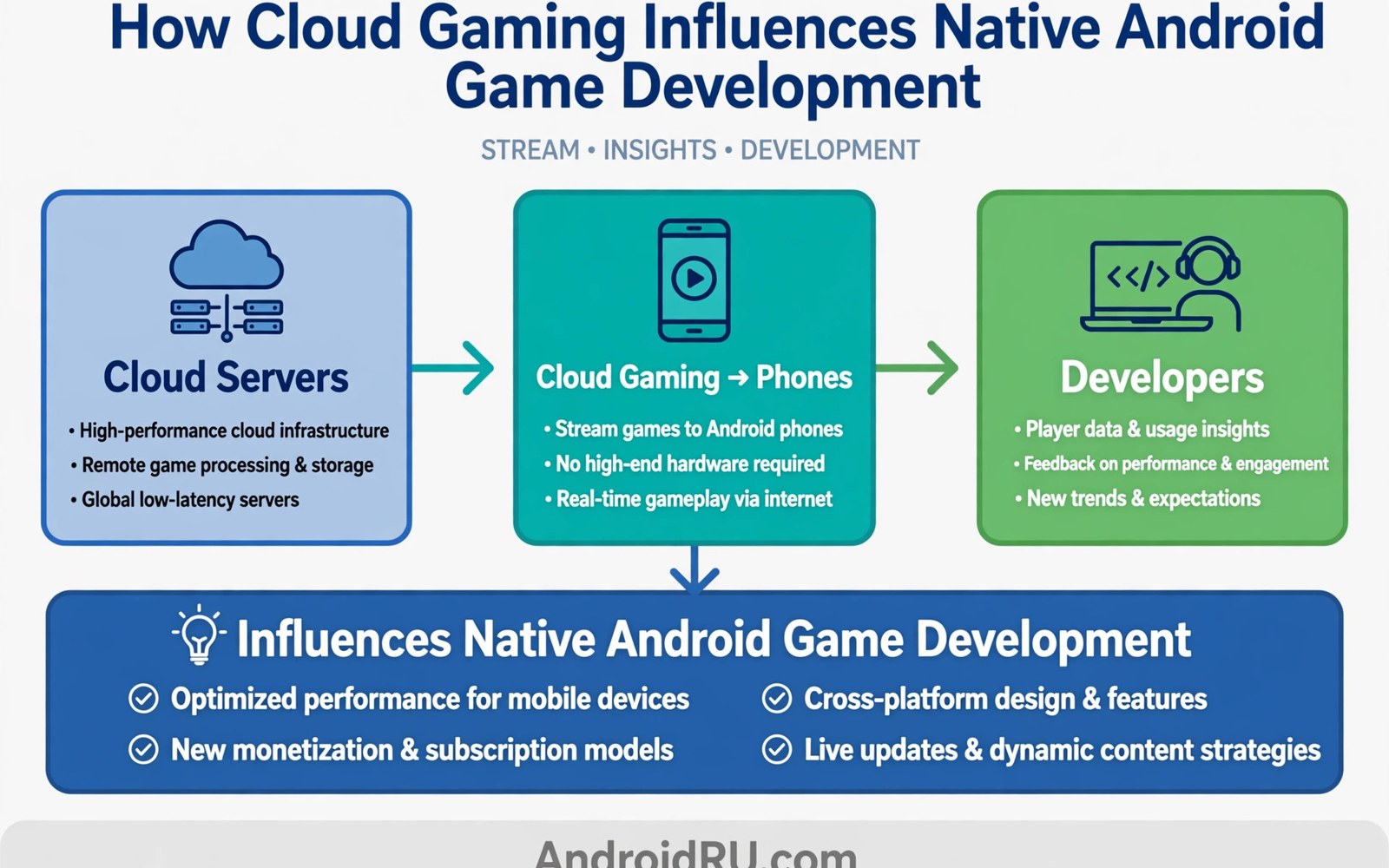
The cloud gaming impact on Android development is already visible across the industry. Studios once designed only for phone hardware. Now they design for servers and streams too. Budgets shift. Skills shift. Player expectations shift. Native games are not dying. They are changing shape under cloud pressure.
Cloud play raises the bar for visuals. Players see PC grade graphics on their phones through streams. Native games must then justify simpler looks with better gameplay or convenience. Studios respond with smarter art and stronger mechanics. The competition improves both paths over time.
Design shifts in native games
Native designers now favor gameplay that suits touch and short sessions. Cloud games cover long cinematic epics well. Native games win on instant access and offline play. Studios lean into those strengths. Quick fun and clever touch mechanics define successful native titles today.
Cross platform design grows too. A game may launch natively on phones and stream from servers to TVs. Shared saves link both versions. Designers must plan controls for touch and controller from day one. That dual planning costs more but reaches more players.
Performance targets change as well. Native teams optimize for a wide range of phone chips. Cloud teams optimize for server hardware and stream quality. Studios that do both need two optimization mindsets. Hiring reflects this split. Engine and network skills gain value beside mobile art skills.
Budget and business effects
Cloud deals create new revenue paths for studios. A title on a cloud library earns through licensing and subscription shares. That income differs from direct sales and ads. Small studios gain exposure through library placement. They trade per unit income for wider reach.
Budgets for native titles face pressure. A studio must decide where to spend. High end native graphics cost a lot and still trail cloud visuals. Many studios redirect that budget toward gameplay and live content. Players reward fun and fresh updates more than raw visual power on phones.
Monetization also evolves. Cloud players already pay a subscription. They resist heavy in game purchase pressure. Native free games rely on those purchases. Studios balance both audiences carefully. A title that monetizes harshly may fail on a cloud library where players expect included value.
Skills developers now need
Network engineering gains importance for game teams. Stream quality and latency shape player reviews. Developers learn to profile network paths beside frame rates. Backend scaling skills matter for launch weeks. A smooth launch needs server capacity planning as much as code polish.
Input design grows more complex. One game must feel good on touch and controller and keyboard. Teams test all three paths. Accessibility also improves because cloud play reaches players on weak hardware. Broader reach demands broader testing.
For players curious about the link side of this shift, the overview of how 5G transforms mobile cloud gaming explains why network quality now shapes game design choices. Faster links let designers trust streaming for more genres each year.
A script to compare dev effort
The script below totals rough effort points for native versus cloud focused features. Studios can adapt the weights to their own team strengths.
features = [
    ("Touch controls", 8, 3),
    ("Controller support", 5, 8),
    ("Low end optimization", 10, 2),
    ("Server scaling", 2, 10),
    ("Offline mode", 9, 1),
]
native_total = sum(n for _, n, _ in features)
cloud_total = sum(c for _, _, c in features)
for name, n, c in features:
    print(name, "native:", n, "cloud:", c)
print("Native total:", native_total)
print("Cloud total:", cloud_total)
print("Balance both paths for the widest reach")
This snippet is an original effort helper written for this article. It is included here so teams can weigh native and cloud work with their own priorities.
Common mistakes
Many studios chase cloud visuals for native games and exhaust budgets. Phone players value smooth fun over extreme graphics. Spend on gameplay first. Another mistake is ignoring touch design for streamed titles. Cloud games on phones still need good touch or controller paths.
Some teams treat cloud as a replacement for native work. Players still want offline games for travel and dead zones. Keep a native path alive. Others ignore server costs in planning. Cloud delivery adds ongoing costs beyond launch. Budget for servers across the game lifetime.
A final mistake is copying monetization across paths without thought. Subscription players and free players expect different value. Tailor offers to each audience. A single harsh model alienates one group or the other.
Indie studios and cloud libraries
Indie studios gain a rare spotlight through cloud libraries, because subscription players try games they would never buy outright. A small puzzle game beside a blockbuster title gets sampled by curious players browsing the catalog. Sampling converts to fans when the game hooks quickly. Indies should design strong first ten minutes, because library browsers decide fast. A gripping opening beats a slow tutorial for catalog discovery.
Revenue from library deals differs from direct sales in timing and size. A library deal pays a lump sum or a usage based share rather than per unit sales. That income arrives predictably and funds the next project. It may total less than a breakout hit, but it removes the risk of zero sales. Many indies prefer predictable income over lottery odds. Library deals suit studios that value stability.
Marketing through libraries also reduces advertising costs, because the service promotes its catalog to millions of subscribers. An indie featured on a library home screen reaches audiences no indie budget could buy. Placement is competitive, so polish and strong art matter for selection. Services curate libraries carefully to keep subscribers happy. Quality remains the entry ticket for indie visibility.
What players should demand next
Players should demand save portability between cloud and native versions, because split progress punishes players who switch paths. A game that syncs saves everywhere respects player time. Studios that ignore save sync lose goodwill when players discover progress traps. Reviewers should test save sync explicitly and report failures. Public pressure moves studios faster than private complaints.
Transparent latency reporting deserves player demand too, because services advertise best case numbers from ideal labs. Players need real world latency ranges by region and hour. Independent testing sites publish some data, but services should publish their own regional statistics. Honest latency data lets players choose services for their location rather than guessing. Demand transparency at purchase time, not after disappointment.
Fair pricing for cloud libraries matters as catalogs grow, because subscription prices rise while older titles leave quietly. Players should track catalog churn for services they pay for. A service that loses favorite titles while raising prices deserves cancellation. Churn tracking sites help players spot patterns. Vote with subscriptions, because cancellations speak louder than forum posts.
Accessibility standards should rise with cloud reach, because streamed games reach players on weak hardware who may also need accessibility features. Demand remappable controls and subtitle options and colorblind modes as standard features. Games that exclude players through missing options lose audiences they could easily keep. Accessibility is a design choice, not a luxury feature. Players who ask for it consistently will see it spread.
Native games that thrive beside cloud
Certain native genres thrive precisely because cloud cannot serve them well offline. Rhythm games need exact timing that networks cannot guarantee. Augmented reality games need local sensors and cameras that streams cannot reach. Quick session games for commutes need instant launch without network checks. These genres will stay native and stay strong for years. Developers in these niches face less cloud competition than others.
Local multiplayer games also resist cloud replacement, because friends on one couch share one screen and instant response. Party games and family titles shine on a shared device. Cloud play adds latency and account complexity to a simple couch session. Native party games remain the best choice for gatherings. Studios serving local multiplayer enjoy a protected niche.
Creative tools and builders thrive natively too, because players create content offline and share later. Building games and music tools need responsive local input without network delay. A creator interrupted by stream stutter loses flow and ideas. Native creative apps protect that flow. Cloud complements creation by sharing results, but creation itself stays local for most players.
How studios test cloud builds
Studios test cloud builds differently from native builds, because server performance and stream quality join traditional bug testing. Test teams run games on server hardware across regions and measure latency at each step. They test controller and touch paths separately for every feature. A feature that works locally may fail through a stream due to encoding or input delay. Cloud testing catches these failures before players meet them.
Load testing simulates launch day peaks to ensure servers scale under real demand. A game that runs fine for a hundred testers may collapse under a million players. Studios simulate traffic spikes and watch server response closely. Scaling fixes discovered in testing prevent launch disasters. Players experience smooth launches only when load testing succeeds beforehand.
FAQ
Will cloud gaming kill native Android games?
No. Native games win on offline play and instant access and touch first design. Cloud expands choice rather than replacing native play. Both paths will coexist for years.
Should indie studios target cloud platforms?
Cloud libraries offer reach but demand controller friendly design. Indies with strong gameplay and modest visuals can shine there. Test your game with a controller early.
Does cloud gaming change what players expect from mobile games?
Yes. Players now compare mobile visuals with streamed PC visuals. Native games must compete on fun and convenience and smart design rather than graphics alone.
Development shifts also point toward the future shape of Android gaming. The future of cloud gaming on Android article maps likely OS level changes. The cloud gaming versus native games comparison weighs latency and graphics and cost for players. The cloud gaming services compared page shows how libraries compete for developer attention today.
Conclusion
The impact of cloud gaming on native Android game development is a shift rather than a death. Design favors touch strengths and cross platform saves. Budgets favor gameplay over raw graphics. Skills expand toward networks and servers. Native games remain vital for offline and instant play. Your next step as a player is simple. Support native games that do touch and quick fun brilliantly. As a developer the step is clearer still. Plan controls and saves for both paths from day one and let each path play to its strength.

