

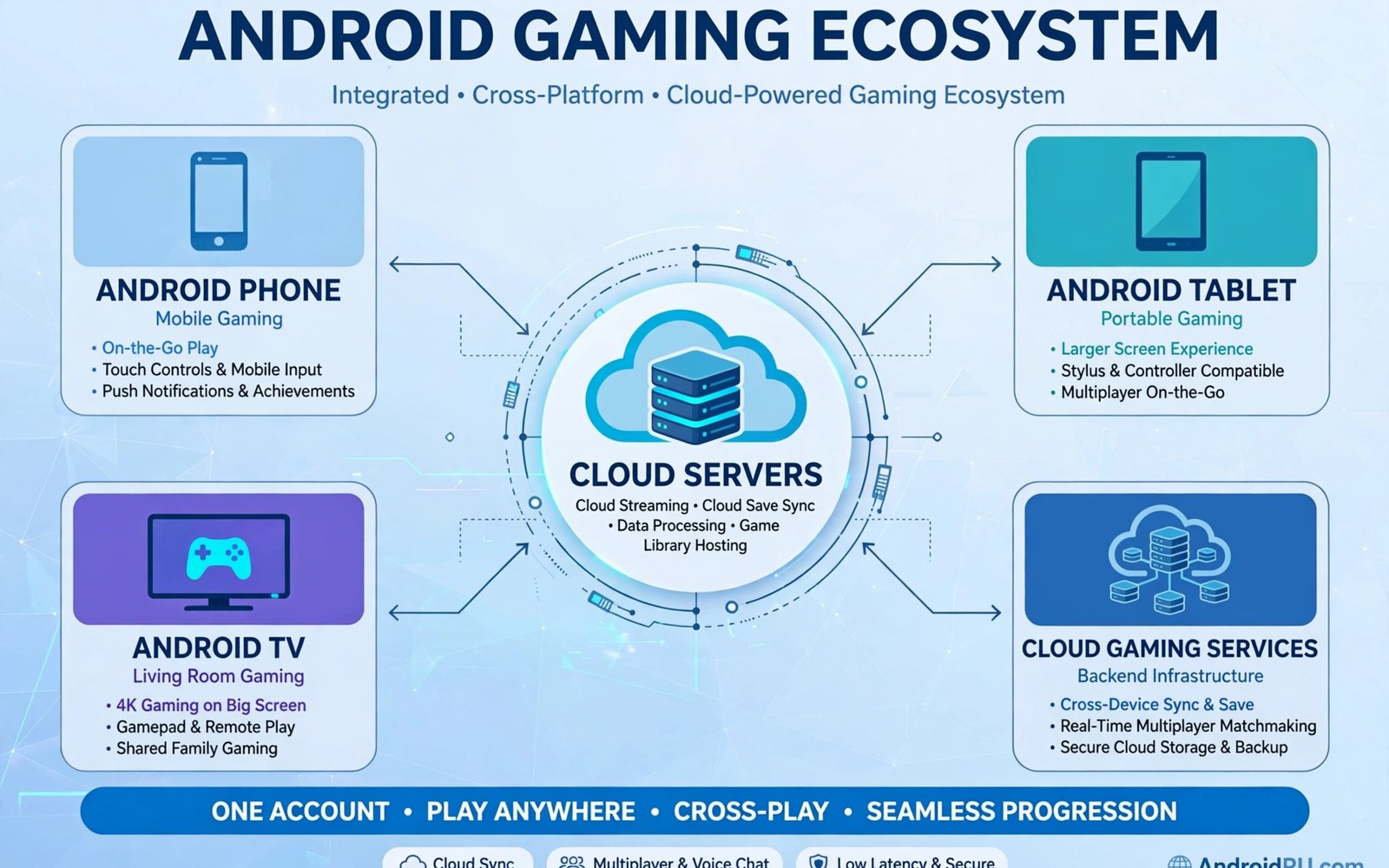
The future of cloud gaming Android integration looks closer than many players expect. Phones grow stronger each year. Networks grow faster. Game services grow deeper. Android itself may soon treat cloud games as first class citizens beside installed apps. That shift will change how players discover and launch and control games.
Integration means more than a better app. It means system level support for controllers and streams and saves. It means cloud games appearing in launchers and search results. It means smoother handoffs between phone and TV and tablet. This article maps likely changes and separates solid trends from distant dreams.
System level game discovery
Future Android versions may list cloud games beside installed games in one library view. A player could search once and see every way to play a title. Tapping a cloud title would launch the stream directly. No separate app hop needed. This unified view reduces friction and helps casual players find cloud options.
Store listings may also show cloud availability clearly. A game page could offer install or stream as equal choices. Players with small storage would pick stream. Players with strong hardware would pick install. Choice at the point of discovery beats digging through separate apps.
Save sync will deepen too. Cloud saves already link some platforms. Future integration may sync saves at system level across services. A player could move from phone to TV without thinking about accounts. That seamless flow is the real promise of integration.
Controllers and input standards
Controller support will standardize further. Android already handles many Bluetooth pads well. Future versions may map buttons automatically per game genre. Players would skip manual mapping for most titles. Haptics and trigger feedback may also standardize across pads.
Touch to controller handoff may improve. A player could start with touch on a train and switch to a controller at home without restarting. Sessions would survive input changes cleanly. That flexibility suits real life where play contexts change often.
Latency handling may move into the system too. Android could prioritize game traffic at OS level. Network scheduling could favor stream packets during play. These low level gains would help every cloud app at once rather than one app at a time.
AI upscaling and stream quality
AI upscaling may sharpen streams on device. A 720p stream could upscale to a crisp phone display with smart processing. This trick saves bandwidth while improving looks. Phone chips already include AI accelerators. Future systems may apply them to video streams automatically.
Adaptive quality will grow smarter. Streams may predict motion and allocate bitrate where eyes focus. Busy scenes get more data. Calm scenes get less. The result is better perceived quality at the same data cost. Data caps benefit directly from this efficiency.
For players tracking link progress, the explainer on how 5G transforms mobile cloud gaming shows the network side of this future. Faster and steadier links make deeper OS integration practical rather than theoretical.
What stays hard
Latency physics will not vanish. Light speed and routing set a floor for delay. Server distance will always matter. Rural players far from data centers will still face higher delay. Edge servers near cities will help many but not everyone equally.
Business conflicts will slow integration too. Platforms compete and guard their libraries. A fully unified Android game library needs cooperation rivals may resist. Expect gradual steps rather than one grand unified store. Progress will arrive app by app and feature by feature.
Data costs remain a barrier in many regions. Unlimited high speed data is not universal. Caps and prices shape who benefits from cloud futures. Integration must include data saver modes to reach players beyond wealthy markets. A future that only serves fast unlimited users is an incomplete future.
A script to watch future readiness
The script below scores your setup for future cloud features. Revisit it yearly as Android and networks improve.
def future_score(wifi_gen, has_controller, data_cap_ok, screen_hz):
    score = 0
    if wifi_gen >= 6:
        score += 30
    if has_controller:
        score += 25
    if data_cap_ok:
        score += 25
    if screen_hz >= 90:
        score += 20
    return score

mine = future_score(wifi_gen=6, has_controller=True, data_cap_ok=True, screen_hz=120)
print("Future readiness score:", mine, "out of 100")
if mine >= 80:
    print("Your setup is ready for deeper integration")
elif mine >= 50:
    print("Solid base. Upgrade Wi-Fi or display next")
else:
    print("Start with Wi-Fi and a controller")
This snippet is an original readiness helper written for this article. It is included here so you can judge your own setup against the trends described here.
Common mistakes
Many players expect instant transformation from each Android release. Integration arrives gradually. Judge each release by concrete features rather than hype. Another mistake is buying gear for rumored features. Buy for current needs. Future features will support standard gear in most cases.
Some players assume cloud will replace all local gaming soon. Offline play and instant access keep native games vital. Keep both paths in your habits. Others ignore data costs while dreaming of 4K streams everywhere. Data reality will gate the future for years. Plan around caps.
A final mistake is dismissing cloud futures entirely because early versions lagged. Networks and encoders improve yearly. Retest cloud play each year. A service that disappointed two years ago may delight today.
What to watch in the next Android release
Each Android release brings clues about cloud gaming direction, and attentive players can spot integration trends early. Watch release notes for controller API improvements and game dashboard features. Controller APIs that support new button types signal deeper game support. Dashboard features that track play time across apps signal system level game awareness. Small API notes today become visible features tomorrow.
Beta programs let curious players test cloud related features months before stable release. Joining a beta carries risks, because beta software can break apps and drain battery. Use a secondary device for beta testing when possible. Report bugs clearly to help shape final features. Beta testers influence Android direction more than passive users, because their feedback reaches developers directly.
Maker skins add another layer to watch, because Samsung and Xiaomi and others extend Android game features independently. Game launcher apps from makers already aggregate installed games and cloud links in some regions. Maker features sometimes preview system features that later arrive in stock Android. Watch maker announcements alongside Google announcements for the full picture of Android gaming futures.
Skills players should build now
Network literacy will serve cloud players better than any single purchase, because understanding latency and jitter and packet loss helps diagnose every future problem. Learn to run ping tests and read their results. Learn the difference between speed and stability. These skills transfer across services and devices for years. A player who understands networks never feels helpless when streams stutter.
Controller skills also compound over time, because muscle memory from one game transfers to others in the same genre. Invest practice time in a comfortable controller setup rather than switching pads constantly. Consistent hardware builds consistent skill. Players who master one pad outperform players who chase new gear monthly. Mastery beats novelty in competitive and casual play alike.
Budget discipline matters as cloud options multiply, because subscriptions stack silently across services. Audit gaming spending quarterly and cancel idle subscriptions promptly. Money saved funds better controllers and network gear that improve every service. Financial habits protect hobby enjoyment from subscription fatigue. A hobby that strains budgets stops being fun.
Community participation enriches cloud gaming futures, because player feedback shapes service roadmaps. Join forums and beta programs for services you use. Report bugs with clear reproduction steps. Suggest features constructively rather than ranting. Services listen to organized feedback more than scattered complaints. Players who engage shape the future they will play in.
Cloud gaming and sustainability
Energy use of cloud gaming draws growing attention, because data centers consume power to render games for millions of players. Efficient servers and renewable energy reduce the footprint per player. Players can favor services that publish sustainability reports and use efficient hardware. Conscious choices push the industry toward greener operations without sacrificing play quality.
Device longevity also improves with cloud play, because phones last longer when they stream rather than render demanding games locally. Longer device life reduces electronic waste and saves players upgrade costs. A budget phone that streams well for five years beats a flagship replaced every two years for the planet and the wallet. Cloud gaming supports sustainability through longer hardware lifespans.
Shared infrastructure efficiency favors cloud rendering at scale, because one powerful server can serve many players across a day with high utilization. Individual gaming PCs often sit idle most hours while consuming standby power. Centralized servers use power more efficiently across player schedules. The sustainability case for cloud strengthens as data centers adopt renewable energy and efficient cooling. Players who care about impact should watch these trends.
FAQ
Will Android build cloud gaming into the OS?
Deeper integration is likely in steps. Expect unified discovery and better controller standards first. A full OS level game store for cloud titles will take longer and needs industry cooperation.
Will cloud gaming replace consoles and gaming phones?
Not fully. Consoles and strong phones still win on latency and offline play. Cloud expands access and choice. Most players will mix local and streamed play for years.
What should I buy now for the cloud future?
A good controller and strong Wi-Fi matter most. Those investments help every cloud service today and tomorrow. Avoid exotic gear tied to one service only.
Future integration builds on development shifts and network gains already visible today. The cloud gaming impact on Android development article explains how studios adapt to streaming. The explainer on how 5G transforms mobile cloud gaming tracks the network side of that future. The cloud gaming services compared page shows the services that will shape integration next.
Conclusion
The future of cloud gaming integration within Android points toward unified discovery and standard controllers and smarter streams. Latency physics and business rivalries and data costs will pace the change. Players gain most by staying flexible. Your next step is simple. Invest in a good controller and solid home Wi-Fi this year. Then retest cloud services each year as integration deepens. That habit keeps you ready for each real improvement without chasing hype.

