

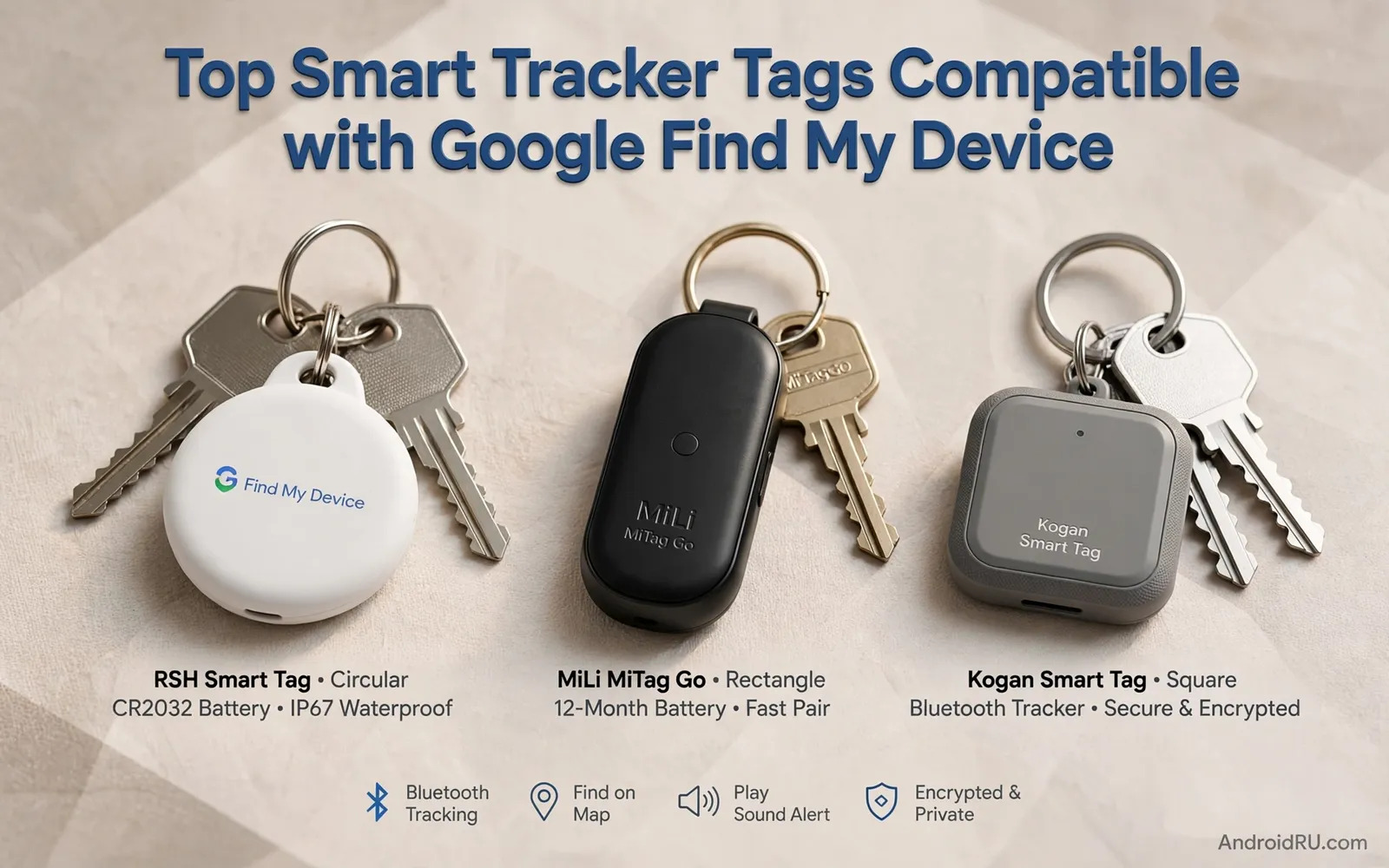
Finding Lost Items Through A Phone Network
A smart tracker tag is a small battery powered device that attaches to keys or a bag or luggage and reports its location through a phone network. Tags compatible with Google Find My Device use nearby Android phones to relay an anonymous location signal. When a tagged item goes missing the owner opens the Find My Device app and sees the last reported location and can play a sound on the tag when nearby. The system works because millions of Android phones can relay signals without revealing owner identity. No single phone needs to know the tag owner for the network to help.
Coverage depends on Android phone density rather than on the tag alone. A lost bag in a busy city reports frequently because many phones pass nearby. A lost bag on a remote trail may report rarely because few phones pass to relay its signal. Bluetooth range limits direct finding to nearby distances while network reports extend finding to places the owner cannot reach directly. Understanding that distinction prevents disappointment when a tag in a remote area updates slowly. Readers learning lost phone recovery can explore locating and remotely wiping a lost Android phone for the phone side of the same network ideas.
Tag Types Battery Life And Form Factors
Card tags suit wallets and passport holders because they are thin and flat. Coin tags suit keyrings and bags because they are compact and sturdy. Some tags include a hole for a keyring while others need a separate holder. Battery life ranges from months to around a year depending on reporting frequency and sound use. Replaceable coin batteries suit users who prefer a quick swap while rechargeable tags suit users who dislike buying batteries. Check battery type before buying because a tag with an obscure battery can become annoying to maintain.
Sound volume and water resistance shape real finding success. A loud tag can be heard under a sofa cushion while a quiet tag may remain hidden in a bag. Water resistance matters for tags on outdoor gear and luggage that faces rain. Durability matters for tags on keys that strike other objects constantly. A tag that breaks on first impact helps nobody. Check the attachment method carefully because a tag that detaches from keys defeats its entire purpose. A secure holder often matters more than a marginal battery difference.
Privacy Safety And Responsible Tracking
Tracker tags raise serious privacy questions because the same technology that finds lost keys could track a person without consent. Google Find My Device includes unknown tracker alerts that warn Android users when an unfamiliar tag travels with them. That protection matters and buyers should never use tags to track another person or a vehicle they do not own. Responsible use means tagging your own belongings and respecting the privacy of everyone around you. A tag slipped into someone else bag without consent is not a clever trick. It is a privacy violation with real consequences.
Owners should also protect their own account security because location data is sensitive. Use strong device locks and account protections for the phone that manages tags. Review sharing settings so location history is not shared more widely than intended. Readers backing up device data can review backing up and restoring Android data safely and fully for account safety habits that apply to tracking as well. A secure account keeps helpful location features from becoming a vulnerability.
- Card tag for wallets and thin passport holders
- Coin tag with secure keyring hole for keys and bags
- Loud sound for finding items hidden under cushions
- Water resistance for outdoor gear and luggage tags
- Replaceable battery for simple long term maintenance
Setting Up Tags For Reliable Finding
Set up each tag in a quiet place and name it clearly for the item it protects. Keys and work bag and travel luggage deserve distinct names that make sense under stress. Test the sound feature immediately after setup so you know the volume and tone. Test separation alerts when available because an alert that warns you as you leave keys behind prevents loss before it happens. Attach the tag securely and check the attachment after a week of real use because new holders can loosen.
Build a routine around tags rather than relying on them only in emergencies. Check battery levels seasonally and replace weak batteries before travel. Keep a spare tag for a new bag rather than moving one tag constantly between items. A tag left on a bag you no longer carry helps nobody while the bag you carry daily goes unprotected. Readers exploring connected home accessories can explore smart home accessories controlled via Android apps for how tags fit a wider connected household. Small routines make tracking reliable when it matters most.
Limits And What Tags Cannot Do
Tracker tags cannot provide live second-by-second tracking like a dedicated GPS device with a cellular connection. Network reports update when a compatible phone passes nearby and that timing varies. Tags cannot prevent theft and a determined thief can remove and discard a tag quickly. Tags cannot locate items inside shielded metal containers reliably because metal blocks Bluetooth signals. A tag inside a metal toolbox may report only when the box opens or when signal escapes through gaps. Understanding limits prevents false confidence and encourages sensible backup habits.
Indoor finding also has limits because Bluetooth direction finding works best at short range with clear signal. Walls and metal furniture distort signals and make precise indoor directions approximate. Use sound as the primary indoor finding tool and use map location as a guide to the right room rather than to an exact centimetre. Walk slowly while listening and check common hiding places systematically. Patience and sound together find more items than staring at a map dot alone.
Choosing Tags And A Final Checklist
Choose by item first. A wallet needs a card tag. Keys need a sturdy coin tag with a secure hole. Luggage needs a durable tag with water resistance. Travel users should prioritise battery life and holder security. Daily commuters should prioritise sound volume and separation alerts. Read compatibility carefully because only tags that explicitly support Google Find My Device join that network. A tag built for another ecosystem will not appear in the Android app no matter how similar it looks.
Test the complete system during the return window. Attach the tag to its real item and walk away and check reporting and sound and separation alerts. A tag that passes real tests earns trust for travel and daily life. A tag that only works on a desk should return before it fails on a journey that matters.
- Confirm explicit Google Find My Device compatibility first
- Match card or coin form to wallet keys or luggage
- Test sound and separation alerts on the real item
- Check battery type and holder security before travel
Tracker Tags For Travel Luggage And Family Life
Travel luggage benefits enormously from tracker tags because lost luggage creates stress at the start of a holiday. Place a tag inside luggage as well as on an outside holder because an outside tag can be removed while an inside tag stays hidden. Check tag battery before departure and keep a spare battery for coin powered tags in travel kits. Name luggage tags clearly for each bag so a family can identify which bag reports from which location. A tag cannot speed airline recovery but it gives travellers information that reduces uncertainty during a stressful wait.
Family life offers many everyday tag uses beyond travel. Keys and wallets and school bags and sports bags all benefit from a tag that warns when left behind. Children bags can carry a tag that helps parents locate a forgotten bag at school. Shared family items such as a camera bag can carry a tag that any family member can locate through a shared account arrangement where supported. Keep tag sharing within trusted family arrangements and respect privacy boundaries for older children and adults. Tracking works best as a family convenience rather than as surveillance.
Pet and outdoor gear uses deserve caution because tags are not designed as pet trackers for animals that roam widely. A tag on a pet collar may report when the pet passes near compatible phones but it cannot provide reliable live tracking across open countryside. Owners should use dedicated pet tracking solutions for animals that need real-time location. A tag suits gear such as a tent bag or a camera case far better than a living animal. Matching the tool to the job prevents disappointment and protects pets from false confidence.
- Place a luggage tag inside the bag as well as outside
- Check tag batteries before every trip and carry spares
- Name family tags clearly for each bag and item
- Use tags for forgotten school and sports bags daily
- Do not rely on item tags as live pet trackers
Tracker Tag Battery Planning For Travel
Battery planning prevents tracker failures during travel when finding luggage matters most. Replace coin batteries before a long trip even when the current battery still reports adequate life because travel stress and cold cargo holds drain batteries faster. Carry spare batteries in hand luggage rather than checked luggage so a tag can be revived mid-journey. Note battery replacement dates for each tag in a travel checklist so no tag is forgotten. A tag with a fresh battery gives travellers confidence that lasts the whole journey.
Cold weather affects tag batteries noticeably because low temperatures reduce usable capacity temporarily. A tag in a cold cargo hold may report less frequently until it warms up. Do not panic when a luggage tag goes quiet in cold transit because reports often resume after warming. Keep tags inside luggage insulation where possible rather than in exposed outer pockets during winter travel. Simple battery and placement planning keeps tracking reliable across seasons and journeys.
- Replace tag batteries before long trips even when life seems adequate
- Carry spare batteries in hand luggage for mid-journey revival
- Note battery dates in a travel checklist for every tag
- Keep tags insulated from extreme cold in luggage

