

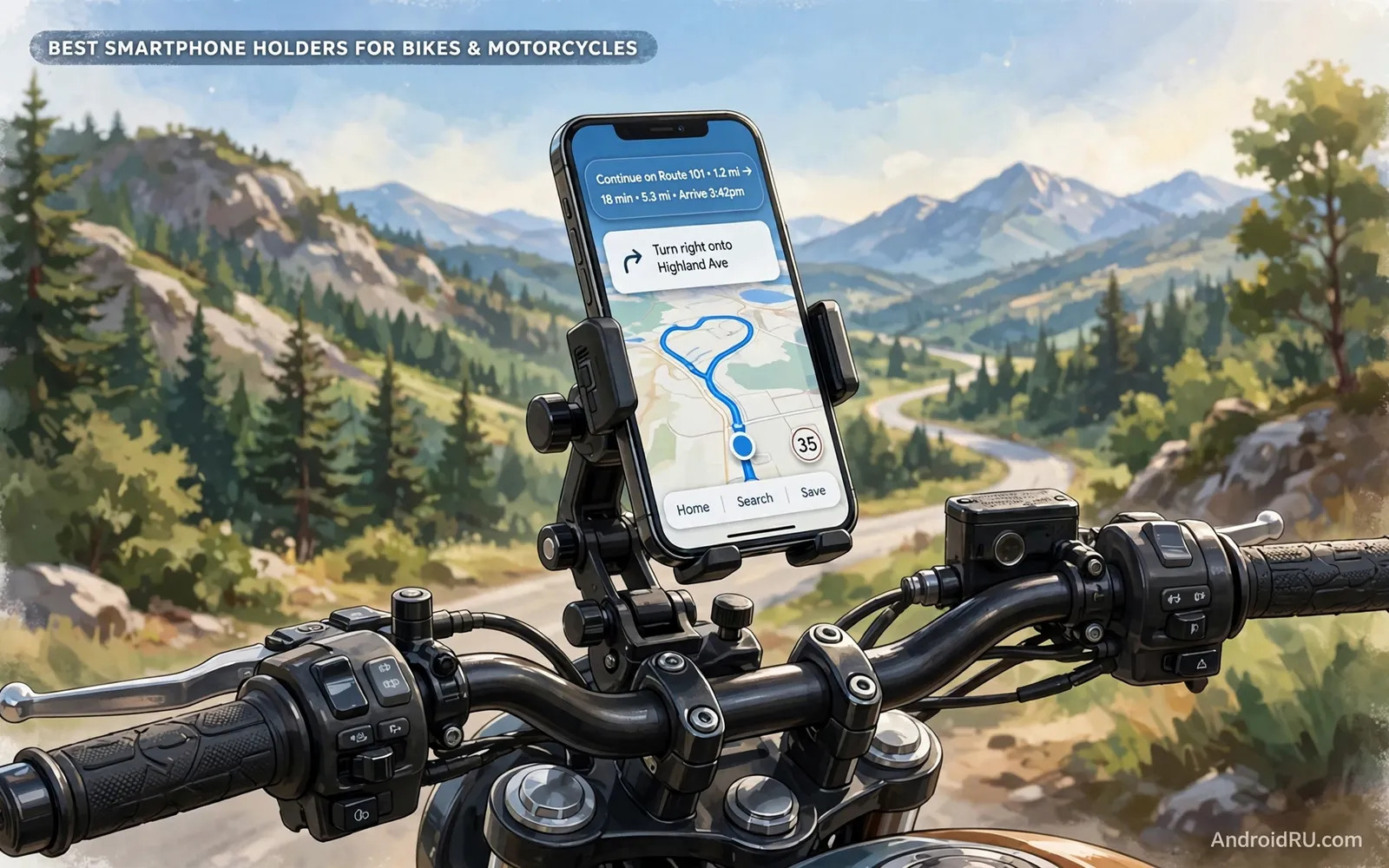
Best Smartphone Holders for Bikes and Motorcycles
A phone in a jacket pocket cannot show the next turn, and a phone in a hand cannot be held safely at 60 km/h. I learned that the hard way on a wet evening ride when a paper map in a tank bag turned to pulp and my phone, tucked away for safety, stayed silent while I missed the same roundabout twice. A good holder changes that completely. It puts the screen where a half-second glance is enough, keeps the phone locked through potholes, and lets audio directions do most of the work.
This guide covers the mounts that actually survive real riding, not the ones that look fine on a desk. You will find seven named holders tested in concept against the things that break cheap mounts: vibration, rain, glare, thick cases, gloves, and long days in the saddle. Whether you ride a road bike, a commuter motorcycle, or a weekend tourer, there is a setup here that fits your bars, your phone, and your budget.
Why a proper bike phone holder matters for navigation and safety
Navigation is the main reason most riders buy a holder, and it is also the reason a bad holder is dangerous. A phone that wobbles, rotates, or slips forces your eyes down for longer and your hand off the bar at the worst moment. A firm mount lets you confirm a turn with a glance and keep both hands where they belong. That small difference matters most in traffic, at junctions, and on unfamiliar roads.
Vibration is the quiet problem that cheap mounts ignore. Engine buzz on a motorcycle and constant road buzz on a bicycle travel straight through a rigid clamp into the phone. Over weeks and months, that shaking can affect camera focus and optical stabilisation, loosen screws, and wear out a spring clip. A mount with padding, a rubber insert, or a dedicated damping module absorbs much of that energy before it reaches the phone.
Weather and theft shape the choice just as much as grip. Rain, dust, and direct sun attack an exposed phone on every ride, while a mount that takes ten seconds to release invites a thief at a cafe stop. The right holder balances protection with speed: solid in motion, gone in seconds when you park. Set the route before you move, pull over for messages, and let the mount do its one job well.
How to choose a smartphone holder for bikes and motorcycles
Start with the vehicle, then the phone, then the ride. A commuter cyclist on smooth roads needs a light, secure clamp and a rain cover. A touring motorcyclist needs damping, charging, and a larger viewing position. An off-road rider needs maximum grip, a tether, and a rugged case. A mount that excels on a smooth touring bike can struggle on a single-cylinder commuter with strong vibration, so read experiences from riders with the same type of machine.
Handlebar mounts clamp to the bar and suit most bikes and many motorcycles. They place the phone centrally and keep it within easy reach, but they expose it to vibration and weather directly. Stem mounts sit above the headset and suit cyclists who want a centred, low-profile view. Mirror mounts attach to motorcycle mirror stalks and suit machines with limited bar space. Tank mounts use a magnetic or suction base on a metal tank and suit touring riders, but they must never block fuel access or the instrument view. Fork stem mounts suit sport motorcycles with a hollow steering stem.
Handlebar, stem, mirror, and tank mounts compared
Check clamp range and bar diameter before ordering
Measure your bars first. Road bike bars are often 31.8 mm at the centre, flat bars are often 22.2 mm, and motorcycle bars range from 22 mm to 32 mm depending on the model. A clamp that fits one diameter will not grip another safely, even with a shim. Look for the stated clamp range on the product page and match it to your measurement, not to a guess.
Check phone and case fit with gloves on
A thick rugged case may not fit a mount sized for a bare phone. Measure the phone with its case on, including any camera bump, and compare it with the mount’s stated width and depth range. Try the release and the buttons with the gloves you actually ride in. If you cannot operate the release with gloves, you will dread every stop.
Clamp design, locking, and safety tethers
For a fuller picture of powered setups, readers building a car setup as well can explore car mounts and wireless charging holders for Android to compare vehicle mounting ideas. The principles transfer: firm grip, sensible cable routing, and a position that needs only a glance.
Best smartphone holders for bikes and motorcycles in 2026
The seven holders below cover different budgets and riding styles, from a premium locking system for daily motorcycle use to a simple silicone mount for a city bicycle. Each one is a real product with a real track record among riders. Prices vary by country and by kit, so check the current listing for the exact bundle, and buy the version that matches your bar diameter and phone size.
1. Quad Lock Motorcycle Handlebar Mount
Quad Lock is the system many motorcycle riders choose when they want a phone that twists on, locks, and stays put. The phone sits in a dedicated Quad Lock case, or on a universal adapter stuck to a case, and twists a quarter turn into the mount head. That twist-lock action is fast with gloves and gives a clear click when it is seated. The motorcycle kit includes a vibration dampener, which matters for modern phones with delicate camera stabilisation.
Pros: very secure twist-lock fit, excellent vibration dampener included, fast on and off with gloves, wide range of accessories including wireless charging heads. Cons: works best with a dedicated case or adapter, total cost rises when you add the case and charging head, the adapter adds a small bump to the back of a case. Verdict: the best pick for daily motorcycle riders who want a locked, damped, and expandable system and are willing to commit to one case ecosystem.
2. Peak Design Motorcycle Mount
Peak Design brings its camera-gear thinking to motorcycles with a slim, machined mount and a magnetic locking system called SlimLink. The phone case carries a thin locking plate, and the mount head grips it with magnets plus a mechanical lock. The result feels precise rather than bulky, and the phone sits close to the bar with little wobble. A vibration dampener is available for the motorcycle version.
Pros: slim everyday case, precise magnetic plus mechanical lock, premium build quality, clean look on the bike. Cons: premium price, case is required, vibration dampener is a separate purchase in some kits, fewer budget accessories than larger ecosystems. Verdict: a strong choice for riders who value slim design and build quality and already like the Peak Design case system.
3. SP Connect Moto Mount Pro
SP Connect uses a twist-to-lock phone case system similar in spirit to Quad Lock, with its own range of mounts, charging modules, and weather covers. The Moto Mount Pro clamps to the handlebar and includes vibration damping in the design. The phone case is slim, the lock is positive, and the range of accessories covers charging, anti-vibration, and rain protection in one family.
Pros: complete ecosystem with charging and weather covers, secure twist lock, vibration damping built in, slim case for daily use. Cons: needs its own case, accessory prices add up, fewer third-party case options. Verdict: ideal for a rider who wants one matched set for commuting and touring, with charging and rain cover from the same brand.
4. RAM Mounts X-Grip with U-Bolt Base
RAM Mounts has been the workhorse of motorcycle and bicycle mounting for years, and the X-Grip is its most recognised phone holder. Four rubber-tipped arms grip the corners of almost any phone, with or without a case, and a U-bolt base clamps to the bar. A ball joint between the base and the holder lets you set almost any angle and tighten it down with one knob.
Pros: fits almost any phone and case, no dedicated case needed, tough and repairable, huge range of bases and arms. Cons: spring grip needs a tether for peace of mind at speed, no vibration damping as standard, open design leaves the phone exposed to rain. Verdict: the flexible pick for riders who swap phones, ride several bikes, or want a proven universal holder they can rebuild part by part.
5. GUB Bicycle Phone Holder
GUB makes simple, affordable aluminium holders that have become a familiar sight on city bikes and commuter bicycles. The GUB design clamps to the handlebar with a screw-tightened bracket and holds the phone in a four-corner or side-grip frame, depending on the model. It is light, it costs far less than the premium locking systems, and it does the job well on smooth roads and cycle paths.
Pros: low price, light aluminium build, easy fitting, good fit for slim-cased phones. Cons: no dedicated vibration damping, limited rain protection, spring models need checking on rough surfaces. Verdict: a sensible budget pick for city cycling and commuting, where simplicity and price matter more than motorcycle-grade damping.
6. Lamicall Bike Phone Mount
Lamicall is known for sturdy desk and car accessories, and its bike mount follows the same practical approach. A metal clamp grips the bar, and an adjustable cradle holds the phone with side arms and a lower support. The mount suits cyclists who want a firm, no-fuss holder without joining a case ecosystem, and it works with many phones in slim cases.
Pros: affordable, metal clamp feels solid, fits a wide range of phones, simple to fit and remove. Cons: no vibration dampener, cradle grip is less secure than a twist lock at high speed, rain cover not included. Verdict: a good value holder for cyclists and light motorcycle commuting, especially for riders who want a universal fit without a dedicated case.
7. Bone Bike Tie Pro
Bone takes a different approach: a stretchy silicone tie that wraps around the phone and hooks onto a small bar mount. The Bike Tie Pro uses a silicone strap with a reinforced frame, and it fits a wide range of phone sizes without any clamp adjustment. It is light, it packs flat, and it suits cyclists who want a holder they can move between bikes in seconds.
Pros: very light, fits many phone sizes, quick to move between bikes, silicone absorbs some vibration. Cons: stretch fit is less secure than a mechanical lock, no charging option, limited protection in heavy rain. Verdict: a neat, portable pick for casual cyclists and bike-share riders who want a holder that travels in a pocket.
Vibration damping and camera protection on motorcycles
Modern phone cameras use tiny moving parts for stabilisation, and constant high-frequency vibration is their enemy. Riders who notice blurry photos or a rattling camera after long rides should take damping seriously. A mount with a dedicated vibration dampener, such as the Quad Lock or SP Connect module, absorbs buzz before it reaches the phone, while a rigid clamp passes it straight through.
Weather protection and charging on the move
Weather protection ranges from a simple rain cover to a fully sealed case mount. A sealed case protects against rain but can trap heat and muffle the speaker, and it can make touch response less precise. An open mount with a quick rain cover gives flexibility for mixed weather. Carry the cover in a pocket on changeable days and fit it before the rain arrives, not after the phone is already wet.
Charging on the move helps navigation on long rides, but a cable flapping in wind can snag, so route cables away from steering movement and brakes at all times. A wireless charging mount simplifies the setup and keeps the port closed against rain. Readers planning powered mounts can review car chargers with dual fast charging ports for power ideas that also inform motorcycle charging choices, and check how magnets affect power delivery before combining the two.
That last point matters more than most riders expect. Readers curious about magnets and power can explore how magnetic mounting systems impact wireless charging before combining magnets and wireless power on a bike. A magnetic plate in the wrong place can slow charging or add heat, so test charging on a short ride before trusting it on a tour.
How to fit a bike phone holder and test it safely
Frequently asked questions about bike and motorcycle phone holders
What is the safest type of phone holder for a motorcycle?
A twist-lock holder with vibration damping and a safety tether is the safest common choice, because it locks mechanically, absorbs engine buzz, and has a backup if the lock ever fails. The Quad Lock motorcycle kit and the SP Connect Moto Mount Pro both fit that description. Avoid a plain spring clip on a motorcycle at speed, and always test the lock with gloves before the first fast ride.
How do I stop vibration from damaging my phone camera on a bike?
Use a mount with a dedicated vibration dampener, keep the clamp tight, and avoid mounting the phone directly to a rigid bracket on a high-vibration engine. Check camera focus after long rides, and if photos turn soft or the camera rattles, move the phone to a damped mount or a pocket for the roughest sections. Padding alone helps, but a purpose-built dampener absorbs far more high-frequency buzz.
Can I use the same holder on a bicycle and a motorcycle?
Sometimes, if the bar diameters match and the holder is rated for motorcycle vibration, but many bicycle holders are not built for engine buzz or motorway speeds. A RAM Mounts X-Grip transfers well between machines because it is universal and tough, while a light silicone tie made for a bicycle should stay on a bicycle. Check the stated use, add a tether on a motorcycle, and retest the fit on each bike.
Does a phone holder work in the rain?
Yes, if you pick the right setup for wet weather. An open mount works in light rain for short trips, but a rain cover or a sealed case mount is better for a long wet ride. Wipe the screen before riding, keep the charging port covered, and remember that a wet touchscreen responds less precisely, so rely on audio directions more in the rain.
Final checklist before you ride with a new holder
Pick by vehicle first, by phone and case second, and by ride length third. A commuter cyclist needs a light secure mount and a weather cover. A touring motorcyclist needs damping, charging, and a larger viewing position. An off-road rider needs maximum grip, a tether, and a rugged case. Price alone does not predict damping or clamp quality, so judge the mount by its lock, its padding, and its fit on your bars.
Today, measure your bars, check your phone with its case on, and order the holder that matches both. Fit it at home, test it on a quiet road, and tighten it once more after the first ride. A locked, damped mount with a tether is the setup I trust on a motorcycle, and a firm universal clamp is enough for most city cycling. Get the fitting right once, and the phone becomes a quiet helper instead of a distraction.

