

Samsung Galaxy M14 5G Review: App Performance and Camera Quality
The Samsung Galaxy M14 5G arrived on 8 March 2023 with a pitch that was easy to understand: a very large battery, a 50MP camera and 5G, at a price that sat close to 200 EUR at launch. Three years later it still turns up in budget shortlists and second-hand listings, which raises a plain question for anyone shopping in 2026: is Galaxy M14 5G worth buying in 2026, or has time moved past it? This Galaxy M14 5G review answers that question by looking at the two things in the title — how apps run on it day to day, and how good its camera really is — plus the display, the battery and the full spec sheet, so the verdict rests on facts rather than nostalgia.
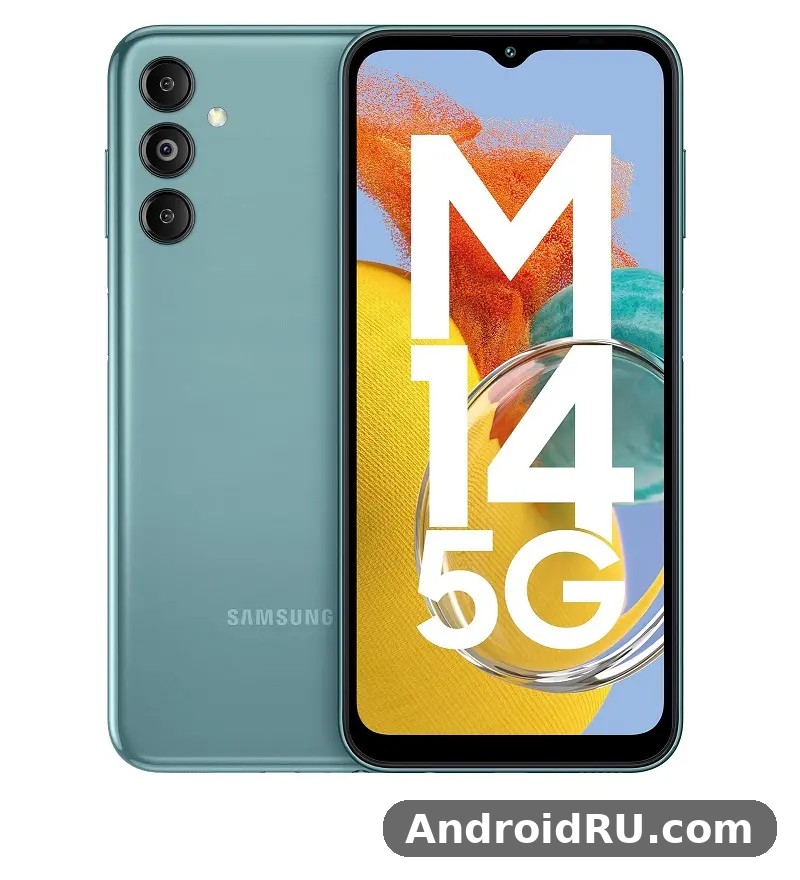
Short version up front: the phone is a battery-first budget handset. Its 6000mAh cell is the headline, the 50MP main camera is genuinely useful in good light, and the 90Hz screen makes everyday scrolling feel nicer than the price suggests. The trade-offs are just as clear. Charging is slow outside India, the extra two rear cameras add little, video stops at 1080p, and the 4GB version can feel cramped once you load it with apps. Read on for the detail behind each of those claims, including the full specifications table and a head-to-head look at the phones Samsung sold around it.
One note on how this review is written: it is built from the published specification sheet, launch pricing, and the many published tests and owner reports that have accumulated since March 2023, not from a claim of a fresh lab test. Where a number comes from the spec sheet, it is stated as a spec. Where something depends on how you use the phone — battery life, low-light photos, gaming warmth — it is described as a range, because your mileage will differ from the next owner’s.
Samsung Galaxy M14 5G at a Glance: Price, Release Date and Key Specs
Samsung announced the Galaxy M14 5G on 8 March 2023 and put it on sale the same month, first in Ukraine and then in India and other markets where the M series sells well. The Galaxy M14 5G price at launch sat around 200 EUR in Europe, and the Samsung Galaxy M14 5G price in India started at about 13,490 rupees for the 4GB/128GB version, with the 6GB/128GB version a little higher. Three years on, the M14 5G price you actually pay depends on where you buy it and whether it is new or used, so check the current listing in your own market rather than trusting a launch price from 2023. What has not changed is the shape of the deal: a big battery and 5G for the price of a basic mid-range phone.
The Galaxy M14 5G colours are Navy Blue, Light Blue and Silver, and the phone is a big, plain slab: 166.8 mm tall, 77.2 mm wide and 9.4 mm thick. The Galaxy M14 5G weight is 206 g, so it feels solid in the hand and a little heavy in a shirt pocket, and the Galaxy M14 5G thickness of 9.4 mm is the direct cost of the 6000mAh cell inside. The front is Corning Gorilla Glass 5 over a 6.6-inch display with a small waterdrop notch for the selfie camera, while the back and frame are plastic with a lightly textured finish that hides fingerprints better than glossy glass. The Galaxy M14 5G fingerprint sensor sits in the power button on the right edge, the volume keys sit above it, and the Galaxy M14 5G headphone jack survives on the bottom edge next to the USB-C port — a combination that budget buyers still ask for by name.
That practical, no-frills build is a family trait. Samsung’s budget M phones have always traded glass and metal for battery and price, and the Galaxy M12 that came before it followed the same recipe with a plastic body, a 90Hz screen and a big battery of its own. If you want the detail on that older sibling, read the Samsung Galaxy M12 Review: Build Quality, Battery and Daily Use alongside this review and you will see how little of the formula Samsung changed — the M14 5G mainly adds a faster chip, 5G and a better main camera.
What is the Galaxy M14 5G?
Think of it as the battery phone of Samsung’s 2023 budget range. It shares most of its bones with the Galaxy A14 5G from the same year — same 6.6-inch 90Hz screen size, same Exynos 1330 chip, same 50MP main camera — and then swaps in a larger 6000mAh battery, which is the whole reason the M series exists. The M series is sold mainly online and in markets where buyers rank battery life and price above design flourishes, and the M14 5G is one of the purest examples of that idea: no ultrawide camera, no 4K video, no wireless charging, but a cell that outlasts phones costing twice as much.
- Screen: 6.6-inch PLS LCD, 1080 x 2408 pixels, 90Hz refresh rate, protected by Gorilla Glass 5.
- Chip: Exynos 1330, a 5 nm octa-core chip with two fast Cortex-A78 cores at 2.4 GHz and six efficient Cortex-A55 cores at 2.0 GHz.
- Memory: 4GB or 6GB of RAM with 64GB or 128GB of storage, plus a dedicated microSD slot.
- Cameras: 50MP main camera with two 2MP helpers on the back, and a 13MP selfie camera on the front.
- Battery: 6000mAh with wired charging at 15W in most markets and 25W in India.
- Software: Android 13 with One UI Core 5.1 at launch, with later updates covered in the software section below.
Galaxy M14 5G App Performance: Exynos 1330 in Daily Use
App performance is where a budget phone earns its keep, and the Galaxy M14 5G performance story starts with the Exynos 1330. It is a 5 nm chip, which matters because smaller, newer silicon tends to sip power rather than gulp it, and it pairs two fast Cortex-A78 cores for bursts of work with six efficient Cortex-A55 cores for background tasks. A Galaxy M14 5G performance test Exynos 1330 owners often cite puts the chip in the same bracket as other budget 5G chips from 2023, with published benchmark scores generally reported in a broad range around the high-300,000s to mid-400,000s on AnTuTu. That is not a flagship number, and it was never meant to be. What it means in practice is that the phone handles the apps most people actually open every day without drama, and only starts to show its price when you ask it to do several heavy things at once.
The Exynos 1330 is helped by One UI Core, which is Samsung’s lighter software build for budget phones. It drops a few features found on more expensive Galaxy phones, but it keeps the parts that matter for speed: a clean home screen, a sensible app drawer, and the same core Samsung apps for messages, calls, photos and files. The result is a phone that feels calm rather than quick — it rarely stutters in normal use, but it also rarely surprises you with instant responses the way a phone with a flagship chip does.
Galaxy M14 5G app opening speed test
Talk of a Galaxy M14 5G app opening speed test usually comes down to the same pattern. Messaging apps, the browser, maps, banking apps and social feeds open in a second or two and scroll without fuss. The camera app takes a beat longer to wake, especially the first time after a restart, and heavier apps such as large games or photo editors pause a moment on their splash screens while they load. Switching between two or three apps is fine. Switching between six or seven is where the 4GB version starts reloading apps from scratch, which is why the RAM choice below matters more than any single benchmark number.
Multitasking is helped by the 90Hz display, which makes the act of switching apps feel smoother even when the chip is working at the same speed, and by the fact that One UI is good at freezing apps in the background instead of letting them drain the battery. Split-screen works for the usual pairs — a video on top and a chat below, or maps beside a browser — though the 6.6-inch screen makes text a little cramped in split view. If your day is built around calls, chats, browsing, email, maps and the odd video, this phone keeps up. If your day involves editing 4K video on the phone or running a game while a video call runs in the background, you are shopping in the wrong price bracket.
Galaxy M14 5G 4GB vs 6GB RAM
The Galaxy M14 5G 4GB vs 6GB RAM choice is the single most useful decision in this review, because it changes daily life more than any other spec on the sheet. The 4GB version is cheaper and fine for a light user who runs a handful of apps and closes them when done. The 6GB version holds more apps in memory, reloads less often, and copes better with the way apps have grown heavier since 2023. The Galaxy M14 5G RAM difference is small on paper and noticeable in the hand: on the 4GB model, jumping back to the browser after taking a photo can mean a reload; on the 6GB model it usually does not. If the price gap in your market is small, buy the 6GB/128GB version. If you are buying the phone for a parent or a child who uses five apps, the 4GB version is honest value.
One UI also offers RAM Plus, which borrows a slice of storage to act as extra memory. It is set under Settings, then Battery and device care, then Memory. It helps a little on the 4GB model, but it is not a substitute for real RAM, because storage is far slower than memory. Treat it as a free tweak, not a reason to buy the cheaper version and hope for the best.
Settings that keep the phone feeling fast
A few settings make a real difference over months of use. First, set the screen to the High refresh rate under Settings, then Display, then Motion smoothness, so the 90Hz panel is actually used. Second, keep at least a fifth of the storage free, because a nearly full phone slows down while it hunts for space to write files. Third, turn on Auto optimisation under Battery and device care, so the phone clears cached junk on its own. Fourth, check which apps are allowed to run in the background under Settings, then Apps, and revoke background access for apps you rarely open. None of this turns the M14 5G into a flagship, but together these steps keep it feeling like the phone you bought rather than a slower version of it a year later.
Galaxy M14 5G gaming performance test
A Galaxy M14 5G gaming performance test gives the same answer as the app tests, with more heat and more caveats. Light games — puzzle games, card games, 2D platformers, casual racers — run smoothly and look good on the big 90Hz screen. Demanding 3D games run, but you will want medium graphics settings and a frame-rate cap if the game offers one, because pushing everything to high makes the phone work hard and the frame rate wanders. The Mali-G68 MP2 graphics unit is a modest two-core design, and it is the part of the chip that runs out of breath first.
Heat is the other half of the story. A Galaxy M14 5G heating issue while gaming is not something most owners report at medium settings, and short sessions stay comfortable. Long sessions at high settings warm the plastic back noticeably, and the chip then eases off its top speed to protect itself, which you feel as a dip in frame rate after twenty or thirty minutes. That is normal behaviour for a budget phone, not a fault, and it is managed by keeping sessions shorter, dropping the graphics preset one notch, and taking the case off if the phone feels warm. The single loudspeaker is loud enough for casual play, though it points down and is easy to cover with a palm, so headphones through the 3.5mm jack or Bluetooth are the better choice for longer sessions.
Software: One UI Core 5.1 and updates
The Galaxy M14 5G update story is one of its quieter strengths. It shipped with Android 13 and One UI Core 5.1, and the Galaxy M14 5G Android 14 update reached it in December 2023, bringing the refinements of One UI 6. Later reports list Android 15 with One UI 7 as the final major update for this model, which is a respectable run for a budget phone launched in 2023. Rollout timing varies by country and carrier, so the honest advice is to check on your own unit under Settings, then Software update, then Download and install, rather than assuming a date you read online applies to you.
The Galaxy M14 5G One UI Core 5.1 features are the familiar Samsung basics done well: a clean home screen with large folders, dark mode, Digital Wellbeing and parental controls, a privacy dashboard that shows which apps used the camera or microphone, and the RAM Plus memory feature described above. One UI Core leaves out a few extras found on costlier Galaxy phones, so do not expect the full Good Lock customisation suite or every camera extra. What you get instead is software that stays out of the way, gets security patches for years, and does not ask the modest chip to carry features it cannot run well.
Galaxy M14 5G Display Quality: 90Hz PLS LCD in Real Life
The Galaxy M14 5G display is a 6.6-inch PLS LCD panel with a 1080 x 2408 resolution, a 20:9 shape and a 90Hz refresh rate, protected by Corning Gorilla Glass 5. On paper that is a strong screen for the price: full HD sharpness at around 400 pixels per inch, so text looks crisp, and a refresh rate above the 60Hz standard that still defines many budget phones. The Galaxy M14 5G display quality 90Hz combination is the first thing you notice when you pick the phone up, because scrolling through a feed or a web page looks visibly smoother than on a 60Hz panel. PLS LCD is Samsung’s own LCD technology, and it behaves like a good LCD: colours are natural rather than punchy, viewing angles are wide, and whites stay white instead of drifting blue or green at an angle.
What the screen does not do is match an AMOLED panel, and buyers should know that before they choose. Blacks are dark grey rather than true black, because the backlight stays on across the whole panel, and contrast in a dark room is weaker than on the Super AMOLED screens Samsung fits to the M15 5G and the older M31s. In bright daylight the panel is readable but not outstanding; you will find yourself shading it with a hand on a sunny day, and auto-brightness sometimes takes a second to catch up when you step outside. None of that ruins the experience. For reading, video and social apps — the things this phone is actually bought for — the display is big, sharp and easy on the eyes, and the waterdrop notch is small enough to forget after a day.
Galaxy M14 5G 90Hz refresh rate smoothness
The Galaxy M14 5G 90Hz refresh rate smoothness is the display’s best trick. With Motion smoothness set to High, the phone draws the screen 90 times a second instead of 60, and the difference shows in the small motions: flicking through a long article, swiping between home screens, pulling down the notification shade. It does not make the chip faster, but it makes the phone feel faster, which is half the battle for a budget handset. The trade-off is battery: 90Hz draws more power than 60Hz, though on a phone with a 6000mAh cell that cost is easy to absorb, and you can drop to Standard 60Hz under Settings, then Display, then Motion smoothness, if you want to stretch the battery further. Some apps cap themselves at 60Hz regardless of the setting, so do not be surprised if a particular game or video app looks the same either way.
Brightness, colours and outdoor use
Colour reproduction on the M14 5G leans natural. Photos look close to life rather than over-saturated, skin tones stay believable, and the screen has a warm, easy quality that suits long reading sessions. There is no HDR badge here and no claim of cinema-grade colour, and the panel’s peak brightness is modest by 2026 standards, so HDR video on a streaming app will look fine rather than spectacular. For video watching, the size matters more than the panel technology: a 6.6-inch screen with thin bezels is a pleasant way to watch a show on a train, and the M14 5G display in that role is genuinely good value. The M14 5G Gorilla Glass front adds a little peace of mind against keys and coins in the same pocket, though a screen protector is still a sensible buy, because Gorilla Glass 5 resists scratches rather than preventing them entirely.
Galaxy M14 5G Camera Quality: 50MP Main Camera, Macro and Selfies
The Galaxy M14 5G camera setup is a triple rear system built around a 50MP main camera with an f/1.8 lens and autofocus, joined by a 2MP macro camera and a 2MP depth sensor, with an LED flash, panorama and HDR modes. The front camera is a 13MP wide unit with an f/2.0 lens. Both front and back record video at 1080p and 30 frames per second, and there is no 4K option and no optical stabilisation. A Galaxy M14 5G camera quality test based on published samples and owner reports gives a clear picture: the main camera is the strength, the selfie camera is decent, and the two helper cameras are the weakest part of the whole phone. That is a normal pattern for this price, and the trick is knowing which camera to use and when.
The 50MP main camera is the one to reach for. By default it saves 12.5MP photos, combining four pixels into one for cleaner results, and you can switch to the full 50MP mode in the camera app when a scene has fine detail worth keeping, such as a landscape or a document. Autofocus is quick in good light, the shutter is responsive enough for everyday moments, and HDR does a fair job of holding detail in bright skies without turning shadows into mud. There is no dedicated ultrawide lens, so wide shots mean stepping back, and there is no telephoto lens, so zoom is digital and best kept to 2x or below.
Daylight photos from the 50MP camera
In daylight the main camera earns its keep. Published Galaxy M14 5G 50MP camera samples show clean detail in good light, with natural colours, honest exposure and edges that hold up when you pinch to zoom. Greens look like greens rather than neon, skies stay blue without going electric, and food and product shots come out bright and shareable. The M14 5G camera in this light is good enough that most people will not miss a more expensive phone, and that is the highest praise a budget camera can earn. Two habits improve results further: tap the screen to focus on the subject before shooting, and wipe the lens with a soft cloth, because a pocket-worn lens is the most common reason budget photos look hazy.
Against its own family the camera holds up well. The Galaxy M31s that came a few years earlier carried a 64MP main camera and a wider set of lenses, and if you want the detail on that older phone, read the Samsung Galaxy M31s Review: Build Quality, Battery and Daily Use to see how Samsung’s budget cameras have changed. The M14 5G does not beat the M31s on raw megapixels, but its newer sensor and processing give it cleaner daylight shots than the older phone, and its 5G chip and newer software make it the easier phone to live with in 2026.
Galaxy M14 5G low light camera performance
The Galaxy M14 5G low light camera performance is where the budget price shows. Without optical stabilisation, the phone leans on Night mode, which takes a longer exposure and blends several frames, and the results are usable rather than impressive. A lit street, a restaurant table or a room with a lamp gives you a recognisable photo with visible noise if you look closely; a genuinely dark scene gives you a soft, grainy image that is fine for a memory and poor for printing. Hold the phone with both hands, brace your elbows, and give Night mode the couple of seconds it asks for — moving during the exposure is the fastest way to ruin a night shot. The 2MP helpers do not help here at all, and the phone is honest about that: in dim light, stick to the main camera and accept its limits.
Galaxy M14 5G portrait mode edge detection
The Galaxy M14 5G portrait mode edge detection relies on the 2MP depth sensor to separate a person from the background, and it works best in the conditions the phone likes: good light, a clear gap between subject and background, and a subject who stays still. In those conditions the blur looks natural and the edges around the head and shoulders hold up well. In poor light, or against a busy background, the edges can smear, especially around hair and glasses, and the phone sometimes blurs a strand that should have stayed sharp. The Galaxy M14 5G depth sensor does its job for the price, but portrait mode on this phone is a daylight feature, not an all-weather one, and the same is true of the macro mode below.
Galaxy M14 5G selfie camera quality in daylight
The Galaxy M14 5G selfie camera quality in daylight is solid for video calls and social posts. The 13MP front camera captures enough detail for a profile photo, skin tones look natural with the beautification filters turned down, and the wide lens fits two people into a selfie without much arm-stretching. Indoors or at dusk the front camera softens quickly and noise creeps in, so step toward a window or a lamp before taking the shot. The Galaxy M14 5G macro camera, the 2MP fixed-focus unit on the back, is the weakest lens on the phone: it needs bright light and a very still hand, and even then its photos are soft and low in detail. Treat it as a curiosity rather than a reason to buy the phone.
Video is the camera’s firm limit. The Galaxy M14 5G video recording 1080p quality is acceptable for clips of family, pets and holidays, with decent colour and sound from the built-in microphones, but 1080p at 30 frames per second is the ceiling, there is no 4K, and walking while filming shows the usual budget wobble. For steady clips, hold the phone with both hands and move slowly; for anything more serious, a phone with stabilisation is the right tool. That said, for the price, a 50MP main camera that takes good daylight photos and a 13MP selfie camera that handles video calls well is a fair deal, and it is the camera — not the chip — that most buyers will judge this phone by.
Galaxy M14 5G Battery Life and Charging Speed
The battery is the reason this phone exists. The Galaxy M14 5G battery is a 6000mAh lithium-polymer cell, a fifth larger than the 5000mAh cell that is standard in this price range, and the Galaxy M14 5G 6000mAh battery life is the single best thing about the phone. In light use — calls, messages, some browsing and a little video — the phone comfortably reaches a second day, and many owners report charging every other day rather than every night. In heavy use, with hours of video, maps and social apps, it still gets through a full day with charge to spare, which is more than most phones at this price can claim. The 5 nm chip helps here too, because it draws less power for the same work than the older 8 nm chips Samsung used in earlier budget phones.
The 6000mAh battery also changes how you use the phone. You stop checking the battery icon at lunchtime, you stop carrying a power bank for a day out, and you can use the phone as a hotspot or a navigation screen without the quiet worry that it will die before you get home. Samsung has form here: the Galaxy M31 also shipped with a 6000mAh cell and earned its reputation the same way, and if you want to see how that older battery champion held up, read the Samsung Galaxy M31 Review: Everyday Speed, Cameras and Value. The M14 5G follows the same playbook with a newer chip and 5G, and the result is a phone that treats battery anxiety as a solved problem.
Galaxy M14 5G battery life test
A Galaxy M14 5G battery life test in real use comes down to screen time. With the screen at 90Hz and a mix of video, browsing and chat, a full charge typically covers a day and a half of ordinary use, and lighter users who mostly call and message can stretch that toward two days. A Galaxy M14 5G battery drain overnight test with the phone idle and the screen off typically shows a drop of only a few percent by morning, which is what you would expect from a big cell paired with an efficient chip and software that puts unused apps to sleep. The M14 5G battery in this role is not just big, it is well managed: One UI’s battery settings let you see exactly which apps used power, put the hungry ones to sleep, and turn on power saving mode when you need the last hours of a long day. Two settings are worth knowing: Battery protection, which can cap charging at 85 percent to slow long-term wear, and the adaptive battery feature that learns which apps you actually open and trims the rest.
Galaxy M14 5G charging speed test
The Galaxy M14 5G charging speed test is the honest counterweight to the battery praise, because charging is slow. The spec sheet lists 15W wired charging for international models and 25W wired charging in India, and the Galaxy M14 5G charging experience depends on which market your phone came from. On the 15W path, a full charge from empty takes roughly two hours; on the 25W path it is noticeably quicker, but still well over an hour for a 6000mAh cell. A quick top-up before leaving the house adds a useful chunk — enough for an evening out — but this is not a phone you can rescue from empty in fifteen minutes.
Two practical points follow. First, in many markets the box has no charger, so the charging speed you actually get depends on the charger you already own; a 25W USB-C power delivery charger is the right buy if your model supports it, and a weak old 10W charger will make the wait longer still. Second, the slow charging matters less than it sounds, because the battery is so large that most owners charge overnight and never think about speed at all. If you are the kind of person who charges in short bursts between meetings, the M14 5G will frustrate you. If you charge overnight, you will never notice.
Full Specifications
The Galaxy M14 5G full specifications and features are listed in the table below, taken from the published specification sheet for model SM-M146B. The M14 5G specs that matter most for daily use are the 6.6-inch 90Hz display, the Exynos 1330 chip, the 4GB or 6GB of RAM, the 50MP main camera and the 6000mAh battery, and the table gives the full picture behind those headlines. Galaxy M14 5G specs such as the 5G bands, the sensor list and the SAR values are included too, because they are the details buyers ask about once the headlines are settled.
| Feature | Samsung Galaxy M14 5G |
|---|---|
| Announced | 8 March 2023 |
| Status | Available, released 8 March 2023 |
| Dimensions | 166.8 x 77.2 x 9.4 mm |
| Weight | 206 g |
| Build | Glass front (Gorilla Glass 5), plastic back, plastic frame |
| SIM | Nano-SIM, dual SIM (Nano-SIM + Nano-SIM) |
| Display | 6.6-inch PLS LCD, 90Hz, 1080 x 2408 pixels, 20:9, about 400 ppi, Corning Gorilla Glass 5 |
| Operating system | Android 13, One UI Core 5.1 at launch |
| Chipset | Exynos 1330 (5 nm) |
| CPU | Octa-core (2×2.4 GHz Cortex-A78 and 6×2.0 GHz Cortex-A55) |
| GPU | Mali-G68 MP2 |
| Memory card slot | microSDHC, dedicated slot |
| Internal storage | 64GB with 4GB RAM, 128GB with 4GB RAM, 128GB with 6GB RAM |
| Main camera | Triple: 50 MP, f/1.8, wide, PDAF; 2 MP macro; 2 MP auxiliary (depth) sensor; LED flash, panorama, HDR |
| Main camera video | 1080p at 30fps |
| Selfie camera | 13 MP, f/2.0, wide; video 1080p at 30fps |
| Sound | Loudspeaker, 3.5mm headphone jack |
| Wi-Fi | Wi-Fi 802.11 a/b/g/n/ac, dual-band, Wi-Fi Direct |
| Bluetooth | 5.2, A2DP, LE |
| Positioning | GPS, GLONASS, GALILEO, BDS, QZSS, NavIC |
| NFC | Yes |
| USB | USB Type-C 2.0 |
| Sensors | Fingerprint (side-mounted), accelerometer, gyro, proximity, compass |
| Battery | Li-Po 6000 mAh; charging 15W wired (international), 25W wired (India) |
| Colours | Navy Blue, Light Blue, Silver |
| Models | SM-M146B, SM-M146B/DS, SM-M146B/DSN |
| SAR (EU) | 0.48 W/kg (head), 1.53 W/kg (body) |
| Price at launch | About 200 EUR |
The Galaxy M14 5G storage picture deserves a closer look, because it is one of the phone’s quiet advantages. The Galaxy M14 5G storage options are 64GB or 128GB, and the Galaxy M14 5G microSD card slot support means you can add a memory card in a dedicated slot without giving up your second SIM — a detail that matters in markets where dual SIM use is common. Retail listings quote the Galaxy M14 5G storage speed UFS 2.2 class, which is quick enough for app installs and photo saving, though it is not the fastest storage on the market, and large games still take a while to install. Buy the 128GB version if you keep a lot of photos and videos on the phone, and use the card slot for media rather than for apps, because apps run better from internal storage.
Connectivity is complete for the price. The M14 5G network bands cover a wide set of 5G bands — 1, 3, 5, 7, 8, 20, 28, 38, 40, 41, 66, 77 and 78, with both standalone and non-standalone 5G — plus the usual 4G, 3G and 2G bands, so the phone works on 5G networks in most of the markets where it is sold. Galaxy M14 5G NFC is listed as supported, which covers tap-to-pay where your bank and region support it, and the Galaxy M14 5G call quality and signal reception are solid, with clear voice calls and steady reception on both 4G and 5G. The M14 5G USB-C port handles charging and data at USB 2.0 speeds, the side-mounted fingerprint sensor is quick once it learns your thumb, and the Galaxy M14 5G side fingerprint sensor speed in daily use is fast enough that you stop thinking about it after the first week — one touch and the phone is open.
| Version | RAM | Storage | microSD | Best for |
|---|---|---|---|---|
| Galaxy M14 5G 4GB / 64GB | 4GB | 64GB | Yes, dedicated slot | Light users on the tightest budget |
| Galaxy M14 5G 4GB / 128GB | 4GB | 128GB | Yes, dedicated slot | Light users who keep lots of photos |
| Galaxy M14 5G 6GB / 128GB | 6GB | 128GB | Yes, dedicated slot | Most buyers: smoother multitasking |
Against its rivals, the M14 5G is easy to place. A Galaxy M14 5G vs Galaxy M15 5G comparison shows what one year of progress buys: the newer M15 5G keeps the same 6000mAh battery and 50MP main camera, but swaps the LCD for a Super AMOLED display and the Exynos 1330 for a Dimensity 6100+ chip, with 25W charging and newer software. If the two phones cost nearly the same where you shop, the M15 5G is the better buy, and the detail is in the Samsung Galaxy M15 5G Review: Display, Cameras and Budget Trade-Offs. Against the older Galaxy M13, the M14 5G is a clear step up: the M13 used the slower Exynos 850 chip and a smaller 5000mAh battery, so the M14 5G is faster, lasts longer and adds 5G. The detail on that older phone is in the Samsung Galaxy M13 Review: Daily Use, Software and Battery Life, and the comparison is a useful reminder that a single generation can change a budget phone a lot.
| Feature | Galaxy M14 5G | Galaxy M15 5G | Galaxy M13 |
|---|---|---|---|
| Display | 6.6-inch PLS LCD, 90Hz | 6.5-inch Super AMOLED, 90Hz | 6.6-inch PLS LCD |
| Chipset | Exynos 1330 | Dimensity 6100+ | Exynos 850 |
| RAM | 4GB / 6GB | 4GB / 6GB / 8GB | 4GB |
| Battery | 6000mAh | 6000mAh | 5000mAh |
| Charging | 15W, 25W in India | 25W | 15W |
| Main camera | 50MP triple | 50MP triple | 50MP triple |
| Launch | March 2023 | 2024 | 2022 |
Galaxy M14 5G Pros and Cons: Who Should Buy It
Every budget phone is a set of choices, and the M14 5G is unusually honest about its own. It spends its budget on the battery, the main camera and the screen, and saves money on charging speed, secondary cameras and build materials. That is a fair trade for the buyers it is aimed at, and a poor trade for anyone who values the things it left out.
Pros
- Two-day battery: the 6000mAh cell is the best in its class at this price, and it removes battery worry from daily life.
- Good daylight camera: the 50MP main camera takes clean, natural photos in good light that hold up on a big screen.
- Smooth 90Hz screen: the 6.6-inch full HD display makes scrolling and reading feel nicer than the price suggests.
- Wide 5G support: a long list of 5G bands, plus dual SIM and a dedicated microSD slot, covers the practical needs of most buyers.
- Headphone jack and Gorilla Glass 5: two small, practical features that many pricier phones have dropped.
- Long software support: Android 13 at launch with updates through Android 14 and later reports of Android 15 is a good run for a budget phone.
Cons
- Slow charging: 15W outside India means a full charge takes around two hours, and the box may not include a charger.
- Weak helper cameras: the 2MP macro and depth cameras add little, and there is no ultrawide lens at all.
- No 4K video: video stops at 1080p at 30 frames per second, with no optical stabilisation for walking shots.
- Plastic build: the back and frame are plastic, and the phone is heavy and thick at 206 g and 9.4 mm.
- Single speaker: the loudspeaker is loud enough, but it is a single downward unit that is easy to cover with a hand.
- 4GB base model: the cheapest version reloads apps more often, so the 6GB model is the one most buyers should choose.
Who the Galaxy M14 5G is for
As a Galaxy M14 5G for students budget phone pick, it makes a lot of sense: the battery survives a full day of classes, maps and messaging, the big screen is good for reading and video, and the price leaves money for a case and a charger. It fits the same way for a second phone, a work phone, or a first smartphone for a parent who wants long battery life and a simple interface rather than the fastest chip on the market. It also fits anyone whose day is mostly calls, chats, browsing and photos in daylight, and who charges overnight.
It fits less well for heavy mobile gamers, who will feel the limits of the Mali graphics unit and the single speaker, and for people who photograph a lot after dark, where the lack of stabilisation and the small helper cameras show. It also fits poorly for anyone who charges in short bursts during the day and needs a fast top-up. If any of those sound like you, spend a little more on a newer model with faster charging and a better low-light camera, such as the M15 5G covered in the comparison above.
Five settings to change on day one
First, set Motion smoothness to High under Settings, then Display, so the 90Hz screen is actually used. Second, turn on Battery protection under Settings, then Battery, and cap charging at 85 percent if you plan to keep the phone for years. Third, set RAM Plus to its middle value under Battery and device care, then Memory, if you bought the 4GB model. Fourth, open the camera settings and turn on the grid lines and the HDR auto mode, which help with framing and bright scenes. Fifth, run a software update check under Settings, then Software update, so the phone starts its life on the newest software available in your region. Five minutes of setup, and the phone behaves the way this review describes it.
Frequently Asked Questions About the Galaxy M14 5G
Is the Galaxy M14 5G worth buying in 2026?
It is worth buying in 2026 if the price is low and your priorities match its strengths: battery life, a good daylight camera, 5G and a big screen. At a used or clearance price it is one of the better budget buys, especially in the 6GB/128GB version. It is not worth buying at a price close to a newer budget phone with faster charging and a better screen, such as the M15 5G, so compare the two prices first. Check the battery health on a used unit before paying, because a three-year-old battery will not hold a full charge the way a new one does.
Does the Galaxy M14 5G have a 6000mAh battery, and how long does it last?
Yes, it has a 6000mAh battery, and in ordinary use it lasts a day and a half to two days, depending on screen time and whether the 90Hz mode is on. Light users can charge every other day. Heavy users with hours of video and maps will still get through a full day with charge left. Charging is the weak side: 15W in most markets and 25W in India, with a full charge taking around two hours on the slower path.
Did the Galaxy M14 5G get the Android 14 update?
Yes. The Galaxy M14 5G Android 14 update reached the phone in December 2023 with One UI 6, and later reports list Android 15 with One UI 7 as its final major update. Rollout timing varies by country and carrier, so check under Settings, then Software update, on your own unit. Security patches continued after the major updates, which is part of why the phone remains a sensible buy in 2026.
Can the Galaxy M14 5G record 4K video?
No. Video recording tops out at 1080p at 30 frames per second on both the rear and the front cameras, and there is no optical stabilisation. Clips in good light look fine for sharing with family and friends, but anyone who films a lot should look for a phone with 4K recording and stabilisation. The still camera is the stronger side of this phone, not the video camera.
Does the Galaxy M14 5G support 5G, NFC and a memory card?
Yes to all three. It supports a wide range of 5G bands — 1, 3, 5, 7, 8, 20, 28, 38, 40, 41, 66, 77 and 78, with standalone and non-standalone 5G — plus NFC for tap-to-pay where your bank and region support it, and a dedicated microSD slot that works alongside two Nano-SIM cards. That combination is one of the reasons the phone has aged well: the connectivity buyers need in 2026 was already on the spec sheet in 2023.
Final Verdict: Galaxy M14 5G Review 2026 Verdict
This M14 5G review lands in the same place the spec sheet points: the Galaxy M14 5G is a battery-first budget phone that does its two headline jobs well. Apps run smoothly enough for everyday life on the Exynos 1330, especially in the 6GB version, and the 50MP main camera takes good daylight photos that most owners will be happy with. The 90Hz screen, the headphone jack, the microSD slot and the wide 5G support are all honest, practical wins, and the long update run means the software has not been left behind.
A Galaxy M14 5G long term use review comes down to one thing: the battery is the feature that ages best. Chips feel slower over time and cameras fall behind newer sensors, but a 6000mAh cell still gets you through the day years later, and that is why this phone keeps appearing in budget shortlists in 2026. Buy the 6GB/128GB version if you can, check the price against the M15 5G before you pay, and if you buy used, check the battery health and the 5G bands for your carrier first. Do those three things and the M14 5G is a sound, unglamorous buy — a phone that does the everyday jobs well and asks for very little in return.

