

POCO M5 Review: Everyday Speed, Cameras and Value
This POCO M5 review looks at a budget phone that arrived with a clear job to do: give buyers a fast chip, a smooth screen and a big battery without a flagship price. The POCO M5 was announced on 5 September 2022 and released on 13 September 2022, and it still draws attention in 2026 because its formula has aged well. At its heart sits the MediaTek Helio G99, a 6 nm chip that POCO paired with up to 6GB of RAM, a 6.58-inch 90Hz display and a 5000mAh battery. The POCO M5 specs sheet reads like a checklist of the things budget buyers ask for first: a 50MP main camera, a side fingerprint sensor, a headphone jack and a microSD slot for extra space.
So, is POCO M5 good for everyday use in 2026? That is the question this article sets out to answer. We look at the design, the screen, the Helio G99 in daily use and in games, the cameras in daylight and at night, the battery and its 18W charging, and the software journey from Android 12 with MIUI 13 to Android 14 with HyperOS. The POCO M5 price in India and other markets made it one of the cheapest ways to get a Helio G99 phone at launch, and that value story is still the reason people search for it today. If you are weighing it against its closest sibling, the POCO M5 vs POCO M5s differences explained in detail later in this article will help, because the two phones share a name and a price band but take different paths on screen and camera.
Design and Build: A Bold Look in Black, Green and Yellow
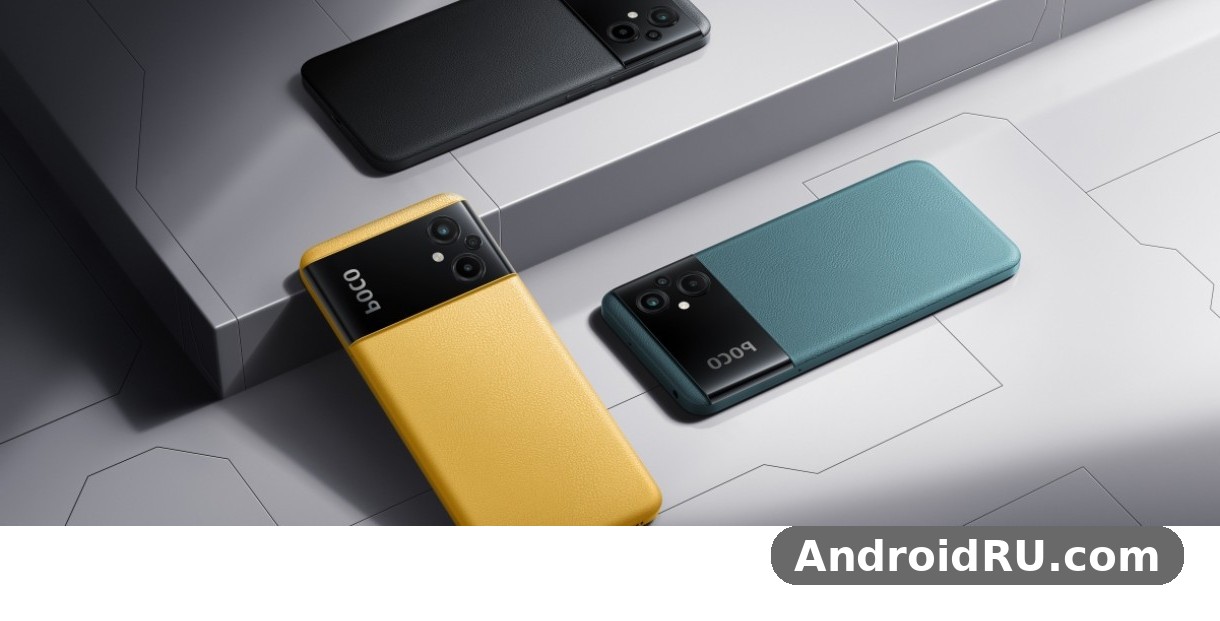
The POCO M5 does not try to look plain. Its back panel carries a leather like texture with a large POCO logo, and the camera module sits in a wide black strip across the top of the phone. The POCO M5 yellow colour design and leather like back finish is the version most people remember, because the bright yellow panel and the black camera strip make the phone easy to spot in a crowd. The POCO M5 colors are Black, Green and Yellow, so buyers who want something quiet can pick black, while the green and yellow versions suit buyers who like a phone with character.
Leather-Like Back and Colour Options
The textured back does more than look different. It gives fingers something to grip, and it picks up fewer fingerprints than a glossy glass back. The POCO M5 yellow model shows this best: the matte yellow surface keeps its colour in normal light and the black strip across the cameras gives the design a clear focal point. The green version is calmer, and the black version is the safe pick for work or school. All three share the same plastic frame and plastic back, which keeps the phone light for its size and keeps repair costs low.
Size, Weight and In-Hand Feel
The POCO M5 201 gram weight and 8.9mm thickness in hand feel balanced rather than heavy, even though this is a big phone with a 6.58-inch screen and a 5000mAh battery inside. The POCO M5 weight of 201 grams sits in the middle of the budget class, and the 8.9 mm body is slim enough to slide into a jeans pocket. The flat sides and the slightly curved back edges help the phone sit comfortably in one hand, although reaching the top of the screen still takes a shuffle for most people. A clear case in the box adds grip and guards the textured back against scuffs.
Side Fingerprint Sensor and Buttons
The POCO M5 fingerprint sensor is built into the power button on the right edge, and the POCO M5 fingerprint sensor side mounted unlock speed is quick and reliable in daily use. Your thumb lands on it naturally when you pick the phone up, and the sensor wakes and opens the phone in one motion. The volume keys sit just above the power button, and both are easy to find by touch. Face unlock is also available as a second option, though the fingerprint sensor stays the faster and more dependable choice.
Ports, SIM Tray and microSD Slot
The POCO M5 microSD card slot for expandable storage options is a dedicated slot, so you do not have to give up a SIM to add a memory card. The tray holds two Nano-SIM cards plus a microSD card at the same time, which suits buyers who keep a work SIM and a personal SIM in one phone. The POCO M5 dual SIM 4G network bands and connectivity options cover the common LTE bands used in most markets, with dual-band Wi-Fi, Bluetooth 5.3, an IR blaster, FM radio and a USB-C port along the bottom edge. A 3.5 mm headphone jack sits on the top edge, so wired earphones still work without an adapter.
Display: A 6.58-Inch 90Hz IPS LCD
The POCO M5 display is a 6.58-inch IPS LCD with a Full HD+ resolution of 1080 by 2408 pixels, which works out to about 401 pixels per inch. The POCO M5 display review 90Hz refresh rate experience is one of the phone’s strongest points: scrolling through feeds, switching apps and swiping between home screens all feel smoother than on a standard 60Hz panel. The screen is protected by Corning Gorilla Glass 5, and the POCO M5 Gorilla Glass 5 screen protection and durability give the front a useful shield against keys and coins in a pocket. A small waterdrop notch at the top holds the 5MP front camera.
Sharpness, Colours and Brightness Outdoors
Text looks crisp at Full HD+ resolution, and colours are vivid without looking overdone. The IPS panel keeps viewing angles wide, so photos and videos still look right when the phone is tilted on a table. The POCO M5 screen brightness outdoors under direct sunlight is adequate rather than outstanding: the panel stays readable in bright daylight, but you will want to raise brightness to the top in strong sun. Indoors the screen is comfortable at half brightness, and the reading mode warms the colours for long sessions at night.
The 90Hz Refresh Rate in Daily Use
The POCO M5 90Hz panel switches between 60Hz and 90Hz depending on what is on screen, which keeps motion smooth while saving some battery. The difference is easy to feel when you scroll a long article or flick through a photo gallery, and it is one of the reasons the phone feels faster than its price suggests. Games that support high refresh rates can use the 90Hz mode too, though most casual games run at 60Hz. The 90Hz setting is on by default, and buyers who want the longest battery life can drop the phone back to 60Hz in settings.
Sound and the Headphone Jack
POCO M5 sound comes from a single loudspeaker on the bottom edge, and the POCO M5 speaker quality and headphone jack audio test shows it is loud enough for videos and calls in a quiet room, though it lacks the depth of stereo speakers. The 3.5 mm headphone jack is the better option for music and films, and it works with any standard wired earphones without an adapter. The phone also supports 24-bit and 192kHz audio, so wired listening stays clean and detailed.
Performance: Helio G99 Power for Everyday Speed
POCO M5 performance in daily use is where the Helio G99 earns its place. The POCO M5 Helio G99 chipset is built on a 6 nm process, with two fast Cortex-A76 cores at 2.2 GHz and six efficient Cortex-A55 cores at 2.0 GHz, plus a Mali-G57 MC2 graphics unit. Apps open quickly, switching between a browser, a chat app and a video app stays smooth, and the phone rarely stumbles during normal multitasking. The POCO M5 Antutu results reported by reviewers sit in the upper 300,000s, which is a strong score for a budget phone from 2022 and still enough for everyday tasks in 2026.
Gaming on the Helio G99
POCO M5 gaming is comfortable for the games most people actually play. The POCO M5 Helio G99 gaming performance test results show smooth play in popular titles at medium graphics settings, with stable frame rates and only mild warmth after long sessions. The POCO M5 gaming test PUBG Mobile graphics settings performance is a good example: the game runs well at balanced settings with smooth frame rates, and the large screen and 90Hz panel make spotting movement easier. The POCO M5 heating issue while playing games for hours is rarely a complaint, and POCO M5 overheating is rarely reported by owners in normal use, because the 6 nm chip runs cool and the phone spreads heat across its plastic body. Demanding 3D titles at top settings will still push the phone, so setting graphics to medium or high rather than the maximum gives the best balance of looks and smoothness.
RAM, Storage and RAM Expansion
The POCO M5 RAM options are 4GB and 6GB, paired with 64GB or 128GB of built-in space. The POCO M5 6GB RAM model with the POCO M5 128GB version is the one to pick if you keep many apps open or play games often, because the extra memory keeps more apps alive in the background. The POCO M5 4GB RAM variant performance for casual users is still fine for calls, chats, browsing and video, though heavy multitaskers will notice apps reloading more often. POCO M5 storage can grow through the dedicated microSD slot, and the POCO M5 RAM expansion and multitasking performance test shows that the virtual RAM feature in MIUI adds extra memory on top of the physical RAM to help with switching between apps. If you are comparing the POCO M5 with its newer relatives, the POCO M6 Pro 5G Review: App Performance and Camera Quality shows how the later M series moved to 5G chips, while the M5 stays a 4G phone with a lower price.
Cameras: A 50MP Main Camera Leads the Way
The POCO M5 camera setup is built around one strong sensor and two helpers. The POCO M5 50MP main camera uses a 50MP sensor with an f/1.8 lens and phase detection autofocus, and it is joined by a 2MP macro camera and a 2MP depth camera. The POCO M5 camera quality in daylight and low light is the real test of this setup, and the main camera carries the phone: daylight shots are detailed and bright, while the two 2MP cameras add close-up and portrait options rather than leading the experience. The POCO M5 50MP camera samples and photo quality review verdict from most testers is that the main camera is good for its class, with natural colours and plenty of detail when light is good.
Daylight Photos and the 50MP Sensor
In daylight the 50MP sensor captures sharp photos with balanced exposure and pleasant colours. Landscapes keep detail in both sky and ground, and food and product shots look clean enough to share without editing. The camera app offers a full 50MP mode for shots where you want the most detail, though the standard photo mode already gives crisp 12.5MP images that are easier to share. Portrait mode uses the depth camera to blur the background, and edge detection is decent in good light. The macro camera needs bright light and a steady hand, and it is best for occasional close-ups rather than daily use.
Night Mode and Low-Light Shots
POCO M5 night mode photos with 50MP main camera support show what the phone can do after dark: night mode takes a longer exposure and combines frames to lift shadows and calm noise. Street scenes and lit shop fronts come out usable, with readable signs and warm tones, though fine detail softens and bright lights can bloom. The main camera handles dusk and indoor evening light better than the helpers, so night shots are best taken with the main sensor. A steady hand or a small tripod helps night mode a lot, because the longer exposure punishes movement.
Front Camera and Video Recording
The POCO M5 front camera selfies with 5MP sensor quality are modest but serviceable for video calls and social posts. The POCO M5 camera on the front is a 5MP sensor with an f/2.0 lens, and it takes bright, clear selfies in daylight, with a portrait mode that softens the background. In dim rooms selfies get softer and noisier, so good lighting matters. Video recording tops out at 1080p at 30 frames per second on both the rear and front cameras, which is enough for clips and calls, though there is no 4K option and no optical stabilisation on the main camera.
Battery Life and 18W Charging
The POCO M5 battery is a 5000mAh unit, and it is one of the main reasons the phone suits buyers who hate charging mid-day. The POCO M5 battery life test with 5000mAh battery shows that the phone comfortably lasts a full day of mixed use, and light users can stretch it into a second day. The POCO M5 5000mAh capacity pairs well with the efficient 6 nm Helio G99 and the IPS panel, so video streaming, browsing and calls drain the battery slowly. Heavy gaming shortens that time, but even a long gaming session leaves enough charge for the evening.
How Long the 5000mAh Battery Lasts
So, how long does POCO M5 battery last on one charge? With typical mixed use, calls, chats, browsing, some video and a little gaming, the answer is a full day with charge to spare, and many owners report two days with lighter use. Screen-on time in everyday use commonly reaches eight to nine hours, depending on brightness and whether the 90Hz mode is on. Dropping to 60Hz and keeping brightness moderate adds useful hours. The battery is a Li-Po unit that holds its capacity well over time, and the phone’s power saving modes in MIUI can stretch the last few percent when you are away from a charger.
Charging Time with the 18W Charger
POCO M5 charging runs at 18W over USB-C, and the POCO M5 5000mAh battery charging time with 18W charger is roughly two hours from empty to full. The POCO M5 18W charging speed is not fast by 2026 standards, but it is honest for the price: a short top-up during breakfast adds a useful chunk, and an overnight charge covers the next day. The phone ships with a charger in the box in most markets, and a POCO M5 unboxing typically includes the phone, a charger, a USB-C cable and a clear case, though the exact contents vary by market. Charging from empty takes patience, so plugging in overnight is the easiest habit for most owners.
Software: MIUI 13, Android 14 and HyperOS
The POCO M5 MIUI experience began with MIUI 13 on top of Android 12, and the phone later moved to newer software. The POCO M5 Android 14 update with HyperOS features arrived for the M5 as part of Xiaomi’s update programme, bringing the HyperOS interface, refreshed system apps and newer security patches. The POCO M5 HyperOS update keeps the phone feeling current in 2026, with the familiar MIUI control centre, floating windows, second space and the theme options that POCO buyers expect. POCO M5 software update from Android 12 to Android 14 is a big jump, so buyers who pick up a used M5 should check for updates in settings and install them over Wi-Fi.
MIUI 13 on Android 12 at Launch
At launch the phone ran MIUI 13, which added its own gallery, file manager, security app and theme tools on top of Android 12. The interface is colourful and full of options, from always-on display settings to app lock and dual apps, and the POCO launcher keeps the app drawer tidy. Some pre-installed apps can be removed, and the rest can be hidden, so the home screen stays as clean as the owner wants it. The software felt smooth on the Helio G99, with animations that match the 90Hz screen.
The Android 14 and HyperOS Update
The move to HyperOS changes the look of the control centre and lock screen, and it trims some of the clutter from the older MIUI builds. The POCO M5 Android 14 update brings newer privacy controls, better permission handling and the current security patch level for the phone. HyperOS also keeps the RAM expansion feature, so the virtual memory option still helps the 4GB model. POCO M5 hidden features tips and tricks for new users include the second space for a separate profile, dual apps for two accounts in one app, and the floating window mode for watching video while chatting. Owners should keep automatic updates on so the phone keeps getting security fixes after the big version jump.
Full Specifications
The POCO M5 full specifications and features explained below cover every part of the phone, from the network bands to the battery. Use this table to compare the M5 against other budget phones before you buy.
| Feature | POCO M5 |
|---|---|
| Announced | 5 September 2022 |
| Released | 13 September 2022 |
| Body | 163.9 x 76.1 x 8.9 mm, 201 g, glass front with Gorilla Glass 5, plastic frame, plastic back |
| Colours | Black, Green, Yellow |
| SIM | Dual SIM (Nano-SIM, dual stand-by) + dedicated microSD slot |
| Display | 6.58-inch IPS LCD, 1080 x 2408 pixels, about 401 ppi, 90Hz refresh rate, Corning Gorilla Glass 5 |
| Platform | Android 12 with MIUI 13, upgradable to Android 14 with HyperOS |
| Chipset | MediaTek Helio G99 (6 nm) |
| CPU | Octa-core: 2 x 2.2 GHz Cortex-A76 + 6 x 2.0 GHz Cortex-A55 |
| GPU | Mali-G57 MC2 |
| Memory | 64GB with 4GB RAM, 128GB with 4GB or 6GB RAM; microSDXC dedicated slot |
| Rear camera | 50MP wide f/1.8 with PDAF + 2MP macro f/2.4 + 2MP depth f/2.4, LED flash, HDR, panorama |
| Rear video | 1080p at 30 frames per second |
| Front camera | 5MP wide f/2.0, HDR, 1080p video at 30 frames per second |
| Sound | Loudspeaker, 3.5 mm headphone jack, 24-bit/192kHz audio |
| Connectivity | Wi-Fi 802.11 a/b/g/n/ac dual-band, Bluetooth 5.3, GPS, NFC (market dependent), FM radio, infrared port, USB Type-C 2.0 |
| Network | GSM / HSPA / LTE (4G, no 5G) |
| Sensors | Side-mounted fingerprint sensor, accelerometer, proximity sensor, compass |
| Battery | 5000mAh Li-Po, 18W wired charging |
The table above is the short version of the full spec sheet. For the fine print, the POCO M5 specs include LTE bands 1, 2, 3, 4, 5, 7, 8, 20, 28, 38, 40 and 41 in most markets, with Wi-Fi calling and VoLTE support depending on the carrier. The dedicated microSD slot takes cards up to 1TB in practice, and the phone supports OTG through its USB-C port.
Pros and Cons
The POCO M5 pros and cons after long term daily use come down to a simple trade: a fast chip, a smooth screen and a big battery on the plus side, against a modest front camera, slow-ish charging and no 5G on the minus side. Weighing both sides helps you decide whether the M5 still fits in 2026 or whether a newer model is a better buy.
Pros
- Helio G99 chip gives strong everyday speed and smooth gaming for the price.
- 6.58-inch 90Hz Full HD+ display with Gorilla Glass 5 protection.
- 5000mAh battery that lasts a full day and often into a second day.
- 50MP main camera takes detailed daylight photos.
- Dedicated microSD slot plus dual SIM, headphone jack and IR blaster.
- Side fingerprint sensor that is fast and easy to reach.
- Android 14 and HyperOS update keeps the software current.
Cons
- No 5G support, so the phone is limited to 4G networks.
- 18W charging is slow, with a full charge taking around two hours.
- 5MP front camera is modest for selfies in low light.
- The 2MP macro and depth cameras add little beyond the main sensor.
- No 4K video recording and no optical stabilisation.
- Single loudspeaker rather than stereo speakers.
- Plastic body feels less premium than glass-backed rivals.
Frequently Asked Questions (FAQ)
Is the POCO M5 good for everyday use in 2026?
Yes, for everyday use the M5 still holds up. The Helio G99 handles calls, chats, browsing, video and casual games without fuss, the 90Hz screen keeps things feeling smooth, and the 5000mAh battery lasts a full day. It is best for buyers who want a cheap, dependable phone and do not need 5G or the fastest charging.
Does the POCO M5 support 5G?
No. The POCO M5 is a 4G phone. The Helio G99 chipset has no 5G modem, so the phone connects over GSM, HSPA and LTE only. If 5G matters to you, look at a newer M series phone instead, such as the one in the POCO M6 Plus 5G Review: Build Quality, Battery and Daily Use, which adds 5G to a similar budget formula.
How long does the POCO M5 battery last?
With mixed daily use the 5000mAh battery lasts a full day with charge to spare, and light users often reach a second day. Expect around eight to nine hours of screen-on time with typical browsing, video and messaging, less with heavy gaming. Charging back to full with the 18W charger takes roughly two hours.
Will the POCO M5 get Android 14 and HyperOS?
Yes. The POCO M5 launched on Android 12 with MIUI 13 and is upgradable to Android 14 with HyperOS, which brings the newer interface and security updates. Check Settings, then About phone, then System update to see the latest version for your region.
Should I buy the POCO M5 or the POCO M5s?
It depends on what you value. The POCO M5 vs M5s choice is a screen and camera trade: the M5 has a 90Hz IPS LCD and a 50MP main camera with the newer Helio G99, while the M5s has an AMOLED screen, the older Helio G95 and a 64MP main camera. The full comparison is in the POCO M5s Review: Build Quality, Battery and Daily Use, and the POCO M6 Review: Daily Use, Software and Battery Life shows what the next generation changed. If you want the smoother screen and the newer chip, pick the M5; if you want an AMOLED panel, the M5s is the one to compare.
Verdict: Who Should Buy the POCO M5
The POCO M5 is a budget phone that gets the basics right and adds a few extras that matter: a fast 6 nm chip, a smooth 90Hz screen, a big battery and a capable 50MP camera. It is not a flagship, and it does not pretend to be one, but for the price it launched at it delivers everyday speed that still feels right in 2026. So, should I buy POCO M5 in 2026 or choose newer model hardware instead? The answer depends on your budget and your network: if the price is low and you are happy on 4G, the M5 remains a sensible buy, while buyers who want 5G or faster charging should look at the newer M series.
Who It Suits Best
The M5 suits students, first-time smartphone buyers and anyone who wants a second phone with a big battery and a large screen. It handles study apps, video calls, streaming and casual games well, and the headphone jack, microSD slot and IR blaster cover the practical extras that many newer phones have dropped. The POCO M4 Pro 5G Review: Everyday Speed, Cameras and Value is worth a look if you want the older 5G option from the same family, but the M5 beats it on chip efficiency and battery life.
Who Should Look Elsewhere
Buyers who need 5G, fast charging or a strong selfie camera should look elsewhere. The 18W charging and the 5MP front camera are the clearest limits, and the lack of 5G will matter more as networks change. If any of those are deal-breakers, a newer model such as the POCO M6 family is the better step, with 5G and faster charging on the list of upgrades.
The final word is simple: the POCO M5 is a value phone that still earns its place. Its Helio G99 speed, 90Hz display, 50MP camera and 5000mAh battery cover the four things most buyers check first, and the Android 14 and HyperOS update keeps it usable well past its 2022 launch. For everyday speed, cameras and value on a tight budget, the POCO M5 remains an easy phone to recommend.

