

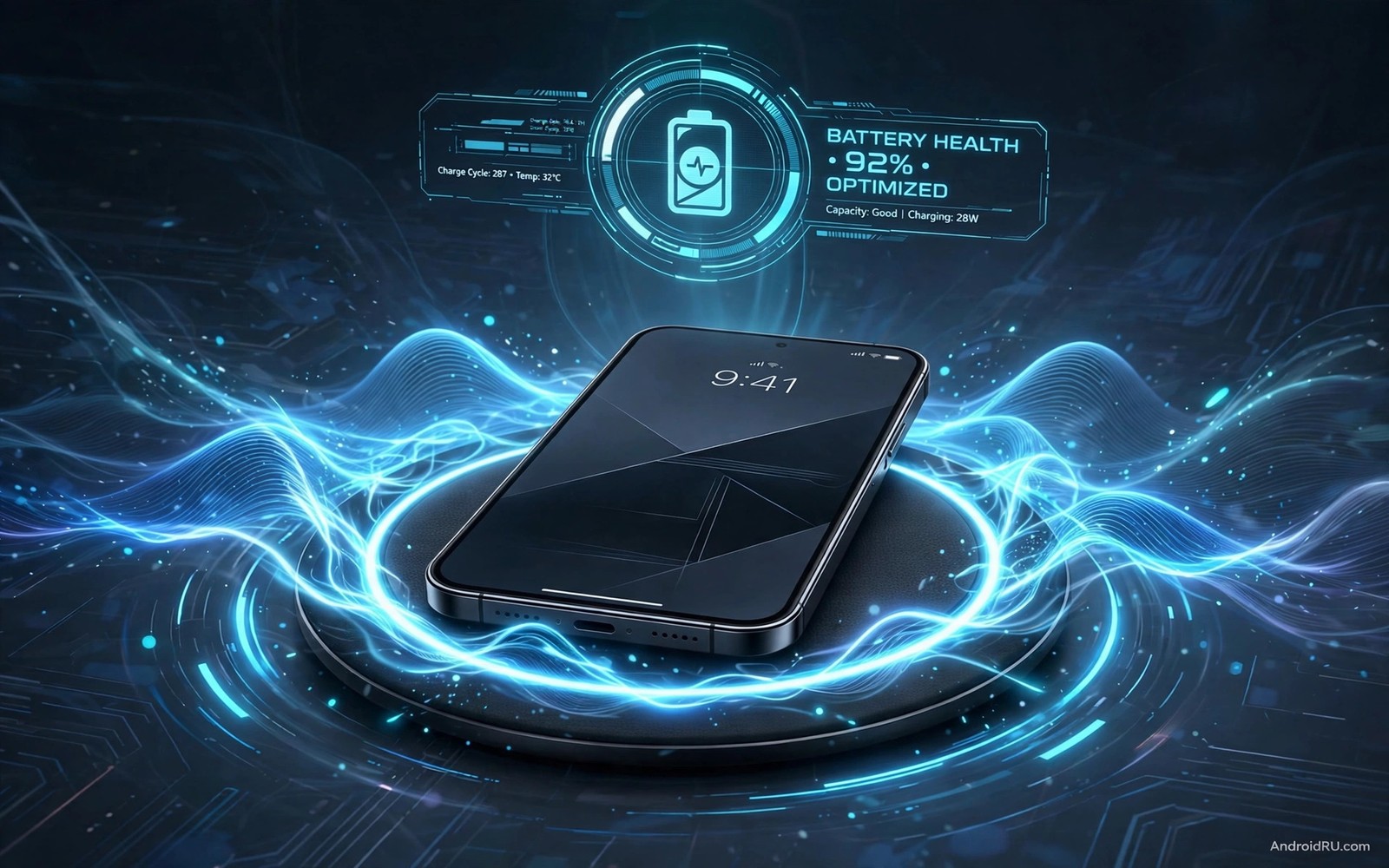
Wireless charging feels like magic. You drop the phone on a pad. It charges without a cable. It also feels suspicious. The pad gets warm. The phone gets warm. Heat is bad for batteries. So wireless charging must be bad. That logic is partly right and partly incomplete. Science shows heat is the real factor. The coil itself is not the villain. Poor alignment and cheap pads create heat. Good pads and good habits keep heat low. Wired charging can also overheat with a bad charger. The comparison is subtler than most headlines suggest. This guide separates evidence from fear. It shows when wireless charging is safe. It shows when to choose a cable instead.
How wireless charging actually works
Wireless charging uses magnetic induction. A coil in the pad creates a magnetic field. A coil in the phone converts that field back into current. Energy transfers across a small gap. That gap causes loss. Lost energy becomes heat. The loss is larger than a direct cable connection. Efficiency for good wireless systems sits near 70 to 80 percent. Wired charging efficiency sits higher near 90 percent. The missing energy warms the pad and the phone. Alignment affects efficiency a lot. A centered phone transfers well. An off-center phone transfers poorly. Poor transfer means more heat for the same charge. A phone in a thick case sits further from the coil. That distance also lowers efficiency. Heat rises again.
Modern wireless systems manage this with communication. The phone tells the pad its needs. The pad adjusts power. The phone monitors temperature. It slows charging if heat rises. It may pause charging on a very hot day. Those safeguards work well on quality gear. Cheap pads may lack good thermal control. They may push full power regardless of heat. They may use poor coils with uneven fields. That difference matters more than wireless versus wired as a category. A good wireless pad beats a bad wired charger. A bad wireless pad loses to a good wired charger. Judge the specific gear. Do not judge the whole method by the worst pad.
What studies show about heat and wear
Battery research is clear on one point. Heat accelerates chemical aging. A cell kept at high temperature loses capacity faster. The effect grows with temperature and time. A cell at 40 degrees ages faster than a cell at 25 degrees. Wireless charging raises temperature by a few degrees on average. That rise matters if it happens daily for years. It matters less if charging happens in a cool room with a good pad. Studies comparing wireless and wired charging find a small extra wear for wireless in warm conditions. They find little difference in cool conditions with aligned placement. The key variable is temperature. It is not the magnetic field. Magnetic fields at these levels do not damage lithium-ion chemistry directly. Heat does the damage.
Charge speed adds another layer. Fast wireless charging at 15 watts generates more heat than slow wireless charging at 5 watts. Fast wired charging also generates heat. The fastest option in either method stresses the cell most. Slow overnight wireless charging is gentle. It spreads charge over hours. It keeps temperature low. Fast wireless charging before a meeting is convenient. It adds heat for speed. Use fast wireless sparingly. Use slow wireless as a daily default. That pattern mirrors wired advice. Speed is a tool. It is not a default. The science supports slow and cool over fast and hot in both methods.
Alignment and case choices that cut heat
Center the phone on the pad every time. Many pads show a light or a sound when aligned. Some phones show a charging animation only when aligned well. If the phone charges slowly or stops then reposition it. A half aligned phone wastes energy as heat. It may also charge in bursts. Bursts add thermal cycling. Thermal cycling stresses the cell. A pad with a guide or a magnetic alignment helps a lot. Magnetic pads snap the phone into place. That snap removes guesswork. It keeps efficiency high. It keeps heat low. If your pad lacks alignment help then mark the sweet spot with a small sticker on the pad edge. That simple mark saves daily fiddling.
Case thickness matters more than case brand. A thin case under 3 millimeters usually works fine. A thick rugged case with metal parts can block the field. Metal in the case absorbs energy as heat. It may also trigger safety cutoffs. Remove a thick case for wireless charging if the phone feels warm. Remove any metal plate used for a car mount. Those plates sit between coils. They heat up directly. They also reduce efficiency sharply. A dedicated wireless friendly case is worth the small cost if you charge wirelessly daily. It keeps distance minimal. It keeps heat minimal. It also protects the phone. That combination is ideal for a daily wireless habit.
Wireless charging overnight done right
Overnight wireless charging can be gentle if done well. Place the phone centered on a quality pad. Keep the room cool. Remove a thick case. Use a slow pad rather than a fast pad. Let adaptive charging finish the last stretch near morning if your phone offers it. That pattern keeps temperature low for most of the night. It avoids long hours at 100 percent and high heat. Check the phone in the morning. It should feel cool or slightly warm. It should not feel hot. A hot morning phone signals a problem. Check alignment. Check case thickness. Check pad quality. A hot phone every morning needs a change. Switch to wired slow charging until you fix the cause.
Do not stack wireless charging with other heat sources. Do not place the pad in sunlight. Do not place it on a warm laptop. Do not place it under a pillow. Those choices trap heat. A pad on a hard cool nightstand works best. Airflow around the pad helps. A pad in a closed drawer does not breathe. Heat builds in enclosed spaces. The same rule applies to wired charging. Wireless simply starts warmer. Give it more airflow to compensate. Small placement choices compound over years. A cool nightstand is free. A hot drawer costs capacity.
Compare wireless habits with other charging choices before deciding. Wired slow charging remains the coolest option overall. Wireless slow charging is close behind when aligned well. Fast wireless charging sits further behind on heat. You can see the broader pattern in correct charging routines that avoid voltage stress and in risks of cheap chargers for battery health. Wireless is one variable among many. Charger quality and heat control matter more than the connection type alone.
When wired charging is the better choice
Choose wired charging on very hot days. Choose it when you need speed without excess heat. Choose it when the phone already feels warm from gaming or navigation. A cable delivers power more efficiently. It generates less waste heat. It also lets you use the phone while charging without alignment issues. Wireless charging while using the phone is awkward. Lifting the phone stops charging. That start stop pattern adds heat cycles. Wired charging handles use during charge better. It still adds heat. It adds less than wireless in that scenario. Use the right tool for the moment. Wireless for desk and nightstand convenience. Wired for speed and heat sensitive moments.
Choose wired charging if your wireless pad consistently heats the phone. A pad that always leaves the phone hot is a bad pad. Replace it or abandon wireless for that phone. No convenience is worth daily heat stress. Also choose wired if the battery already shows wear. A worn cell handles heat worse. It has higher resistance. It heats more under the same load. Protect a worn cell with the coolest charging method. That method is slow wired charging in a cool room. It extends usable life until replacement makes sense. Honest assessment beats brand loyalty to a charging method.
A wireless heat test you can run
Test your own pad in one week. Charge wirelessly for three nights. Note morning temperature by touch. Note charge time. Then charge wired slowly for three nights. Compare morning temperature and charge time. A good wireless pad should feel only slightly warmer than wired. Charge time should be longer but not double. A large temperature gap signals poor alignment or a poor pad. A huge time gap signals a weak pad or a thick case. Record the results. That personal test beats generic claims. Your pad and your case and your room define your result. Generic studies define averages. Your test defines your phone.
Wireless heat test
Night 1 wireless: morning feel warm, time 3.2 hours
Night 2 wireless: morning feel warm, time 3.1 hours
Night 3 wireless: morning feel cool, time 3.4 hours
Night 4 wired slow: morning feel cool, time 2.8 hours
Reading: wireless adds slight warmth, acceptable here
The test log above follows a simple comparison pattern used by many Android power users to judge a charging pad without any paid tool. It uses touch as a rough thermometer. It uses charge time as an efficiency hint. It changes only the charging method. It keeps case and room constant. A consistent hot result points at the pad. A variable result points at alignment. Fix alignment first. Replace the pad second. The test takes a week. It prevents years of unnecessary wear from a bad pad.
Common mistakes
Many owners use a cheap pad with no thermal control. That pad cooks the phone nightly. Many owners charge through a thick metal case. That case absorbs energy as heat. Many owners place the pad in sunlight or on a warm surface. That placement adds heat from outside. Many owners use fast wireless charging every day. Daily fast charging adds heat for no time benefit overnight. Many owners ignore a hot morning phone. Heat is a signal. It deserves a response. Many owners believe magnetic fields damage batteries directly. Science points at heat. Focus on heat and the rest follows.
Another mistake is assuming all wireless charging is equal. Pad quality varies hugely. Coil design varies hugely. Alignment varies hugely. A premium magnetic pad and a bargain flat pad are different products. Judge your specific pad by temperature. Do not judge wireless charging by a single bad experience. Also avoid reverse wireless charging as a daily habit because it adds heat to the host phone for a small transfer. Reverse charging is an emergency tool. It is not a daily routine. Keep it for emergencies and your battery will thank you.
FAQ
Is wireless charging worse than wired charging? It generates slightly more heat on average. Good alignment and slow pads keep the gap small. Bad pads widen the gap a lot. Quality and heat control matter more than the method name.
Can I leave my phone on a wireless pad all night? Yes with a quality pad and a cool room. Use slow charging and adaptive charging if available. Check morning temperature. A hot phone needs a placement or pad change.
Does a case ruin wireless charging? A thin case is fine. A thick case or a metal plate reduces efficiency and adds heat. Remove thick cases for wireless charging if the phone feels warm.
Conclusion
Science does not condemn wireless charging outright. It condemns heat. Wireless charging adds a little heat by nature. Good pads and good alignment keep that heat small. Slow overnight wireless charging in a cool room is a safe daily habit. Fast wireless charging on a cheap pad in a warm room is not. Test your pad for one week. Note morning temperature. Center the phone. Use a thin case. Switch to wired slow charging on hot days or when the phone already feels warm. That balanced routine gives you convenience without paying for it in battery life.

