

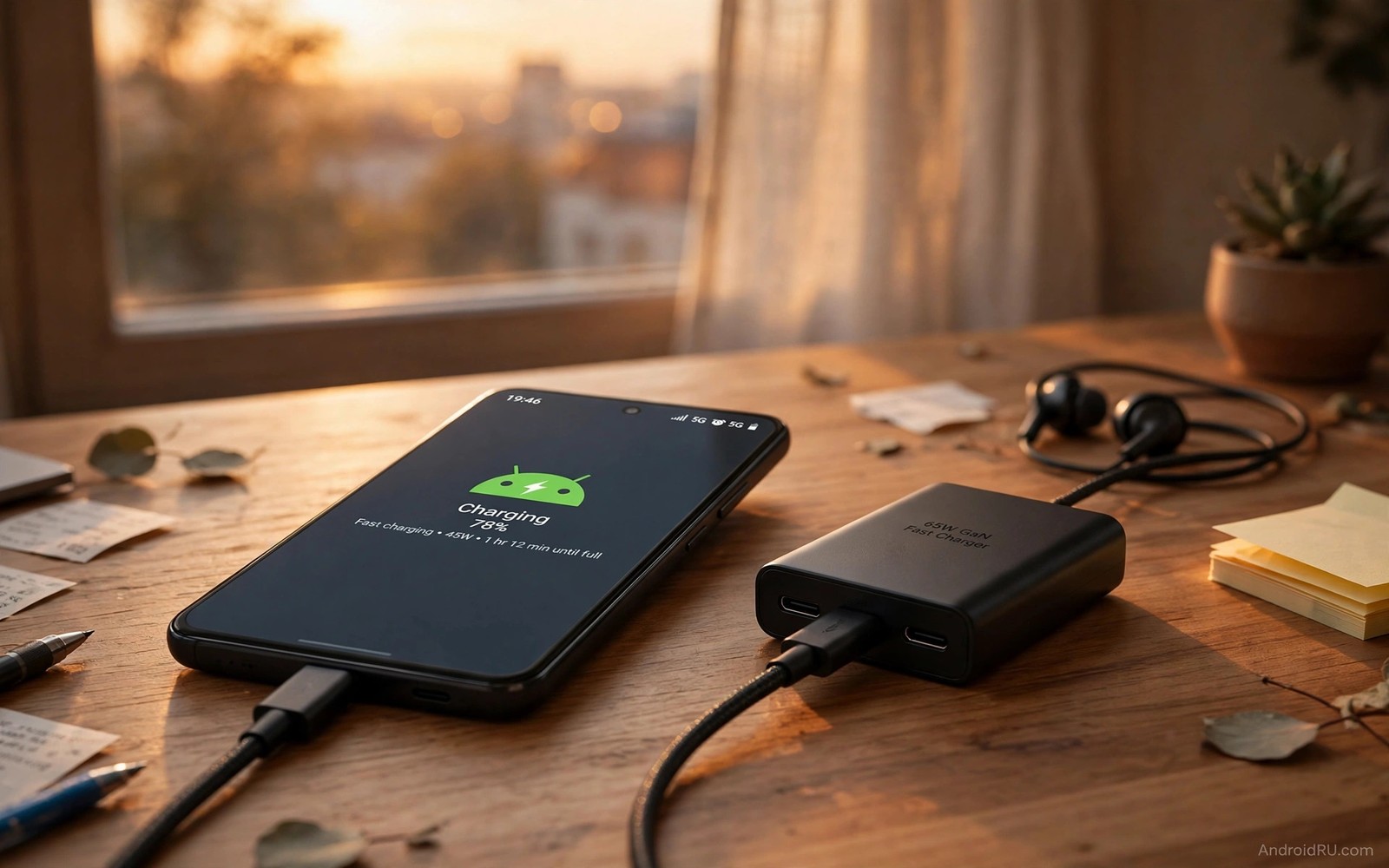
Fast charging feels like magic and a threat at once. A dead phone reaches half charge during a coffee break. The brick grows warm. The phone grows warm. A voice in your head asks whether speed is silently killing the battery. The honest answer is more nuanced than the scary headlines suggest.
Batteries age through heat and stress and time. Fast charging adds heat. Modern phones manage that heat with staged charging curves. They charge fast when the battery is empty and slow down as it fills. The management matters more than the headline wattage number.
This guide separates physics from fear. You will learn how lithium cells actually wear. You will learn what the charge curve does to protect them. You will learn the habits that matter far more than charger wattage. You will finish knowing when to enjoy fast charging and when to slow down.
How a lithium battery actually ages
A lithium cell stores energy by moving ions between electrodes. Each cycle wears the structure slightly. Heat accelerates the wear. High voltage at full charge stresses the cell further. Deep discharge to zero stresses it from the other end. Age is a sum of cycles and heat and voltage exposure over years.
A battery rated for 800 cycles keeps about eighty percent capacity after that many full cycles. Partial cycles count proportionally. Charging from forty to eighty percent twice equals roughly one partial cycle load. Daily topping up does not punish the battery the way full zero to hundred cycles do.
What the charge curve does for you
A fast charger rarely delivers full wattage for the whole session. It floods power into an empty battery where the cell accepts it safely. It tapers power past fifty percent. It trickles near full charge to protect the top end. The phone and charger negotiate this curve constantly through temperature sensors.
Heat triggers an automatic slowdown. A phone in a hot car charges slower by design. A phone running a game while charging also slows down. These slowdowns feel annoying but they protect the cell. Never bypass them with a freezer trick or a modified charger. The protection exists because heat is the real enemy.
Wattage numbers mislead buyers
A 120 watt charger does not pour 120 watts into the cell for an hour. The headline number describes peak input under ideal conditions for a short window. The battery receives far less on average across the session. Two phones with the same headline wattage can age differently based on cooling and curve design.
Dual cell designs split the load across two smaller cells. Each cell charges at a moderate rate while the phone advertises a huge total. Cooling vapour chambers spread heat away from the cells. These engineering choices matter more than the number on the box. Judge a phone by long term battery reports rather than wattage alone.
Habits that matter more than wattage
Charging overnight at full voltage for eight hours stresses the top end nightly. An eighty percent charge limit removes most of that stress. Heat during charging matters more than speed itself. Remove thick cases while fast charging. Keep the phone out of direct sun on a car dashboard.
Gaming while fast charging stacks two heat sources. The processor heats the phone while the charger heats the cell. Pause heavy games during the fastest phase of charging. Let the phone reach fifty percent first. Then game while the charger tapers to a gentler rate.
When fast charging deserves caution
Cheap uncertified chargers deserve real suspicion. A charger without proper negotiation can feed wrong voltage to the phone. Stick to the brand charger or a certified third party charger with the right protocol. A bargain brick that overheats is a fire risk before it is a battery risk.
A swollen battery changes every rule. Stop fast charging a swollen phone at once. Stop charging it at all and seek repair. Fast charging a damaged cell accelerates failure. Safety outranks speed completely in that situation.
Read charger labels correctly
Charger labels hide the protocol in small print. Look for the protocol name rather than the wattage number. A label listing several protocols covers more phones. A label listing only wattage hides compatibility gaps. Protocol names decide real charging speed.
Check output voltage and current pairs on the label. Fast charging uses higher voltage pairs for efficiency. A charger with only five volt output cannot fast charge modern phones. Multiple voltage pairs signal a flexible modern design. Single voltage pairs signal an older basic brick.
Beware counterfeit labels on bargain chargers. A printed protocol name proves nothing without certification marks. Buy chargers from reputable sellers with verifiable certification. A counterfeit charger risks the phone and the home. Certification costs less than a fire.
Keep the original charger as a reference standard. Test new chargers against the original with timed top-ups. A new charger matching original speed passes the test. A slower new charger fails regardless of its label claims. Timed tests beat printed promises.
Design a cool charging corner
A charging corner needs airflow above all else. Choose a hard surface away from bedding and curtains. Keep the corner out of direct sunlight through the day. Sunlight heats the phone even before charging starts. A shaded ventilated corner protects every charge.
Use a small stand to lift the phone off the surface. Airflow beneath the phone carries heat away. A flat phone on a blanket traps heat underneath. A stand costs little and cools measurably. Stands also keep the screen visible for quick glances.
Keep the corner free of clutter that blocks airflow. Stacked papers and clothes insulate the phone. A clear corner stays cool through long sessions. Clean the corner weekly as part of desk tidying. A tidy corner is a cool corner.
Place a thermometer check into the routine monthly. Feel the phone back after thirty minutes of charging. Mild warmth passes the check. Uncomfortable heat fails it and demands a cable or charger review. Monthly checks catch gradual charger decline early.
Charge safely during summer heat
Summer heat transforms normal charging into a battery stress test. Ambient temperatures above thirty five degrees push charging temperatures into throttling zones quickly. A phone charging in a hot car can exceed safe temperatures within minutes. Moving charging indoors to an air conditioned room restores normal charging speeds. Location choice matters more than charger choice during heat waves.
Remove the phone case entirely during summer charging sessions. Cases trap heat against the back panel and prevent airflow cooling. A caseless phone on a hard surface dissipates heat far more effectively. The minor scratch risk of caseless charging pales against heat damage to the battery. Summer charging deserves caseless treatment as a seasonal rule.
Schedule heavy charging for cooler morning and evening hours during summer. Midday charging in hot rooms stacks ambient heat onto charging heat. Morning charging before temperatures peak keeps the cell cooler throughout the session. Evening charging after sunset offers similar benefits. Timing shifts cost nothing and protect the battery measurably.
Watch for heat warnings specifically during summer fast charging. A heat warning signals that the phone already throttled charging to protect itself. Continuing to charge through repeated warnings stresses the cell unnecessarily. Pausing charging until the phone cools respects the protection system design. Patience during heat warnings extends battery life across many summers.
Store spare chargers and cables away from direct sunlight in summer. Sun heated cables and bricks start charging sessions already warm. A warm brick adds heat to the phone from the first minute. Cool accessories keep the whole charging chain cooler. Accessory storage is an overlooked part of summer battery care.
adb shell dumpsys battery | grep -i temp
adb shell dumpsys battery | grep -i health
adb shell settings get global adaptive_charging
The commands above are a generic illustration for reading battery temperature and health state from a computer. They show the kind of values a technician reviews when charging behaviour looks odd. Everyday users should use the on-screen battery settings instead.
Faster charging setups show how charger choice and cooling shape charge speed safely. Overnight charging routines reveal why hours at full voltage age a cell faster. Battery health recovery starts with meter calibration before any replacement decision.
Common mistakes
The biggest mistake is blaming wattage while ignoring heat. A cool 65 watt charge ages a battery less than a hot 18 watt charge in the sun. Manage temperature first. Worry about wattage second. Shade and airflow beat charger shopping.
Another mistake is charging to full every night out of habit. The top ten percent of charge stresses the cell most. An eighty percent limit or a morning top-up routine reduces that stress sharply. Full charges still have a place before long travel days.
A third mistake is trusting every fast charging headline. Peak wattage is a marketing number. Real sessions taper hard after half charge. Compare full zero to hundred times and long term health reports instead of peak numbers.
FAQ
Should I stop using fast charging completely?
No and modern phones are designed around it with tapering curves and heat limits. Use fast charging when you need speed. Use slower charging overnight or at a desk when time allows. The mix gives you speed without daily top-end stress.
Does wireless fast charging damage batteries more?
Wireless charging generates extra heat through energy loss in the coil. A cooled wireless pad reduces the gap sharply. A hot pad in a warm room ages the battery faster than a wired charge at the same speed. Choose pads with fans or charge wirelessly at a slower rate.
How do I know if my battery is already degraded?
Check battery health in settings when your phone reports it. Watch for sudden percentage cliffs and shutdowns above twenty percent. Compare screen time against the first year of ownership. A large drop across all three signals points at a worn cell.
Conclusion
Check your battery health and temperature habits today. Enable an eighty percent charge limit if your phone offers one. Move fast charging sessions out of direct sun. Keep the fast charger for busy mornings.
Fast charging is a tool and not a villain. Use it with cool temperatures and sane charge limits. Your battery will age gracefully for years. Speed stays available when life demands it. Health stays protected when life allows patience.

