

Buying the alcatel Fierce XL? Read This Review and Specs Guide First
In late 2015, shoppers on a tight budget in the United States had a new big-screen option from alcatel. The alcatel Fierce XL arrived as a 5.5-inch Android phone with a low price, a quad-core chip, and the kind of screen size that usually cost far more at the time. This alcatel Fierce XL review looks at the Android version of the phone only, because alcatel sold the same name in two very different forms. One ran Android 5.1.1 Lollipop, and the other ran Windows 10 Mobile, and the two versions were separate products with separate buyers in mind. Everything that follows here is about the Android model, the one that reached MetroPCS on 2 November 2015 after its announcement on 29 October 2015, and then reached T-Mobile in the winter of 2015.
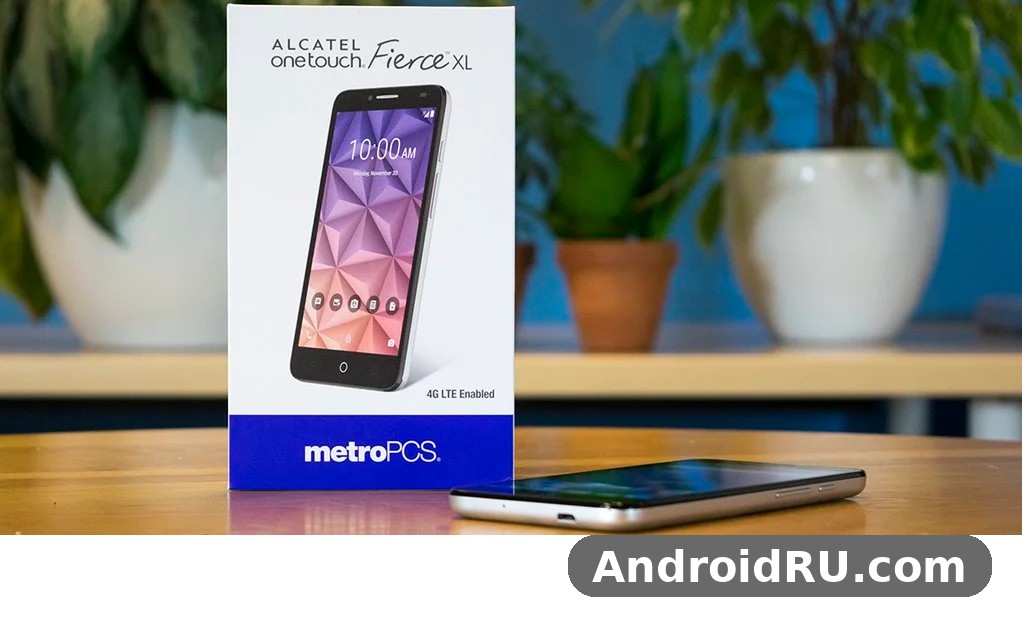
The question this guide answers is a simple one: is the alcatel Fierce XL worth buying in 2015, and what did a buyer actually get for the money? At a 139-dollar launch price, the phone promised a large HD display, LTE data, a 2GB RAM setup, and an 8-megapixel rear camera. Those numbers sound modest now, but in the budget market of 2015 they were the whole point. A big screen and a low price were the selling points, and the rest of the specification sheet was built to support them without pushing the cost up. This alcatel Fierce XL Android version review and specifications guide works through the design, the display, the performance, the cameras, the battery, and the price, so a buyer can judge the phone on its own terms, in its own era, rather than against phones that cost three or four times as much.
Readers who want the short version can skip to the verdict near the end, but the detail matters here. Budget phones in 2015 often looked good on a specification sheet and disappointed in daily use, usually because of slow storage, a dim screen, or a battery that faded before dinner. The Fierce XL avoided some of those traps and walked straight into others, and the balance between the two is what decided whether it was a smart buy. The alcatel Fierce XL full specifications and features explained in this article come from the published specification sheet for the Android variant, not from guesswork, and where a figure was never published, this guide says so.
Design and Display
The Fierce XL was a big phone by 2015 standards, and it did not try to hide it. A 5.5-inch screen put it in the same size class as far more expensive handsets of the year, and that size shaped everything about how the phone felt in the hand and in the pocket. The alcatel Fierce XL dimensions and weight were reasonable for a phone of this size, with a slim profile for a budget device and a weight that stayed comfortable during long calls and long video sessions. The body used plastic throughout, which kept the price down and kept the phone light, and the finish was plain and practical rather than flashy. There was no metal frame and no premium coating, but the phone did not pretend to be something it was not.
The front was dominated by the display, with modest bezels above and below the screen and the earpiece, front camera, and sensors arranged in the usual places. The back carried the 8-megapixel camera and its LED flash near the top, with the alcatel branding below. The power button and volume keys sat on the side where a thumb or finger could reach them without shifting grip too far, which mattered on a phone this wide. One-handed use was possible for simple tasks, but most owners would have used two hands for typing and for reaching the far corner of the screen. That was normal for 5.5-inch phones in 2015, and buyers coming from a 4.5-inch or 5-inch phone would have noticed the change within a day.
A Big Screen for a Budget Phone
The display was the clearest reason to pick this phone over cheaper rivals. The alcatel Fierce XL 5.5 inch display quality and size gave buyers a large canvas for video, web browsing, and games, and the 720 by 1280 resolution kept text sharp enough for everyday reading. At 267 pixels per inch, individual pixels were hard to spot at normal viewing distance, and the HD panel was a genuine step up from the low-resolution screens that still appeared on many budget phones of the year. The 5.5-inch IPS LCD panel brought wide viewing angles and steady colours when the phone was tilted or shared with someone sitting beside the owner.
The alcatel Fierce XL 720p HD screen resolution and viewing angles held up well for video and social feeds, and the IPS panel avoided the washed-out look that cheaper screens showed from the side. Brightness was adequate for indoor use and for shaded outdoor use, though direct sunlight would have made the screen harder to read, as it did on almost every phone in this price class. Colours were natural rather than vivid, which suited video and photos better than an oversaturated panel would have. The screen was protected by a layer of dragontrail glass, a detail that helped the phone survive the small knocks and scratches of daily life in a pocket or a bag. For a buyer whose main uses were video, browsing, and messaging, the display was the strongest single feature of the phone, and the alcatel Fierce XL display was the part of the package most likely to impress on first use.
Screen Size in Daily Use
A large screen changes how a phone is used, and the Fierce XL was no exception. Video filled the display nicely, web pages showed more text per screen, and the on-screen keyboard had room for larger keys, which made typing faster and less error-prone. Games also benefited, with more room for controls and a clearer view of the action. The trade-off was pocket space and one-handed reach, and buyers who carried the phone in a tight jeans pocket would have felt the size every time they sat down. That trade was worth making for most buyers at this price, because a big screen was the feature that separated this phone from the smaller budget models around it.
Build, Size and Everyday Handling
The alcatel Fierce XL dimensions weight and build quality review starts with a simple observation: this was a plastic phone that felt solid rather than hollow. The back cover did not flex under a normal grip, the buttons had a clear click, and the phone sat flat on a table without rocking. The battery was sealed inside, so there was no removable back to creak or pop loose, and the overall construction felt tidy for a 139-dollar device. The phone measured 151.9 by 77.8 by 8.9 millimetres and weighed 173 grams, which put it in line with other 5.5-inch phones of the period. It was not a small phone, but it was not an awkward one either, and most owners would have adapted to the size within a few days.
The alcatel Fierce XL weight of 173 grams gave the phone a reassuring heft without making it tiring to hold during a long call. The rounded edges helped the wide body sit comfortably in the palm, and the matte-style finish on the back gave fingers something to grip. A case was still a sensible purchase, because a plastic body on a large phone can be slippery, and a drop onto a hard floor would have been the biggest risk to the screen. The micro USB port sat on the bottom edge, the headphone jack on the top, and the SIM and microSD trays were placed where they could be reached without tools beyond the usual ejector pin. Nothing about the layout was unusual, and that was a strength: a first-time smartphone owner could pick the phone up and find everything where it was expected to be.
What the Plastic Body Means for Owners
Plastic gets a mixed reputation, but on a budget phone it has real advantages. It does not shatter like glass, it does not dent like thin metal, and it keeps the phone light enough to carry all day. The Fierce XL used that trade well, spending its budget on the screen and the radio rather than on materials that would not have changed how the phone worked. Owners who wanted a premium feel would have needed to spend far more, and for the target buyer, a sturdy plastic body at this price was the right call.
Performance and Software
Performance on a budget phone is always a compromise, and the Fierce XL made its compromise in a sensible place. The alcatel Fierce XL Snapdragon 210 performance and battery life story starts with the chipset itself: the Qualcomm Snapdragon 210, model MSM8909, with a quad-core 1.1 GHz processor built from four Cortex-A7 cores running at 1.1 GHz and an Adreno 304 graphics processor. The alcatel Fierce XL chipset was built for entry-level phones, and its job was to keep everyday tasks smooth while sipping power rather than to win speed tests. Paired with 2GB of RAM, it handled calls, messaging, email, web browsing, and social apps without drama, and that covered what most buyers in this price range actually did with a phone.
The alcatel Fierce XL 2GB RAM and 16GB storage review has to be honest about limits. Two gigabytes of RAM was enough for several apps to stay open at once in 2015, but heavy multitasking would have forced apps to reload, and demanding games would have run at modest settings. The 16GB of internal storage filled up quickly once apps, photos, and cached data piled up, which is why the microSD slot mattered so much on this phone. The alcatel Fierce XL performance was good enough for the everyday use it was designed for, and buyers who understood that would have been satisfied. Buyers who expected flagship speed at a budget price would have been disappointed, but that expectation was never realistic at 139 dollars.
Snapdragon 210 and 2GB of RAM
The Snapdragon 210 used four small, efficient cores rather than a mix of fast and slow ones, which kept the design simple and the power draw low. The 1.1 GHz clock speed was modest, but the Cortex-A7 cores were efficient, and the phone rarely felt hot during normal use. The Adreno 304 graphics processor handled the interface, video playback, and casual games without trouble, and the alcatel Fierce XL Adreno 304 graphics performance for casual games was perfectly acceptable for puzzle games, card games, and simple arcade titles. Three-dimensional games with heavy graphics would have needed lower settings and would still have shown dropped frames, but that was true of every phone with this chip.
The alcatel Fierce XL gaming performance on Snapdragon 210 chipset was therefore a story of matching the game to the hardware. Light games ran well, video streamed smoothly, and the interface stayed responsive when the phone was not overloaded with background apps. The 2GB of RAM helped here, because it was double what the cheapest phones of the year offered, and it gave the operating system room to keep the current app in memory while a few others waited in the background. The alcatel Fierce XL RAM was one of the better decisions in the specification sheet, and it is one of the reasons the phone stayed usable for longer than some of its cheaper rivals. Storage was the tighter constraint, and the microSD slot was the answer to it, as the storage section below explains.
Android 5.1.1 Lollipop on a Budget Phone
The Android version of the Fierce XL shipped with Android 5.1.1 Lollipop, the version of Android that was current when the phone was announced. The alcatel Fierce XL Android 5.1.1 Lollipop software and apps experience was close to stock Android, with light custom touches from alcatel rather than a heavy skin. That was good news for performance, because a heavy interface would have slowed the modest hardware, and it was good news for owners who liked Android the way Google designed it. The interface had the familiar cards, notifications, and settings of Lollipop, and the app drawer, home screens, and quick settings all behaved the way Android users expected.
The alcatel Fierce XL Lollipop software included the Google apps that most owners relied on, from search and maps to email and the Play Store, and the phone could install the apps that defined the Android experience in 2015. The alcatel Fierce XL software was simple and approachable, which suited first-time buyers and owners moving up from a feature phone. The alcatel Fierce XL Android variant versus Windows 10 Mobile variant question mattered here, because the Android version could run the full range of Android apps, while the Windows version lived in a much smaller app world. For most buyers, that difference alone settled the choice, and the Android model was the safer pick for anyone who wanted the widest choice of apps.
The alcatel Fierce XL software updates and Android Lollipop limitations deserve a plain statement. Budget phones in 2015 rarely received major Android version upgrades, and buyers should have treated Android 5.1.1 as the version they would keep. Security patches and small fixes might have arrived through the carrier, but a jump to a newer Android version was unlikely, and the phone would have aged as the app world moved on. That was normal for the price, and it is part of why the Fierce XL made sense as a phone to buy and use for a year or two rather than as a long-term investment. The software it shipped with was solid, complete, and ready to use on day one, and that counted for more than a promised update that might never arrive.
Everyday Speed and the Limits of Budget Hardware
How good is the alcatel Fierce XL for everyday use? For calls, texts, email, browsing, maps, music, and social feeds, it was good. Apps opened at a reasonable pace, scrolling stayed smooth in most apps, and the phone rarely stalled on ordinary tasks. The limits showed up when too many apps ran at once, when a heavy web page loaded with ads and video, or when a demanding game pushed the graphics chip. A buyer who kept the app count modest and cleared the occasional heavy task would have had a smooth experience, and that habit mattered more on this phone than it did on a flagship. The phone rewarded realistic expectations and punished anyone who treated it like a device three times its price.
Cameras
The camera setup on the Fierce XL was straightforward: an 8-megapixel camera on the back with autofocus and an LED flash, and a 2-megapixel camera on the front for selfies and video calls. The alcatel Fierce XL camera was built for daylight photos, quick snaps, and sharing, not for low-light photography or for large prints. In good light, the rear camera produced clear, colourful photos that looked fine on the phone screen and on social feeds, and the autofocus locked on quickly enough for everyday subjects such as people, food, and scenery. The LED flash helped in dim rooms, though it could not rescue a truly dark scene.
The alcatel Fierce XL camera quality with 8 megapixel rear camera depended heavily on light. Outdoors on a bright day, photos had decent detail and natural colours, and the 8-megapixel sensor captured enough resolution for cropping and sharing. Indoors or at dusk, noise crept in, detail softened, and the small sensor showed its limits, which was normal for a budget phone camera in 2015. Video recording reached 1080p, and the alcatel Fierce XL 1080p video recording with rear camera was good enough for family clips and short videos shared with friends. There was no optical stabilisation, so steady hands mattered, and panning quickly would have shown shake, but for still subjects and slow movement the results were usable.
8MP Rear Camera in Real Conditions
The rear camera had autofocus, which was an important feature at this price, because fixed-focus cameras on cheaper phones made close subjects blurry. With autofocus, the Fierce XL could handle a document, a menu, or a flower at close range, and it could keep a person sharp at arm’s length and beyond. The LED flash gave the camera a chance in a dim restaurant or a dark room, though flash photos had the flat, harsh look that a single small LED always produces. The camera app itself was simple, with the usual modes for photos and video, a few scene options, and settings that a casual user could ignore entirely. That simplicity suited the target buyer, who wanted to point, shoot, and share without learning a manual.
Photos from this camera looked their best when viewed on the phone or posted online, where the screen and the compression hid the noise and the soft detail. Printed large or viewed at full size on a computer monitor, the limits became clear, but that was not how most owners used their photos. For a budget phone in 2015, the rear camera was competitive, and it was a clear step above the 5-megapixel cameras that still appeared on cheaper handsets. The alcatel Fierce XL selfie camera on the front was a different matter, and it deserves its own honest assessment below.
2MP Front Camera and Selfies
The front camera used a 2-megapixel sensor, which was modest even in 2015. The alcatel Fierce XL front camera 2 megapixel selfie quality was acceptable in bright light, where selfies came out clear enough for a profile picture or a quick share, but the low resolution and small sensor meant that detail was limited and low-light selfies were noisy. Video calls worked, and the camera was fine for the occasional chat with family, but anyone who took selfies seriously would have wanted a better front camera. That was the trade the phone made: the budget went to the screen and the rear camera, and the front camera got what was left. For most buyers at this price, that trade was acceptable, because the front camera was a secondary feature rather than the reason to buy the phone.
The alcatel Fierce XL selfie results improved with good light and a steady hand, and owners learned quickly that a window or an outdoor setting beat a dim room every time. The front camera had no flash, so evening selfies relied on the screen or on room light, and results varied. None of this was unusual for a 139-dollar phone in 2015, and the front camera did the job it was designed for: quick selfies and video calls, without pretending to be a portrait camera.
Battery Life and Connectivity
The Fierce XL carried a 2500mAh battery that was sealed inside the body, so owners could not swap it for a spare. The alcatel Fierce XL battery life with 2500mAh battery capacity was adequate for a day of normal use in 2015, which meant calls, messaging, some browsing, and a little video, with the phone reaching the evening on a single charge. Heavy use, especially video streaming over LTE or long gaming sessions, would have drained the battery faster, and a power user would have needed a top-up before bedtime. The efficient Snapdragon 210 helped here, because its small cores drew less power than the faster chips in more expensive phones, and the 720p screen needed less energy than a 1080p panel of the same size.
Charging used a micro USB port, and the alcatel Fierce XL micro USB charging and connectivity options were the standard of the day: a micro USB cable for charging and for connecting to a computer, plus a 3.5mm headphone jack for wired headphones. There was no fast charging and no wireless charging, so a full charge took a couple of hours from empty, and owners learned to plug the phone in overnight. The alcatel Fierce XL battery was not the largest in its class, but it was well matched to the efficient hardware, and the phone did not waste power on features it did not have. For the everyday use the phone was built for, the battery was good enough, and that was the standard that mattered.
LTE, VoLTE and Call Quality
Connectivity was one of the stronger parts of the package. The alcatel Fierce XL LTE connectivity and VoLTE call quality gave owners fast mobile data on the MetroPCS and T-Mobile networks, and the phone supported VoLTE, which carried voice calls over the LTE network for clearer sound and faster call setup. The alcatel Fierce XL LTE radio covered the bands used by its carriers in the United States, and data speeds were good for streaming, browsing, and social apps wherever coverage was strong. Wi-Fi, Bluetooth, and GPS were all present, covering the usual needs for home internet, wireless headphones and accessories, and navigation.
The alcatel Fierce XL call quality on MetroPCS network coverage was clear in areas with a good signal, and VoLTE calls sounded noticeably cleaner than older circuit-switched calls when both ends supported it. The alcatel Fierce XL VoLTE support was a genuine advantage for a budget phone in 2015, because many cheaper phones still lacked it, and it showed that alcatel had aimed the phone at the current network rather than at the previous generation. The alcatel Fierce XL MetroPCS launch made sense for the same reason: MetroPCS customers got a large-screen LTE phone with modern calling at a prepaid-friendly price, and the later T-Mobile arrival extended the same deal to contract customers. Coverage, as always, depended on the local network, and buyers in weak-signal areas would have noticed it on any phone, not just this one.
Sound, Speaker and Headphone Jack
The alcatel Fierce XL speaker sound quality and headphone jack combination was practical rather than impressive. The loudspeaker was loud enough for ringtones, notifications, and speakerphone calls in a quiet room, but it was a single small speaker, and music played through it sounded thin, as it did on almost every budget phone of the year. Headphones told a better story: the 3.5mm jack delivered clean stereo sound for music and video, and most owners would have listened that way. The alcatel Fierce XL audio experience was therefore best with headphones, and the presence of the standard jack meant any ordinary pair of earphones worked without an adapter.
Price, Availability and Who Should Buy It
The alcatel Fierce XL price on MetroPCS and T-Mobile was the heart of the story. At 139 dollars, the phone cost a fraction of the flagships of late 2015, and it brought a 5.5-inch HD screen, LTE, and a modern version of Android to buyers who did not want a contract or a large upfront payment. The alcatel Fierce XL release date and availability in the United States followed a clear path: announced on 29 October 2015, on sale at MetroPCS from 2 November 2015, and then available on T-Mobile in the winter of 2015. The alcatel Fierce XL launch coverage from October 2015 announcement framed the phone as a budget big-screen option for the holiday season, and that framing was accurate. It was a phone for the end-of-year shopping season, aimed at buyers who wanted a large screen without a large bill.
The alcatel Fierce XL price of 139 dollars also set the terms for judging the phone. Every compromise in the specification sheet, from the 2-megapixel front camera to the 16GB of storage, has to be read against that number, and most of them make sense once the price is in view. A buyer who compared the Fierce XL with phones at the same price would have found a strong screen, a modern radio, and a usable camera. A buyer who compared it with a phone costing 400 dollars would have found a slower chip and a weaker camera, but that comparison was never fair. The phone was built for a budget, and it spent that budget where it showed.
Shoppers who were weighing nearby alcatel models could learn a lot from the smaller Pop 3 line, and the guide alcatel Pop 3 (5) Review: Features in Everyday Use and the Full Specs shows how the same brand handled a smaller, cheaper phone for everyday use. The alcatel Fierce XL vs alcatel Pop 3 5.5 budget phone comparison is useful because the two phones shared a brand and a price philosophy, and the comparison shows what the extra size and the extra money bought: a larger screen, a stronger camera, and a more modern radio on the Fierce XL, against a smaller and easier-to-handle body on the Pop 3. A separate look at the larger Pop 3 model, Everything About the alcatel Pop 3 (5.5): Review, Usability and Full Specifications, covers the 5.5-inch Pop 3 in detail, and it is the closest sibling to the Fierce XL in the alcatel range of the time.
Who the Fierce XL Was Made For
The alcatel Fierce XL for first time smartphone buyers on a budget was an easy recommendation in late 2015. A buyer moving from a feature phone got a large, readable screen, a familiar Android system, and a camera that could capture family moments, all without a confusing setup or a large bill. The phone also suited a second-line buyer, a parent buying a first phone for a teenager, or anyone who wanted a big screen for video and browsing and did not care about flagship speed. It was less suited to a heavy gamer, a keen photographer, or anyone who needed a phone to last three or four years without feeling slow, because the modest chip and the fixed Android version would have shown their age. Knowing which group a buyer belonged to was the key to a good decision, and the phone was honest about which group it served.
Buyers who liked the idea of alcatel wearables from the same era could also look at the companion devices of the period, such as the wrist-worn option covered in alcatel Watch Hands-On Review and Complete Specs: Durability and Display, which shows how the brand approached a small screen and a long battery life on the wrist. Another wearable from the same period, alcatel GO Watch Review: Design, Audio and Value for Money, took a sportier approach with a focus on activity and outdoor use. These were separate products from the phone, but they show the range alcatel was building in 2015, and they help place the Fierce XL in the wider lineup of the year. For tablet shoppers in the same brand, the guide Living With the alcatel Pixi 3 (8) LTE: Review, Key Features and Complete Specs covers an 8-inch alcatel tablet with LTE, a device that shared the same value-first thinking as the Fierce XL.
Pros and Cons
Every budget phone is a list of trades, and the Fierce XL is easier to judge once those trades are written out plainly. The alcatel Fierce XL pros and cons for budget phone shoppers start with the screen, the price, and the modern radio, and they end with the camera limits, the storage, and the modest chip. The alcatel Fierce XL pros were clear: a large 5.5-inch HD display, a low 139-dollar price, LTE with VoLTE, a usable 8-megapixel rear camera, and 2GB of RAM that kept everyday apps running. The alcatel Fierce XL cons were equally clear: a weak 2-megapixel front camera, only 16GB of internal storage, a 2500mAh battery that needed nightly charging under heavy use, and a Snapdragon 210 chip that could not handle demanding games or heavy multitasking.
The alcatel Fierce XL alternatives in late 2015 included other budget phones from Motorola, LG, and ZTE, as well as smaller alcatel models such as the Pop 3 range. The Fierce XL stood out among them for its screen size at the price, and that was its strongest argument. A buyer who valued screen size above all else would have picked it without hesitation. A buyer who valued camera quality or long battery life above screen size might have looked elsewhere, and that was a fair choice too. The phone did not try to be the best at everything, and its honesty about that is part of why it earned a fair review rather than a harsh one.
- Large 5.5-inch HD IPS display with good viewing angles
- Low 139-dollar launch price on MetroPCS and T-Mobile
- LTE data with VoLTE calling and clear call quality
- 8-megapixel rear camera with autofocus, LED flash, and 1080p video
- 2GB of RAM and a microSD slot for storage expansion
- Weak 2-megapixel front camera with limited detail
- Only 16GB of internal storage before expansion
- 2500mAh battery that needs nightly charging with heavy use
- Modest Snapdragon 210 chip that struggles with demanding games
- Android 5.1.1 Lollipop with unlikely major version upgrades
Full Specifications
The table below gathers the complete specification sheet for the Android variant of the alcatel Fierce XL. The alcatel Fierce XL specs in this table are the published figures for the model sold by MetroPCS and T-Mobile in the United States, and the Android variant is the only version covered here. The Windows 10 Mobile version of the same name had a different operating system and a separate article, and none of its details belong in this table.
| Feature | Specification |
|---|---|
| Model | alcatel Fierce XL (Android variant) |
| Operating system | Android 5.1.1 Lollipop |
| Announced | 29 October 2015 |
| Release | MetroPCS 2 November 2015; T-Mobile winter 2015 |
| Launch price | 139 dollars |
| Display | 5.5-inch IPS LCD, 720 x 1280 pixels, 267 ppi, Dragontrail glass |
| Chipset | Qualcomm Snapdragon 210 (MSM8909), quad-core 1.1 GHz Cortex-A7 |
| Graphics | Adreno 304 |
| RAM | 2 GB |
| Internal storage | 16 GB |
| Expandable storage | microSD card up to 32 GB |
| Rear camera | 8 MP, autofocus, LED flash, 1080p video recording |
| Front camera | 2 MP |
| Battery | 2500 mAh, non-removable |
| Connectivity | LTE, VoLTE, Wi-Fi, Bluetooth, GPS, micro USB, 3.5mm headphone jack |
| Dimensions | 151.9 x 77.8 x 8.9 mm |
| Weight | 173 g |
| Colours | Black |
The alcatel Fierce XL storage picture deserves a note, because two figures circulated for the microSD limit. Some sources mentioned support up to 128GB, but the official specification gave 32GB, and this guide uses the official 32GB figure. The alcatel Fierce XL microSD card support up to 32GB was enough for a large music collection and many photos, and it removed the worst pressure from the 16GB of internal storage. The alcatel Fierce XL storage expansion with microSD card slot worked the way owners expected: photos, music, and some app data could live on the card, while the system and the core apps stayed on the internal memory. The alcatel Fierce XL microSD slot was therefore an essential part of the package, not an afterthought, and buyers should have bought a card with the phone.
The alcatel Fierce XL features list, taken as a whole, describes a coherent budget phone: a big HD screen, a quad-core chip with 2GB of RAM, LTE with VoLTE, an 8-megapixel camera, and a microSD slot, all for 139 dollars. Nothing in the list was outstanding on its own, and nothing was missing that a buyer at this price would have expected. The specification sheet was balanced, and the balance is what made the phone work as a product rather than as a collection of numbers.
Frequently Asked Questions
Buyers in 2015 asked the same questions about this phone again and again, and the answers below cover the ones that mattered most. Each answer uses the published specification sheet for the Android variant, so there is no confusion with the Windows version.
Is the alcatel Fierce XL an Android phone?
Yes, the version covered in this article is the Android version, and the alcatel Fierce XL Android model ran Android 5.1.1 Lollipop with the Google apps and the Play Store. Alcatel also sold a separate Fierce XL that ran Windows 10 Mobile, and that version had a different operating system and a different app world. The two versions shared a name and a similar body, but they were different products, and this guide covers only the Android one. Buyers should have checked the operating system on the box before buying, because the name alone did not tell the two apart.
What is the alcatel Fierce XL release date?
The alcatel Fierce XL release was 2 November 2015 on MetroPCS, a few days after the announcement on 29 October 2015, and the phone reached T-Mobile in the winter of 2015. The launch was aimed at the United States market, and the phone was sold through the two carriers rather than as an unlocked device in most shops. The price at launch was 139 dollars, and that price, together with the large screen, was the main reason the phone drew attention in the budget market of late 2015.
How good is the alcatel Fierce XL battery?
The alcatel Fierce XL battery used a 2500mAh cell that was sealed inside the phone, and it lasted a full day of normal use, including calls, messaging, browsing, and some video. Heavy use, such as long video streaming over LTE or extended gaming, drained it faster, and the phone had no fast charging, so owners charged it overnight. The efficient Snapdragon 210 chip and the 720p screen helped the battery last, because neither drew as much power as the faster hardware in more expensive phones.
Does the alcatel Fierce XL support a microSD card?
Yes, the phone has a microSD card slot, and the official specification gives support up to 32GB. That slot matters because the phone has only 16GB of internal storage, and apps, photos, and cached data fill that space quickly. A microSD card takes the pressure off the internal memory, and buyers were advised to buy a card with the phone. The alcatel Fierce XL T-Mobile and MetroPCS versions both included the slot, and the card worked for photos, music, and other media.
Verdict
The alcatel Fierce XL verdict is a fair one: this was a good budget phone for the buyer it was made for, and a poor choice for anyone who wanted more than a budget phone could give. The large HD screen, the low price, the LTE radio with VoLTE, and the usable rear camera added up to a package that did its job well in late 2015. The weak front camera, the tight storage, the modest chip, and the fixed Android version were the costs of that price, and they were visible from the start. A buyer who wanted a big screen, a simple Android phone, and a small bill would have been happy with it. A buyer who wanted a camera phone, a gaming phone, or a phone to keep for years would have been better served by spending more or by waiting. For its moment, its market, and its price, the Fierce XL earned its place as a sensible, honest budget buy, and the alcatel Fierce XL review ends where it began: a big screen, a small price, and a phone that knew exactly what it was.

