

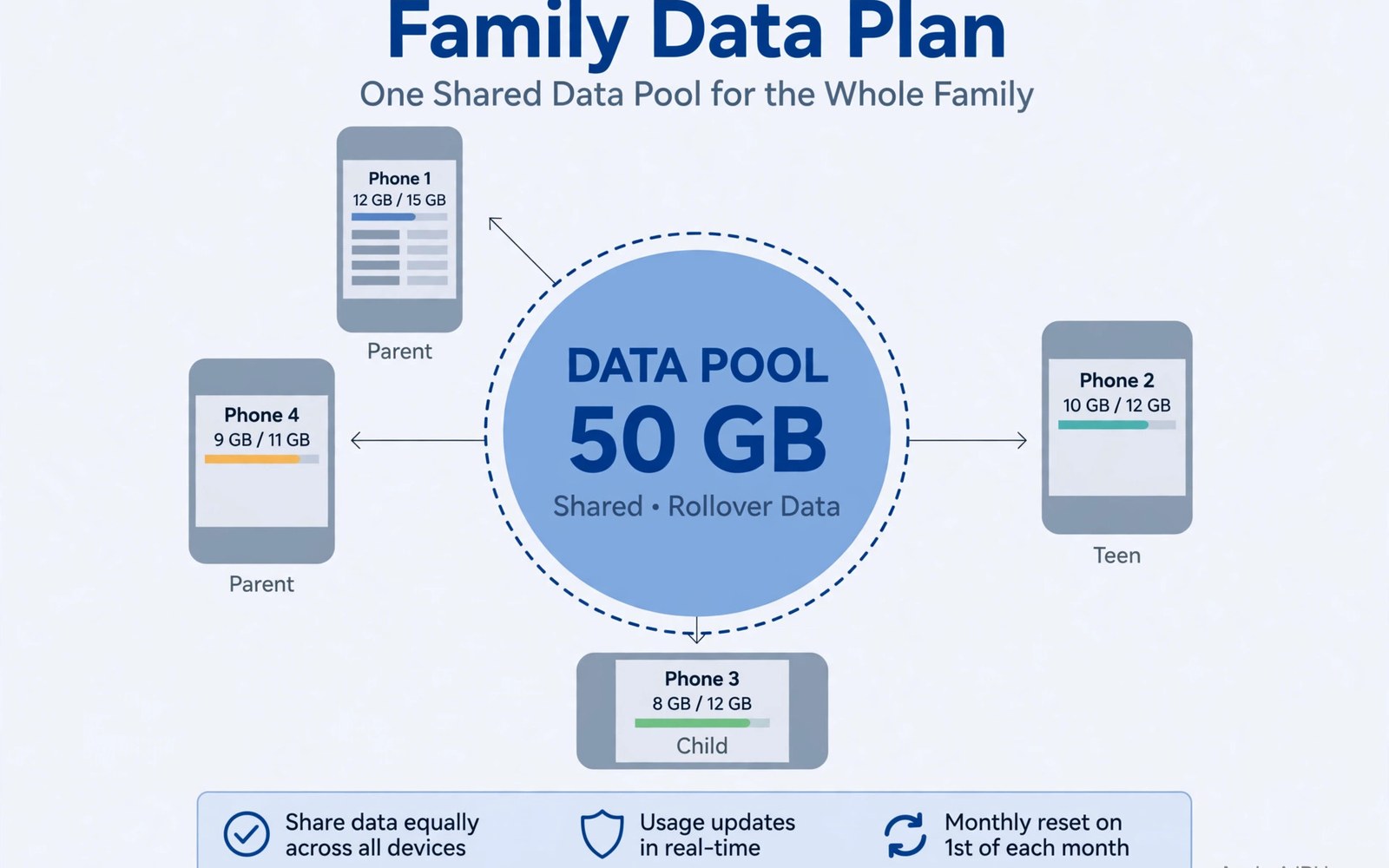
Family phone bills grow fast with each new line. Separate plans multiply fees and waste data. Shared plans pool data across the family. Light users subsidize heavy users naturally. The family pays one bill instead of many. That simplicity saves money and time. This article compares shared family plans fairly. It shows how pooling works and where it fails.
Pooling suits most families but not every family. A heavy teen can drain a shared pool fast. A light grandparent may waste a large pool share. The sections below cover pool math and controls. They also cover perks and switching tips. Use them to judge any family plan. The right pool size beats the cheapest headline price.
How Shared Data Pools Work
A shared pool gives the family one data bucket. Every line draws from the same bucket. A teen streaming video drains it fastest. A parent checking email barely touches it. The pool refills each billing cycle. Unused data usually expires at cycle end. Some plans roll over unused data monthly. Rollover softens months with uneven use.
Pools differ from per-line allowances clearly. Per-line plans isolate each user. A heavy user cannot touch another line. Shared plans let heavy users borrow slack. That borrowing helps families with varied use. It hurts families with several heavy users. Add up total family use before choosing. Total use decides pool size better than line count.
Sizing the Pool for Your Family
Measure each member usage for two months. Phone settings show per-line totals. Add the totals for a family baseline. Add a 25 percent buffer for growth. Streaming habits grow over time steadily. New apps and video quality raise use yearly. A buffer prevents mid-month throttling pain. A pool without buffer frustrates everyone.
Watch teen usage most closely in sizing. Teens stream video and social feeds heavily. Their use can double in a school holiday. Holiday spikes drain pools early. Consider a separate line for extreme teen use. Isolation protects parents from teen spikes. A hybrid setup mixes shared and separate lines. That mix suits families with one outlier user. A separate heavy line can use prepaid data options to cap costs.
Parental Controls and Safe Use
Family plans often include parental control apps. Controls limit screen time and content. They can pause data for a line remotely. Parents can set bedtime data cutoffs. Controls also block premium purchases. Those blocks prevent surprise charges. Review controls monthly as kids grow. Older teens need looser rules than young kids.
Content filters vary widely by carrier app. Some filters block broad categories well. Others miss new apps entirely. Test filters with your child present. Explain why limits exist honestly. Kids respect rules they understand. Secret controls breed workarounds fast. Combine technical limits with open conversation. Trust plus tools beats tools alone.
Perks That Add Family Value
Family plans bundle perks for several lines. Streaming services top the perk list. Cloud storage helps families share photos. Hotspot allowances help homework on laptops. Some plans include device protection. Protection matters for kids with fragile phones. Add the value of perks you truly use. Ignore perks no family member opens.
Compare perk value against plan price carefully. A plan with costly perks may beat a cheap plan. A family that streams daily gains real value. A family that never streams gains nothing. List perks each member would use weekly. Price those perks at standalone rates. Add them to the plan comparison honestly. The honest total reveals the true winner.
Multi-Line Discounts and Fees
Carriers discount each extra line on family plans. The first line costs the most. Later lines cost less each. Four lines often cost little more than three. That math favors larger families. Small families gain less from discounts. Two lines may match separate plans closely. Compare totals rather than per-line ads.
Fees multiply across lines too. Activation fees apply per line sometimes. Taxes apply to the whole bill. Device payments add per line separately. Add every fee before comparing plans. A plan with low line prices but high fees misleads. The final bill total is the only fair comparison. Ask for a written total before signing anything.
Managing Heavy Users in a Pool
Set data warnings for every line in the pool. Warnings alert heavy users before drain. Set a warning at half pool use. Set a second warning near pool end. Warnings teach budgeting without sudden cutoffs. Some carriers let parents cap a line. Caps stop a line at a set amount. Caps protect the pool from one user.
Talk about pool use at family meetings. Show the usage screen to everyone. Teens often do not know their impact. Visible numbers change behavior fast. Reward months where the pool lasts. A small reward beats a data cutoff argument. Make pool health a shared goal. Families that track together waste less data.
Switching the Whole Family at Once
Switching families takes coordination across lines. Port each number one at a time carefully. Keep old lines active until ports finish. Test the new plan on one line first. That pilot line reveals coverage truth. Port remaining lines after the pilot passes. A staged switch avoids a family-wide outage. Families moving numbers should also follow switching carriers while keeping your number step by step.
Time the switch near cycle end. Switching early wastes paid days. Check device compatibility for every phone. Older phones may lack new network bands. A phone that fails bands needs replacement. Budget replacements before switching carriers. Check financing deals for multi-line switches. Carriers often discount phones for family moves.
Grandparents and Light Users in Pools
Light users subsidize pools without complaint usually. Their unused data feeds heavy members. That subsidy is the pool bargain. Light users still deserve good service. Check coverage at their homes first. Rural grandparent homes need strong low band. A pool that fails grandparents fails the family. Test their home signal before switching.
Simplify phones for light users after switching. Set large text and simple home screens. Teach them the new voicemail system. Save support numbers in their contacts. Light users need help more than data. A family plan with good support suits them. Store support helps grandparents most. Factor support quality into family decisions.
Work Lines Inside Family Plans
Some families add a work line to the pool. Work use may dwarf family use quickly. Video meetings burn data all day. A work line may need its own allowance. Separate the work line if it dominates. Pool rules differ for business use. Some carriers restrict business use on family plans. Read terms before adding work lines.
Expense handling matters for work lines too. Employers may reimburse only the work share. A pooled bill complicates reimbursement math. Separate bills simplify expense claims. Keep work and family billing apart when possible. A separate work plan saves accounting pain. Convenience rarely beats clean expenses here. Choose separation for work lines by default.
Reviewing the Family Plan Yearly
Family use changes every year as kids grow. Teens stream more each year steadily. Parents may cut use after habit changes. A yearly review catches both shifts. Compare current use with pool size. Shrink pools when use falls. Grow pools before throttling hits. A yearly check saves money both ways.
Review perks during the same yearly check. A streaming perk kids outgrew adds no value. A new perk may suit changed tastes. Note price rises buried in bill updates. Carriers raise fees with little notice sometimes. A ten-minute review protects the family budget. Make it a yearly routine together. Families that review yearly pay less for more.
Teen Phone Rules That Actually Work
Written phone rules beat verbal rules for teens. Write data limits and bedtime rules down. Post them where the family sees them. Review them together each month. Teens follow rules they helped create. Invite teens to suggest fair limits. Compromise builds respect for the final rules. A rule imposed without input invites evasion.
Consequences should be clear and consistent. A broken data rule pauses data briefly. A repeated break pauses it longer. Never remove emergency calling access. Safety outranks any data discipline. Restore access after the agreed period. Forgive and reset each month cleanly. Grudges over data poison family trust fast.
Shared Tablets and Hotspot Homework
Tablets on family plans need data planning too. Homework video uses data steadily. A tablet line draws from the same pool. Add tablet use to pool math early. School video calls consume gigabytes weekly. Hotspot for laptops adds similar loads. Budget school use before entertainment use. Learning needs outrank streaming wants.
Set homework hours with full speed priority. Pause entertainment devices during homework. Router controls can enforce that priority. Phone hotspot settings can too. Teach kids to download lessons on Wi-Fi. Downloads spare mobile data for live classes. A homework-first routine protects the pool. Families that plan school data avoid month-end fights.
Deals Season and Upgrade Timing
Family upgrades cost most during launch season. New phones carry premium prices then. Wait three months for prices to soften. Carrier deals improve during holidays. Back-to-school deals suit family upgrades. Bundle deals may include free lines. Read bundle terms for hidden fees. A free line with fees is not free.
Stagger upgrades across the family yearly. Upgrade one phone per quarter if possible. Staggering spreads costs through the year. It also spreads learning curves for new phones. Teens can inherit parent phones as hand-me-downs. Hand-me-downs save money and reduce waste. Reset hand-me-down phones fully first. A clean reset protects parent data privacy.
Family Plan Shopping Checklist
- Measure every member usage for two months first.
- Add total use plus a 25 percent buffer for pool size.
- Set data warnings and caps for heavy lines.
- Compare the final bill total including all fees.
- Test the new network on one pilot line first.
- Review pool size and perks together every year.
Family total = sum of all member monthly usage
Pool target = family total x 1.25
Per-line cost = final bill total / number of lines
Pilot test: one line for one month before porting rest
Review: usage, perks, fees once per year
The method above reflects common family plan comparison practice for mobile shoppers. Pool rules and perks vary by carrier and region. Always confirm current terms on the carrier page before you buy.
One Pool That Fits the Whole Family
Shared family plans reward families that measure first. Add up real use and add a buffer. Set warnings for heavy lines early. Compare final bills rather than headline prices. Pilot one line before porting the family. Those steps prevent most family plan regrets. A well-sized pool serves everyone calmly. Families with a heavy tetherer should also check hotspot tethering plans for that line.
Review the plan yearly as kids and habits grow. Pools that fit last year may fail today. Adjust before throttling causes arguments. A family plan should reduce stress not create it. Measure yearly and switch when value fades. The best family plan is one nobody argues about.

