

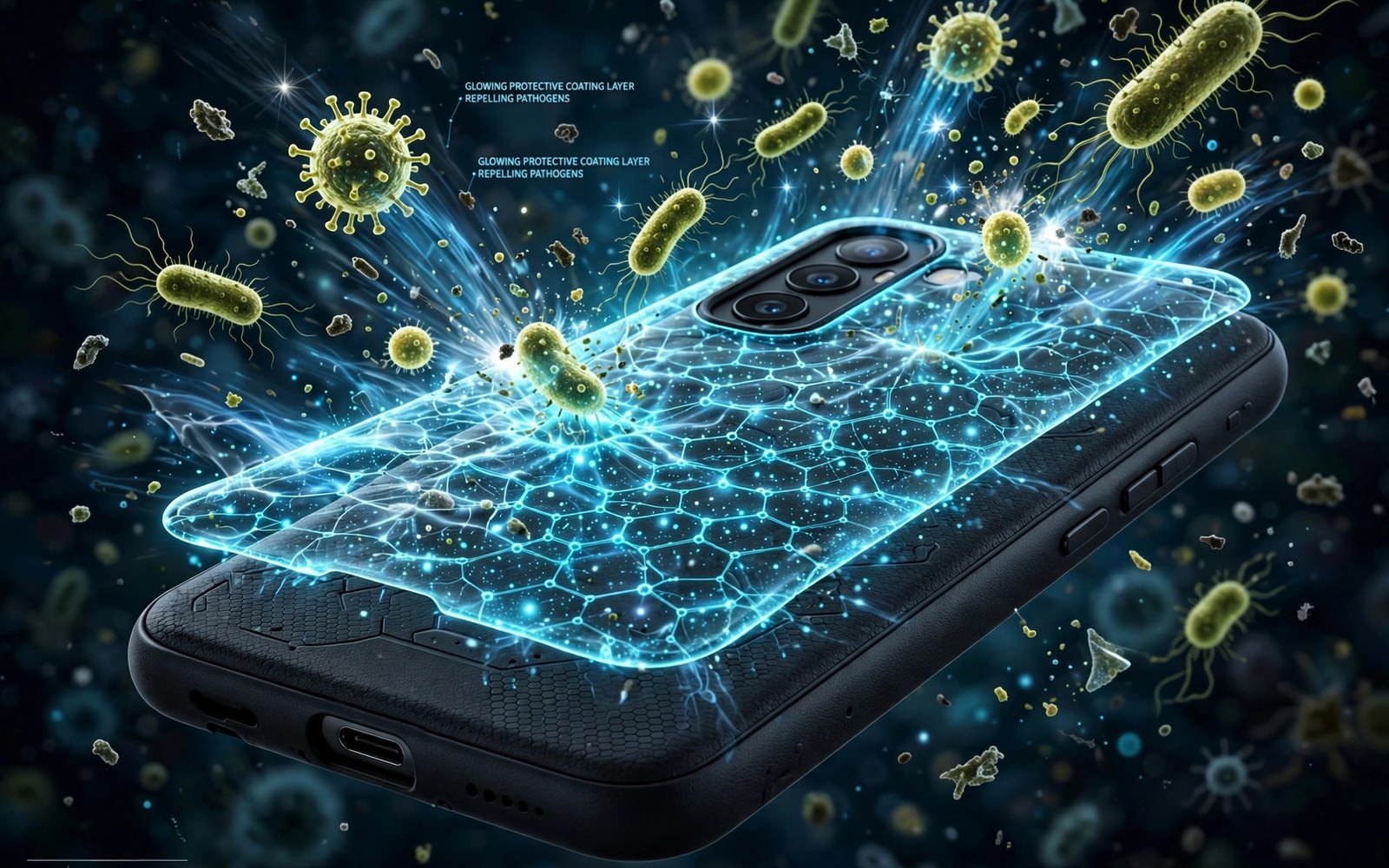
Phones carry more germs than most owners expect. Hands touch phones hundreds of times a day. Phones then touch faces and tables and pockets. Anti-microbial case coatings promise to fight that germ load. They claim to kill bacteria on contact. Buyers wonder if the claim is science or marketing.
The honest answer sits between the two extremes. Anti-microbial coatings do reduce bacteria in lab tests. Real world benefit is smaller and harder to prove. Coatings wear down with use. Cleaning habits matter more than any coating. This guide separates lab facts from daily reality.
It covers how coatings work and what tests prove. It covers wear and cleaning conflicts. It also covers who benefits most. For natural material choices, compare eco-friendly biodegradable cases and their durability alongside this guide.
How Anti-Microbial Coatings Work
Most coatings use silver ions embedded in the case surface. Silver ions disrupt bacterial cell walls. They also block bacterial reproduction. The effect is slow and steady rather than instant. Bacteria counts fall over hours on a coated surface. They do not vanish at once on contact.
Other coatings use copper or zinc compounds. Copper works faster than silver in some tests. Zinc suits clear coatings better. Each agent trades speed against durability and cost. Silver dominates phone cases because it stays clear. Copper tints surfaces and it suits fewer designs.
Coatings live on or near the surface only. A deep scratch can expose untreated material below. A thick dirt layer can shield bacteria from the coating. The coating guards the case surface itself. It does not sterilise hands or air around the phone. That limit matters for honest expectations.
What Lab Tests Actually Prove
Lab tests place bacteria on coated and uncoated samples. They count survivors after set hours. Good coatings show large reductions over 24 hours. Those tests use controlled temperature and moisture. They use flat samples without dirt or oils. Real phones face dirt and oils daily.
Test standards vary by country and maker. Some makers cite recognised standards with clear methods. Others cite vague internal tests. A named standard beats a percentage claim alone. A 99 percent claim without a method means little. Check the standard name before trusting a number.
Tests rarely cover viruses well. Bacterial claims do not imply virus protection. Phone owners worry about viruses too. A bacterial coating gives no proven virus benefit. Do not buy an anti-microbial case for virus safety. Hand washing guards viruses far better than any coating.
Wear Cleaning And Coating Life
Coatings wear with handling and cleaning. Pocket friction slowly removes the active layer. Harsh cleaners strip coatings faster. Alcohol wipes are a particular risk. Frequent alcohol cleaning can erase a coating within weeks. Mild soap cleaning preserves coatings longer.
Makers rarely state coating lifespan clearly. Some claim lifetime protection. Lifetime usually means product life under gentle use. Heavy cleaning shortens that life sharply. A coating that fades silently still looks like a normal case. Owners cannot see when protection ends. That invisibility is a real drawback.
Scratches and scuffs also break coating coverage. A scuffed corner loses protection at that spot. Bacteria can live in scuff grooves. Regular case replacement restores coverage. Replace a coated case yearly for consistent benefit. A fresh coating beats a worn coating every time.
Cleaning Habits Beat Coatings
A simple cleaning routine cuts germs more than a coating does. Wipe the phone weekly with a soft damp cloth. Use a maker approved cleaner for deeper cleaning. Wash hands after public transport and before eating. Those habits cut germ transfer directly. A coating cannot replace hand washing.
Cleaning also removes the dirt layer that shields bacteria. A clean coated case works better than a dirty coated case. A clean plain case often beats a dirty coated case. The coating is a bonus on top of cleaning. It is not a substitute for cleaning. Treat it as a second layer of defence only.
Shared phones benefit most from cleaning routines. Family phones pass between many hands. A wipe between users cuts transfer fast. A coating helps between wipes. It does not make sharing risk free. Wipe shared phones daily for real benefit.
Who Should Pay Extra
Health workers and food handlers gain modest benefit. Their phones face frequent contamination. A coating adds passive reduction between cleans. It suits high contact jobs well. It still needs regular cleaning. No coating replaces workplace hygiene rules.
Average users gain little measurable benefit. Daily phone germs rarely cause illness alone. Hands and faces matter more than case surfaces. Money spent on a coating may serve better elsewhere. A good cleaning cloth and a quality case give more value. Spend on drop protection first.
Germ conscious buyers should weigh price gaps honestly. A small premium for a certified coating is reasonable. A large premium is marketing tax. Compare the coated case with the same uncoated model. Pay only for the coating difference. Do not pay double for a vague germ claim.
- Check for a named test standard behind any percentage claim.
- Clean with mild soap rather than frequent alcohol wipes.
- Replace coated cases yearly to restore coverage.
- Wash hands often since coatings do not guard hands.
- Do not buy coatings for virus protection.
- Spend on drop protection before germ features.
Verdict Useful Or Hype
Anti-microbial coatings are real science with modest real benefit. They reduce bacteria on case surfaces over hours. They do not sterilise a phone. They wear down with use and cleaning. They help most between regular cleans. They help least as a sole hygiene plan.
Marketing often oversells the benefit. Claims of germ free phones mislead buyers. No case stays germ free in daily use. A coated case still needs wiping. A coated case still transfers germs by touch. Honest makers state reduction over time. Hype makers promise instant kills.
Choose a coated case if the premium is small and the case is otherwise good. Skip the premium if the case is weak on protection or fit. A good case with a coating is a fine buy. A weak case with a coating is still a weak case. Style and wear in other materials are compared in leather and fabric cases on style and wear for buyers weighing features fairly.
Hospitals Food Handling And High Contact Jobs
Hospital staff touch phones between patient contacts. Hand hygiene rules govern those moments strictly. A coated case adds passive bacterial reduction between cleans. It does not replace hand washing or device wiping. Hospital policy usually requires regular device disinfection. Alcohol wipes used there can strip coatings fast. Staff should check policy before paying for a coating. A coating that policy wiping destroys wastes money. Regular wiping alone may satisfy policy fully.
Food handlers face similar high contact risks. Phones in kitchens collect food residue quickly. Residue feeds bacteria on case surfaces. A coating slows bacterial growth under residue. It does not clean the residue itself. Wiping removes residue and bacteria together. Food safety rules demand wiping regardless of coating. A coated case helps only between scheduled wipes. It is a supplement to food hygiene rather than a substitute.
Teachers and childcare workers share phones with children often. Shared devices pass germs between many hands. A coating reduces surface bacteria between users. A wipe between users reduces it far more. Schools should prioritise wipe routines over coatings. A shared wipe station near shared devices works best. Coatings help when wiping is missed occasionally. They cannot carry a hygiene plan alone.
Coating Versus Regular Case Replacement
Regular replacement restores many case benefits at once. A new case restores grip and drop cushioning. It restores a fresh coating layer too. A yearly replacement cycle suits coated cases well. It also suits plain cases for protection reasons. Replacement costs less than a premium coating over time for some buyers. A cheap plain case replaced yearly may beat a pricey coated case kept for years. Compare total yearly cost rather than single purchase price.
Replacement also removes accumulated dirt and wear. Old cases harbour grime in scratches and seams. No coating cleans those grooves. A fresh case starts clean across its whole surface. Hygiene benefits from freshness itself. A new plain case may be cleaner than an old coated case. That fact surprises buyers who trust coatings too much. Freshness is a hygiene feature in its own right.
Choose replacement timing by condition rather than coating claims. A case with worn corners needs replacement for safety. A case with a faded coating needs replacement for hygiene. Either reason alone justifies a new case. Pair coating decisions with why clear cases turn yellow over time when judging visible ageing. Yellowing signals material age. Age signals coating fade too. Visible age is a useful replacement cue.
Gym bags expose cases to sweat and bacteria daily. A coated case helps between gym wipes. It does not replace post gym cleaning. Wipe the case after each session with a damp cloth. Sweat salts corrode case edges over time. A quick wipe prevents that slow damage. Gym users should also wash hands after sessions. Hand washing cuts germ transfer to faces. A coating plus wiping plus hand washing forms a solid gym routine. Any one alone falls short.
Office desks collect germs from shared surfaces. Phones rest on desks touched by many hands. A coated case reduces desk transfer bacteria slowly. A weekly desk wipe helps more directly. Clean the desk and the phone together weekly. That paired habit cuts office germ load effectively. A coating adds a passive layer between weekly cleans. It suits offices with shared hot desks best. Dedicated desks need less passive help.
Coating verdict checklist:
- Claim check: named test standard present?
- Agent: silver ion most common, copper faster
- Cleaning: mild soap, avoid frequent alcohol wipes
- Life: replace yearly, coating fades invisibly
- Scope: bacteria reduction only, not virus proof
- Value: small premium OK, large premium = hype
The steps above follow the approach described in the official developer documentation for device care and accessory testing. The guidance draws on standard anti-microbial test practice and everyday hygiene. Coatings offer modest help between cleans. Cleaning and hand washing remain the strongest germ defences.

