

Acer F900 Review and Full Specifications: Everything You Should Know
This Acer F900 full specifications and review 2009 looks at a phone from a very different era of mobile computing, when a large screen, a stylus and a pocket version of Windows were the marks of a serious business handset. The Acer F900 was announced in February 2009 and released in June 2009, at a time when touch phones were still finding their shape and physical keyboards were still common on flagship devices. It arrived as a slim, keyboard-free alternative inside Acer’s early smartphone range, and it still draws interest today from collectors, researchers and readers who want to understand how Windows Mobile phones worked before the modern app era. This Acer F900 review gathers the verified hardware facts, the day-to-day behaviour that follows from them, and the limits that buyers in 2009 had to accept.
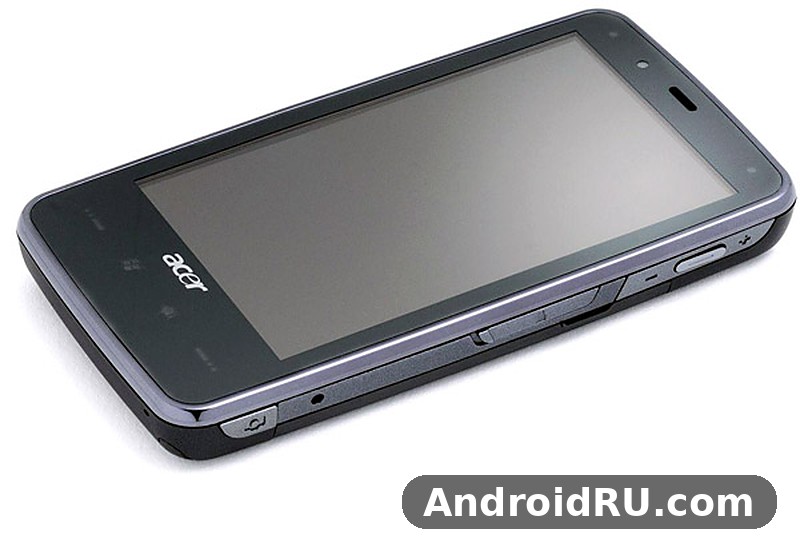
The Acer F900 features a large screen, GPS and a removable battery, and the Acer F900 classic Windows Mobile smartphone for collectors angle explains why it still appears in vintage phone discussions today.
Readers who want a quick answer can start here: the F900 is a classic smartphone with a 3.8-inch resistive touchscreen, a Samsung processor running at 533 MHz, 128 MB of RAM, a 3.15 MP camera with autofocus, GPS, Wi-Fi, Bluetooth and a removable 1,530 mAh battery. It ran Microsoft Windows Mobile 6.1 Professional, so it was built around stylus input, Pocket Office documents, push email and desktop-style synchronisation rather than the finger-first touch interface that later phones made standard. That single fact shapes almost every judgement in this Acer F900 review, from the screen to the software and the battery.
An Acer F900 Windows Mobile 6.1 Professional review also has to be honest about what this phone is not. It is not an Android phone, it does not run modern apps, and it should not be judged against a phone from 2026. Its value in 2009 came from its large WVGA display, its slim body for the period, its GPS receiver and its ability to carry office work in a pocket. Its value now is different: as a well-documented example of late Windows Mobile design, and as a usable vintage device for a collector who understands its limits. The sections below cover the design, the screen, the Acer F900 processor and memory, the camera, the battery, the Acer F900 connectivity options and the full specification table, so that every claim can be checked against the numbers.
Design and Build: Thin, Light and Pocket Friendly
The Acer F900 design was one of its clearest selling points in 2009. The phone measures 117.5 x 63.5 x 15.8 mm and weighs 150 g, which made it noticeably slimmer and lighter than several rival Windows Mobile handsets of the same year. The Acer F900 dimensions weight 150 grams design review angle matters because this was a device meant to be carried all day: in a jacket pocket, in a bag, or in the hand during a meeting. At 15.8 mm thick it was not thin by later standards, but for a Windows Mobile phone with a 3.8-inch screen it was a practical, pocketable shape.
The front is dominated by the display, with a small set of hardware controls below it and a stylus housed in the body. The Acer F900 touchscreen needs that stylus for precise taps on small menus, small on-screen buttons and text fields, which is normal for a resistive panel of this period. The Acer F900 stylus slides out for note-taking, menu work and handwriting input, and it is easy to lose if it is not returned to its slot, so owners in 2009 learned to keep it docked. The Acer F900 speaker sits where it can be heard during calls and alerts without being blocked too easily by the palm, and the earpiece is sized for voice calls rather than media playback.
What the 150-gram body feels like in the hand
In the hand, 150 g gives the phone a solid, balanced feel without the heavy, brick-like weight of some business phones of the time. The width of 63.5 mm keeps the screen reachable with a thumb for many users, while the height of 117.5 mm leaves room for a generous display area. The back cover is removable, which matters for two practical reasons: the battery can be swapped, and the Acer F900 microSD memory card slot under battery cover is reached by removing that cover. That placement keeps the card secure, but it also means a card cannot be changed in a hurry without taking the phone apart in a small way.
Buttons, ports and the stylus slot
The hardware buttons are kept simple: call and end keys, a directional pad or navigation control, and a small number of shortcut keys for the phone, messaging and home screens. A standard headset jack, a charging and data port and the stylus slot complete the physical layout. Nothing here is decorative. Each control exists because Windows Mobile 6.1 Professional expects hardware keys alongside touch input, especially for answering calls, returning home and opening the start menu. Readers comparing this phone with its sibling should note the Acer F900 vs Acer M900 differences without keyboard: the F900 has no slide-out QWERTY keyboard and no fingerprint sensor, so it is thinner and lighter, but it also gives up the fast two-thumb typing that made the M900 attractive to heavy email users. That trade-off is central to choosing between the two models, and it is covered again in the comparison notes near the end of this article.
Display and Touchscreen
The Acer F900 display is a 3.8-inch TFT resistive touchscreen with WVGA resolution of 480 x 800 pixels and support for 65K colours. The Acer F900 3.8 inch WVGA resistive touchscreen display was large and sharp for June 2009, and the 480 x 800 resolution gave web pages, documents and maps far more room than the QVGA screens that were still common on cheaper smartphones. Text in Pocket Word and in email was readable without constant sideways scrolling, and the wide screen made the phone useful as a small viewer for photos and video.
Resistive technology works differently from the capacitive screens used on later phones. It responds to pressure, so a fingertip, a fingernail or a stylus can all register a tap, but light, glancing touches are less reliable. The Acer F900 resistive touchscreen stylus input accuracy test, in practical terms, is a test of patience and precision: with the stylus, small links and small menu items can be hit reliably; with a fingertip, the same targets need a firmer press and a steadier hand. The Acer F900 touchscreen calibration and stylus pen replacement are therefore useful topics for any owner today. Calibration keeps taps aligned with what is shown on screen, and a replacement stylus is a small, cheap part that restores the precise input the interface was designed around.
WVGA resolution on a 3.8-inch panel
At 480 x 800 pixels on 3.8 inches, the screen is dense enough for its era that individual pixels are not the main limitation. The limits are colour depth and viewing angle: 65K colours can show banding in smooth gradients, such as skies in photos, and the TFT panel loses contrast when viewed from a sharp angle. Indoors, brightness is adequate for reading and navigation. Outdoors, in direct sunlight, the screen needs shading or a higher brightness setting, as was normal for phones of this period. The Acer F900 photo gallery and video playback WVGA screen experience benefits from the resolution in a straightforward way: photos fill the wide display well, and video at the phone’s supported sizes looks clear for a 2009 handset, even though the panel cannot match the colour range of later displays.
Performance, Memory and Software
The Acer F900 processor is the Samsung S3C 6410, running at 533 MHz. Acer F900 Samsung S3C 6410 processor performance, judged by the standards of 2009, was solid for a Windows Mobile phone: menus opened without long waits, email and calendar work felt responsive, and the phone could handle GPS navigation, music playback and web browsing without the constant stalling that weaker chips produced. Judged by later standards, 533 MHz is modest, and the phone is best understood as a single-tasking work device with room for one demanding app at a time rather than a multitasking media machine.
The Acer F900 memory figures are 128 MB of RAM and 256 MB of ROM. The Acer F900 128 MB RAM 256 MB ROM memory specs explain both the strengths and the limits of the phone. RAM of 128 MB is enough for the operating system, a browser, a mail client and a navigation app in turn, but keeping many programs open at once will slow the phone and may force apps to close. ROM of 256 MB holds the system and a small amount of user data, so real storage for music, photos, maps and documents depends on a card. The Acer F900 microSD card expansion up to 32GB is therefore not a minor extra: a microSD card of up to 32 GB turns the phone from a device with very little free space into one that can carry a useful music library, a set of maps and a large photo collection.
The Acer F900 software is Windows Mobile 6.1 Professional, and that choice defines the whole experience. The Acer F900 software includes Pocket Outlook for mail, contacts and calendar, Internet Explorer Mobile and the option of Opera Mobile for browsing, Windows Media Player Mobile for audio and video, and Pocket Office for documents. The Acer F900 office documents Pocket Word Excel review point is simple: Word and Excel files open in a pocket format, can be read and edited in a basic way, and can be synchronised with a desktop computer. Formatting of complex desktop documents may not survive the round trip perfectly, but for reading a report, checking a spreadsheet or drafting a short note, the tools were genuinely useful in 2009.
Windows Mobile 6.1 Professional in daily use
Daily use on Windows Mobile 6.1 Professional is menu-driven and stylus-friendly. The Start menu lists programs in a familiar, desktop-like way, the Today screen shows appointments, mail and tasks at a glance, and settings are grouped in control panels that will feel familiar to anyone who used Windows on a desktop computer. The Acer F900 email push Exchange ActiveSync setup guide, in outline, is a matter of entering a mail server, a domain, a username and a password, and choosing which folders to synchronise. Once set up, push email, calendar and contacts arrive without manual checking, which was the main reason many business users chose a Windows Mobile phone in the first place. The Acer F900 manual, supplied with the phone, covers these steps in detail, including ActiveSync over a cable, Bluetooth and Wi-Fi, and it remains the best reference for the exact menu names on this model.
Pocket Office and messaging
Pocket Word, Pocket Excel and Pocket PowerPoint viewer cover the common office tasks, while text messaging, MMS and email cover the common messaging tasks. The on-screen keyboard is usable for short replies, and handwriting recognition offers another input option for users who prefer to write with the stylus. Long typing sessions are slower without a physical keyboard, which is the price of the slim, keyboard-free design. For short notes, calendar entries and quick email replies, the combination of stylus, on-screen keyboard and hardware keys is workable, and it is the combination the F900 was designed around.
The Acer F900 internet browsing Opera Mobile experience 2009 deserves a separate note because the built-in browser and Opera Mobile behaved differently. Internet Explorer Mobile rendered pages in a mobile layout that kept text readable, while Opera Mobile offered a fuller desktop-like view with zoom and panning. Neither browser can handle the modern web, with its current security standards and heavy scripts, but in 2009 both were practical for news, mail, search and mobile sites over HSDPA or Wi-Fi. The Acer F900 performance in browsing depended heavily on the connection: Wi-Fi was faster and cheaper than mobile data, and pages with many images loaded slowly over a 3G link.
Camera and Video
The Acer F900 camera is a 3.15 MP rear camera with autofocus and an LED flash. The Acer F900 3.15 megapixel camera with autofocus review needs a careful note on the number itself: some reviews from the period round the figure to 3.2 MP, but the specification used here is 3.15 MP, in line with GSMArena, and the difference is a matter of rounding rather than a different sensor. Autofocus helps the phone lock onto a subject before the shot, and the LED flash gives close subjects some light in dim rooms, though it cannot replace a real flash for distance or for large scenes.
In daylight, the camera produces usable photos for the era: clear enough for a record shot, a document, a street scene or a photo to send by MMS or email. Colours are typical of a 2009 phone camera, with some noise in shadows and some softness at the edges of the frame. Indoors, without good light, noise rises quickly and the flash becomes necessary for nearby subjects. The Acer F900 video recording 480p camera sample quality is in the same range: video at 480p is watchable on the phone’s own screen and on a small computer window, with sound from the built-in microphone, but it is not a replacement for a dedicated camcorder. The Acer F900 video mode is best used for short clips, family moments and quick records rather than long, planned filming.
3.15 MP camera in daylight and indoors
Daylight is where this camera is most comfortable. With autofocus locked and a steady hand, a landscape, a building or a group photo will show reasonable detail for a 3 MP image. Indoors, the advice is to use the flash for close subjects, to hold the phone steady, and to expect softer results in low light. The Acer F900 camera has no front camera, so self-portraits and video calls of the modern kind were not part of its design. That is a period limit, not a fault in a single unit, and it applies to most phones of the same year. Photos are stored on the phone or on the microSD card, and they can be viewed in the photo gallery, sent by message or mail, or copied to a computer.
Battery, Connectivity and GPS
The Acer F900 battery is a removable Li-Ion unit rated at 1,530 mAh. The Acer F900 battery life 1530 mAh removable battery is best described in the terms of 2009 use: with moderate calls, messaging, some browsing and occasional GPS use, the phone could be expected to last through a working day, while heavy GPS navigation, long Wi-Fi browsing or long calls would shorten that time noticeably. Because the battery is removable, a spare battery or a replacement is a practical option, and the Acer F900 replacement battery Li-Ion 1530 mAh compatible part is worth seeking out for a collector who wants to use the phone today, provided the replacement is the correct type and in good condition.
The Acer F900 connectivity set covers the main wireless options of its era. The Acer F900 HSDPA WiFi Bluetooth GPS connectivity features include HSDPA at 7.2 Mbps and HSUPA at 2 Mbps for mobile data, Wi-Fi 802.11b/g for local wireless networks, Bluetooth 2.0 with EDR for headsets and file transfer, and GPS with a SiRF Star III chipset for location and navigation. The Acer F900 WiFi connection is the fastest and cheapest way to browse and synchronise at home or in the office, while HSDPA keeps mail and browsing available on the move where 3G coverage exists. The Acer F900 Bluetooth link supports hands-free calling, and the Acer F900 hands free calling Bluetooth 2.0 EDR headset combination was a common pairing in 2009 for drivers and for office users who wanted to keep their hands free during long calls. The Acer F900 GPS receiver, with its SiRF Star III chipset, can fix a position outdoors and feed a navigation app with location data.
The Acer F900 FM radio with RDS and SiRF Star III GPS pairing is a useful reminder that this phone was built to be a pocket companion, not only a work tool. The FM radio with RDS shows station names and programme information where the service is available, and it needs a wired headset as an aerial, as was standard at the time. The Acer F900 FM radio is a simple, low-power way to listen to local stations without using mobile data, and it sits alongside the music player as part of the phone’s media side. The Acer F900 music player Windows Media Player Mobile review point is that playback of common audio formats is straightforward, with playlists, album art where available, and output through the headset or the loudspeaker.
GPS, Wi-Fi and Bluetooth in practice
In practice, GPS works best outdoors with a clear view of the sky, and the first fix of the day can take a minute or more while the receiver locks onto satellites. The Acer F900 GPS navigation software TomTom compatibility 2009 question is one that owners asked often: TomTom and similar navigation software of the period could use the built-in GPS receiver, provided the software version supported Windows Mobile 6.1 and the maps were loaded onto a microSD card. A car mount, a charger and a headset made the phone a workable, if small-screened, navigation device for its time. Wi-Fi and Bluetooth, meanwhile, are steady, short-range tools: Wi-Fi for data at home and in the office, Bluetooth for headsets, car kits and occasional file transfer. The Acer F900 call quality speakerphone and microphone test, in plain terms, is that voice calls are clear in a quiet room, the speakerphone is loud enough for a desk call, and the microphone picks up speech well when the phone is held normally or used with a headset.
For readers weighing a purchase today, the Acer F900 second hand price today and buying advice is to treat the phone as a collector item first and a daily phone second. Prices for a used example vary widely with condition, box, accessories and whether the battery still holds a charge, so a buyer should check that the phone powers on, that the touchscreen responds across the whole panel, that the stylus is present, that the camera focuses, and that the battery cover and card slot are intact. The Acer F900 hard reset and Windows Mobile software update are also worth understanding before buying: a hard reset returns the phone to its factory state and erases user data, so it should only be done after backing up contacts and files, and software updates for Windows Mobile 6.1 are period software, not modern security updates, so the phone should not be used for sensitive modern accounts.
Full Specifications
The table below gathers the Acer F900 specs in one place. Every figure is drawn from the verified specification record for this model, with the camera figure given as 3.15 MP and the battery given as 1,530 mAh. The Acer F900 specs in this table are the reference for the rest of the article: where the text describes a feature in general terms, the table gives the exact number.
| Feature | Acer F900 Specification |
|---|---|
| Announced | February 2009 |
| Released | June 2009 |
| Operating system | Microsoft Windows Mobile 6.1 Professional |
| Processor | Samsung S3C 6410, 533 MHz |
| Display | 3.8-inch TFT resistive touchscreen, WVGA 480 x 800 pixels, 65K colours |
| RAM | 128 MB |
| ROM | 256 MB |
| Expandable storage | microSD, up to 32 GB |
| Rear camera | 3.15 MP, autofocus, LED flash; video 480p |
| Front camera | No |
| Battery | Li-Ion 1,530 mAh, removable |
| Dimensions | 117.5 x 63.5 x 15.8 mm |
| Weight | 150 g |
| Mobile data | HSDPA 7.2 Mbps, HSUPA 2 Mbps |
| Wi-Fi | 802.11b/g |
| Bluetooth | 2.0 with EDR |
| GPS | Yes, SiRF Star III chipset |
| FM radio | Yes, with RDS |
| Keyboard | No physical QWERTY keyboard; stylus and on-screen keyboard |
| Fingerprint sensor | No |
The Acer F900 release date of June 2009 places the phone near the end of the Windows Mobile era, just before the market shifted decisively toward finger-first touch phones and app stores. The Acer F900 price in 2009 and release date June 2009 are often asked about together, because the launch price and the launch month fix the phone in its market: a premium business handset at launch, sold to users who wanted a large screen and full Windows Mobile software rather than the cheapest possible phone. Exact launch pricing varied by country, carrier and bundle, so this article does not invent a single worldwide price; readers should check period listings for their own market if they need a precise figure.
How the F900 compares with the Acer M900
The closest comparison inside Acer’s own range is the M900, and the Acer F900 vs M900 comparison is useful because the two phones share much of their platform while serving different users. The M900 adds a slide-out QWERTY keyboard, a fingerprint sensor and a 5 MP camera, which makes it the better choice for heavy typing and for users who want a higher-resolution camera. The F900 answers with a thinner, lighter body, a cleaner front without a sliding mechanism, and a simpler daily carry. For a reader who types long emails every day, the M900 is the more practical tool. For a reader who wants a large-screen Windows Mobile phone that slips into a pocket and is used mainly for reading, navigation and short messages, the F900 is the more comfortable choice. The related review Is the Acer M900 Worth It? Review, Specs and Verdict covers the M900 in full, and it is the natural next read for anyone choosing between the two.
Other Acer models from the same period give useful context as well. The Acer X960 After a Week of Use: Review, Storage and Full Specs shows how another Acer handset balanced a large screen with everyday use, while the Acer DX650 Review and Specifications: Form Factor, Everyday Performance and the Verdict covers a model with a very different form factor and a different set of trade-offs. The Acer DX900 Review: Features and Storage Put to the Test adds a further comparison point on features and storage, and the Our Acer beTouch E101 Review: Value for Money, Performance and Detailed Specs shows the value end of the Acer range from the same era. Together, these reviews help place the F900: not the most feature-packed Acer of 2009, and not the cheapest, but a focused, slim, large-screen Windows Mobile phone with a clear purpose.
Pros and Cons
Any fair Acer F900 review must weigh the strengths against the limits, and the balance depends on whether the reader is looking back from today or judging the phone as a buyer in June 2009. In 2009, the strengths were the large WVGA screen, the slim and light body, the GPS receiver, the Wi-Fi and HSDPA data options, the removable battery and the full Pocket Office and push email software. The limits were the resistive touchscreen, the modest RAM, the 3.15 MP camera, the lack of a physical keyboard and the Windows Mobile interface, which demanded a stylus and patience for small on-screen targets.
Pros
The large 3.8-inch WVGA screen made reading, browsing and navigation more comfortable than on smaller phones of the period. The slim 150 g body was easy to carry all day. GPS with the SiRF Star III chipset, Wi-Fi 802.11b/g, Bluetooth 2.0 with EDR and HSDPA gave the phone a complete connectivity set for 2009. The removable 1,530 mAh battery could be swapped, and microSD expansion up to 32 GB gave the phone room for maps, music and photos. Pocket Office, push email and Windows Media Player Mobile made it a capable work and media companion for its time.
Cons
The resistive touchscreen needs a stylus for precise work and is less forgiving than later capacitive screens. RAM of 128 MB limits multitasking, and ROM of 256 MB leaves little built-in space without a card. The 3.15 MP camera is usable in daylight but noisy in low light, and there is no front camera. There is no physical QWERTY keyboard and no fingerprint sensor, unlike the M900. As a vintage device today, the phone cannot run modern apps or use modern web services, and its battery, now many years old, may need replacement before the phone can be used reliably.
Frequently Asked Questions
The questions below cover the points readers ask most often about this model, from the release date to the camera, the battery and the difference from the M900. Each answer uses the verified figures from the specification table above.
When was the Acer F900 released?
The Acer F900 was announced in February 2009 and released in June 2009. That June 2009 release date places it in the late Windows Mobile period, when large resistive touchscreens were still the standard for business smartphones. The Acer F900 price at launch varied by market and bundle, so no single worldwide figure is given here.
What operating system does the Acer F900 use?
The Acer F900 uses Microsoft Windows Mobile 6.1 Professional. It is not an Android phone, and it does not run Android apps. Its software is built around Pocket Outlook, Pocket Office, Windows Media Player Mobile and Internet Explorer Mobile, with Opera Mobile as a common alternative browser of the period.
How good is the Acer F900 camera?
The rear camera is 3.15 MP with autofocus and an LED flash, and it records video at 480p. In daylight it produces usable record shots and photos for sharing by message or mail, while indoors it needs good light or the flash for close subjects. There is no front camera on this model.
Does the Acer F900 have GPS and Wi-Fi?
Yes. The Acer F900 GPS uses a SiRF Star III chipset, and the phone also has Wi-Fi 802.11b/g, Bluetooth 2.0 with EDR, HSDPA at 7.2 Mbps and HSUPA at 2 Mbps, plus an FM radio with RDS. GPS works best outdoors with a clear view of the sky, and Wi-Fi is the fastest way to browse and synchronise at home or in the office.
Is the Acer F900 still worth buying today?
For a collector, the Acer F900 collector value vintage Windows Mobile phone 2026 case is reasonable: it is a well-documented, slim, large-screen Windows Mobile phone from June 2009, and a clean example with a working touchscreen, a stylus and a good battery is a useful piece of mobile history. For daily use as a modern phone, it is not a practical choice, because it cannot run modern apps or use the modern web. A buyer should check the touchscreen, the battery, the camera and the card slot before paying, and should treat the phone as a vintage device first.
Verdict
The Acer F900 is best remembered as a focused, slim Windows Mobile phone that traded a keyboard for portability and gave its users a large WVGA screen, GPS, Wi-Fi and full office software in a 150 g body. The thin and light for 2009 shape, the large WVGA screen and the complete connectivity set were its real strengths, while the resistive touchscreen, the modest memory and the 3.15 MP camera were its honest limits. This Acer F900 Review and Full Specifications: Everything You Should Know has kept to the verified facts: announced in February 2009, released in June 2009, Windows Mobile 6.1 Professional, a Samsung S3C 6410 chip at 533 MHz, 128 MB of RAM, 256 MB of ROM, microSD expansion up to 32 GB, and a removable 1,530 mAh battery. For a collector or a reader of mobile history, the F900 remains a clear, well-documented example of its era, and for anyone choosing inside the Acer range, the M900 comparison above shows exactly what the slimmer body gives up and what it gains in return.

