

Everything About the alcatel Pop 3 (5.5): Review, Usability and Full Specifications
The alcatel Pop 3 (5.5) arrived in the spring of 2016 as a large-screen budget phone from a brand that built its name on affordable Android handsets. Announced in February 2016 and released in April 2016, it offered a 5.5-inch display, Android 5.1 Lollipop, and a price of around 120 EUR at launch. The alcatel Pop 3 price was around 120 EUR at launch, and the alcatel Pop 3 (5.5) release date and launch price put it in the same affordable class as many first phones of its year. The alcatel Pop 3 release came at a moment when big screens were moving from flagships into the budget range, and a 5.5-inch display no longer meant a premium price tag. This alcatel Pop 3 review is based on the published specifications and the context of 2016, not on a hands-on test, and it pays close attention to the one fact that matters most about this phone: it was sold in two versions with different chipsets, different batteries, and different cameras.
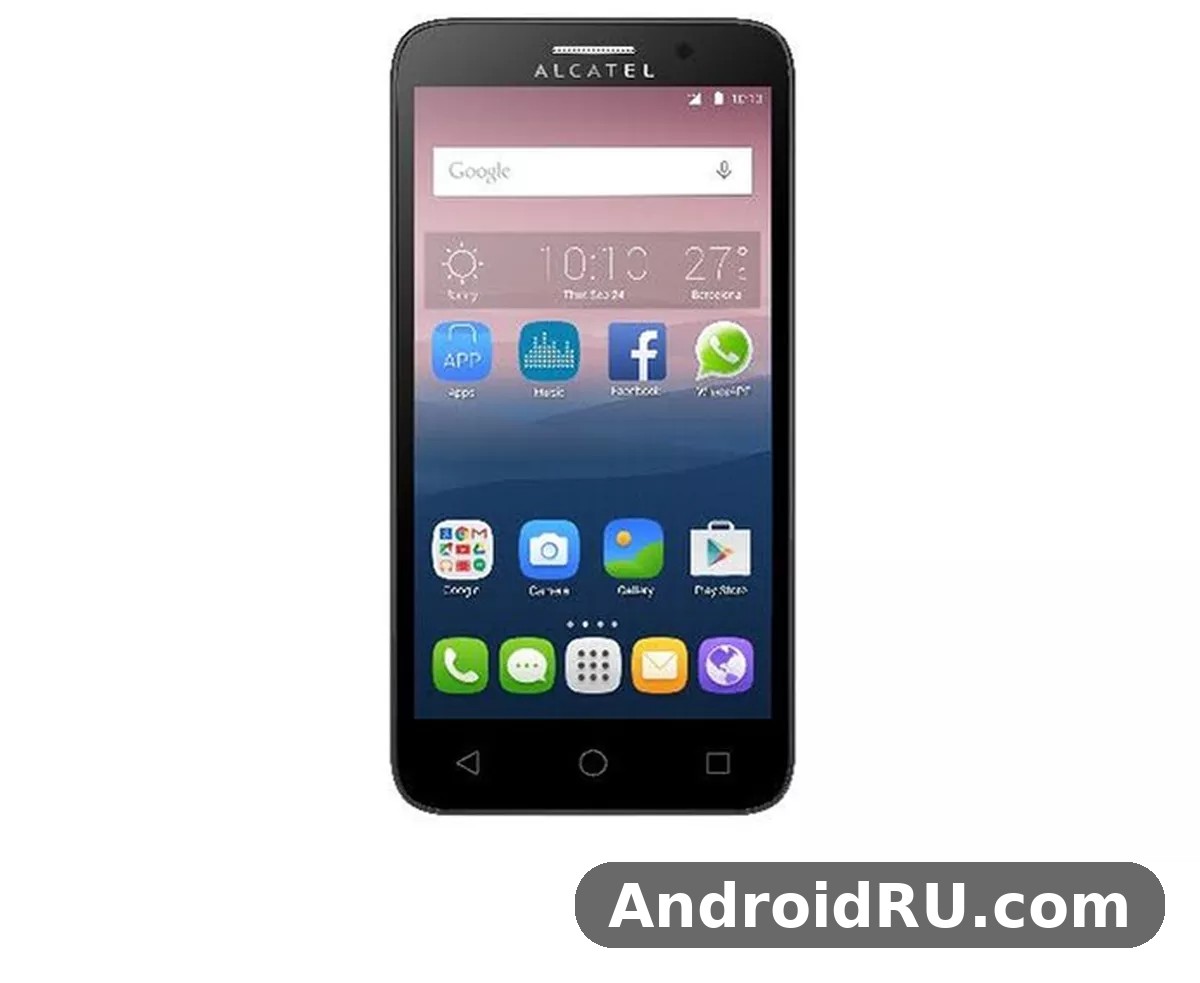
That split is why a simple spec sheet can mislead. The alcatel Pop 3 (5.5) full specifications and features change with the model number, so two phones with the same name on the box can behave differently on a mobile network, last a different length of time away from a charger, and take different photos. The alcatel Pop 3 variants are the 3G model 5025D and the 4G LTE models 5054A, 5054D, 5054T and 5054X, and the alcatel Pop 3 chipset is different in each branch of the family. This alcatel Pop 3 (5.5) review for budget phone buyers explains both versions side by side, so you can tell them apart before you spend money on a used example in 2026. The alcatel Pop 3 (5.5) price and value for money made sense in 2016 for buyers who wanted a big screen for reading, video and maps without paying flagship money, and that remains the fairest way to judge it now.
In short, the phone pairs a 5.5-inch 720p TFT display with 1 GB of RAM, 8 GB of internal storage, a microSD card slot, and a rear camera of 5, 8 or 13 megapixels depending on the variant. The alcatel Pop 3 specs in the table near the end of this article list every detail in one place, from the exact dimensions to the battery capacity of each version. The rest of this guide walks through design, screen, performance, cameras, battery, software and the everyday trade-offs of a budget smartphone 2016 release, then ends with a clear verdict on who should still consider one and who should look elsewhere.
Design and Build of a 5.5-Inch Budget Phone
At 151.9 x 77.8 x 9.5 mm and 174 g, the Pop 3 (5.5) is a large phone by 2016 standards and a normal one by the standards of the years that followed. The alcatel Pop 3 dimensions place it firmly in the two-handed class: the screen is wide enough for comfortable reading and video, but the top corners sit out of easy thumb reach. The alcatel Pop 3 weight of 174 g is honest for a plastic phone with a 5.5-inch screen, heavy enough to feel solid in the hand without becoming a burden in a jacket pocket. The alcatel Pop 3 (5.5) weight and dimensions for one handed use are the first trade-off to accept: this is a phone you hold with one hand and operate with two whenever you reach across the screen.
Size, Weight and Grip
The 9.5 mm thickness is chunky next to the slim flagships of 2016, yet it gives the curved plastic back something to hold on to, and the width of 77.8 mm means the phone fills a palm rather than disappearing into it. Readers who prefer a smaller handset from the same brand and year can start with Is the alcatel Pixi 4 (3.5) Worth It? Review, Specs and Verdict, which covers a 3.5-inch phone built for the opposite priority. The Pop 3 (5.5) makes the opposite choice: screen space first, pocketability second. In a trouser pocket it is noticeable, in a bag it is unremarkable, and on a desk it sits flat and stable thanks to its width.
Build Materials and Colour Options
The body is plastic from edge to edge, which was normal for the price in 2016 and which kept the cost down and the weight in check. The alcatel Pop 3 colors varied by market and carrier, so the exact shades on sale depended on where and when the phone was bought rather than on a single global palette. The alcatel Pop 3 accessories that owners commonly added were a case and a screen protector, and both are worth having on a used example because the plastic back and the TFT display pick up marks more easily than glass and metal. A case also improves the grip, which matters on a phone this wide.
Display: A 5.5-Inch 720p TFT Panel
The alcatel Pop 3 display is a 5.5-inch TFT panel with a resolution of 720 x 1280 pixels, which works out at about 267 pixels per inch. The alcatel Pop 3 screen is large enough for web pages, e-books and video to feel comfortable, and the alcatel Pop 3 (5.5) screen size and display quality were a genuine selling point in 2016, when many budget phones still shipped with screens under five inches. Text at normal sizes looks clean, icons are easy to tap, and the 16:9 shape suits video without black bars on most clips of the era.
Sharpness and Everyday Legibility
At 267 ppi the panel is not as crisp as a 1080p screen, and fine text shows a slight softness if you look closely, but at a normal viewing distance the picture is perfectly readable. The alcatel Pop 3 (5.5) TFT display viewing angles in bright sunlight are the weaker side of the panel: TFT technology of this class loses contrast and colour when viewed from an angle, and direct sun washes the image out, so reading outdoors means shading the screen or turning the brightness up. The alcatel Pop 3 (5.5) large screen design for media and reading still earns its keep indoors, where the size matters more than the panel technology. Buyers who want an even larger budget screen from the same period can compare it with Living With the alcatel Pixi 3 (8) LTE: Review, Key Features and Complete Specs, which covers an 8-inch tablet-style device from the same family.
Performance and the Two Chipsets You Must Know About
The alcatel Pop 3 performance depends entirely on which version you hold, and this is the section to read twice. The alcatel Pop 3 (5.5) 3G model 5025D versus 4G model 5054 differences cover the processor, the graphics chip, the mobile network and even the battery, so the model number on the back or in the settings is the only reliable way to know what you are buying. The alcatel Pop 3 (5.5) performance for calls and messaging is adequate in both versions, because calls, texting, email and light browsing ask little of a quad-core chip, but the two versions reach that result by different routes. Two different chipsets under one name is the fact that defines this phone, and every buying decision should start from it.
The 3G Model 5025D With MediaTek MT6580
The 3G model, sold as the 5025D, runs on the MediaTek MT6580, a quad-core Cortex-A7 chip at 1.3 GHz with Mali-400MP2 graphics. The alcatel Pop 3 MediaTek version is the 3G one, and the alcatel Pop 3 (5.5) MediaTek MT6580 processor performance is best described as steady rather than quick: it opens the dialler, the messaging app and a browser without drama, and it handles one app at a time without complaint. The alcatel Pop 3 3G connection tops out at HSPA speeds, which were enough for messaging, maps and standard-definition video in 2016 and which remain usable for basic data where 3G networks still operate.
What the MT6580 Handles Well
Calls, texts, email, calendar reminders, music playback and light web browsing all sit comfortably within what the MT6580 can do, and the chip stays cool doing them. Games beyond simple puzzles and older casual titles will stutter, and switching between several apps will be slow, but the phone was never sold as a gaming device. For a buyer who wants a large-screen handset for the basics, the 3G model delivers exactly that and nothing more.
The 4G LTE Models 5054A, 5054D, 5054T and 5054X With Snapdragon 210
The LTE models, sold as the 5054A, 5054D, 5054T and 5054X, run on the Qualcomm Snapdragon 210, known as the MSM8909, a quad-core Cortex-A7 chip at 1.1 GHz with Adreno 304 graphics. The alcatel Pop 3 Snapdragon version is the 4G one, and the alcatel Pop 3 (5.5) Snapdragon 210 processor performance trades a little clock speed for a modern LTE modem and a more efficient radio. The alcatel Pop 3 LTE models connect to 4G networks where they are available, which makes maps, messaging and browsing noticeably more responsive than on the 3G version, even though the processor itself is a touch slower on paper. The alcatel Pop 3 4G versions are the ones to look for if you plan to use the phone on a current network, because 3G coverage has been switched off in many countries since 2016.
What the Snapdragon 210 Handles Well
The Snapdragon 210 handles the same everyday tasks as the MediaTek chip, with the added benefit of faster mobile data and a radio that was designed for the LTE era. Video calls, navigation and music streaming all benefit from the better connection, and the Adreno 304 graphics cope with casual games and the interface animations of Android 5.1. Neither chip will feel fast next to a modern budget phone, and both will show their age when several apps compete for attention, but the 4G model is the more future-proof of the two for daily use on a live network.
RAM, Storage and microSD Expansion
Both versions share the same memory: 1 GB of RAM and 8 GB of internal storage, with a microSDXC card slot for expansion. The alcatel Pop 3 RAM is 1 GB, which was the budget standard in 2016 and which sets the clearest limit on the phone today. The alcatel Pop 3 (5.5) 1GB RAM multitasking limits for beginners are simple to understand: one app runs well, two apps take turns slowly, and three or more will force the phone to reload them. The alcatel Pop 3 storage is 8 GB, and the alcatel Pop 3 (5.5) 8GB internal storage free space after setup is only a few gigabytes once Android 5.1 and the preinstalled apps have taken their share. The alcatel Pop 3 (5.5) storage space and microSD card support is therefore not a luxury but a necessity: a card holds photos, music and offline maps, while the internal memory is best kept for apps. 1 GB of RAM and 8 GB of storage define the ceiling of this phone, and a microSD card is the cheapest way to live within it. The alcatel Pop 3 (5.5) microSD card slot location and maximum capacity should be checked on the exact variant before buying a large card, since regional versions differ in how the slot is arranged. The smaller sibling with a 5-inch screen takes the same approach to memory, as covered in alcatel Pop 3 (5) Review: Features in Everyday Use and the Full Specs.
Cameras: 5MP, 8MP or 13MP Depending on Variant
The alcatel Pop 3 camera changes with the variant, which is unusual and worth checking before you buy. Some versions carry a 5 megapixel rear camera, others an 8 megapixel sensor, and some markets received a 13 megapixel version, all with autofocus and an LED flash. The alcatel Pop 3 (5.5) camera quality for everyday photos depends on which of the three you get and on the light you shoot in. The alcatel Pop 3 (5.5) 13MP camera variant availability by region was uneven, so a buyer who cares about photos should confirm the megapixel count on the exact unit rather than trusting the family name.
Rear Camera in Daylight
In good daylight the rear camera produces usable photos for messages, social posts and small prints, with colours that look natural rather than boosted. The alcatel Pop 3 (5.5) 5MP rear camera sample quality explained in plain terms: the entry version captures enough detail for a photo viewed on a phone screen, but cropping or printing large will show softness and noise. The 8 and 13 megapixel versions hold up better when you zoom or crop, and the LED flash helps with close subjects indoors, though it cannot rescue a dark room. Video recording reaches 720p, which matches the screen resolution and keeps clips easy to share and play back.
Front Camera for Selfies and Video Calls
The front camera is 2 megapixels on some versions and 5 megapixels on others, and the difference shows in video calls and selfies. The alcatel Pop 3 (5.5) front camera for video calls today is adequate for a recognisable face on a small window, and the 5 megapixel version gives a clearer picture with more detail. Neither version will flatter its subject in poor light, and both are best used with the light in front of you rather than behind. For a sense of how alcatel handled cameras on its larger phones of the same year, Buying the alcatel Fierce XL? Read This Review and Specs Guide First covers a 5.5-inch stablemate with a different camera setup.
Battery Life: 2910mAh in the 3G Model, 2500mAh in the 4G Model
The alcatel Pop 3 battery differs by variant, in the opposite direction from what you might expect: the 3G model carries the larger cell. The 3G version has a 2910 mAh battery, while the 4G LTE version has a 2500 mAh battery, and the alcatel Pop 3 (5.5) battery life and charging time should be judged with that split in mind. 2910 mAh in the 3G model and 2500 mAh in the 4G model is the pair of numbers to remember. The alcatel Pop 3 (5.5) 2910mAh battery standby time in practice was rated for long standby on paper, yet real standby depends on signal strength, background apps and the age of the cell, and a used battery from 2016 will hold less charge than a new one did.
How Long It Lasts in Daily Use
With light use, calls, messages, a little browsing and some music, either version should last a full day when the battery is healthy, and the 3G model has the edge because of its larger cell and its less demanding radio. Heavy screen time, navigation or video will drain the 4G model faster, and the 5.5-inch display is the biggest consumer of power in both versions. Charging is by microUSB, and a full charge takes a few hours from empty, so overnight charging is the practical routine. Readers who want a closer look at charging behaviour on a related alcatel of the same year can read alcatel Pixi 4 (4) Long-Term Review: Charging Speed, Connectivity and Full Specifications, which examines charging speed and connectivity on a smaller stablemate.
Software and Everyday Usability
The alcatel Pop 3 Android version is 5.1 Lollipop, the software the phone shipped with in 2016. The alcatel Pop 3 (5.5) Android 5.1 Lollipop software experience is the familiar Lollipop interface of its era: a clean app drawer, pull-down notifications, Google apps for mail, maps and browsing, and a settings menu that still feels logical a decade later. This review makes no claim of a recent hands-on test; what follows is drawn from the published specifications and the known behaviour of Android 5.1 on hardware of this class.
Android 5.1 Lollipop in Daily Use
In daily use, Lollipop on 1 GB of RAM is workable if expectations stay modest. The dialler, contacts, messages, camera and browser all run, and the interface responds without long pauses when a single app is in front. Modern apps are the problem: many current versions of popular apps no longer support Android 5.1, and the phone receives no security updates, so it is best suited to calls, texts, offline media and light browsing rather than banking or sensitive accounts. A microSD card and a small set of well-chosen apps keep it useful without overloading it.
Connectivity: WiFi, Bluetooth and GPS
The alcatel Pop 3 (5.5) WiFi Bluetooth and GPS connectivity options cover the essentials: Wi-Fi 802.11 b/g/n with hotspot support, Bluetooth 4.0 with A2DP for wireless headphones and car kits, and GPS with A-GPS for navigation. The alcatel Pop 3 SIM setup uses a Micro-SIM, and the alcatel Pop 3 (5.5) dual SIM version and network bands depended on the market and the exact model number, so buyers should confirm the bands before choosing a carrier. The alcatel Pop 3 Bluetooth pairing is straightforward with headsets and speakers of the same era, and the alcatel Pop 3 GPS lock is quick enough for turn-by-turn navigation with offline maps saved to the memory card. The alcatel Pop 3 (5.5) speaker loudness and call quality test notes from 2016 describe a loudspeaker that was adequate for ringtones and hands-free calls, with call quality that was clear on a good signal.
Full Specifications
The alcatel Pop 3 specs in the table below collect every published detail for the 5.5-inch model in one place. Where a value differs between the 3G and 4G versions, the table says so, because that difference is the heart of this phone.
| Category | Detail |
|---|---|
| Network | GSM / HSPA / LTE (LTE on 5054 models only); 2G GSM 850 / 900 / 1800 / 1900; 3G HSDPA; 4G LTE on 5054 models; speed HSPA, LTE |
| Launch | Announced February 2016; released April 2016 |
| Body | 151.9 x 77.8 x 9.5 mm; 174 g; Micro-SIM (dual SIM optional) |
| Display | TFT, 5.5 inches, 720 x 1280 pixels, 16:9 ratio, about 267 ppi |
| Platform | Android 5.1 Lollipop; 3G model 5025D: MediaTek MT6580; 4G models 5054A / 5054D / 5054T / 5054X: Qualcomm Snapdragon 210 (MSM8909); CPU quad-core 1.3 GHz Cortex-A7 (3G) or quad-core 1.1 GHz Cortex-A7 (4G); GPU Mali-400MP2 (3G) or Adreno 304 (4G) |
| Memory | microSDXC card slot (dedicated slot); 8 GB internal storage, 1 GB RAM |
| Main camera | Single 5 MP / 8 MP / 13 MP depending on variant, autofocus, LED flash; video 720p |
| Selfie camera | Single 2 MP / 5 MP depending on variant |
| Sound | Loudspeaker yes; 3.5 mm jack yes |
| Comms | Wi-Fi 802.11 b/g/n, Wi-Fi Direct, hotspot; Bluetooth 4.0, A2DP; GPS yes, with A-GPS; FM radio; microUSB 2.0 |
| Features | Sensors: accelerometer, proximity |
| Battery | Li-Ion; 2910 mAh in the 3G model, 2500 mAh in the 4G model |
| Misc | Colours vary by market; price about 120 EUR |
Pros and Cons
Pros
The alcatel Pop 3 pros start with its big screen and low price, and the list below sums up what still counts in its favour.
- Large 5.5-inch 720p display for reading, video and maps
- A choice of 3G or 4G LTE, with the 4G models offering faster mobile data
- microSDXC card slot to expand the small 8 GB of internal storage
- Rear camera up to 13 MP on some variants, with autofocus and LED flash
- Large 2910 mAh battery in the 3G model
Cons
The alcatel Pop 3 cons start with 1 GB of RAM, and the list below sums up what holds it back today.
- Only 1 GB of RAM, which limits multitasking and modern apps
- Only 8 GB of internal storage, with little free space after setup
- Android 5.1 Lollipop with no updates and limited support for current apps
- TFT panel with modest viewing angles and weak sunlight legibility
- Two different chipsets and batteries under one name, which makes buying confusing
- Smaller 2500 mAh battery in the 4G model
Frequently Asked Questions
Does the alcatel Pop 3 (5.5) support 4G LTE?
Only the 5054 models do. The 5054A, 5054D, 5054T and 5054X carry the Snapdragon 210 and an LTE modem, while the 5025D is a 3G-only phone with the MediaTek MT6580. Check the model number in the settings or on the label before you buy, because the two versions look the same from the outside.
How much RAM does the alcatel Pop 3 (5.5) have?
It has 1 GB of RAM in both the 3G and the 4G version. That is enough for calls, messaging and one app at a time, but it will reload apps when you switch between several of them, and many current apps will run slowly or not at all.
Is the alcatel Pop 3 (5.5) worth buying today?
It is worth buying today only for a narrow set of uses: a spare phone for calls and texts, a large-screen handset for reading and offline media, or a first phone for a light user. For anything more demanding, a newer budget phone with more RAM and a current Android version is a better use of the same money.
How to reset the alcatel Pop 3 (5.5) to factory settings?
Open Settings, go to Backup and reset, choose Factory data reset, and confirm. Back up photos, contacts and messages first, because the reset erases everything on the internal storage, and remove the microSD card if you want to keep what is on it.
Verdict
The alcatel Pop 3 verdict is simple: this is a big-screen budget phone from 2016 that did its job well at its price and that now survives as a spare, a reader or a first phone for light use. The 5.5-inch display, the microSD slot and the choice of a 4G model are its lasting strengths, while 1 GB of RAM and Android 5.1 are its lasting limits. Check the exact model number before you buy, because the difference between the 5025D and the 5054 models is the difference between a 3G phone with a 2910 mAh battery and a 4G phone with a 2500 mAh battery. Buy the 4G version if you need a live network, buy the 3G version if you want the larger battery and the slightly faster chip, and in either case pay a price that matches a ten-year-old budget phone.

 from 2016: two chipsets, 5.5-inch HD screen, 1GB RAM and up to 13MP camera. Our review covers specs, battery and who it still suits.)