

Acer neoTouch Review and Detailed Specs: Features and Screen Quality Covered
This Acer neoTouch review and full specifications 2009 guide looks back at a phone that arrived at a turning point for mobile computing. The Acer neoTouch S200 Windows Mobile 6.5 review story starts in October 2009, when Acer put a 1 GHz processor, a large 3.8-inch screen and a 5-megapixel camera into a single Windows Mobile handset. It was ambitious, it was fast for its year, and it was aimed at people who wanted a pocket computer as much as a phone. This Acer neoTouch review covers what the phone did well, where it showed its age even in 2009, and how its screen, performance, camera and battery behaved in everyday use.
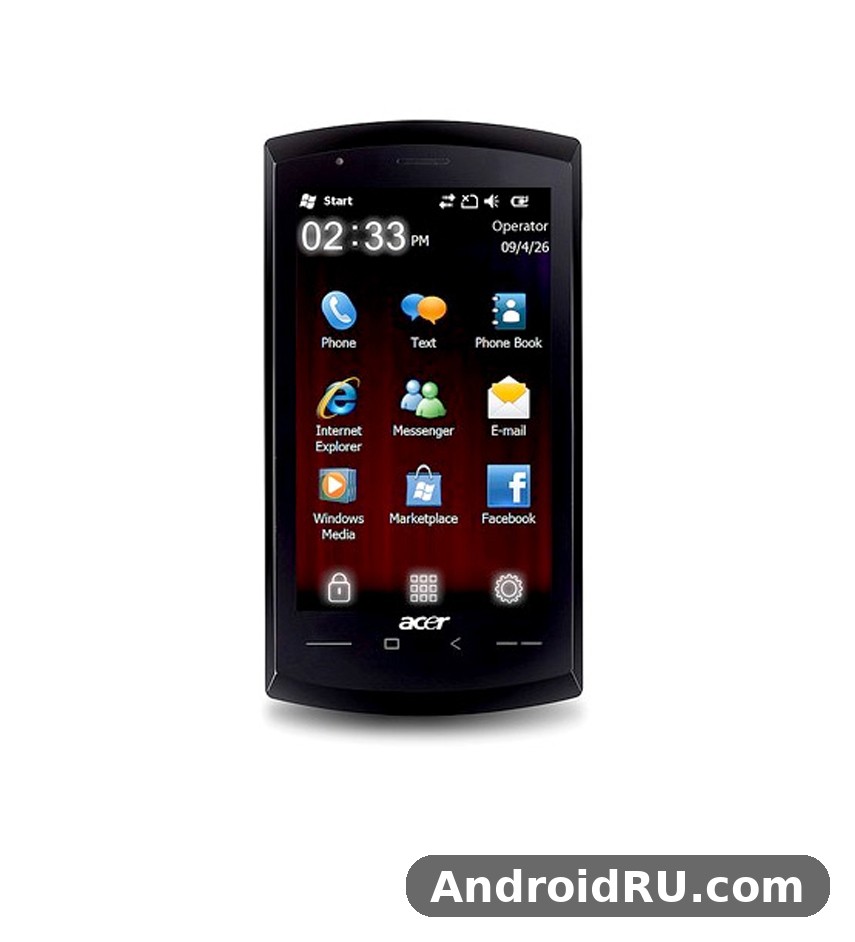
The Acer neoTouch price and availability October 2009 launch placed it in the premium smartphone range of its time, and the Acer neoTouch S200 SingTel launch Singapore October 2009 showed how carriers presented it as a flagship Windows Mobile device. The Acer neoTouch also known as Acer F1 smartphone name appeared in early coverage, because the F1 name was used before the neoTouch branding became the retail name. The Acer neoTouch hands on first impressions October 2009 reports, including the PhoneArena hands-on dated 6 October 2009, focused on the same three things that still define this model today: speed, screen size and the Acer Shell interface over Windows Mobile 6.5. This article treats the phone as a classic 2009 device, using launch-period information and the verified specification record, not a modern hands-on test.
If you are comparing other Acer phones from the same period, these related guides may help: Acer Liquid After a Week of Use: Review, Value for Money and Full Specs, Buying the Acer beTouch E200? Read This Review and Specs Guide First, Acer beTouch E110 Specs and Review: A Detailed Look at Features, Acer beTouch E100 Review and Full Specifications: Everything You Should Know, and Breaking Down the Acer neoTouch P300: Review, Performance and Full Specs. The last of those covers a different neoTouch model, the P300, so do not confuse its later hardware and software with the S200 described here.
Design and Build Quality
The Acer neoTouch phone was built around its screen. A large display, a slim profile for 2009 and a clean front face gave it a modern look at launch, while the back used a smooth finish that felt more like a business device than a fashion phone. There was no physical keyboard, so the screen, the call and end keys, and a small set of touch controls carried most of the interaction. That choice made the phone thinner and easier to hold with one hand than many keyboard-equipped rivals, but it also meant that typing, navigation and text selection depended on the touch layer working well. For readers checking Acer neoTouch features, the design message was simple: this was a full-touch Windows Mobile phone, not a hybrid with a slide-out keyboard.
Dimensions, Weight and Pocket Comfort
The Acer neoTouch dimensions weight and pocket comfort review picture is one of a phone that was large for its year but still pocketable. At about 119 mm tall, 62.5 mm wide and 12.5 mm thick, with a weight of about 130 grams, it filled a shirt pocket without the bulk of the heaviest business phones of 2009. Acer neoTouch dimensions and Acer neoTouch weight mattered because the 3.8-inch screen set the minimum size, and Acer kept the bezel reasonably tight around it. In a trouser pocket it felt solid rather than heavy, and the rounded edges helped it slide in and out without catching. A case was still a sensible idea, because the large glass-fronted screen was the most exposed part of the phone, and a drop onto a hard surface could damage the display more easily than the plastic body.
Buttons, Ports and the 3.5 mm Jack
Below the screen sat the usual call controls, while the sides carried volume, power and camera controls in places that were easy to reach without looking. The Acer neoTouch 3.5mm headphone jack audio quality review point is worth noting here, because a standard 3.5 mm socket meant owners could use ordinary headphones instead of a proprietary adapter. Sound through wired headphones was clear and loud enough for music and podcasts on the move, and the phone could work as a portable media player when paired with a microSD card. The micro-USB port handled charging and data, the stylus silo kept the pen close at hand, and the rear camera sat flush enough not to snag in a pocket. None of these details was flashy, but together they made the phone practical to carry and use every day.
Display and Screen Quality
The screen is the strongest reason to remember this phone, and it is the centre of this Acer neoTouch display discussion. The Acer neoTouch screen measured 3.8 inches diagonally, used TFT technology, and offered a WVGA resolution of 480 by 800 pixels. That combination gave it a sharp image for web pages, email, maps and photos in 2009, with room for more text per line than the smaller QVGA and HVGA screens that were still common. Colours were bright and punchy for a TFT panel of the period, text stayed readable at normal viewing distances, and the wide aspect ratio suited video and landscape browsing. This was not a modern OLED panel, and it was never going to match the contrast of later displays, but for its launch year it was one of the larger and clearer phone screens available.
WVGA Resolution, Colours and Outdoor Visibility
The Acer neoTouch 3.8 inch WVGA touchscreen display quality held up well indoors, where brightness and colour saturation made menus, photos and web pages easy to read. The Acer neoTouch screen quality outdoor visibility and colours question had a more mixed answer. In direct sunlight the TFT panel washed out, as most phone screens of 2009 did, and reflections on the glossy surface made it harder to read maps or messages outdoors. Raising brightness helped, at the cost of battery life, and shading the screen with a hand was often the practical fix. Viewing angles were acceptable for sharing a photo with one other person, but colours shifted when the phone was tilted sharply. For indoor use, office work and evening browsing, the display was a clear strength; outdoors, it behaved like a typical screen of its generation.
Resistive Touchscreen, Stylus and Everyday Accuracy
The Acer neoTouch resistive touchscreen stylus accuracy and responsiveness need a careful explanation, because resistive touch was normal in 2009 even though it feels different today. The screen responded to pressure rather than to the light touch used by later capacitive screens, so a fingertip press, a fingernail or the supplied stylus all worked. The Acer neoTouch touchscreen was accurate for tapping small Windows Mobile menus, selecting text and drawing, and the Acer neoTouch stylus gave the best precision for handwriting, note-taking and fine controls. Finger use was possible, and Acer Shell added larger touch targets, but the underlying Windows Mobile interface still had small buttons that were easier with the stylus. Swiping and scrolling worked, though they felt firmer and less fluid than on capacitive rivals that arrived soon after. Owners who learned to use a light, firm press got the best results, while owners who expected a feather-light touch sometimes found the screen unresponsive at first.
Performance and Snapdragon Power
Performance is where the Acer neoTouch 2009 story becomes historic. The Acer neoTouch Snapdragon chipset was the Qualcomm QSD8250 Snapdragon S1, running a 1 GHz Scorpion core with Adreno 200 graphics. The Acer neoTouch performance at launch felt fast because most rivals still used processors running at 528 MHz or 600 MHz, so menus, web pages and applications opened with less waiting. The Acer neoTouch release timing matters here: it was the second phone on the market with a 1 GHz Snapdragon processor, after the Toshiba TG01, and that fact shaped how reviewers judged it. It was not just another Windows Mobile phone; it was proof that a phone processor could reach desktop-like clock speeds in a pocket device.
1 GHz Snapdragon S1 in Daily Use
The Acer neoTouch Snapdragon 1GHz processor performance review evidence from 2009 points to strong results for browsing, email, office documents and media playback. The Acer neoTouch vs Toshiba TG01 Snapdragon smartphone comparison is useful, because both phones shared the same 1 GHz idea but differed in screen, software and design. The Toshiba TG01 arrived first, while the Acer model added Acer Shell, a 5-megapixel camera and a different take on Windows Mobile usability. The Acer neoTouch second Snapdragon phone after Toshiba TG01 position meant it was judged against a very small group of fast phones, and it held its own on raw speed. In daily use, the processor helped most with large web pages, zooming and panning maps, and playing WVGA video, where slower phones stuttered. It could not fix the limits of Windows Mobile 6.5 or the 256 MB of RAM, but it removed the processor as the main bottleneck.
Memory, Multitasking and Storage Limits
The Acer neoTouch 256MB RAM multitasking limitations in 2009 were real, even with a fast processor. The Acer neoTouch memory allowed a few applications to stay open, but heavy multitasking, large attachments and several browser tabs could slow the phone and force applications to reload. The Acer neoTouch 512MB ROM storage and app installation guide point is related: the Acer neoTouch storage included 512 MB of internal ROM, with part of that space used by the system, so owners who installed many applications needed a microSD card. Acer neoTouch specifications RAM ROM processor and camera details are summarised in the table below, and they explain the balance of this phone: a fast processor, modest memory by later standards, and expandable storage that made the phone more flexible. The Acer neoTouch microSD expansion and internal storage options therefore mattered in practice, because a card held music, photos, maps and documents without filling the internal memory. The Acer neoTouch software experience improved when owners kept the internal memory tidy, closed unused programs and stored media on the card.
Software and Windows Mobile 6.5
The operating system was Windows Mobile 6.5, and that choice defined both the strengths and the limits of the phone. The Acer neoTouch Windows Mobile platform gave owners Outlook email, calendar, contacts, Office Mobile, Internet Explorer Mobile and access to Windows Marketplace for Mobile, which suited business users who already lived in Microsoft software. The Acer neoTouch software also included Acer Shell, a custom home screen with large widgets for weather, time, messages, music and favourite contacts. Acer Shell made the phone friendlier than a stock Windows Mobile device, with big touch targets and a more visual home screen, but it could not hide the older menus underneath. Tapping into settings, file management or some third-party applications still revealed the small, stylus-friendly interface that Windows Mobile was known for.
Acer Shell, Widgets and Customisation
The Acer neoTouch user experience with Windows Mobile 6.5 depended a lot on Acer Shell. The Acer neoTouch Acer Shell interface customisation and widgets let owners arrange the home screen around the information they checked most, from the clock and weather to missed calls and new messages. That made the phone feel personal and modern at a glance, even though the deeper system stayed familiar to Windows Mobile users. Customisation was practical rather than endless: owners could change widgets, shortcuts and wallpaper, and they could reach common tools quickly without digging through menus. The trade-off was that Acer Shell added another layer on top of the system, so a software fault or a heavy widget could slow the home screen. Keeping the widget set simple gave the best balance of looks and speed.
Apps, Maps and GPS Navigation
The Acer neoTouch GPS navigation with Windows Mobile maps software was a useful feature for drivers and travellers in 2009. The Acer neoTouch GPS receiver worked with mapping software to show position, plan routes and guide the driver with voice prompts, and the large WVGA screen made maps easier to read than on smaller phones. The Acer neoTouch connectivity for navigation also mattered, because assisted GPS could use the mobile network to get a faster first fix. Office documents, PDF reading, email with attachments and calendar sync all fitted the business focus, while media playback and a reasonable web browser covered leisure use. The app catalogue was smaller and less polished than the stores that grew up around later platforms, so owners should judge the phone by what it shipped with and what Windows Mobile offered at the time, not by the app choice of a decade later.
Camera Quality
The rear camera was a 5-megapixel unit with autofocus, and it was one of the stronger parts of the specification sheet. The Acer neoTouch camera produced detailed daylight photos for 2009, with enough resolution for prints and for viewing on a computer screen, and autofocus helped with close subjects such as documents, business cards and flowers. The Acer neoTouch 5 megapixel autofocus camera sample quality in good light showed natural colours and reasonable sharpness in the centre of the frame, though edges could soften and bright skies could blow out. Low-light photos were weaker, with more noise and slower shutter speeds, and there was no front camera for video calls. The camera interface was simple, with scene modes, white balance and resolution choices, and the dedicated camera key made it quick to open when a moment appeared.
5 Megapixel Autofocus Camera in Daylight and Low Light
In daylight, the camera rewarded a steady hand and a clean lens. Photos of streets, buildings and people held detail well, and the WVGA screen gave a large preview that made framing easier. Indoors and at dusk, the camera needed more light, and moving subjects blurred more easily. The Acer neoTouch video playback WVGA resolution support explained in this section is a separate point: the phone could play video at WVGA-friendly resolutions, which suited the screen, though file format support depended on the player and codecs available on Windows Mobile. For a 2009 phone, the camera was competitive rather than class-leading, and its best results came in the conditions where most phone cameras of the period also did their best work: bright, even light and a still subject.
Battery Life and Connectivity
The battery was a removable 1,300 mAh lithium-ion unit, and the Acer neoTouch battery behaviour reflected the power demands of a large screen and a 1 GHz processor. The Acer neoTouch battery life 1300mAh real world test picture from launch-period use was mixed: a light day of calls, messages and occasional browsing could last into the evening, while heavy GPS navigation, video playback or long browsing sessions drained the battery much faster. The Acer neoTouch charging time and standby time measurements varied with the charger, the network signal and how many background tasks were running, so owners learned to carry the charger on long days and to close unused applications. A removable battery was a practical advantage, because a spare battery could extend a long day without a power socket.
Battery Life, Charging and Standby Time
Standby time was best when the phone had a strong signal, Wi-Fi and Bluetooth were off, and the screen brightness was set to a moderate level. Screen brightness was the biggest single drain, followed by GPS and mobile data, so dimming the display and using Wi-Fi where available helped the phone last longer. Charging through the micro-USB port was convenient, and a full charge from empty took a few hours with the supplied charger, which was normal for the period. There was no fast charging in the modern sense, and owners should not expect the battery endurance of a later phone with a much larger cell. The lesson for a classic device is to treat the battery as a consumable: a fresh, good-quality replacement cell, if one can be found, makes a bigger difference than any software tweak.
Wi-Fi, Bluetooth, GPS and Mobile Data
The Acer neoTouch WiFi Bluetooth GPS connectivity features explained here cover the main wireless tools. The Acer neoTouch WiFi connection used 802.11b/g, which was standard for 2009 and fast enough for email, browsing and media downloads on a home or office network. The Acer neoTouch Bluetooth link used Bluetooth 2.0 with A2DP, so owners could pair a headset for calls or stream stereo audio to compatible headphones and car kits. The Acer neoTouch GPS receiver, described above, supported navigation and location-based services. The Acer neoTouch HSDPA 7.2 Mbps mobile data speed test expectation was up to 7.2 Mbps on HSDPA, with slower speeds in practice depending on the network and signal, and quad-band GSM for voice and text when 3G was not available. The Acer neoTouch connectivity set was complete for its year, with Wi-Fi for speed at home, 3G for data on the move, Bluetooth for accessories and GPS for maps.
Full Specifications
For readers searching for Acer neoTouch specs, the table below brings the verified details together in one place. The Acer neoTouch specifications RAM ROM processor and camera summary in the introduction is expanded here, with the display, battery, connectivity and physical details that buyers and collectors check first. The Acer neoTouch price at launch varied by country and carrier, and the Acer neoTouch S200 model name is the key detail to check when comparing listings, because the P300 and P400 are different neoTouch models. Use the table as the reference point, and use the sections above for how those numbers behaved in use.
| Feature | Detail |
|---|---|
| Brand | Acer |
| Model | Acer neoTouch S200 |
| Also known as | Acer F1 |
| Announced | October 2009 |
| Released | October 2009 |
| Operating system | Windows Mobile 6.5 Professional |
| Chipset | Qualcomm QSD8250 Snapdragon S1 |
| Processor | 1 GHz Scorpion |
| Graphics | Adreno 200 |
| RAM | 256 MB |
| Internal storage | 512 MB ROM |
| Expandable storage | microSD card slot |
| Display | 3.8-inch TFT resistive touchscreen |
| Resolution | 480 x 800 pixels, WVGA |
| Rear camera | 5 megapixels, autofocus |
| Front camera | No |
| Video recording | Yes, supported on Windows Mobile |
| Battery | Removable Li-Ion 1,300 mAh |
| Network | GSM 850 / 900 / 1800 / 1900, HSDPA 900 / 2100 |
| Mobile data | HSDPA up to 7.2 Mbps, HSUPA |
| Wi-Fi | Wi-Fi 802.11 b/g |
| Bluetooth | Bluetooth 2.0 with A2DP |
| GPS | Yes, with A-GPS |
| Headphone jack | 3.5 mm |
| USB | microUSB |
| Sensors | Accelerometer |
| Dimensions | About 119 x 62.5 x 12.5 mm |
| Weight | About 130 g |
| Stylus | Yes, stored in the body |
How to Read the Specification Table
The table is best read as a 2009 snapshot, not as a comparison with a modern phone. A 1 GHz processor was fast then, 256 MB of RAM was workable then, and a 3.8-inch WVGA screen was large then. The numbers that still matter most for a collector or a curious reader are the chipset, the operating system, the screen size and resolution, the camera resolution and the battery capacity, because those explain what the phone could do and where it struggled. The Acer neoTouch manual is the best source for the exact menu names and safety notes for a surviving handset, and the Acer neoTouch update history is also worth checking, because Windows Mobile 6.5 received updates and fixes during its supported life.
Display and Camera Notes
The display and camera notes are short: the TFT panel gave a bright WVGA image with good colour indoors, while the 5-megapixel autofocus camera gave detailed daylight photos and weaker low-light results. Neither part was perfect, but both were competitive for October 2009, and both are central to the screen quality and camera quality themes of this review. A buyer checking a used example should test the touch layer across the whole screen, look for dead pixels, and take a test photo in daylight before deciding.
Processor, Memory and Connectivity Notes
The processor, memory and connectivity notes explain the balance of the phone: the Snapdragon S1 gave it speed, the 256 MB of RAM set the multitasking ceiling, and the microSD slot, Wi-Fi, Bluetooth, GPS and HSDPA gave it the wireless tools expected of a premium 2009 smartphone. The Acer neoTouch update path for software was limited by the Windows Mobile platform, so owners should not expect modern applications or security updates on a surviving handset. That limit is part of the classic-device story, not a fault in the original design.
Pros and Cons
The Acer neoTouch common problems and software update history should be read alongside the strengths, because a fair review of a 2009 phone needs both sides. Common problems reported in the period included the learning curve of Windows Mobile, the limits of resistive touch for finger-only use, and battery drain during heavy GPS or video use. Software updates could improve stability and fix bugs, but they could not change the underlying platform or add the app choice of later systems. Owners who understood those limits got a fast, capable phone; owners who expected a modern app store experience were more likely to be disappointed.
Strengths and Weaknesses at a Glance
Pros
- the second Snapdragon-powered phone on the market, with a 1 GHz processor that felt fast in 2009.
- a large 3.8-inch screen for its time, with WVGA resolution that suited browsing, maps and video.
- 5-megapixel autofocus camera with good daylight detail.
- Complete 2009 connectivity, including Wi-Fi, Bluetooth, GPS and HSDPA.
- Standard 3.5 mm headphone jack, microSD expansion and removable battery.
Cons
- Windows Mobile 6.5 felt dated next to newer touch interfaces, even at launch.
- Resistive touchscreen needed a firmer press and worked best with the stylus.
- 256 MB of RAM limited heavy multitasking.
- Battery life fell quickly under GPS, video and long browsing sessions.
- Outdoor screen visibility was limited in direct sunlight.
The Acer neoTouch replacement battery and accessories buying advice for a surviving handset is to check the battery first, then the charger, the stylus and a microSD card. Acer neoTouch accessories such as a case, a spare battery and a car charger made the phone more practical in 2009, and they still matter for anyone who wants to use or display a working example today. Buy only from a seller who shows the phone switched on, the screen responding to touch, and the camera working, because those are the parts that are hardest to repair on a classic phone.
Frequently Asked Questions
When was the Acer neoTouch released?
The Acer neoTouch was released in October 2009. The launch period included a hands-on report on 6 October 2009 and a SingTel launch in Singapore on 17 October 2009, and the phone was also known as the Acer F1. The Acer neoTouch 2009 launch placed it among the first Snapdragon-powered phones, and the October date is the release date to use when checking listings or comparing it with rivals from the same year.
What processor does the Acer neoTouch use?
The Acer neoTouch uses the Qualcomm QSD8250 Snapdragon S1 chipset, with a 1 GHz Scorpion processor and Adreno 200 graphics. That made it the second phone on the market with a 1 GHz Snapdragon processor, after the Toshiba TG01. The fast processor helped with browsing, maps and media, even though the 256 MB of RAM and Windows Mobile 6.5 set other limits on the overall experience.
Is the Acer neoTouch still worth buying today?
The Acer neoTouch collector value and retro smartphone appeal today is the main reason to buy one now. It is not a practical daily phone for modern applications, banking or messaging, because Windows Mobile 6.5 is no longer supported and many modern services will not run on it. As a collector item, a piece of Snapdragon history or a display piece, a working example with a good screen, a working camera and a fresh battery can be worth owning. Check the touch layer, the battery and the included accessories before paying a collector price.
Does the Acer neoTouch have a microSD slot?
Yes, the Acer neoTouch has a microSD card slot for expandable storage, alongside 512 MB of internal ROM. A microSD card is the practical way to store music, photos, maps and documents, and it keeps the internal memory free for applications. Use a card of a size that Windows Mobile 6.5 and the phone hardware can handle, and keep a copy of important files elsewhere, because old cards and old batteries can fail without warning.
Verdict: Who Should Remember the Acer neoTouch?
The verdict is that the Acer neoTouch was a fast, large-screen Windows Mobile phone that showed where smartphones were heading in 2009. Windows Mobile 6.5 with Acer Shell on top gave it a business-friendly base and a friendlier home screen, while a 5-megapixel camera with autofocus gave it a competitive camera for its year. The screen quality, the Snapdragon speed and the complete connectivity set were its strongest points, and the resistive touch layer, the modest RAM and the battery life under heavy use were its clearest limits. For a reader who wants to understand the early Snapdragon era, the S200 is a useful landmark: it arrived second, it arrived with a big screen, and it arrived just before touch phones changed again. Keep the model name clear, check the S200 details in the table above, and judge the phone as a classic 2009 device, not as a rival to a modern handset.

