

Redmi K70 Review: Display Quality, Speed and Daily Use
This Redmi K70 review looks at a phone that arrived with a clear job: bring a former flagship chip, a sharp high-resolution screen and very fast charging to a price far below the top tier. Xiaomi announced the handset on 29 November 2023, and it was released on the same day, with sales in China starting on 1 December 2023. The model number is 23113RKC6C, and the launch price was about 320 EUR, with the Redmi K70 price in China after launch starting at CNY 2,499 for the base version. That starting point matters, because almost everything about this phone reads like a flagship from the year before, sold at a much lower price.
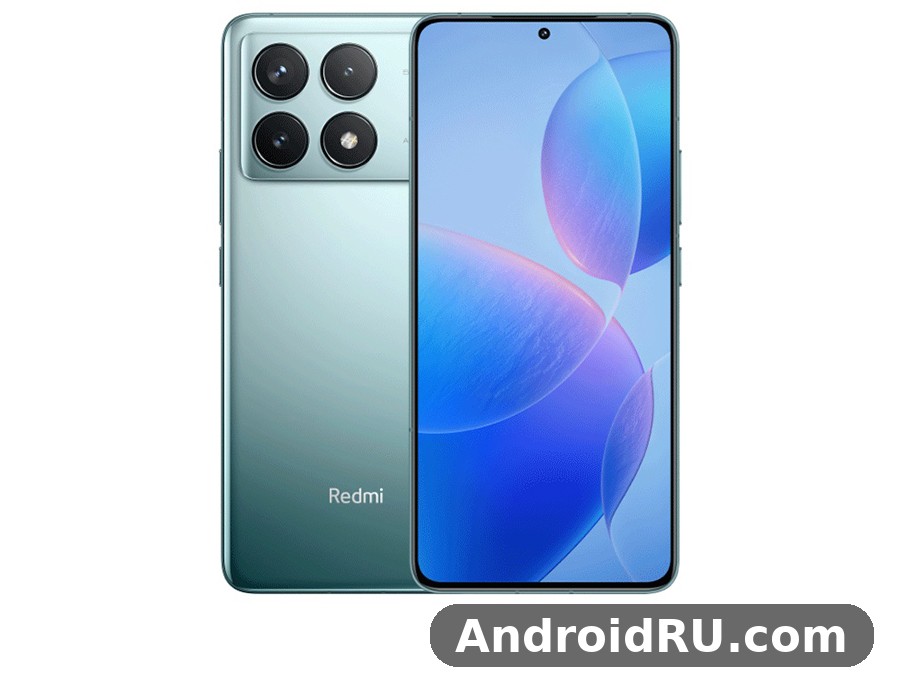
The headline Redmi K70 specs are easy to list: a 6.67-inch OLED panel with 1440 x 3200 pixels, a Qualcomm Snapdragon 8 Gen 2 chip, 12GB or 16GB of RAM, a 50MP main camera with optical image stabilisation, a 5000mAh battery and 120W charging that can fill the battery in about 18 minutes. It launched with Android 14 and HyperOS, and it comes in Black, Silver, Blue/Green and Purple. On paper the package is strong, so the real question is how it behaves day to day, two years after launch, when the chip is no longer the newest and the software has moved on.
The short answer is that the screen and the charging still carry the phone. The display is bright, sharp and detailed, the chip still handles demanding apps and games without fuss, and the 120W charging removes most battery anxiety. The cameras are good in daylight and less impressive after dark, and the phone was launched mainly for China, so buyers elsewhere need to check bands, software and seller support before buying. This review works through the display, speed, cameras, battery and software in turn, then lists the full specifications, so you can judge whether the Redmi K70 value still makes sense for you.
Design and Build Quality
Redmi K70 design is clean and flat-sided, with a rectangular camera module on the back and a centred hole-punch camera on the front. The frame and glass back give it a solid, dense feel rather than a light plastic one, and the flat sides make it easy to grip and easy to pick up from a table. It is a large phone, so one-handed use takes some finger gymnastics, but the weight is spread evenly and the phone does not feel top-heavy.
Size, Weight and In-Hand Feel
Redmi K70 dimensions are 160.9 x 75 x 8.2 mm, and Redmi K70 weight is 209 g. That is chunky by modern standards, but the 8.2 mm thickness keeps it from feeling like a brick, and the flat edges help it sit steadily in the hand. The volume and power buttons sit on the right edge within easy reach, and the dual Nano-SIM tray keeps the phone usable with two numbers. A case is worth adding, not because the phone feels fragile, but because a 209 g glass phone is unforgiving when it slips onto a hard floor.
Colours and Finish
Redmi K70 colours are Black, Silver, Blue/Green and Purple, so there is a quiet option and a few bolder ones. The darker finishes hide fingerprints better, while the lighter ones show off the glass back. Any Redmi K70 case and screen protector buying guide starts with the same advice: pick a case that covers the camera module edges, because the module sits proud of the back and takes the first knock when the phone is laid down. Redmi K70 durability depends on daily care more than on any rugged rating, since no official IP rating is listed for this model, so keep it away from heavy rain and dust.
Buttons, Ports and Speakers
Redmi K70 speakers are a stereo pair, and a Redmi K70 speaker quality test with stereo sound shows clear separation between the two channels, with enough volume for video and casual music without headphones. The sound supports 24-bit/192kHz Hi-Res audio, which suits wired listening over USB-C. There is no 3.5 mm headphone jack and no FM radio, while an infrared port is present for controlling a television or air conditioner, and the USB Type-C port supports OTG.
Fingerprint Sensor and Everyday Handling
Redmi K70 fingerprint unlocking uses an optical sensor under the display, and Redmi K70 fingerprint sensor speed and accuracy is good in normal use: a registered thumb opens the phone quickly, and the sensor works well once the finger is placed flat on the marked area. A Redmi K70 unboxing is a useful first check for buyers who want to confirm the charger in the box and the condition of the phone, and it is worth checking the screen for a pre-applied protector. In daily handling the phone feels reassuring, with no creaks or flex, and the under-display sensor keeps the back clean.
Display Quality
Redmi K70 display quality is the strongest reason to pick this phone. The 6.67-inch OLED panel shows 68 billion colours, runs at 120 Hz, and supports Dolby Vision and HDR10+, with a peak brightness of 4000 nits. In any Redmi K70 6.67 inch OLED display quality review, the panel is the first thing that stands out: text is crisp, photos look rich, and video has the contrast that only OLED can give. The 1440p screen resolution of 1440 x 3200 pixels works out to about 526 pixels per inch, so even small text stays sharp.
Sharpness, Colour and Brightness
The OLED display is a 12-bit panel, which helps gradients in skies and skin tones look smooth instead of banded. Colours are vivid in the default mode and more restrained if you switch the colour profile, so the phone suits both people who like punchy colour and people who want a calmer look. For a Redmi K70 1440p screen brightness outdoors test, the headline number is the 4000-nit peak, and in practice the screen stays readable in bright daylight, even if the peak figure only applies to small bright areas in HDR content. The screen covers about 89.0 percent of the front, so bezels are thin and video fills the view nicely.
Refresh Rate and Outdoor Use
Redmi K70 screen refresh rate settings for smooth scrolling let you choose between a fixed rate and an adaptive setting, and the 120 Hz mode makes scrolling through feeds, web pages and menus feel fluid. The panel also uses high-frequency PWM dimming, which helps comfort in low light for people who notice flicker on other OLED phones. Outdoors, the phone holds up well: brightness rises fast, reflections are manageable, and the auto-brightness steps are smooth rather than jumpy. The screen is bright, sharp and comfortable to read outdoors, and it stays that way through a long day of reading and video.
Performance and Speed
Redmi K70 performance comes from the Qualcomm SM8550-AB Snapdragon 8 Gen 2, a 4 nm chip with an octa-core CPU: one 3.2 GHz Cortex-X3 core, two 2.8 GHz Cortex-A715 cores, two 2.8 GHz Cortex-A710 cores and three 2.0 GHz Cortex-A510 cores, plus an Adreno 740 GPU. A Redmi K70 Snapdragon 8 Gen 2 performance test puts this former flagship chip in a clear spot: it is a step behind the newest flagship chips, yet it is far ahead of the mid-range chips used in most phones near this price. Apps open fast, switching is instant, and heavy web pages load without stutter.
Memory is 12GB or 16GB of LPDDR5X RAM with 256GB, 512GB or 1TB of UFS 4.0 storage, and there is no card slot, so pick the storage size with care. A Redmi K70 12GB RAM multitasking performance test is less about raw speed and more about keeping apps alive: with 12GB, switching between a browser, maps, messaging and a camera app keeps everything in place, and the 16GB versions have even more headroom. The Redmi K70 vs Redmi K70 Pro differences explained in short are the chip and the camera tuning: the Pro uses the newer Snapdragon 8 Gen 3, while this phone keeps the Gen 2 and a lower price. For a closer look at the faster sibling, see Redmi K70 Pro Review: Screen Quality, Cameras and Charging.
Snapdragon 8 Gen 2 in Daily Tasks
In daily use the Snapdragon 8 Gen 2 feels relaxed. Social apps, email, banking, navigation and photo editing all run without waiting, and the phone stays responsive when several apps are open at once. The chip also handles 8K video playback and large photo files without warming up much, which is where older mid-range chips usually show their limits. HyperOS animations stay smooth, and the 120 Hz screen makes the speed easy to feel, not just to measure.
Gaming Performance and Heat
Redmi K70 gaming performance with demanding titles is strong: popular competitive games run at high frame rates with stable graphics, and the Adreno 740 GPU handles high settings in most titles without dropping frames for long stretches. Redmi K70 gaming is helped by the large vapour-chamber style cooling area inside the phone and by the sharp, responsive screen, which makes aiming and timing feel precise. Redmi K70 overheating during long gaming sessions is limited in normal play, though a long session in a warm room will warm the upper back of the phone, as it does on most glass phones. If gaming is your main use, the Ultra model is worth comparing in Redmi K70 Ultra Review: Gaming, Multitasking and Battery Life.
Cameras
Redmi K70 camera hardware is a triple rear setup: a 50MP main camera with an f/1.6 lens, a 1/1.55-inch sensor, phase-detection autofocus and optical image stabilisation, plus an 8MP ultrawide camera and a 2MP macro camera. The front camera is 16MP. The main sensor is the interesting part: it is larger than the sensors in most phones at this price, and the wide f/1.6 aperture lets in plenty of light. The 8MP ultrawide and 2MP macro are useful extras rather than headline features, and the phone records video up to 8K at 24 frames per second.
Main Camera in Daylight and Low Light
Redmi K70 50MP camera quality in daylight is good: photos are sharp, colours are lively without looking artificial, and the large sensor keeps detail in both bright skies and shadows. The 50MP camera captures fine detail in foliage, building textures and food shots, and the autofocus locks on quickly for moving subjects such as pets and children. Redmi K70 night mode photo samples low light show the expected trade-off: the main camera still takes usable night shots with decent brightness, but fine detail softens and bright lights can bloom. Redmi K70 portrait mode tips for better photos are simple: keep the subject a step or two away, use good light, and let the phone separate the subject from the background rather than forcing a close crop.
Ultrawide, Macro and Selfie Camera
Redmi K70 ultrawide camera review in real life comes down to convenience: the 8MP ultrawide fits a whole building or a group of friends into the frame, though edge detail is softer than the main camera and colours are a little cooler. Redmi K70 macro camera results close up shots are modest, as the 2MP macro sensor is best for casual close-ups of flowers or small objects in bright light, not for serious detail work. The Redmi K70 16MP selfie camera quality review is positive for video calls and social photos: Redmi K70 selfie shots are clear and well exposed, with natural skin tones in daylight, and the front camera records 1080p video at 30 or 60 frames per second with gyro-based stabilisation. The cheaper sibling takes a different camera path, covered in Redmi K70E Review: Camera Quality, Battery and Value.
Video Recording
Redmi K70 video recording reaches 8K at 24 frames per second, 4K at 24, 30 or 60 frames per second, and 1080p up to 240 frames per second for slow motion, with gyro-EIS stabilisation. A Redmi K70 8K video recording quality test shows plenty of detail, though 4K at 30 or 60 frames per second is the more practical choice for most people, since 8K files are huge and need a powerful computer to edit. A Redmi K70 4K video stabilisation test while walking shows steady footage with only mild bounce, and the phone handles panning smoothly. For video quality at the next step up, see Redmi K80 Pro Review: Photo Quality, Video and Performance.
Battery Life and Charging
Redmi K70 battery capacity is 5000 mAh in a non-removable Li-Po cell, and the phone supports 120W wired charging with Power Delivery 3.0 and Quick Charge 3+, reaching a full charge in about 18 minutes with the supplied charger. There is no wireless charging, which is the one clear gap in the power story. The combination of a large battery and very fast wired charging means the phone is rarely the thing that limits your day.
How Long the Battery Lasts
Judging Redmi K70 5000mAh battery life daily use is simple: most people end the day with charge left after a mix of messaging, browsing, maps, music and an hour or two of video. Heavy gaming or long camera sessions will drain it faster, but the 5000mAh battery still gets through a full day for most users, and a lighter day can stretch into a second morning. A Redmi K70 battery drain overnight standby test shows only a small drop while the phone sleeps, provided background sync is kept in check. Redmi K70 how to check battery health status is a common question after a year of use: check the battery section in settings and look at usage patterns, and if the phone starts losing charge much faster than before, a battery service check is worth doing.
120W Charging in Practice
A Redmi K70 120W fast charging time test shows the real benefit: a ten-minute top-up adds a large chunk of charge, and a full charge takes about 18 minutes from empty. Redmi K70 charging is at its best with the 120W charger, and the phone manages heat during charging well enough that the back only feels warm, not hot. Redmi K70 charging with third party 120W charger is possible, but speeds vary: chargers that support the right fast-charging protocols charge quickly, while generic chargers fall back to slower speeds. The charging is fast charging that genuinely changes daily habits, because a short plug-in before leaving the house is often enough. The newer K80 generation puts even more focus on battery life, as covered in Redmi K80 Review: Design, Battery Life and Usability.
Software, Connectivity and Extras
Redmi K70 software launched with Android 14 and HyperOS, Xiaomi’s interface that replaced MIUI on this generation. Redmi K70 HyperOS features and software experience cover a cleaner control centre, lock-screen customisation, better cross-device links with other Xiaomi products, and the usual set of themes, gestures and privacy controls. The interface is busy in places and ships with pre-installed apps that some owners remove, but it is fast, and the settings are easy to learn after a day or two.
HyperOS and Android 14
The Redmi K70 software update policy and HyperOS updates are worth checking before buying a used or imported unit: update timing can differ by region and by seller, so confirm which HyperOS version the phone is running and whether security patches are arriving. In use, HyperOS feels smooth on this hardware, with quick app launches and reliable notifications, and the phone supports the usual Android features such as split-screen, app cloning and digital wellbeing tools. A Redmi K70 long term review after one year would focus on battery health, update frequency and whether the storage still feels roomy, since there is no card slot to add space later.
Connectivity, Audio and Sensors
Redmi K70 5G support covers a wide set of bands, including SA and NSA modes, and the phone also supports Wi-Fi 802.11 a/b/g/n/ac/6e/7 with dual-band operation and Wi-Fi Direct, Bluetooth 5.3 with A2DP and LE, and NFC for contactless payments: Redmi K70 NFC is present and works with supported payment apps where the region allows it. Redmi K70 WiFi 7 connectivity and Bluetooth range are solid in a home or office, with stable links to headphones, watches and routers. Positioning covers GPS with L1 and L5 bands, GLONASS, BeiDou, Galileo, QZSS and NavIC, and the sensor set includes an under-display fingerprint sensor, accelerometer, proximity sensor, gyroscope and compass.
Full Specifications
These Redmi K70 specs put the phone in the upper mid-range with a former flagship chip, and the Redmi K70 256GB storage option worth buying for most people is the 12GB RAM and 256GB version, since it keeps the price low while leaving room for apps, photos and offline video. The full table below lists the key details from the official specification sheet.
| Network | GSM / CDMA / HSPA / CDMA2000 / LTE / 5G |
|---|---|
| 2G / 3G / 4G bands | GSM 850 / 900 / 1800 / 1900; HSDPA 800 / 850 / 900 / 1700 / 2100; LTE bands 1, 3, 4, 5, 8, 18, 19, 26, 28, 34, 38, 39, 40, 41, 42, 48, 66 |
| 5G bands | 1, 3, 5, 8, 28, 38, 41, 48, 66, 77, 78 SA/NSA |
| Announced | 29 November 2023 |
| Status | Available. Released 29 November 2023 |
| Dimensions | 160.9 x 75 x 8.2 mm |
| Weight | 209 g |
| SIM | Nano-SIM + Nano-SIM |
| Display type | OLED, 68B colours, 120Hz, Dolby Vision, HDR10+, 4000 nits peak |
| Display size | 6.67 inches, 107.4 cm2, about 89.0% screen-to-body ratio |
| Resolution | 1440 x 3200 pixels, 20:9 ratio, about 526 ppi density |
| Operating system | Android 14, HyperOS |
| Chipset | Qualcomm SM8550-AB Snapdragon 8 Gen 2 (4 nm) |
| CPU | Octa-core: 1×3.2 GHz Cortex-X3, 2×2.8 GHz Cortex-A715, 2×2.8 GHz Cortex-A710, 3×2.0 GHz Cortex-A510 |
| GPU | Adreno 740 |
| Card slot | No |
| Internal memory | 256GB 12GB RAM, 256GB 16GB RAM, 512GB 12GB RAM, 512GB 16GB RAM, 1TB 16GB RAM; UFS 4.0 |
| Main camera | Triple: 50 MP, f/1.6, wide, 1/1.55 inch, 1.0 micrometre, PDAF, OIS; 8 MP ultrawide; 2 MP macro |
| Main camera features | Colour spectrum sensor, LED flash, HDR, panorama |
| Main camera video | 8K at 24fps, 4K at 24/30/60fps, 1080p at 30/60/120/240/960fps, 720p at 1920fps, gyro-EIS |
| Selfie camera | Single 16 MP wide, HDR, 1080p at 30/60fps, gyro-EIS |
| Loudspeaker | Yes, with stereo speakers; 24-bit/192kHz Hi-Res audio |
| 3.5 mm jack | No |
| WLAN | Wi-Fi 802.11 a/b/g/n/ac/6e/7, dual-band, Wi-Fi Direct |
| Bluetooth | 5.3, A2DP, LE |
| Positioning | GPS (L1+L5), GLONASS, BDS, GALILEO, QZSS, NavIC |
| NFC | Yes |
| Infrared port | Yes |
| Radio | No |
| USB | USB Type-C, OTG |
| Sensors | Fingerprint (under display, optical), accelerometer, proximity, gyro, compass |
| Battery | Li-Po 5000 mAh, non-removable |
| Charging | 120W wired, PD3.0, QC3+, 100% in 18 min (advertised) |
| Colours | Black, Silver, Blue/Green, Purple |
| Model | 23113RKC6C |
| Price | About 320 EUR |
Pros and Cons
The phone is strong value for a former flagship chip, and the balance of strengths and weaknesses is easy to sum up once the display, speed, cameras and battery have been tested in daily use.
Pros
- Sharp 6.67-inch 1440p OLED with 120 Hz, Dolby Vision, HDR10+ and a 4000-nit peak brightness.
- Fast Snapdragon 8 Gen 2 chip with 12GB or 16GB of RAM and UFS 4.0 storage.
- 120W wired charging that fills the 5000 mAh battery in about 18 minutes.
- Capable 50MP main camera with a large sensor, OIS and 8K video recording.
- Stereo speakers, NFC, infrared port, Wi-Fi 7 and wide 5G band support.
Cons
- No wireless charging, despite the flagship-level chip and screen.
- No microSD card slot, so the storage size chosen at purchase is final.
- No official IP rating is listed for dust and water resistance.
- Ultrawide and macro cameras are modest next to the strong main camera.
- Launched mainly for China, so global buyers should check bands and software support.
Frequently Asked Questions
Is the Redmi K70 good for gaming?
Yes. The Snapdragon 8 Gen 2 and Adreno 740 GPU run demanding titles at high settings with stable frame rates, and the 120 Hz OLED screen makes games feel responsive. Long sessions warm the phone a little, but performance stays steady in normal play, and the 5000 mAh battery lasts through several hours of gaming before the 120W charger tops it up in minutes.
How long does the Redmi K70 battery last?
For most people it lasts a full day, with charge left in the evening after messaging, browsing, maps and video. Heavier days with gaming or long camera use will drain it faster, and lighter use can stretch into a second morning. When it does run low, the 120W wired charging fills it in about 18 minutes, so a short top-up is usually enough.
Does the Redmi K70 support wireless charging?
No. The phone supports 120W wired charging over USB-C with Power Delivery 3.0 and Quick Charge 3+, but it has no wireless charging coil, so wireless chargers will not work with it. Buyers who charge overnight on a wireless pad should plan to use the cable and the fast charger instead.
What is the Redmi K70 release date?
Xiaomi announced the phone on 29 November 2023, and it was released on the same day, with sales in China starting on 1 December 2023. It launched with Android 14 and HyperOS, in Black, Silver, Blue/Green and Purple, with 12GB or 16GB of RAM and 256GB, 512GB or 1TB of storage.
Is the Redmi K70 still worth buying in 2026?
It can be, at the right price. The screen, chip and 120W charging still feel current, and the 50MP main camera takes good daylight photos, so a well-kept unit at a clear discount is a sensible buy. Check the battery health, confirm the HyperOS version and update status, and confirm 5G bands and seller support for your region before paying, since the phone was launched mainly for China.
Verdict
This Redmi K70 review ends where it started: with a phone that trades the newest chip for a sharp screen, a fast former flagship processor and charging that removes battery worry. The 6.67-inch 1440p OLED is the highlight, the Snapdragon 8 Gen 2 still handles daily work and demanding games, and the 50MP main camera is reliable in good light. The missing wireless charging, the lack of a card slot and the China-first launch are real limits, but none of them changes what the phone does well. For buyers who want a bright, fast and long-lasting phone without paying flagship money, and who are happy with wired charging, it remains a practical choice in 2026.

