

Acer Liquid Z3 vs the Rest: Review and Specifications Compared
The Acer Liquid Z3 arrived in a year when small phones still ruled the budget shelf. This Acer Liquid Z3 full specifications and review looks at the little Acer handset on its own terms: a compact 3.5-inch phone with a dual-core chip, a small removable battery and a price that sat near the bottom of the 2013 market. The Acer Liquid Z3 release date September 2013 followed an August announcement, and the phone went on sale at about 100 euros. That low price shaped every choice Acer made, from the TFT panel to the 512MB of memory, and it still shapes how the phone should be judged today.
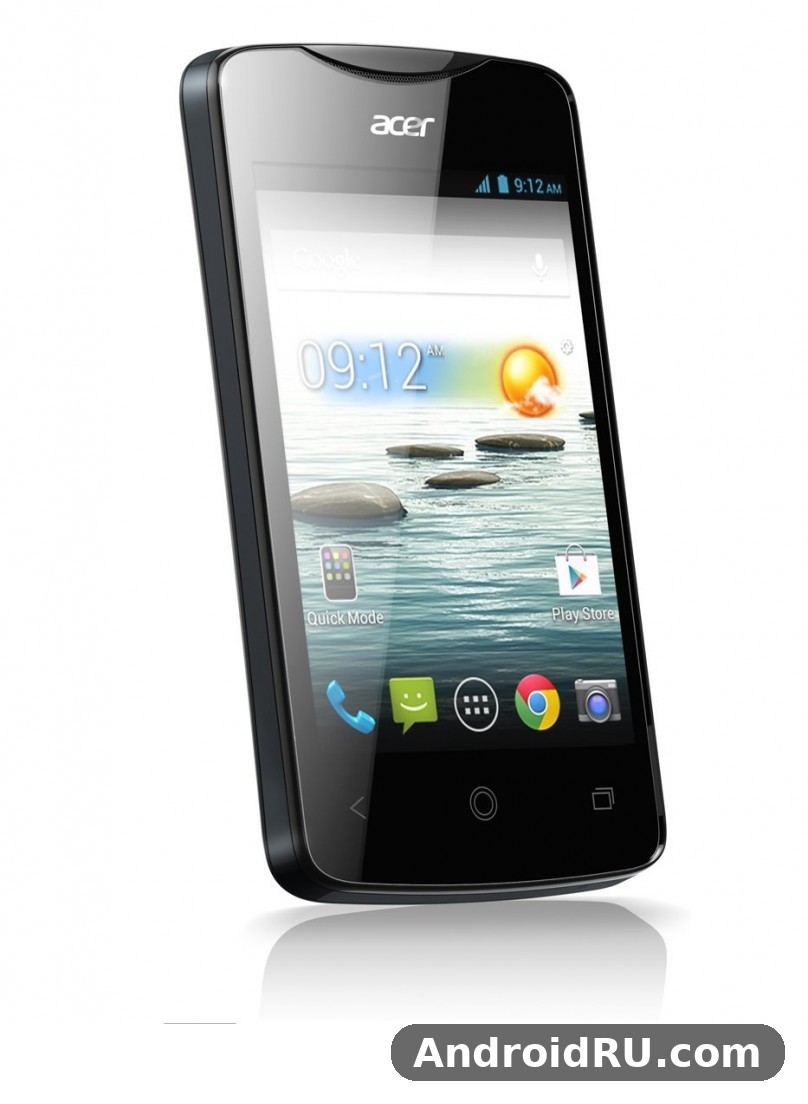
Readers coming to this Acer Liquid Z3 review in 2026 should treat it as a look back at a classic budget phone, not as a buying guide for a daily driver. Modern apps, modern web pages and modern security expectations have all moved past what this hardware can do. What remains interesting is how much Acer squeezed into 120 grams, and how the phone compares with the other small, cheap handsets of its year. An Acer Liquid Z3 unboxing in 2013 would have shown a simple box, a charger and a phone that felt honest about its limits, and that honesty is the thread running through this review.
Design and Build Quality
Compact Size and Pocket Feel
The Acer Liquid Z3 design is plain, rounded and practical. At 109 x 60 x 10.4 mm it fits fully inside an adult palm, and the curved back helps it sit comfortably during long calls. The Acer Liquid Z3 weight 120 grams dimensions review numbers tell the same story as holding it: this was a phone built to be carried without thought, slipped into a jacket pocket and forgotten until it rang. The Acer Liquid Z3 dimensions also meant one-handed use was easy, with the thumb reaching every corner of the small screen, and the phone was light enough to forget in a pocket on a walk or a commute. The Acer Liquid Z3 sound from its small speaker was loud enough for ringtones and hands-free calls, though music sounded thin and best heard through earphones.
Acer Liquid Z3 accessories sold at the time were simple: cases, screen protectors and spare batteries. Because the back cover comes off by hand, owners could swap a tired battery in seconds, and an Acer Liquid Z3 teardown is simple for the same reason, with no glue or hidden screws standing between the user and the battery bay. That kind of owner-friendly build has almost vanished from modern phones, and it is one of the few things about the Z3 that still feels generous rather than dated.
Colours and Materials
Two finishes were offered. The Acer Liquid Z3 Rock Black Classic White colours gave buyers a simple choice between a dark, discreet shell and a light one that showed fingerprints more readily. The Acer Liquid Z3 colors were limited to those two, and both used a matte plastic back that resisted scratches better than the glossy shells on some rivals. An Acer Liquid Z3 case was a sensible buy for owners who wanted to keep that matte finish clean, and a basic silicone cover cost very little at the time.
Rock Black and Classic White
Rock Black suited buyers who wanted the phone to disappear into a pocket or a bag, while Classic White gave the small handset a friendlier look that stood out on a desk. Neither finish pretended to be premium, and neither needed to: the plastic body kept the weight down, the matte texture gave a steady grip, and the removable cover made the whole phone easy to open for a battery swap or a card change. For a phone priced near 100 euros, the build was fair, solid and free of rattles.
Display
A 3.5-Inch TFT Panel
This Acer Liquid Z3 3.5 inch display review section starts with the obvious: the screen is small by any later standard, and that is the point. The Acer Liquid Z3 display uses a TFT panel measuring 3.5 inches, and the Acer Liquid Z3 screen shows the Android interface of its era in a compact frame that suits one thumb. Icons and text sit close together on the little panel, and the 3:2 shape gives web pages and menus a squat, practical look rather than the tall, narrow view of later phones.
Resolution and Sharpness
Resolution is 320 x 480 pixels, which works out to about 165 pixels per inch. That figure was ordinary for a budget phone in 2013, and it is enough for readable text, simple photos and the plain icons of Android 4.2. Fine print looks soft, and small photos lose detail when pinched larger, but menus, messages and call screens stay clear. Colours lean a little cool on the TFT panel, and contrast is modest, so the screen reads best as a tool for calls, texts and short checks rather than as a window for long reading sessions.
Outdoor Visibility and Viewing Angles
In bright sunlight the panel washes out, as most budget TFT screens of the period did, and the viewing angles narrow quickly when the phone tilts. Indoors, under a lamp or in a shaded room, the picture is steady and easy on the eyes. Owners learned to shade the screen with a hand on sunny days, and the small size made that easy. None of this surprised buyers in 2013: a screen like this was the accepted trade for a phone that cost about as much as a modest pair of shoes.
Performance and Software
MediaTek MT6572 and 512MB of RAM
The Acer Liquid Z3 MediaTek MT6572 processor performance sets the tone for the whole phone. The Acer Liquid Z3 chipset is the MediaTek MT6572, a 28 nm part with a dual-core 1.0 GHz Cortex-A7 CPU and Mali-400 graphics. On paper it was an entry-level chip even in 2013, and in daily use it handled the basics: calls, texts, the camera, music and light web browsing. The Acer Liquid Z3 performance was never about speed records; it was about doing ordinary jobs without fuss, and on that measure the chip did its work.
The Acer Liquid Z3 512 MB RAM performance is where the limits show first. The Acer Liquid Z3 RAM allows one or two apps to stay open, but switching between a browser, a music player and a map app forces reloads, and heavy pages can stall. Games beyond simple puzzle titles run slowly, and video playback is best kept to short clips at modest quality. In its own year this was normal for the price, and buyers who kept their expectations in line with the hardware found the phone patient rather than painful.
Android 4.2 Jelly Bean Experience
The Acer Liquid Z3 Android 4.2 Jelly Bean software gave owners the familiar Jelly Bean home screens, widgets and notification shade of the period, with Acer adding a few light touches of its own. The Acer Liquid Z3 Android interface is simple to learn: a grid of apps, a pull-down shade for settings, and a plain dialler and messaging app that do their jobs without clutter. The Acer Liquid Z3 software stays close to stock Android, which helped the small amount of memory go further than a heavy custom skin would have allowed.
Acer Liquid Z3 updates stopped at Android 4.2, so the phone never received the later versions that brought new features and security fixes. That fact matters more now than it did in 2013. Acer Liquid Z3 apps that still work today are mostly the basic ones: the dialler, messaging, a simple music player, the FM radio and a handful of light offline tools. Modern social apps and banking apps will not run, and the old browser struggles with current web pages, so the phone now suits calls, texts and music far better than it suits the modern internet.
Storage and microSD Expansion
The Acer Liquid Z3 microSD card slot expansion is the phone saving grace on storage. The Acer Liquid Z3 4 GB internal storage space leaves only a small amount free after the system takes its share, so a card is close to essential for music and photos. The Acer Liquid Z3 storage can grow by up to 32GB with a microSD card, and the Acer Liquid Z3 microSD slot sits under the back cover beside the SIM slots. Moving photos and music to the card keeps the internal memory clear for the few apps the phone can still run, and it is the single most useful upgrade any owner can make.
Camera
3.15MP Rear Camera
The Acer Liquid Z3 3.15 megapixel camera quality is modest, and honest expectations help here. The Acer Liquid Z3 camera on the back captures 2048 x 1536 stills, and in bright daylight the results are usable: garden photos, friends at a table, a notice board or a whiteboard all come out clear enough to share. Indoors, or in dim light, the picture turns noisy and soft, and the lack of a flash means night shots are best avoided. Video records at 480p, which suits short clips of family moments rather than anything meant for a large screen.
VGA Front Camera
The front camera is a VGA unit, and the Acer Liquid Z3 VGA front camera video calls were its real job. On a 3G or Wi-Fi connection it carried a recognisable face and voice, which was all most buyers asked of a budget front camera in 2013. Selfies from it look soft and flat, and nobody should expect a portrait worth printing, but for a quick video call with family the little sensor did enough. Paired with the small screen, it made the Z3 a workable handset for staying in touch rather than a tool for photography.
Battery Life and Connectivity
1500mAh Removable Battery
The Acer Liquid Z3 battery life 1500 mAh story is simple: a small cell for a small phone. The Acer Liquid Z3 battery is a removable Li-Ion unit, and in 2013 terms it carried the phone through a day of light use, meaning calls, texts and a little music, with an evening charge as the routine. A removable battery was a genuine plus in 2013, because a spare cell in a bag doubled the phone’s day without a charger. The Acer Liquid Z3 removable battery replacement is still the easiest repair on the phone: lift the back cover, swap the cell, and the phone is ready again. The Acer Liquid Z3 charger and USB cable type is the familiar microUSB of the period, with a standard wall charger and a cable that also links the phone to a computer for moving photos and music.
Dual SIM, HSPA and Wireless
The Acer Liquid Z3 dual SIM version Z130 lets owners carry two numbers in one small handset, which suited travellers and anyone splitting work and personal calls. The Acer Liquid Z3 SIM slots sit under the back cover beside the microSD slot, and the dual stand-by setup keeps both lines reachable. The Acer Liquid Z3 HSPA 21 Mbps mobile data speed covered 3G browsing, email and maps at the pace of the period, while the Acer Liquid Z3 WiFi Bluetooth 3.0 connectivity features handled home networks and wireless headsets. Acer Liquid Z3 WiFi runs on 802.11 b/g/n, and Acer Liquid Z3 Bluetooth 3.0 with A2DP pairs with headsets and car kits for hands-free calls. GPS, an FM radio and a 3.5 mm headphone jack round out a practical set of connections for a phone of this size and price.
How the Z3 Compares With the Rest of 2013
The Acer Liquid Z3 vs budget phones of 2013 picture is one of honest trade-offs. The Z3 gave up screen size, memory and camera power in exchange for a tiny body, a low price and a removable battery, and that exchange made sense for buyers who wanted a second phone, a first smartphone for a younger family member, or a simple handset for calls and texts. Bigger budget phones of the year offered more screen and more memory, but they also cost more and filled a pocket in a way the Z3 never did.
Against Larger 2013 Phones
Set beside a large phone of the same year, the Z3 looks like a different species. The Acer Liquid Z3 versus Acer Liquid S2 comparison shows the gap inside Acer’s own range: the S2 was a 6-inch flagship-style handset with a full HD screen, a Snapdragon 800 chip and 2GB of RAM, while the Z3 was a pocket phone built to a strict budget. Readers weighing the two ends of that range can read the Acer Liquid S2: Full Review and Specifications to see what the extra money bought. The S2 did everything faster and showed it on a far bigger screen, yet it also weighed nearly twice as much and cost more than three times the Z3, so the choice came down to size and budget rather than to one phone being better in every way.
Against Same-Size Budget Phones
Among small budget phones the contest was closer. The Acer Liquid Z3 versus Acer Liquid Z5 comparison is instructive, because the Z5 kept the same budget spirit with a larger 5-inch screen and a 5-megapixel camera, trading pocket comfort for a roomier view. Our Acer Liquid Z5 Review: Screen Quality in Everyday Use and the Full Specs covers that trade in detail, and the Acer Liquid S1 Review and Specifications: Value for Money, Everyday Performance and the Verdict shows another step up the same ladder, with a bigger display and more room for apps. The Z3 held its own on price, weight and one-handed use, and lost ground on screen space, camera detail and memory, which is exactly the balance a buyer in 2013 had to weigh.
Where the Z3 Wins and Where It Loses
The Z3 wins on size, weight, price and the removable battery, and it loses on screen quality, camera power and multitasking. Acer Liquid Z3 alternatives from the same year mostly offered a bigger screen for more money, so the Z3 stayed the pick for buyers who valued a small phone above all else. Acer’s wider 2013 range put the little phone in context: tablets such as the one in Our Acer Iconia Tab A3 Review: Usability, Storage and Detailed Specs covered media and reading at home, while the device in What the Acer Iconia A1-830 Gets Right: Review and Detailed Specifications showed how Acer balanced price and usability on a larger screen. The Z3 was the pocket member of that family, and it played that role well.
Full Specifications
The Acer Liquid Z3 specs below are drawn from the GSMArena listing for the model, which records an August 2013 announcement and a September 2013 release. The Acer Liquid Z3 price in 2013 euros was about 100, which places it firmly at the budget end of the 2013 market, and the table shows where that money went: a small screen, a dual-core chip, a modest camera and a removable battery.
| Feature | Acer Liquid Z3 |
|---|---|
| Brand | Acer |
| Model | Liquid Z3 (Z130) |
| Announced | August 2013 |
| Released | September 2013 |
| Status | Discontinued |
| Dimensions | 109 x 60 x 10.4 mm |
| Weight | 120 g |
| Display | TFT, 3.5 inches, 320 x 480 pixels, 3:2 ratio, about 165 ppi |
| Operating system | Android 4.2 Jelly Bean (listed as 4.2.2 in some listings) |
| Chipset | MediaTek MT6572 (28 nm) |
| CPU | Dual-core 1.0 GHz Cortex-A7 |
| GPU | Mali-400 |
| RAM | 512MB |
| Internal storage | 4GB |
| Card slot | microSD, up to 32GB |
| Rear camera | 3.15 MP, video 480p |
| Front camera | VGA |
| Battery | Li-Ion 1500 mAh, removable |
| SIM | Dual SIM (Mini-SIM, dual stand-by) |
| Network | GSM / HSPA, HSPA 21.1 / 5.76 Mbps |
| Wi-Fi | Wi-Fi 802.11 b/g/n |
| Bluetooth | 3.0, A2DP |
| GPS | Yes, with A-GPS |
| FM radio | Yes |
| USB | microUSB 2.0 |
| Headphone jack | 3.5 mm |
| Sensors | Accelerometer, proximity |
| Colours | Rock Black, Classic White |
| Price at launch | About 100 EUR |
Pros and Cons
This Acer Liquid Z3 pros and cons review sums up the handset in two short lists. The strengths all come from its size, price and practical build, while the weaknesses all come from the same budget choices that made that price possible.
Pros
- Small and light at 120 grams, easy to carry and to use with one hand.
- Removable 1500mAh battery, with a cheap spare cell doubling the day.
- Dual SIM support for work and personal numbers in one handset.
- microSD slot up to 32GB, easing the tight 4GB of internal storage.
- Low launch price of about 100 euros, honest value for the hardware.
- Simple Android 4.2 interface that is easy to learn and light on memory.
Cons
- Only 512MB of RAM, so multitasking is slow and apps reload often.
- Small 3.5-inch TFT screen at 320 x 480, soft text and weak sunlight visibility.
- Basic 3.15MP rear camera with no flash, and a VGA front camera.
- Only 4GB of internal storage, with little free after the system.
- Android updates stopped at 4.2, so modern apps will not run.
- Small 1500mAh battery that needs an evening charge with steady use.
Frequently Asked Questions
Is the Acer Liquid Z3 worth it in 2026?
As a daily phone, no. The question of is the Acer Liquid Z3 worth it in 2026 has a narrow yes only for collectors, hobbyists and anyone who wants a tiny spare handset for basic use. The Acer Liquid Z3 second hand price in 2026 is only a few euros or dollars when one appears for sale, which matches a phone that can no longer run modern apps. For anyone asking how to use Acer Liquid Z3 in 2026, the honest answer is to treat it as a backup for calls, texts and music: put in a SIM and a microSD card, keep expectations low, and enjoy a small piece of 2013. The Acer Liquid Z3 for calls texts and music still works as a concept, because the dialler, messaging and music player need little power and no modern app support.
When was the Acer Liquid Z3 released?
The Acer Liquid Z3 was announced in August 2013 and released in September 2013, according to the GSMArena listing for the model. That timing puts it among the last wave of small, cheap Android phones before larger screens took over the budget market, and it explains why the hardware looks modest next to the phones that followed a year later.
Does the Acer Liquid Z3 have a microSD card slot?
Yes. The phone takes a microSD card of up to 32GB, and the slot sits under the removable back cover beside the SIM slots. A card is close to essential, because the 4GB of internal storage leaves little room for music and photos once the system has taken its share.
Can I reset the Acer Liquid Z3 without losing my files?
An Acer Liquid Z3 factory reset without losing data starts with a backup, because the reset itself wipes the internal storage. Copy photos, music and contacts to a microSD card or a computer first, then run the reset from the settings menu. Anything kept only in the phone memory will be gone after the reset, so the backup step is the part that matters.
Is the Acer Liquid Z3 screen easy to replace?
An Acer Liquid Z3 screen replacement cost and guide is hard to find now, because parts for a 2013 budget phone are scarce and few repair shops still stock them. The small screen and simple build make the job straightforward for a repairer with the right part, but the cost of the part and the labour can easily pass the value of the phone itself. For most owners, a cracked Z3 is a reason to retire the handset rather than repair it.
How long does the Acer Liquid Z3 battery last?
With the 1500mAh cell, a day of light use was the norm in 2013: calls, texts and a little music, with a charge in the evening. Steady browsing or long calls shortened that, and any battery still in a Z3 today will be old, so real-world life in 2026 will be shorter than the original figure. A fresh replacement cell helps, and the removable design makes that swap easy.
Final Verdict
The Acer Liquid Z3 was a fair budget phone for its year and a likeable one, priced at about 100 euros and built around a simple idea: a small, light handset that made calls, sent texts and played music without fuss. Common Acer Liquid Z3 problems were the ones its price predicted, namely slow multitasking on 512MB of RAM, storage warnings on 4GB of internal memory, and an ageing battery in later years. None of those flaws surprised its buyers, because the phone never pretended to be more than it was. As a classic of the small-phone era it deserves a kind look back, and as a handset for today it belongs in a drawer, a collection or a spare-phone role, where its size and simplicity can still be appreciated on their own terms.

