

Samsung Galaxy M13 Review: Daily Use, Software and Battery Life
The Samsung Galaxy M13 arrived in July 2022 as a quiet, practical budget phone, and four years later it is still the kind of handset people ask about in second-hand shops and family hand-me-downs. It does not try to impress with a flashy design or a headline-grabbing chip. Instead it offers a big 6.6-inch Full HD+ screen, a 5000mAh battery, a 50MP main camera and the familiar Samsung software experience, all at a price that was about 150 EUR at launch. That combination is exactly why a Galaxy M13 review daily use still makes sense to write in 2026: the phone was built for ordinary days, and ordinary days are what most buyers actually need it for.
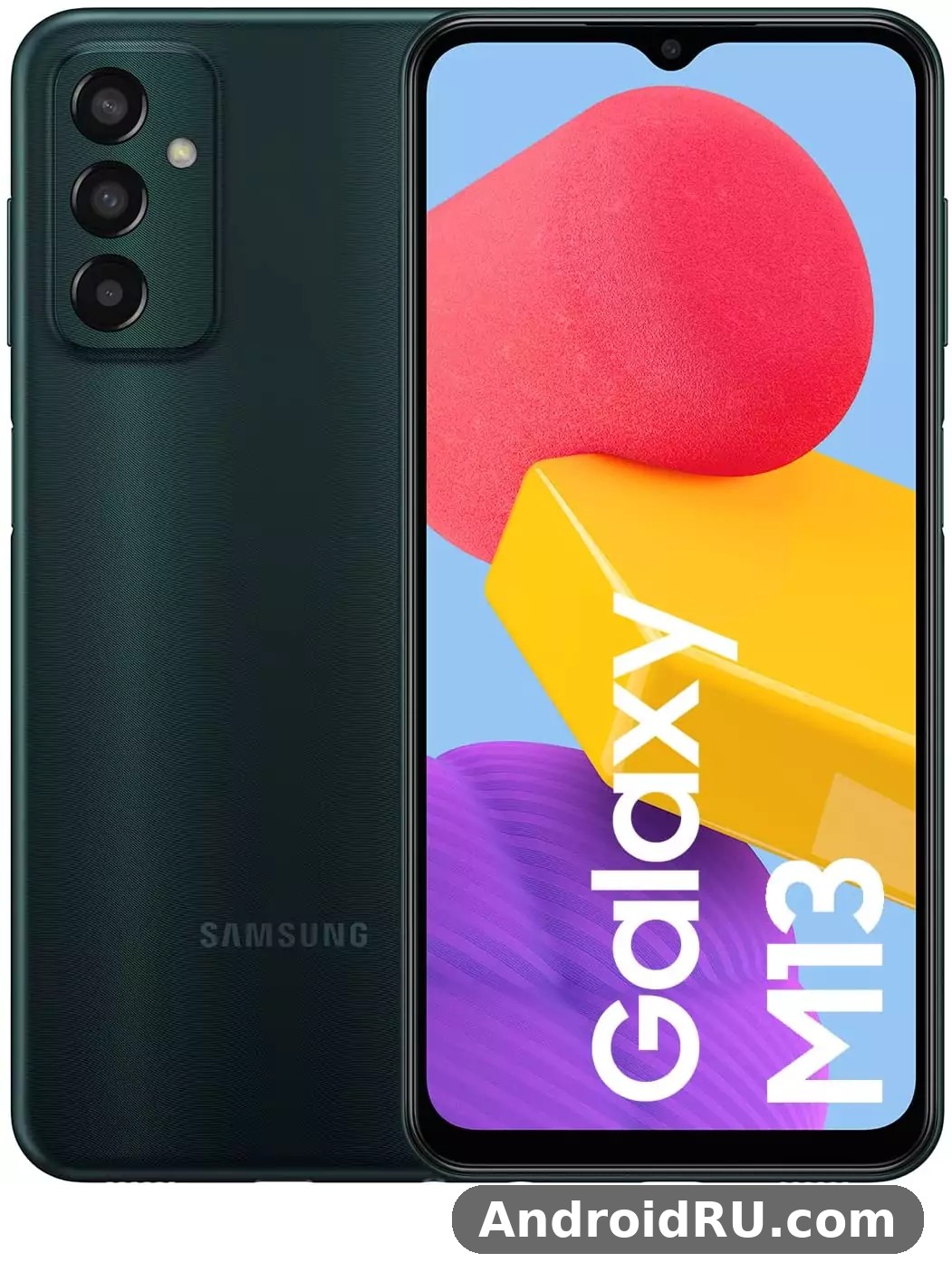
This review looks at the M13 the way a real owner would use it. We cover the design and screen, the Exynos 850 chip in everyday apps, the One UI Core software, the battery and its slow 15W charging, the triple camera, and the full specification sheet. This M13 phone review is written for buyers, not for spec-sheet collectors, so every section ends with what the detail means for your day. There is no pretending here: this is a 4G phone from 2022 with 4GB of RAM, so expectations need to match the hardware. Read on to find out where it still holds up, where it shows its age, and who should still consider one today.
Galaxy M13 Design and 6.6 Inch Display for Daily Use
Pick up the M13 and the first thing you notice is its size. The Galaxy M13 screen size 6.6 inch panel dominates the front, with a small waterdrop notch at the top for the 8MP selfie camera and a chin at the bottom that is a little thicker than the other bezels. At 164.5 mm tall, 76.9 mm wide and 8.4 mm thick, it is a large phone, and the Galaxy M13 weight 192 grams in hand feels reassuring rather than heavy, because the weight is spread across a wide, flat body. The back is plastic with a subtle ridged texture that hides fingerprints well, and the three camera lenses sit in a neat vertical row without a raised camera island, which keeps the phone stable when it lies flat on a table.
Colour choice is simple: the Galaxy M13 colours Deep Green Orange Copper and Light Blue cover the range from sober to cheerful, with Deep Green the most understated of the three. The plastic frame and back will pick up scuffs over time, so most owners end up buying a case early, and Galaxy M13 cases and screen protectors are still easy to find online because the phone sold in large numbers. A side-mounted fingerprint sensor sits in the power button on the right edge, just below the volume rocker, and the Galaxy M13 fingerprint sensor side mounted design is fast and reliable once your thumb learns the position. It is a sensible place for it on a phone this wide.
There is a 3.5mm headphone jack on the bottom edge next to the Galaxy M13 USB Type C port and the single loudspeaker, and the Galaxy M13 headphone jack 3.5mm is a genuine advantage in 2026, when most new phones have dropped the port entirely. The Galaxy M13 dual SIM and microSD support comes through a tray that holds two nano-SIM cards plus a dedicated microSD card at the same time, so you never have to choose between a second number and extra storage. That matters for a phone with only 64GB in its base version, and it is one of the practical Galaxy M13 features that budget buyers notice first.
The PLS LCD screen in everyday light
The display is a 6.6-inch PLS LCD with a 1080 x 2408 resolution, which works out to about 400 pixels per inch, and Galaxy M13 display quality FHD+ is good enough that text looks crisp and photos look clean at normal viewing distance. Colours are a little cooler and less saturated than a Samsung AMOLED panel, and blacks are dark grey rather than truly black, but for reading, browsing and video the difference is smaller than the spec sheet suggests. The Galaxy M13 screen brightness outdoors is adequate for a budget LCD: it is readable in shade and on cloudy days, though direct midday sun will make you shade the screen with your hand, as it does on most phones in this class.
There is no high refresh rate here, and an M13 display test in 2026 will confirm the panel runs at 60Hz, so scrolling is not as smooth as on newer 90Hz or 120Hz budget phones. That is a fair trade for the price, and most people stop noticing it after a day or two. Watching video is where the big screen earns its keep: the 20:9 aspect ratio suits YouTube and streaming apps, the 1080p resolution keeps video sharp, and the stereo effect is missing because the Galaxy M13 speaker quality single speaker setup means sound comes from one bottom-firing driver only. It gets loud enough for a quiet room, but it sounds thin at full volume, so headphones or a small speaker are worth using for films.
What the screen does well, and what it does not
For reading, messaging and maps, the screen is a clear strength: large, sharp and easy on the eyes, with a blue-light filter in the settings for evening use. The M13 6.6 inch display is at its best with text and video, where the 1080p resolution keeps edges clean and the large panel means less scrolling. For gaming and fast scrolling, the 60Hz panel and the LCD response time are simply average. The notch is small and easy to ignore, and the auto-brightness sensor reacts quickly when you walk indoors. If you compare it with the AMOLED screens on Samsung phones that cost twice as much, you will see the gap; if you compare it with other budget LCD phones from 2022, the M13 screen is right in the middle of the pack, which is exactly where a phone like this should be.
Galaxy M13 Performance and Exynos 850 in Real Life
Inside the M13 sits the Exynos 850 chipset, an octa-core chip built on an 8 nm process with eight Cortex-A55 cores running at up to 2.0 GHz, paired with a Mali-G52 GPU and 4GB of RAM. Galaxy M13 Exynos 850 performance is best described as steady rather than fast: apps open without drama, switching between a handful of apps works fine, and the phone rarely stutters in the basics. The M13 Exynos 850 is the same chip Samsung used in the Galaxy A13 and the Galaxy M12, so its behaviour is well known by now, and the 8 nm process keeps it reasonably efficient for a chip of its age.
In Galaxy M13 WhatsApp and YouTube daily use, the phone is perfectly comfortable. Messages send instantly, calls connect cleanly, YouTube plays 1080p video without dropped frames, and browsing with several tabs open in Chrome works as long as you do not expect desktop-class speed. Galaxy M13 performance in 2026 depends heavily on how full the storage is and how many apps run in the background, because 4GB of RAM means the system will close background apps sooner than a phone with 6GB or 8GB. Keeping the phone tidy, with unused apps removed and the storage below about 85 percent full, makes a visible difference to how smooth it feels day to day.
Gaming and heavier apps on 4GB of RAM
Light games such as casual puzzles, card games and 2D platformers run without trouble, and M13 gaming is fine for that kind of play. Galaxy M13 gaming performance PUBG is a different story: PUBG Mobile does run, but only at modest graphics settings, and you should expect the occasional frame dip in busy scenes. The phone does not get uncomfortably hot during a 30-minute session, and questions about Galaxy M13 overheating during long calls have a simple answer too: the chip sips power during calls, so the phone stays cool, and any warmth you feel comes from long gaming or charging sessions rather than from talking. Heavy 3D titles and video editing apps will feel slow, and that is the honest limit of this hardware.
Storage is another place where the choice matters. Galaxy M13 storage 64GB vs 128GB is a decision worth thinking about before you buy: the 64GB model leaves roughly 45GB free after the system, which fills up quickly with photos and apps, while the 128GB model gives you real breathing room. M13 storage can be expanded with a microSD card, and the Galaxy M13 microSD card slot expandable storage supports cards up to 1TB, which is ideal for photos, music and offline video. Apps themselves should stay on the internal storage for speed, with the card used for media. M13 RAM 4GB is fixed on both storage versions, so buying the larger storage model does not buy you more memory.
Speed tips that actually help
Three habits keep the M13 feeling responsive: restart it once a week, keep the software updated through Settings, and turn off the RAM-hungry features you do not use, such as always-on widgets you never look at. The phone also benefits from the Device Care tools built into One UI, which clear cached files and close background apps in one tap. None of this turns the M13 into a fast phone, but it stops a slow phone from feeling slower than it needs to, and that is a worthwhile trade for five minutes of attention a week.
One UI Core 4.1 and Android 12 Software Experience
The M13 launched with Android 12 and One UI Core 4.1, and that is the software most used examples still run unless they have received later updates. Galaxy M13 software is the lighter Core edition of Samsung’s interface, which means a few features from full One UI are missing, such as Samsung DeX and some of the deeper Good Lock customisation, but the essentials are all present: a clean home screen, the Samsung app suite, the Galaxy Store for Samsung apps, and Google Play for everything else. Galaxy M13 One UI Core 4.1 features include the privacy dashboard, microphone and camera indicators, one-handed mode, and the Edge panel, and the interface is easy to learn for anyone moving from another Android phone.
M13 Android 12 brings the Material You colour theming, the conversation widgets and the improved notification controls of that Android version, and on the M13 they run without the heavy animations that can bog down budget hardware. The phone shipped with Samsung’s promise of two major Android updates, and owners should check Settings, then Software update, to see what their unit has actually received, because update availability varies by region and by model number, with SM-M135F and SM-M135F/DSN the international variants. A Galaxy M13 update that arrives over the air is worth installing, since Samsung’s updates for this phone have included security patches that keep an older device safer for daily use.
One thing worth knowing about Galaxy M13 unboxing expectations in 2026: the phone is no longer sold new in most markets, so most buyers today are looking at used or refurbished units, and the software version on the unit you buy is whatever the previous owner left installed. Check the Android version in Settings before you pay, run the software update check on Wi-Fi, and make sure the phone is not still signed in to the previous owner’s Samsung or Google account. Those three checks take five minutes and save a great deal of trouble later.
Everyday software: what works well
Daily software life on the M13 is calm and predictable. The dialler, messages, camera and gallery apps are Samsung’s own, they are well laid out, and they do not bombard you with prompts. Samsung’s Device Care, the digital wellbeing tools and the parental controls all work as expected, and the phone handles two SIM cards with separate ringtones and data preferences without fuss. Voice calls are clear, the earpiece is loud enough for a noisy street, and the dual-SIM behaviour is one of the reasons the M13 remains popular as a work-and-personal phone in one body.
Galaxy M13 Battery Life and 15W Charging
The 5000mAh battery is the M13’s strongest card, and the Galaxy M13 battery life test results that matter most are the everyday ones: with mixed use, including messaging, browsing, an hour of video and some calls, the phone comfortably reaches the end of the day with charge to spare, and lighter users regularly see two days between charges. M13 battery life is helped by the efficient Exynos 850 chip and the 60Hz LCD, neither of which drinks power the way a high-refresh AMOLED flagship does, and the M13 5000mAh cell is the same capacity Samsung fitted to many of its popular budget phones for a reason: it removes battery worry from daily life.
Galaxy M13 battery drain overnight is modest, typically only a few percent with Wi-Fi on and the phone idle, which is a good sign for a phone of this age, though a used battery will drain faster than a new one. If overnight drain is high on your unit, the cause is usually an app that keeps the phone awake, and the battery usage screen in Settings will name it within a day. The phone also has Samsung’s power-saving modes, which cap background activity and dim the screen, and they are genuinely useful when you need to stretch the last 20 percent until you get home.
The slower half of the story is charging. Galaxy M13 charging time 15W means a full charge from empty takes around two hours, and the Galaxy M13 charging setup is a 15W wired charger over USB-C with no wireless charging. That is slow by 2026 standards, when even budget phones commonly charge at 25W or more, and it shapes how you should use the phone: charge it overnight, or top it up during a long desk session, rather than expecting a quick ten-minute boost before leaving the house. A 15W charger was included in the box in some regions at launch, but it is not guaranteed with a used unit, so check what comes with the phone you buy.
How the battery compares with the M31
Samsung’s M series has always been about big batteries, and the older Galaxy M31 is the famous example, with a 6000mAh cell that made it a legend among battery-first buyers. If you want the full story of that phone, read the Samsung Galaxy M31 Review: Everyday Speed, Cameras and Value, which covers how Samsung tuned that larger battery for everyday use. The M13’s 5000mAh cell is smaller, but it pairs with a more efficient chip and a lower-power screen, so the real-world gap between the two phones is smaller than the numbers suggest. For most people the M13 lasts a full day with room to spare, and that is the standard that matters.
Battery care for a used M13
If you buy a used M13, treat the battery as a wear item: ask the seller about its health, look for swelling or a loose back cover, and run the phone for a day before deciding to keep it. Avoid leaving it plugged in at 100 percent for days at a time, and keep it out of hot cars, since heat ages lithium batteries faster than anything else. A battery replacement is inexpensive at a repair shop if the original cell is tired, and it can give a second-hand M13 another year or two of useful life.
Galaxy M13 Cameras: 50MP Triple Camera and 8MP Selfies
The rear camera system is a triple setup led by a 50MP triple camera main sensor with an f/1.8 lens, joined by a 5MP ultrawide camera with a 123-degree field of view and a 2MP depth sensor for portrait mode. Galaxy M13 camera quality in daylight is genuinely good for the price: photos are sharp in the centre of the frame, colours are natural with a slight Samsung warmth, and the 50MP sensor captures enough detail for cropping and for prints. The M13 50MP camera benefits from pixel binning, combining four pixels into one for brighter 12.5MP photos by default, which is the mode most owners should use.
Galaxy M13 50MP camera samples shared by owners online tend to show the same pattern: strong results in sunlight, decent results in shade, and softer results indoors, where the small sensor and the f/1.8 lens have to work harder. The 5MP ultrawide is useful for landscapes and group shots, but it is noticeably softer than the main camera and it struggles in low light, so use it when the light is good and the scene needs the wider view. The 2MP depth sensor only assists portrait mode, and it does a fair job of separating a person from the background in good light, though edge detection around hair can be imperfect.
Night mode, video and selfies
Galaxy M13 night mode camera test results are modest: the phone has a night mode that brightens dark scenes, but without optical stabilisation the results depend on holding the phone steady, and fine detail is lost to noise reduction. It is good enough for a photo of friends at dinner or a street scene at dusk, and it is not a substitute for a phone with a larger sensor. Galaxy M13 video recording 1080p quality is capped at 1080p and 30 frames per second from both the rear and the front cameras, with electronic stabilisation that smooths out small shakes while walking, and that is enough for social video, video calls and family clips. There is no 4K recording, which is normal for this class and this chip.
The 8MP front camera sits in the waterdrop notch and takes pleasant selfies in daylight, with Samsung’s face-beauty processing that can be turned down or off in the settings. Video calls look clean on a good connection, and the front camera also handles face recognition for unlocking, though the side fingerprint sensor is faster and more reliable. A full M13 camera review has to be honest about the limits: this is a daylight camera system that rewards good light, and owners who shoot mostly outdoors will be far happier with it than owners who shoot mostly indoors at night.
Getting better photos from the M13
Three habits improve results more than any setting: tap the screen to focus on your subject, keep the lens clean, and shoot with the light behind you rather than in front of you. Turn off the beauty filter for more natural skin, use the ultrawide only in daylight, and switch to night mode with the phone braced against something solid. The camera app also has a Pro mode for the main sensor, a panorama mode, and a food mode, and the Pro mode is worth trying if you want control over ISO and white balance in tricky light.
Full Specifications
Here is the complete Galaxy M13 specs sheet, based on the published specifications for the international model SM-M135F. Galaxy M13 specs are often confused with the Indian variant of the same name, which has a 6000mAh battery and a redesigned back, and with the Galaxy M13 5G, which is a different phone with a Dimensity 700 chip, so this table covers the international 4G model only. M13 specs full details are listed below, and the Galaxy M13 price in 2026 varies widely because the phone is now sold mainly used or refurbished, with the launch price of about 150 EUR as the reference point. M13 price in India listings reflect the Indian variant and its different battery, so compare carefully before judging a price you see online.
| Feature | Samsung Galaxy M13 (international, SM-M135F) |
|---|---|
| Display | 6.6-inch PLS LCD, 1080 x 2408 pixels, 20:9, about 400 ppi, 60Hz |
| Chipset | Exynos 850 (8 nm), octa-core Cortex-A55 up to 2.0 GHz, Mali-G52 GPU |
| RAM | 4GB |
| Storage | 64GB or 128GB, microSDXC dedicated slot up to 1TB |
| Rear cameras | 50MP main f/1.8, 5MP ultrawide 123-degree, 2MP depth; 1080p video at 30fps |
| Front camera | 8MP, 1080p video at 30fps |
| Battery | 5000mAh, non-removable Li-Po, 15W wired charging, USB Type-C 2.0 |
| Software | Android 12, One UI Core 4.1 at launch |
| Body | 164.5 x 76.9 x 8.4 mm, 192g, plastic back and frame, side fingerprint sensor |
| Connectivity | 4G LTE, dual nano-SIM, Wi-Fi 802.11 a/b/g/n/ac, Bluetooth 5.0, GPS, NFC in some regions, 3.5mm jack |
| Colours | Deep Green, Orange Copper, Light Blue |
| Launch | Announced 27 May 2022, released 1 July 2022, about 150 EUR at launch |
What the numbers mean in practice
The specification sheet tells a consistent story: a large sharp screen, a modest but efficient chip, a big battery with slow charging, and a high-resolution main camera supported by two simpler helpers. Nothing here is wasted, and nothing here is overdone. The Samsung M13 is a good example of how Samsung balanced that sheet for the price, and the 4GB of RAM is the tightest number on it, the one that will decide how the phone feels in 2026, because modern apps and web pages use more memory than they did in 2022. The 5000mAh battery is the most generous number, and it is the one that keeps the phone useful long after faster phones have been retired for a dead battery.
Galaxy M13 vs Galaxy M12 and Galaxy M14 5G Comparison
Galaxy M13 vs Galaxy M12 is the comparison most buyers actually face, because the two phones share the Exynos 850 chip, the 5000mAh battery and the 15W charging, and the M12 is often cheaper second-hand. The M13 wins on the screen, which moves from the M12’s 720p PLS LCD to a 1080p FHD+ panel, and on the main camera, which moves from 48MP to 50MP with better daylight detail, and on software, since the M13 launched on Android 12 while the M12 launched on Android 11. The M12 has a 90Hz screen option on some units and a similar battery life, so if the price gap is large, the M12 is still a fair budget choice. For the full story of the older phone, read the Samsung Galaxy M12 Review: Build Quality, Battery and Daily Use, which covers its build and battery in detail.
The step up to 5G changes the picture more. The Galaxy M14 5G brings a faster chip, 5G connectivity and a larger 6000mAh battery, and the Samsung Galaxy M14 5G Review: App Performance and Camera Quality explains how that phone handles apps and photos in daily use. Against the M14 5G, the M13 is the cheaper, lighter and simpler option: it costs less used, it has a headphone jack and a dedicated microSD slot, and it does everything the M14 does except 5G and the heaviest gaming. If your network and your budget do not need 5G yet, the M13 saves money without giving up the essentials.
The newer Galaxy M15 5G moves further still, with a 6000mAh battery, a Super AMOLED screen and 5G, and the Samsung Galaxy M15 5G Review: Display, Cameras and Budget Trade-Offs lays out what that phone gains and what it gives up for its price. The M13 cannot match its screen or its battery, but it remains the cheapest way into a large Samsung phone with a sharp display and a reliable camera, and for a second phone or a phone for a younger family member, that price gap matters more than the spec gap.
| Phone | Display | Chip | Battery | Main camera | Best for |
|---|---|---|---|---|---|
| Galaxy M13 | 6.6-inch FHD+ PLS LCD, 60Hz | Exynos 850 | 5000mAh, 15W | 50MP triple | Cheapest big-screen Samsung daily phone |
| Galaxy M12 | 6.6-inch HD+ PLS LCD, 90Hz on some units | Exynos 850 | 5000mAh, 15W | 48MP quad | Lowest price, similar battery |
| Galaxy M14 5G | 6.6-inch FHD+ PLS LCD, 90Hz | Exynos 1330 | 6000mAh, 25W | 50MP triple | 5G and longer battery life |
| Galaxy M15 5G | 6.5-inch FHD+ Super AMOLED, 90Hz | Dimensity 6100+ | 6000mAh, 25W | 50MP triple | Best screen and battery in this group |
| Galaxy F55 5G | 6.7-inch FHD+ Super AMOLED, 120Hz | Snapdragon 7 Gen 1 | 5000mAh, 45W | 50MP triple with OIS | Faster charging and smoother display |
Galaxy M13 vs M12: the short version
Galaxy M13 vs M12 comes down to the screen and the camera: the M13 has the sharper display and the slightly better main camera, while the M12 is usually cheaper and has a similar battery. Both phones run the same chip and the same amount of RAM, so neither is faster than the other in apps, and both will feel their age in the same ways. Choose the M13 if the sharper screen matters to you, choose the M12 if the price gap is wide, and check the battery health of either one before you pay, because a tired battery erases the advantage of either phone.
Pros and Cons of the Samsung Galaxy M13
Every budget phone is a set of trade-offs, and the M13 is no exception. Its strengths are practical and durable: the battery, the screen size, the camera in daylight, the headphone jack and the dedicated microSD slot. Its weaknesses are equally practical: slow charging, modest performance, 4GB of RAM and a single speaker. Weighing them honestly is the point of this review, because the right phone is the one whose strengths match your day and whose weaknesses you can live with.
Pros
- Big 5000mAh battery that lasts a full day and often two days for light users, which removes the need to carry a charger everywhere.
- Large 6.6-inch Full HD+ display that is sharp for reading, video and browsing, with about 400 pixels per inch.
- 50MP main camera that takes good daylight photos with natural colours and plenty of detail for sharing and cropping.
- Headphone jack, dedicated microSD slot and dual SIM support in one phone, which is rare in 2026 and genuinely useful.
- Clean Samsung software with One UI Core, reliable side fingerprint sensor and a light, comfortable 192g body.
Cons
- Slow 15W charging means a full charge takes around two hours, with no fast top-up before you leave the house.
- Exynos 850 with 4GB of RAM feels slow in heavy apps and games, and background apps close sooner than on phones with more memory.
- Single bottom speaker sounds thin at high volume, and there is no stereo sound for video.
- 60Hz LCD with modest outdoor brightness, and no 5G, no 4K video and no optical stabilisation for the camera.
- Plastic body that scuffs over time, and a used phone may need a battery replacement to restore its original stamina.
Who the M13 suits best
Galaxy M13 for students on a budget is an easy recommendation: the phone handles lectures, notes, messaging, video and music all day, it charges overnight, and it costs little enough that a cracked screen is not a disaster. It also suits parents buying a first phone, anyone who wants a reliable backup handset, and older users who value a big screen, a loud earpiece and a simple interface. Galaxy M13 as a second phone in 2026 works well too, as a travel phone, a work number handset or a media device for the car, because the battery lasts, the storage expands, and the headphone jack still works with the wired headphones people already own.
Frequently Asked Questions About the Galaxy M13
Is Galaxy M13 worth buying in 2026?
It is, if the price is low and your needs are basic: calls, messaging, browsing, video, photos in daylight and a battery that lasts all day. The question is Galaxy M13 worth buying in 2026 only makes sense with the price attached, because at a low used price the phone is good value, while at a price close to a newer budget phone with 5G and faster charging, the newer phone is the better buy. Check the battery health, the Android version and the condition of the screen before you pay, and buy the 128GB version if the price difference is small.
Does the Galaxy M13 support 5G?
No, the international Galaxy M13 is a 4G LTE phone, and there is no 5G version of this exact model. The Galaxy M13 5G is a separate phone with a different chip, a different screen size and a different camera setup, so do not confuse the two when you shop. If 5G matters to you, look at the Galaxy M14 5G or the Galaxy M15 5G instead, and if your area has good 4G coverage, the M13’s LTE connection is fast enough for video, calls and browsing.
How long does the Galaxy M13 battery last?
With mixed daily use, the 5000mAh battery lasts a full day with charge to spare, and light users often reach a second day. Heavy video, gaming and navigation will shorten that, and an older battery will hold less charge than a new one, so a used phone should be tested for a day before you commit. Charging takes around two hours at 15W, so overnight charging is the practical routine, and the power-saving mode in Settings can stretch the last part of the day when you need it.
Can I expand the storage on the Galaxy M13?
Yes, the phone has a dedicated microSD card slot that works alongside two nano-SIM cards, and it supports cards up to 1TB. Use the card for photos, music and offline video, keep apps on the internal storage for speed, and remember that the 64GB model fills up faster than the 128GB model, so the card is most useful on the smaller version. The tray is on the side of the phone and needs the small ejector tool that came in the box, or a paperclip in a pinch.
What Android version does the Galaxy M13 run?
It launched with Android 12 and One UI Core 4.1, and Samsung promised two major Android updates for this model. The version on any used phone depends on what updates its previous owner installed, and availability varies by region, so check Settings, then Software update, on the phone itself. Security patches matter more than the version number for a phone of this age, so make sure the phone has received reasonably recent patches before you rely on it for banking and email.
Final Verdict: Should You Buy the Galaxy M13?
The Galaxy M13 is a phone that knows exactly what it is: a big-screen, big-battery budget handset for people who want the basics done well and do not want to pay for more. Its screen is sharp, its daylight camera is good, its battery lasts, and its software is calm and familiar. Its charging is slow, its chip is modest, and its 4GB of RAM sets a clear ceiling on how hard you can push it. None of those limits is a surprise on a phone that launched at about 150 EUR, and none of them stops the phone from doing its job.
If you are choosing between the M13 and a newer Samsung in the same family, the comparison with the F55 5G shows what extra money buys: a faster chip, a smoother 120Hz AMOLED screen and 45W charging. The Samsung Galaxy F55 5G Review: Everyday Speed, Cameras and Value covers that phone in full, and it is the right choice if your budget stretches that far. If your budget does not stretch, or if you need a dependable second phone, the M13 remains a sensible buy in 2026, provided you buy it at a low price, check the battery, and choose the 128GB version when you can. Charge it overnight, keep it tidy, and it will quietly do its job day after day, which is all most of us ask of a phone.

