

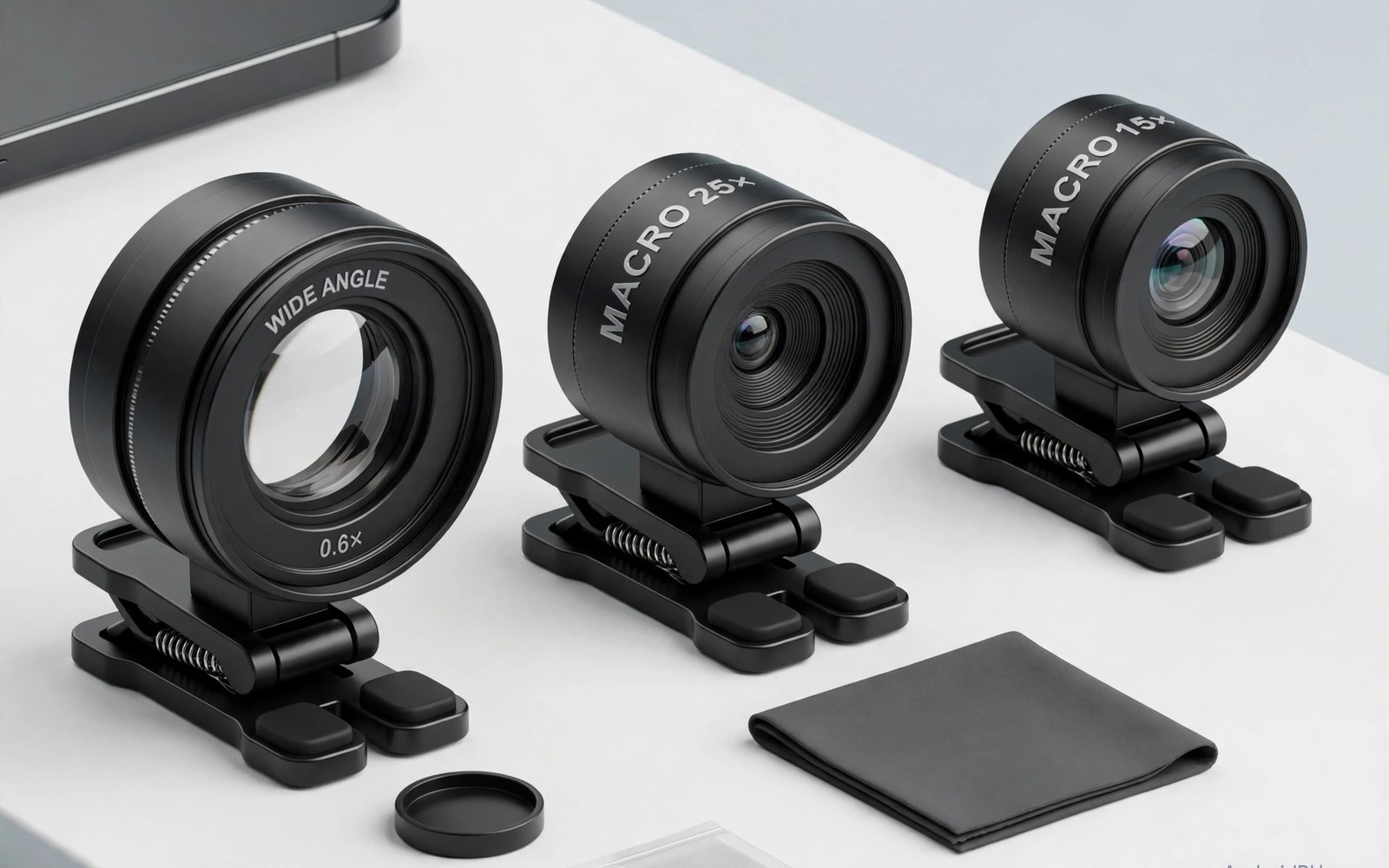
A phone camera already takes good photos in daylight but a clip on lens can change what it can capture. A wide angle lens fits more of a landscape into one frame. A macro lens reveals tiny detail in a flower or an insect. A telephoto lens brings a distant subject closer without digital zoom blur. A fisheye lens creates a dramatic curved view for creative shots. This guide covers seven camera lens accessories that transform mobile photography. You will learn which lens suits each scene and how to avoid common clip on problems.
Start with the lens mount type for your phone. Clip on lenses attach over the phone camera with a spring clip. That clip must align exactly with the camera lens or photos will show dark edges. A case can interfere with clip alignment because it changes the camera position. Test a clip lens with your case on and off before a shoot. Some lenses work better on a bare phone while others include a case mount for a specific model. A case mount gives steadier alignment than a generic clip but it only fits one phone model.
Wide angle lenses are the most useful accessory for travel and interiors. A wide lens captures a whole room or a mountain view without stepping back. The trade off is distortion at the edges of the frame. Straight lines near the edge may bend slightly in a wide photo. That distortion can look creative for landscapes but it can look odd for architecture. Choose a wide lens with a moderate angle rather than an extreme fisheye if you want natural looking travel photos.
Macro Telephoto And Fisheye Lenses
Macro lenses let a phone focus very close to a small subject. A flower petal or a coin detail becomes sharp and large in the frame. A macro lens needs steady hands because the depth of field is very shallow at close range. A small tripod helps a lot for macro work. For tripod choice then portable tripods for creators explain stable setups for close shots. A macro lens with a built in light can help in shade because close subjects often sit in shadow.
Telephoto lenses bring distant subjects closer for wildlife and sports. A clip on telephoto lens adds optical magnification that digital zoom cannot match for detail. The trade off is a narrower field of view and a need for steady holding. A telephoto shot shakes more easily because small hand movements magnify with the lens. Use a tripod or rest the phone on a stable surface for telephoto shots. A telephoto lens also needs good light because a smaller effective aperture can darken the image in shade.
Fisheye lenses create a circular or strongly curved image that suits creative photography. A fisheye lens is less useful for everyday photos because the distortion is extreme. Use a fisheye lens for skateboarding or for artistic interiors where distortion adds energy. A fisheye lens can also capture a full sky in one frame. Keep a fisheye lens for special shots rather than as a daily lens. That restraint keeps its effect fresh when you do use it.
Filters And Lens Care
Filters that clip over a phone lens can change colour and light in useful ways. A polarising filter cuts reflections from water and glass and it deepens sky colour. A neutral density filter reduces light for long exposure shots of moving water. A star filter adds sparkle to bright lights at night. Filters need clean glass to work well. A smudged filter softens every photo taken through it. Clean filters with a soft cloth before each shoot and store them in a pouch away from keys.
Lens care matters because clip on lenses scratch easily in a bag. Store each lens in its own pouch or case rather than loose with keys. A scratched lens creates flare in bright light and it softens detail. Check lens glass under bright light before a shoot. A lens with a deep scratch should be replaced because it will affect every photo. For outdoor protection during lens shoots then outdoor drop protection accessories help keep the phone safe. For storage of many photos then picking the right microSD card explains speed for large photo files.
Test Lens Alignment With A Simple Script
A short log helps you compare lenses across scenes. Note the lens type and the scene and any dark edges or distortion in the photo. This short script saves lens scene notes into a plain text file. It keeps the comparison honest because memory alone favours the newest lens. Review the log before buying another lens so you do not repeat a lens type that already disappointed you.
notes = []
notes.append('wide lens landscape no dark edges')
with open('lens_notes.txt', 'w') as f:
    for n in notes:
        f.write(n + chr(10))
Attribution: This code sample is an original example written for this article. It shows a simple way to store lens test notes in a text file. It does not come from any outside guide and it does not change phone settings.
Test each lens in daylight first because low light hides alignment problems. A lens that shows dark edges in daylight will show them worse at night. Align the clip carefully and check the full frame on the phone screen before shooting. If dark edges persist then try the lens without a case. A case that shifts the clip by a millimetre can cause a dark corner that ruins an otherwise good photo.
A lens kit that includes several lenses in one box can offer good value for a beginner. A kit lets you try wide and macro and fisheye without buying each lens separately. A kit lens may have lower optical quality than a single premium lens. Test kit lenses critically and keep only the ones you actually use. A kit that sits unused in a drawer is poor value even at a low price.
A premium single lens can outperform a whole kit for a specific style. A photographer who mainly shoots macro should invest in one good macro lens rather than a kit with many mediocre lenses. A photographer who mainly shoots landscapes should invest in one good wide lens. That focused investment gives sharper photos for the style you shoot most often. It also reduces bag weight compared with carrying a full kit everywhere.
A lens that is used for night photography should be tested for flare from street lights. A cheap lens can create strong flare streaks at night that ruin a photo. Test a lens at night with a bright light in the frame before a night shoot. A lens with good coatings shows less flare than a cheap uncoated lens.
A lens that is used for portrait photos should be tested for edge distortion on faces. A wide lens can distort a face near the edge of the frame. Place the subject near the centre for wide lens portraits to avoid that distortion. A telephoto lens is usually better for portraits because it compresses features naturally.
A lens that is used in a dusty environment should be cleaned after each shoot. Dust on lens glass can scratch the coating when wiped dry. Blow loose dust off first and then wipe with a soft cloth. That two step cleaning prevents scratches from dust particles dragged across glass.
A lens kit that is carried in a camera bag should be stored in a padded insert. A lens rolling loose in a bag can chip its edge against another lens. A padded insert keeps each lens separate and safe. That protection is worth the small extra bag space for a photographer who carries several lenses.
A lens that is used for video should be tested for focus breathing during a zoom or a focus pull. Some clip lenses change framing slightly when focus shifts. That shift can distract viewers in a video. Test a lens on a short video clip before a long recording to spot focus issues early.
A lens that is used with a phone stabiliser should be checked for balance. A heavy lens on a small stabiliser can overload its motor and cause drift. Test stabiliser balance with the lens attached before a shoot. A balanced stabiliser gives smooth video without motor strain.
A lens that is used with a phone gimbal should be removed before folding the gimbal for storage. A lens left on a folded gimbal can press against the gimbal arm and damage the lens edge. Remove the lens after each shoot and store it separately. That habit protects both lens and gimbal over time.
Common Mistakes
One common mistake is clipping a lens over a phone case that misaligns it. That misalignment creates dark edges in every photo. Another mistake is using a telephoto lens handheld in low light. That combination creates blur from hand shake. A third mistake is storing lenses loose in a bag where they scratch. Use pouches for every lens.
Some photographers also expect a clip on lens to match a dedicated camera lens in quality. A phone lens accessory improves a phone camera but it cannot match a large camera lens. Another error is forgetting to clean a lens before a shoot. A smudged lens softens photos that otherwise would be sharp. Clean glass before every important shoot.
Frequently Asked Questions
Will a clip on lens work with my phone case?
A clip on lens may work with a thin case but a thick case can misalign the clip. Test the lens with your case on before a shoot. If dark edges appear then remove the case or use a case mount made for your model. A case mount gives steadier alignment than a generic clip on a thick case.
Is a macro lens worth buying for a phone?
A macro lens is worth buying if you enjoy close up photos of flowers or insects or small objects. It reveals detail that a phone alone cannot focus on at close range. Use a tripod for macro work because depth of field is shallow. A macro lens with a light helps in shade where close subjects often sit.
Do lens accessories reduce photo quality?
A good lens accessory can improve a specific type of photo while a poor lens can soften all photos. Cheap lenses may add distortion and flare. Test a lens in daylight and check edges for softness before keeping it. A premium lens for one style usually beats a cheap kit for general use.
Conclusion
Camera lens accessories transform mobile photography when chosen for a specific scene. A wide lens suits travel and a macro lens suits close detail and a telephoto lens suits distant subjects. Check clip alignment with your case and clean glass before each shoot. Use a tripod for macro and telephoto work. Your concrete next step is simple. Tonight clip your most used lens onto your phone with its case on and check the full frame for dark edges before your next shoot.

