

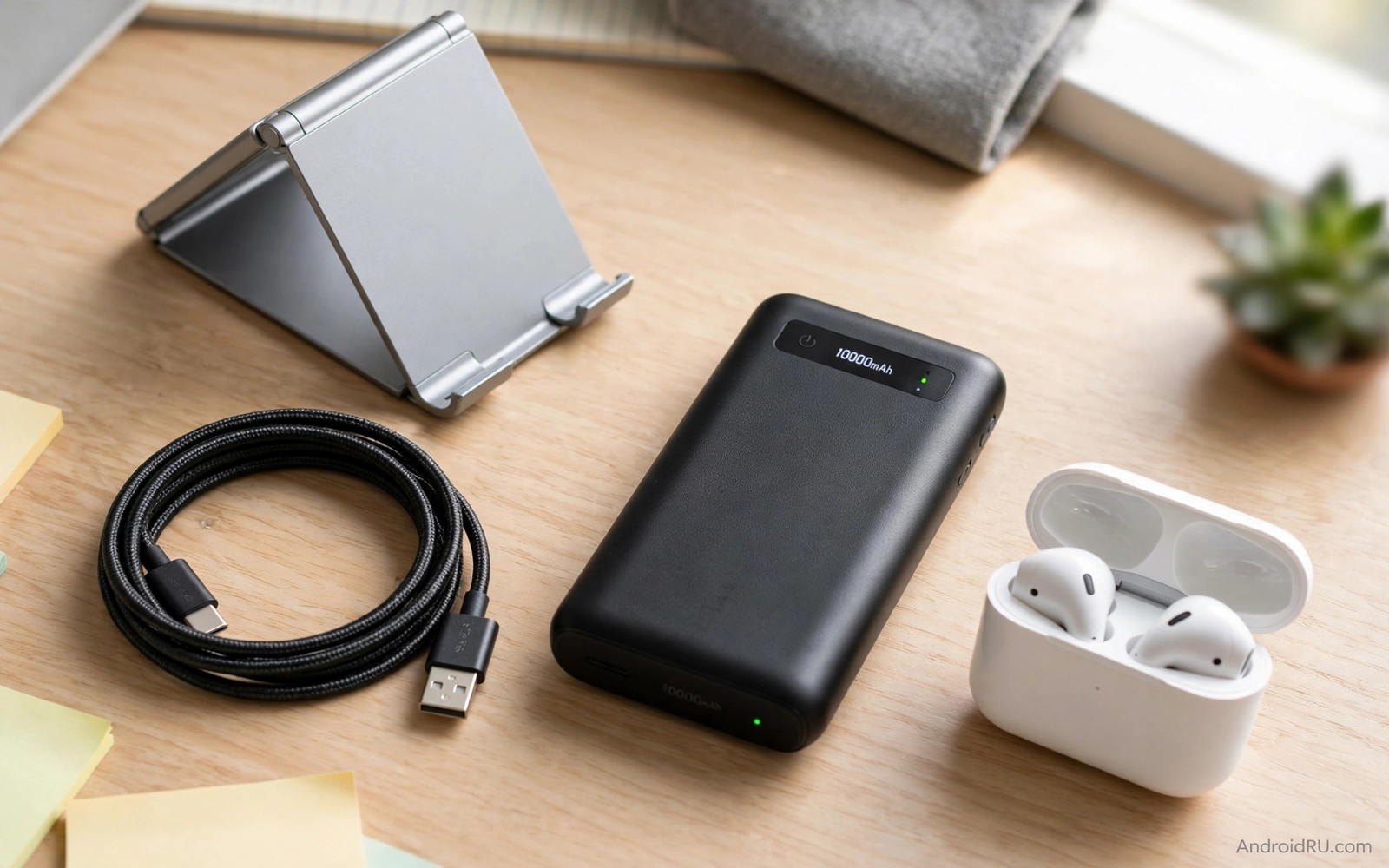
Cheap does not have to mean useless. A few low cost accessories solve daily annoyances that expensive phones ignore. A good stand stops neck strain during video calls. A short cable stops tangles on a desk. A simple grip stops drops on a busy train. The best cheap accessories earn their place by fixing a real habit.
The trap is buying ten random items that sit in a drawer. A useful accessory matches a task that you repeat every day. A traveller needs a different set from a desk worker. A gamer needs a different set from a photographer. This guide picks ten items that help many users and it explains who benefits most from each one.
Price matters but build quality matters more. A cable that frays in a week costs more than a slightly dearer cable that lasts a year. Check reviews for durability and not only for price. Check return policy before you buy a pack of unknown items. A cheap accessory should save time and not create new frustration.
Stands Grips And Holders For Daily Comfort
A desk stand lifts the phone to eye level for calls and recipes. A car mount with a strong magnet holds the phone steady on rough roads. A ring grip or a pop grip helps one handed use on large phones. A bedside stand keeps the phone visible as an alarm clock. Each item costs little and each item removes a daily strain.
Choose a stand with a wide base and a non slip pad. A narrow stand tips over with a heavy phone. Choose a car mount that fits your vent or dashboard shape. A mount that fits poorly will drop the phone at the worst moment. Test the grip position for a day before you trust it on a run. Comfort items need a real trial and not only a photo review.
Cables Adapters And Power For Travel
A short braided cable suits a desk and a long braided cable suits a bed. A cable with a right angle plug helps gaming in landscape mode. A small USB adapter lets you connect a flash drive or a keyboard to a phone. A compact power bank with a built in cable saves you from carrying a separate cable. Pack one cable for each main place and stop moving a single cable around the house.
Check the cable rating before you buy. A cable rated for low power will charge slowly even with a fast charger. A cable rated for data will move files faster than a charge only cable. Label your cables with a small tag if you own several types. A labelled set stops the daily search for the right cable. The cable quality lesson in the difference between cheap and expensive USB-C cables applies to every cable in this list.
Audio And Camera Helpers On A Budget
A cheap clip on microphone improves voice notes and video calls a lot. A small tripod steadies photos in low light. A lens cloth in a pouch keeps the camera lens clean on travel days. A simple earbud case with a clip stops lost earbuds in a bag. Audio and camera helpers need no brand name to work well.
Test a microphone with a real call before you trust it for work. A microphone that sounds muffled is worse than the phone microphone. Test a tripod with your heaviest phone case on. A tripod that sags under weight will ruin long exposures. Keep a lens cloth in the same pocket as the phone so you actually use it.
Protection That Does Not Ruin The Phone Look
A thin clear case protects against scratches without hiding the phone design. A tempered glass protector saves the screen from keys in a pocket. A camera lens guard stops scratches on a raised camera module. A pouch for travel stops dust in the charging port. Protection should feel invisible in daily use.
Replace a cracked glass protector at once. A cracked protector can hide screen damage and it can cut a finger. Clean the case once a month to stop dust scratching the phone edges. A case that traps grit can damage the phone it should protect. Good protection needs light maintenance and not only a purchase.
Organisers That Save Time Every Day
A cable organiser stops a drawer full of tangles. A small pouch for adapters keeps travel gear in one place. A desk tray for phone and keys stops the morning search. A wall hook near the door holds a charger where you always find it. Organisation items cost little but they save minutes every day.
Pick one organiser for each problem area. A desk organiser will not fix a travel bag. A travel pouch will not fix a desk drawer. Start with the area that annoys you most each morning. Fix that area first and enjoy the gain before you buy more organisers.
desk = stand_and_short_cable
travel = power_bank_and_pouch
audio = clip_microphone
protection = case_and_glass
The snippet above is an original example written for this guide. It shows generic settings that you can adapt to your own device. It does not copy code from any outside source.
Use the example above as a shopping checklist for cheap accessories. It is not code to install. Tick one line at a time as you buy and test each item. Return any item that fails its first week test.
Build A Starter Kit For One Room
Start with one room where you use the phone most. A desk kit differs from a kitchen kit and a car kit. A desk kit needs a stand and a short cable. A kitchen kit needs a stand that resists splashes. A car kit needs a mount that survives bumps. One room at a time keeps the kit useful.
List the three tasks you repeat most in that room. A desk worker repeats calls and charging and note taking. A kitchen user repeats recipes and timers and music. A car user repeats navigation and calls and charging. Match one accessory to each repeated task. Three matched accessories beat ten random accessories every time.
Test the room kit for a week before you expand it. Note which accessory you use daily and which accessory you ignore. Remove ignored accessories from the room. Move a useful accessory to a second room only after it proves itself. A proven kit grows slowly and stays useful.
Keep the room kit tidy with a small tray or pouch. A tidy kit is easy to use and easy to find. A messy kit hides useful items under clutter. Tidy storage is part of the accessory itself. A kit that is easy to reach gets used every day.
Avoid Accessory Clutter With A Simple Rule
A simple rule prevents drawer clutter. Buy a new accessory only when it replaces a daily frustration. A frustration that happens weekly may not justify a purchase. A frustration that happens daily usually does justify a small purchase. That frequency test keeps buying focused.
Apply a one in and one out rule for similar items. A new cable should replace an old frayed cable. A new case should replace a worn case. A new stand should replace a stand that tips over. One in and one out keeps the total count stable. A stable count keeps drawers usable.
Review all accessories once every few months. Remove broken items and donate unused items that still work. A review takes twenty minutes and it frees drawer space. Freed space makes remaining accessories easier to find. Clutter removal is a free upgrade to every remaining item. Cable quality still matters in any kit and the difference between cheap and expensive USB-C cables helps you keep only good cables.
Gift or recycle accessories that fail the frequency test. A gadget that sits unused for three months is clutter. A gadget that helps daily is a tool. Call items by their real use and not by their marketing promise. Honest naming makes clutter decisions easy.
Choose Accessories For A Gift Without Waste
A gifted accessory should match the recipient daily routine. A stand suits a desk worker recipient. A power bank suits a traveller recipient. A grip suits a large phone recipient. Routine matching prevents gift drawer clutter. A thoughtful gift beats an expensive random gift.
Check the recipient phone size and port type before buying. A case for the wrong phone model is useless. A cable for the wrong port type is useless. Model checking takes a minute and it saves a return. A gift that fits earns appreciation immediately.
Include a receipt or a return option with a tech gift. A return option removes pressure if the accessory does not fit. A recipient who can exchange a gift will end up with a useful item. Exchange freedom is a kindness for tech gifts. A gift with an exchange option is a safer gift.
Avoid gimmick accessories that solve no real problem. A gimmick gift amuses for a day and clutters for a year. A practical gift helps daily and earns lasting thanks. Practicality is the best gift principle for accessories. Screen protection is a practical gift and choosing the perfect tempered glass screen protector helps pick a good one.
Wrap a tech gift with a short note explaining its use. A note helps a non technical recipient use the accessory correctly. A note also shows thought behind the choice. Thoughtful notes turn a small accessory into a memorable gift. A memorable gift needs no high price.
If a case choice also matters for your new kit then smartphone cases rated from most protective to worst value compares cases honestly.
Common Mistakes
The first mistake is buying a bulk pack of random accessories with no plan. A plan based on daily tasks saves money. The second mistake is choosing the cheapest cable with no power rating. A weak cable wastes a fast charger. The third mistake is trusting a photo review over a durability review. A shiny photo hides a fraying cable.
Another mistake is buying a mount that does not fit your car or desk. Fit matters more than brand. A further mistake is keeping a cracked protector on the phone. A cracked protector protects nothing and it risks a cut.
Frequently Asked Questions
Are cheap accessories safe for my phone?
Most cheap accessories are safe if they meet basic standards. Check cable ratings and charger ratings before use. Avoid unknown chargers with no safety marks. A cheap stand or grip poses little risk to the phone.
Which cheap accessory should I buy first?
Buy the item that fixes your biggest daily annoyance first. A desk worker should start with a stand. A traveller should start with a power bank and a pouch. One useful item beats five drawer items.
How long should a cheap cable last?
A well made braided cable should last many months of daily use. A thin plastic cable may fray in weeks. Check the strain relief near the plugs. Strong strain relief predicts longer life.
Conclusion
Pick one daily annoyance today and buy the single accessory that fixes it. Test that accessory for a full week before you buy the next one. If it saves time or stops a drop then keep it in your daily set. If it sits unused then return it and try a different solution. That one item test is your concrete next step toward a useful cheap accessory kit.

