

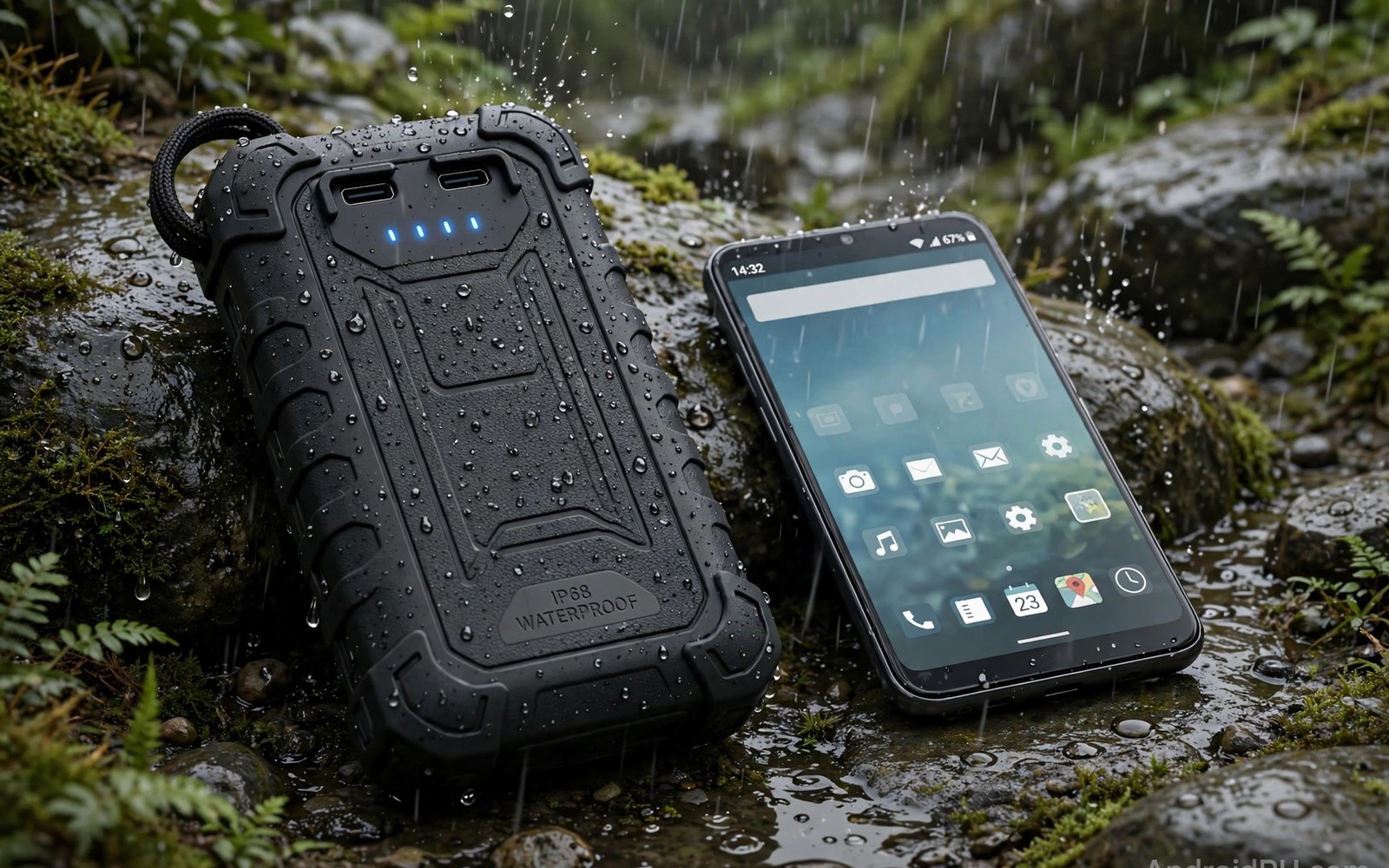
Outdoor trips punish ordinary power banks. Rain and dust and drops attack cases and ports daily. A rugged waterproof bank is built to survive that punishment. Sealed cases and shock-absorbing shells protect cells inside. Covered ports keep water and grit out of connectors. Those features cost weight and size but they buy reliability far from help.
Protection ratings describe what a bank can survive. Water ratings state depth and time limits for immersion. Dust ratings state how well seals block fine particles. Drop ratings state the height and surface for impact tests. Ratings help compare banks but they do not promise invincibility. Real trail conditions mix water and dust and drops together. This guide explains ratings in practical terms.
Rugged banks suit hikers and campers and field workers. They suit boaters and festival goers in rain too. They suit less well for light urban carry where bulk matters. A rugged bank in a city bag adds weight without daily benefit. Match ruggedness to the harshest trip on your calendar. That match keeps the bank useful rather than burdensome.
Understanding Water And Dust Ratings
Water ratings use a scale that states immersion depth and duration. A basic splash rating covers rain but not submersion. A higher rating covers brief immersion at shallow depth. A top rating covers longer immersion at greater depth. Check the exact rating rather than trusting a waterproof label alone. Labels without a rating number deserve scepticism.
Dust ratings state protection against fine particles. A top dust rating means seals block dust fully. Lower ratings allow some dust entry over time. Dust in ports causes wear and charging faults. Sealed port covers help even when the case rating is strong. A cover left open defeats the seal entirely during rain.
Ratings are tested in clean lab water under controlled conditions. River water and mud and salt water are harsher than lab water. Salt water corrodes seals and contacts faster than fresh water. Rinse a bank with fresh water after salt exposure when the maker allows it. Dry the bank fully before opening port covers. Lab ratings guide expectations but trail care still matters.
- Check the exact water rating number
- Keep port covers closed in rain
- Rinse salt water off when maker allows
Drop Shock And Case Design
Rugged cases use rubber bumpers and reinforced corners. Those features absorb impact energy before it reaches cells. A drop onto rock still risks internal damage despite a tough shell. Inspect the bank after a hard drop for cracks or swelling. A cracked case may lose its water seal even if charging still works. Retire a bank with a cracked seal from wet use.
Internal mounting also protects cells from shock. Cells held firmly resist vibration on rough trails. Loose cells can shift and stress connections over time. Quality rugged banks use internal padding for this reason. Weight often signals better internal protection. An ultra light rugged claim deserves a closer look at construction.
Case texture affects grip in wet hands. A textured rubber surface grips better than smooth plastic. Good grip prevents drops in the first place. Lanyard loops add security on boats and cliffs. A loop lets the bank hang from a pack rather than sit loose. Small design details prevent the drops that ratings must survive.
Ports Covers And Charging In The Field
Port covers are the weak point of many rugged banks. A cover that opens easily may open in a bag. A cover that seals tightly may be hard to open with cold hands. Test covers before a trip in realistic conditions. Practice opening them with gloves if the trip needs gloves. A cover that cannot be opened in cold weather is a field failure.
Charging a phone from a rugged bank in rain needs care. Open covers expose ports to water during charging. Charge devices under shelter when rain is heavy. A dry bag or a tent porch protects the charging pair. Wipe ports dry before connecting cables after rain. Wet connections can corrode and they can short briefly.
Solar rugged banks add a panel to the tough case. Panel output remains modest as with other solar banks. Rugged solar banks suit emergency trickle use rather than main charging. They add weight for the panel and the armour together. Weigh that total against a separate bank plus panel setup. A lighter non-solar rugged bank plus a folding panel may serve better.
Capacity Weight And Outdoor Trade-offs
Rugged armour adds weight on top of battery weight. A large rugged bank can feel heavy on a long hike. Capacity must justify that weight in real charges. A bank that charges a phone twice may suit a weekend hike. A multi-day trek may need a larger bank or a refill plan. Count phone charges needed before choosing capacity.
Weight distribution in a pack matters too. Place the bank near the back panel for balance. A bank swinging in an outer pocket strains straps and ports. A padded pouch inside the pack protects the bank further. Good packing extends rugged life beyond the case rating. The case protects against accidents and packing protects against wear.
Cold weather cuts usable capacity in all banks. Rugged cases do not prevent cold capacity loss. Keep the bank close to the body in extreme cold. Body heat keeps cells in a workable range. Charge the phone in a tent or a jacket pocket when possible. Cold care matters as much as water care on winter trips.
Testing A Rugged Bank Before A Trip
Test water seals at home before trusting them outdoors. Splash the closed bank lightly and check ports stay dry. Do not submerge a bank beyond its rating for a test. A gentle splash test reveals a faulty cover without risking the bank. Check the case for gaps after the splash. A dry interior means seals work for rain use.
Test drop resistance only with common sense. Do not throw a bank at rocks to prove toughness. A short drop onto grass reveals case grip and build. Inspect corners and covers after any accidental drop. A bank that survives normal handling with intact seals is ready. Deliberate abuse tests risk a bank needed on the trip.
Test charging performance in cold and heat before departure. Charge a phone from the bank in a cool room and note the gain. Repeat in a warm room for comparison. A large gap points to temperature sensitivity. Plan extra capacity for cold trips based on that test. Home tests prevent field surprises far from help.
Care And Lifespan Outdoors
Clean the bank after each outdoor trip. Wipe mud and dust from the case and covers. Inspect seals for grit that could break the waterproof barrier. Replace a bank with a damaged seal before the next wet trip. Store the bank partly charged between trips. Long storage at full or empty stresses cells unnecessarily.
Check cables used outdoors for damage too. Trail cables fray faster than desk cables. A frayed cable can damage a rugged bank port. Replace outdoor cables at the first sign of wear. Keep a spare cable in a dry pouch on trips. Spare gear turns a small failure into a minor delay outdoors.
Rugged Banks And Water Sports
Water sports demand the highest rugged bank protection. Kayaking and boating expose banks to splashes constantly. A bank in a dry bag inside a kayak stays safest. A bank mounted on a boat deck faces direct spray. Choose a top water rating for deck use. A splash rating alone may fail under repeated spray.
Salt water adds corrosion risk beyond fresh water splashes. Salt residue on ports corrodes contacts after drying. Rinse banks with fresh water after salt exposure when allowed. Dry ports fully before charging devices. Salt corrosion can cause charging faults weeks later. Post-trip cleaning matters most after salt water use.
Flotation is a practical concern on water. A heavy bank sinks fast if dropped overboard. A floating pouch keeps a dropped bank retrievable. Bright coloured pouches improve visibility in water. A lanyard attached to a life jacket prevents loss entirely. Water sports packing should plan for drops overboard.
Charging devices on water needs shelter from spray. Charge phones inside a dry bag with a cable pass-through. Open bank ports only under shelter. A wet connection during charging risks short circuits. Wait for calm sheltered moments to charge devices. Patience on water protects both bank and phone.
Rugged Banks For Field Work
Field workers rely on rugged banks for daily power in harsh sites. Construction and agriculture expose banks to dust and impacts. A rugged bank survives drops onto concrete and soil. Dust seals protect ports from fine site dust. A bank that fails on site can halt communication for a crew. Reliability outweighs lightness for field work use.
Field banks should offer fast phone charging for work apps. Maps and messaging and photos drain phones during shifts. A bank with a strong output port keeps work phones alive. Multiple ports help crews share one bank during breaks. Shared use needs clear ownership for safety responsibility. A crew bank should have a named owner for damage checks.
Charging banks overnight at field camps needs planning. Generator power may be limited at remote camps. Prioritise bank refills alongside phone refills each night. A bank left empty after a shift fails the next day. Routine nightly refills keep field power reliable. Field power systems reward discipline over improvisation.
Replacement planning matters for field banks used daily. Daily field use ages banks faster than weekend hiking use. Track capacity fade every few months under field conditions. Replace a fading field bank before it fails on site. A spare field bank in a site office prevents work disruption. Redundancy is cheap compared with lost field communication.
Check water and dust ratings first
Keep port covers closed in rain
Test seals with a light splash at home
Pack the bank in a padded pouch
Clean seals after every outdoor trip
Readers who want more context on portable power can read Why Phone Displays Show “Charging Slowly” and How to Fix It for a related view on the same topic.
Readers who want more context on portable power can read The Future of Qi2 Wireless Charging Standard Across All Smartphones for a related view on the same topic.
Readers who want more context on portable power can read USB Power Delivery (USB-PD) vs Proprietary Fast Charging Standards for a related view on the same topic.
The steps above follow the approach described in the official developer documentation and standard industry guidance for safe charging practice.
Rugged waterproof banks trade lightness for survival outdoors. Ratings guide water and dust expectations. Case design and port covers decide real field performance. Cold and weight and capacity shape the full trade-off. A tested rugged bank becomes trusted gear rather than a hopeful purchase.
Match ruggedness to your harshest planned trip. Test seals and charging at home before departure. Pack the bank well and clean it after each trip. Those habits keep seals working across many adventures. The best rugged bank is the one that still charges after a hard day outside. It should feel like insurance rather than a burden.
Water sports and field work test rugged banks hardest. Salt water and spray demand top ratings and cleaning. Field dust and drops demand strong cases and seals. Flotation and redundancy planning prevent loss and disruption. Rugged banks earn their weight in these demanding settings.
Match rugged ratings to your harshest water or field exposure. Clean banks after salt and dust exposure. Plan charging shelter and spare banks for critical trips. Those practices keep rugged power reliable. A rugged bank should be the least worrying item in harsh conditions. It simply works when other gear struggles.

