

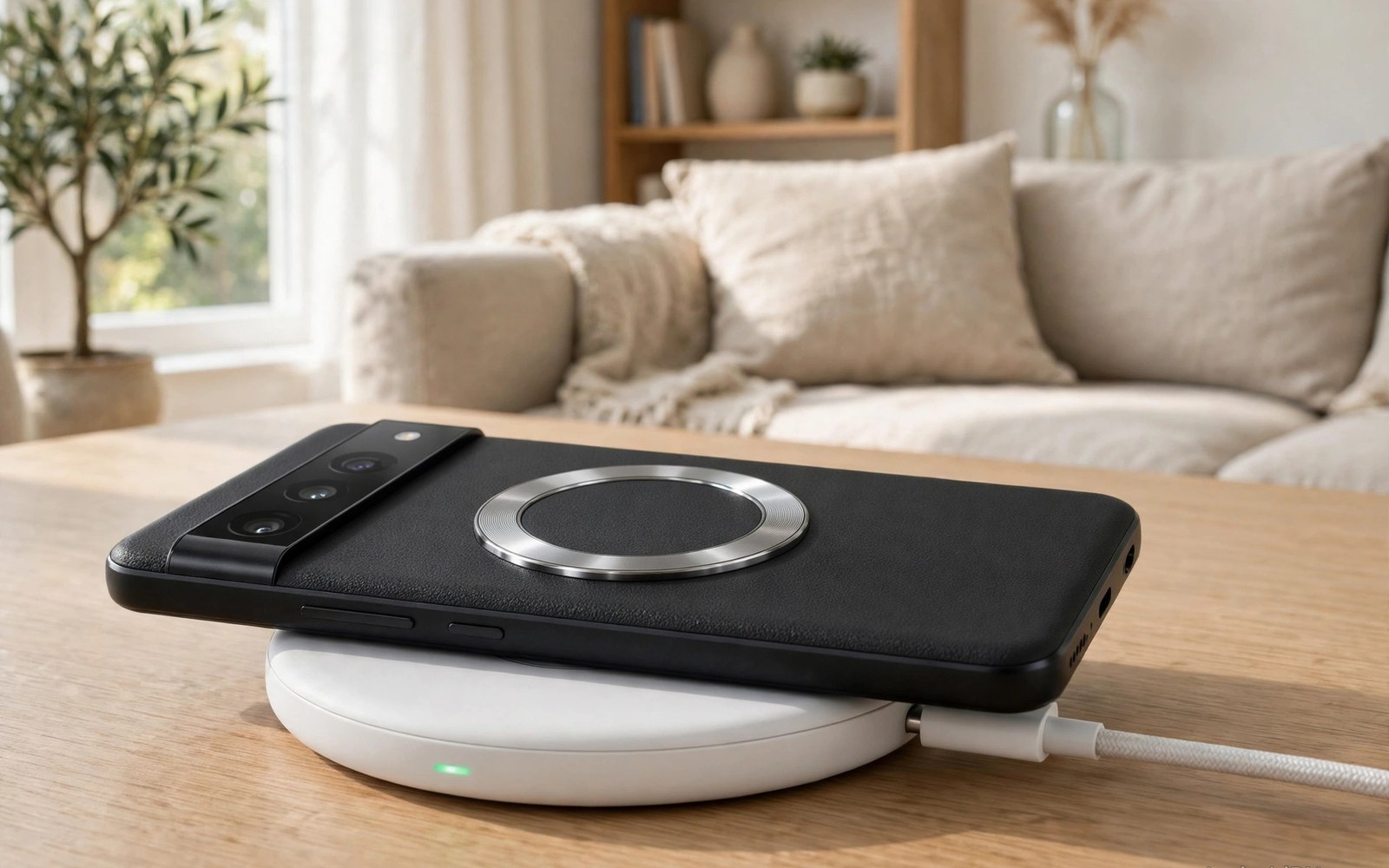
Wireless charging is about to get more consistent. The Qi2 standard adds magnetic alignment to the wireless formula. Magnets centre the phone on the charger every time. That centring improves efficiency and it improves speed stability. Android phones stand to gain a lot from wider Qi2 adoption. This guide explains the standard and its future clearly.
Qi2 builds on the earlier Qi standard that many phones already use. Earlier wireless charging worked but placement was fiddly. A slight shift could slow charging or break it. Magnetic rings solve placement by snapping the phone into place. The charger and phone coils align automatically. That alignment benefit alone makes daily wireless charging easier.
Qi2 also raises the practical power ceiling for many phones. Faster wireless rates become more reliable with better alignment. Heat control improves because aligned coils waste less energy. Accessory makers gain a common magnetic layout to design around. Cases and chargers and car mounts can share one alignment system. That ecosystem effect may matter more than raw speed.
How Qi2 Improves On Earlier Wireless Charging
Magnetic alignment is the headline Qi2 improvement. A ring of magnets around the coil guides the phone into place. Users no longer hunt for the sweet spot by sliding the phone. The snap gives tactile confirmation that alignment is correct. Charging starts at a strong rate immediately. That consistency transforms wireless charging from fiddly to effortless.
Efficiency improves alongside alignment. Aligned coils transfer more field energy to the phone. Less energy escapes as heat around the coils. Cooler charging sustains higher rates for longer sessions. Battery wear from wireless heat also falls. Efficiency gains may seem modest per session but they add up daily.
Safety and communication improve in the new standard too. Charger and phone exchange more data about power and temperature. That data lets the pair adjust power smoothly. Foreign objects between phone and charger trigger protection faster. A key or coin on the pad should pause charging promptly. Smarter communication makes wireless charging safer for everyday use.
- Snap the phone onto the magnetic ring
- Check for a steady charging icon
- Remove metal objects from the pad first
What Qi2 Means For Android Users
Android users gain access to a wider accessory ecosystem. Magnetic cases and chargers made for a common layout fit more phones. Car mounts with magnetic alignment become more practical. Desk pads with magnetic spots charge phones reliably. That shared ecosystem lowers accessory costs over time. It also reduces the need for phone-specific chargers.
Android phone makers can adopt Qi2 at different speeds. Some models already support magnetic wireless charging. Others may add support in future generations. Case makers can add magnetic rings to phones without built-in support. Those cases bring much of the benefit to older phones. Full built-in support still gives the best alignment and speed.
Charging speed expectations need care during transition. A Qi2 charger with an older phone charges at the older phone limit. A Qi2 phone with an older pad charges at the older pad limit. Top Qi2 speed needs both sides to support the standard. Mixed setups still work safely at lower rates. Compatibility keeps old gear useful during the transition.
Magnets Cases And Accessories
Magnetic cases are central to the Qi2 accessory story. A case with a built-in ring adds alignment to any compatible phone. Case thickness still matters because distance weakens the link. Thin magnetic cases give the best balance of protection and charging. Thick rugged cases may weaken magnet hold and charging speed. Test a new case with a timed charge before daily use.
Accessories beyond chargers benefit from magnetic alignment. Car mounts can hold phones while charging wirelessly. Desk stands can present phones at a readable angle while charging. Battery packs can snap on for portable top-ups. A common magnetic layout lets one accessory serve many phones. That versatility is a strong reason for makers to adopt the standard.
Magnet strength and placement need standardisation to work well. A weak ring lets a phone slide in a moving car. A misplaced ring misaligns the coil despite the snap. Quality cases and chargers follow the layout precisely. Cheap accessories may cut corners on magnet placement. Buy accessories with clear standard support and good user reports.
Speed Heat And Daily Use
Qi2 speed gains come mainly from stable alignment. A phone that stays aligned holds its rate without flicker. That stability beats a higher peak that drops repeatedly. Heat stays lower because less energy wastes around misaligned coils. Lower heat lets the phone sustain its rate longer. Daily wireless charging therefore feels faster even when peak numbers look similar.
Overnight Qi2 charging suits battery health well. A magnetic pad holds the phone steady all night. Slow overnight rates create little heat. The phone can finish charging near waking time with learned patterns. That gentle finish protects long term battery life. Qi2 makes overnight wireless charging a practical default for many users.
Urgent top-ups still favour cables over wireless pads. Cable charging delivers higher power with less heat loss. Qi2 narrows the gap but it does not close it fully. Use wireless pads for desk and overnight convenience. Use cables when a fast top-up matters before leaving. That division gives the best of both systems.
Adoption Timeline And Buying Advice
Adoption will spread gradually across phone makers and price levels. Flagship phones adopt new standards first. Mid-range phones follow as component costs fall. Accessory makers move fast because magnetic accessories sell widely. Charger makers will offer Qi2 pads at many price points. Patience pays for buyers who do not need the newest standard at once.
Buyers today should weigh phone support before buying Qi2 gear. A Qi2 pad still charges older phones safely at older rates. That backward compatibility makes a Qi2 pad a reasonable future-proof buy. A Qi2 case for a phone without support adds magnets but not full benefits. Check phone specifications for magnetic wireless support before paying a premium.
Avoid overpaying for vague magnetic claims. A pad that says magnetic without clear standard support may use a different layout. That layout may not align with future phones or cases. Clear standard labelling signals proper alignment design. User reports for your exact phone model add further confidence. Standard support plus model reports guide smart purchases.
The Future Beyond Qi2
Future wireless standards may push power higher still. Better coils and better cooling could raise practical rates. Longer distance charging remains a research goal rather than a daily reality. Room-scale wireless power faces efficiency and safety hurdles. Near-field pads with magnets remain the practical path for years. Qi2 sets a stable base for those future gains.
Ecosystem growth may matter more than power gains. A common magnetic layout across phones simplifies accessories for everyone. Travellers could share one pad across many devices. Hotels could offer magnetic pads as standard amenities. Cars could build magnetic charging into consoles widely. That shared infrastructure turns wireless charging into a background utility.
Android users should watch maker announcements each year. New models will clarify Qi2 support levels and speeds. Accessory catalogues will show which layouts dominate. Early adopters can enjoy magnetic convenience now. Patient buyers will find broader choice at lower prices later. Either path benefits from understanding the standard today.
Qi2 And Accessory Ecosystem Growth
Accessory ecosystems grow fastest around stable standards. Qi2 magnetic layout gives accessory makers a stable target. Case makers can design one ring layout for many phones. Charger makers can design pads that fit that layout. Car mount makers can build magnetic holders confidently. That shared target lowers development costs for all makers.
Lower development costs translate into wider accessory choice. More makers enter the magnetic accessory market. Competition lowers prices for cases and pads. Users gain choice across price levels and styles. A stable standard benefits buyers through competition. Fragmented layouts would keep prices high and choice narrow.
Retail availability also improves with standardisation. Shops can stock magnetic accessories that fit many phones. That broad fit reduces unsold phone-specific stock. Retailers therefore stock more magnetic options confidently. Users find magnetic accessories in more shops. Availability grows alongside maker adoption in a virtuous cycle.
Second-hand accessory markets benefit too. A magnetic pad that fits many phones resells easily. Phone-specific accessories resell poorly after a model change. Standard accessories retain value across phone upgrades. Users can keep pads and mounts when switching phones. That longevity makes magnetic accessories a better investment.
Qi2 Challenges And Open Questions
Qi2 adoption faces challenges despite clear benefits. Some phone makers may delay support for cost reasons. Magnetic components add cost to phone designs. Budget phones may skip magnetic support longest. That delay could split the market between magnetic and non-magnetic phones. Accessory makers must serve both segments during transition.
Magnet interference with other phone features needs care. Magnets near compasses can affect navigation accuracy. Phone makers must shield compasses from magnetic rings. Poor shielding could cause navigation errors in some designs. Testing should verify compass accuracy with magnetic cases attached. Users who navigate frequently should check compass behaviour.
Card safety near magnetic accessories raises questions too. Magnetic fields can affect stripe cards stored near phones. Users should avoid storing cards directly against magnetic banks. Wallet cases with magnetic rings need card shielding. Card damage from magnets is rare but possible with prolonged contact. Simple separation prevents most card risks.
Standard evolution may change magnetic layouts in future versions. A future layout change could orphan current accessories. Standards bodies usually preserve backward compatibility carefully. Current Qi2 accessories should remain useful for years. Buyers need not fear immediate obsolescence from future updates. Standard stability is a core goal for accessory ecosystems.
Check phone Qi2 support first
Use a thin magnetic case
Snap the phone onto the pad ring
Test speed with a timed charge
Use cable charging for urgent top-ups
Readers who want more context on portable power can read USB Power Delivery (USB-PD) vs Proprietary Fast Charging Standards for a related view on the same topic.
Readers who want more context on portable power can read How GaN (Gallium Nitride) Chargers Offer High Power in Compact Sizes for a related view on the same topic.
Readers who want more context on portable power can read Wireless Charging Efficiency: Heat Loss, Speed, and Alignment Tips for a related view on the same topic.
The steps above follow the approach described in the official developer documentation and standard industry guidance for safe charging practice.
Qi2 makes wireless charging consistent through magnetic alignment. Efficiency and heat control improve with that alignment. Android users gain a wider accessory ecosystem as adoption grows. Mixed old and new gear still works safely at lower rates. The standard succeeds by making wireless charging effortless rather than merely faster.
Check your phone support before buying Qi2 accessories. Choose a thin magnetic case and a clearly labelled pad. Test alignment and speed at home first. Use wireless charging for desk and overnight convenience. Keep cables for urgent top-ups. That balanced approach captures Qi2 benefits without overpaying for hype.
Ecosystem growth and open challenges frame the Qi2 future honestly. Stable magnetic layouts drive maker competition and retail choice. Adoption delays and magnet side effects remain real concerns. Compass and card care need attention from makers and users. Overall the standard points toward simpler wireless charging.
Watch adoption across phone price levels over the next years. Keep magnetic accessories away from stripe cards. Test compass accuracy with magnetic cases if navigation matters. Those cautions cost little and prevent rare problems. Qi2 promises a future where wireless charging just works. That promise is worth following closely.

