

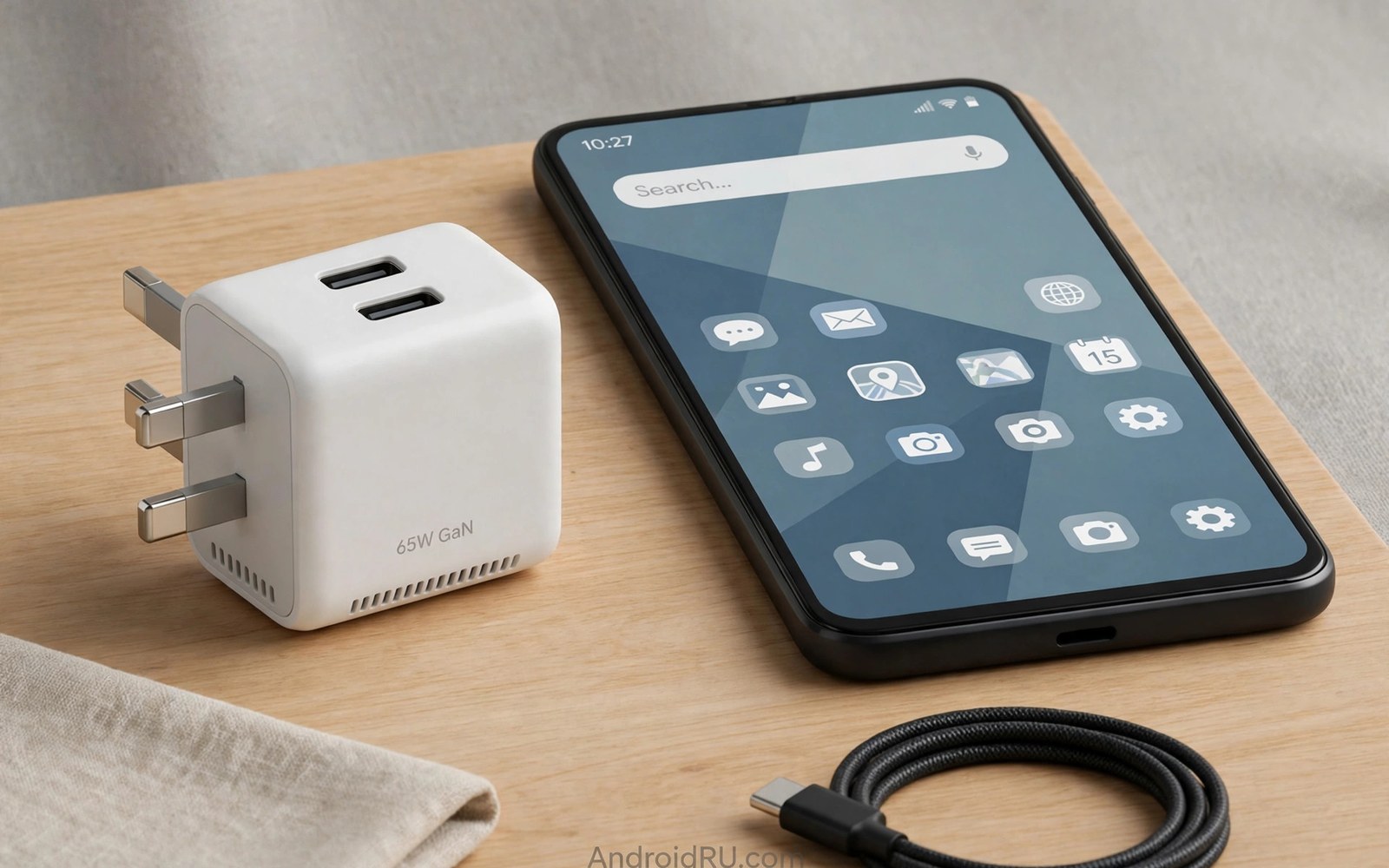
Chargers used to grow with power. A strong charger meant a large brick that hogged an outlet and filled a bag. Gallium nitride changed that balance by letting circuits switch faster and waste less energy as heat. The result is a charger that can be small and strong at the same time. Travellers notice the difference first because a pocket-size brick can now charge a phone and a tablet.
Gallium nitride is a semiconductor material that handles high voltage with less loss than silicon. It switches on and off far faster in a power circuit. Faster switching means smaller coils and smaller capacitors inside the charger. Those smaller parts are the reason the whole brick can shrink. Less wasted energy also means less heat to manage in a tight case. That combination explains the compact designs on shop shelves today.
Buyers still need to read labels with care. A small size alone does not prove a charger is good. Output ratings and safety marks matter just as much as the material inside. A well built GaN charger should stay cool and hold its rated power under load. A poor one may throttle early or run hot despite the modern material. This guide explains the technology and the checks that separate good models from weak ones.
What Gallium Nitride Changes Inside A Charger
A charger converts mains power into the low voltage that a phone can accept. Silicon parts have done this job for decades with steady results. Their switching speed sets a floor on the size of the parts around them. Gallium nitride switches faster so those surrounding parts can shrink. Designers can then pack the same power into a smaller shell. The circuit still needs good isolation and good filtering to stay safe.
Heat is the other gain from faster switching. Every switch loses a little energy as heat. Fewer losses mean the charger wastes less power during conversion. That efficiency gain lets a small case shed heat without a large metal sink. It also helps the charger hold full power for longer sessions. Users should still check that the case does not get painfully hot in use.
- Look for the output list on the charger label
- Check for recognised safety marks
- Compare size and weight with the old charger
Size Weight And Travel Benefits
A compact charger changes how people pack. One small brick can replace two older bricks in a travel bag. Multi-port GaN models add more value because they charge two devices from one outlet. That single outlet matters in hotels where sockets are scarce. A lighter bag also matters on long walking days in a city. Small gains add up across a whole trip.
Home desks gain from the same shrink. A small charger leaves room for other plugs on a power strip. It is less likely to block a neighbouring outlet with its bulk. Wall mounting stays neater when the brick sits close to the wall. Cable management also improves because the charger does not pull on the socket. These practical gains matter as much as raw power for daily use.
Power Output And Port Choices
GaN chargers come in many power classes for different needs. A low power model suits a phone and earbuds on a nightstand. A mid power model can add a tablet without slowing the phone much. A high power model can serve a laptop as well as a phone. Shared power matters because ports split the total when both are in use. Read the shared output rules before assuming each port gives full power alone.
Port mix also shapes the buying choice. USB-C ports now carry most fast charging traffic. A USB-A port still helps for older cables and older accessories. A charger with two USB-C ports covers most modern kits well. Check that each port supports the standard your phone needs. A high total watt number means little if the port your phone uses is limited.
Heat Efficiency And Long Sessions
Efficiency claims need a real world test. Charge a phone from a low level and feel the charger case at intervals. A good GaN charger should feel warm rather than hot. It should also hold its speed past the first burst of power. Some weak models start fast and then throttle hard as heat builds. That throttle can erase the advantage of a high headline rating.
Room temperature and airflow shape the test result. A charger buried under bedding will run hotter than one on a desk. Ventilation matters more for compact bricks because they have less surface area. Keep the charger clear of fabric during a long charge. Avoid stacking chargers so heat can escape from each case. These habits keep efficiency high across a full session.
Safety And Build Quality
A modern material does not replace good safety design. Look for overvoltage and overcurrent protection in the product notes. Short circuit protection should cut power fast if a cable fails. Temperature cutoffs add a final guard against overheating. Reputable makers list these features in plain language. Vague safety claims on a bargain listing should raise doubt.
Build quality shows in small details. Prongs should fit firmly without wobble in a socket. The case seams should be tight and the plastic should feel solid. A loose port can cause arcing and it can damage a cable over time. Weight alone does not prove quality but an ultra light brick may hide thin parts. Buy from sellers with a clear return policy so a weak unit can go back.
When GaN Is Worth The Upgrade
Upgrade first if your current charger is large and slow. A compact GaN model can cut bag weight and free an outlet at once. Upgrade also if you charge several devices from one spot each day. A multi-port GaN brick simplifies that desk setup a lot. Keep the old charger as a spare for a second room rather than throwing it away.
Skip the upgrade if your phone charges slowly by design. A small phone with a modest input rate gains little from a huge brick. A single device user with a working charger may also wait. Prices fall over time so waiting can buy a better model later. Buy when the size or the port mix solves a real daily problem. That rule keeps spending tied to real benefit.
Gallium Nitride In Multi-Device And Laptop Charging
Multi-device charging is where gallium nitride shines brightest. A single compact brick can serve a phone and a tablet together. Older silicon bricks for that load were large and heavy. A gallium nitride brick handles the same load in a pocket-size case. That shrink matters on desks with limited outlet space. It matters even more in travel bags with strict weight limits.
Laptop charging adds a higher power demand to the mix. A gallium nitride brick rated for laptop power can also charge a phone. Shared power rules still apply when both devices connect. The laptop may draw most power while the phone trickles. Check shared output tables before expecting full speed on both ports. A brick with generous total power serves mixed loads better.
Heat management becomes critical at laptop power levels. A compact brick at high power must shed heat efficiently. Good designs use internal layouts that spread heat across the case. Poor designs concentrate heat near one port or one side. Feel the case during a long laptop charge to judge design quality. A brick that stays evenly warm is better than one with a hot spot.
Desk setups gain from one brick replacing several. A single gallium nitride brick can replace a phone brick and a tablet brick. That consolidation frees outlets and reduces cable clutter. It also simplifies travel packing to one brick plus cables. Keep the old bricks as spares in other rooms. Consolidation should not mean discarding working gear entirely.
Gallium Nitride Charger Lifespan And Warranty
Gallium nitride circuits can last many years with normal use. Heat is the main factor that shortens charger life. A charger kept cool in open air ages slower than one buried in bedding. Ventilation therefore protects both phone and charger lifespan. Place chargers where air can move around the case. Avoid stacking chargers so heat escapes freely.
Port wear also limits charger lifespan over time. Repeated plugging strains internal port contacts. A port that wobbles causes flicker and heat at the connection. Treat ports gently and avoid yanking cables sideways. A charger with solid ports lasts longer under daily use. Replace a charger with a loose port before it damages cables.
Warranty terms reveal maker confidence in a design. A longer warranty suggests stronger components and testing. Read warranty coverage for heat and port failures specifically. Some warranties exclude damage from misuse or poor ventilation. Keep receipts and packaging until the warranty period ends. A warranty claim needs proof of purchase in most cases.
Price and lifespan should be judged together. A cheap brick that fails in a year costs more over time. A quality brick that lasts five years costs less per year. Factor in the cost of damaged cables from a poor charger too. A stable charger protects cables and phone ports as well. Long term value favours quality over the lowest shelf price.
Note the total power rating first
Check shared power across ports
Use a cable rated for the port power
Test heat after thirty minutes
Keep the charger clear of fabric
Readers who want more context on portable power can read Wireless Charging Efficiency: Heat Loss, Speed, and Alignment Tips for a related view on the same topic.
Readers who want more context on portable power can read Reverse Wireless Charging: How to Power Earbuds from Your Phone for a related view on the same topic.
Readers who want more context on portable power can read Best High-Capacity Power Banks Built for Extended Travel for a related view on the same topic.
The steps above follow the approach described in the official developer documentation and standard industry guidance for safe charging practice.
Gallium nitride earns its place by shrinking strong chargers without losing efficiency. The best models stay cool and hold power across a full charge. The worst models hide behind a modern label with weak circuits inside. Read outputs and safety notes before you trust the size claim. A careful pick gives a smaller bag and a faster desk setup.
Start with your real device list and your real port needs. Match those needs to a charger with clear ratings. Test heat and speed in the first week of use. Return any unit that throttles early or runs too hot. The right GaN charger should feel like an easy upgrade from day one.
Gallium nitride is most valuable when one brick serves many devices. Multi-device and laptop use show the size advantage clearly. Lifespan depends on heat care and port care as much as material. A quality brick with a good warranty earns its price over years. Treat it well and it repays the investment daily.
Buyers should test a new gallium nitride brick under their heaviest load. Charge the largest device and note heat and stability. Add a second device and note shared power behaviour. Those tests reveal design quality fast. A brick that passes heavy load tests will handle daily phone charging easily.
A gallium nitride brick also simplifies gift buying for family members. One versatile brick suits different phones in a household. That versatility reduces duplicate purchases across family members. A single quality brick can serve a parent and a teenager alike. Shared chargers also reduce clutter in shared living spaces.
Check charger certifications again when buying for family use. A certified brick protects every phone that connects to it. Uncertified bricks risk every device in the house. Family sharing amplifies both benefits and risks of a charger choice. Choose certified quality when a brick serves many people.
Future gallium nitride designs will shrink further as manufacturing improves. Smaller bricks with higher power will become common. Current bricks already deliver most of that benefit today. Buyers need not wait years for a practical compact charger. The present generation already fits pockets easily.

