

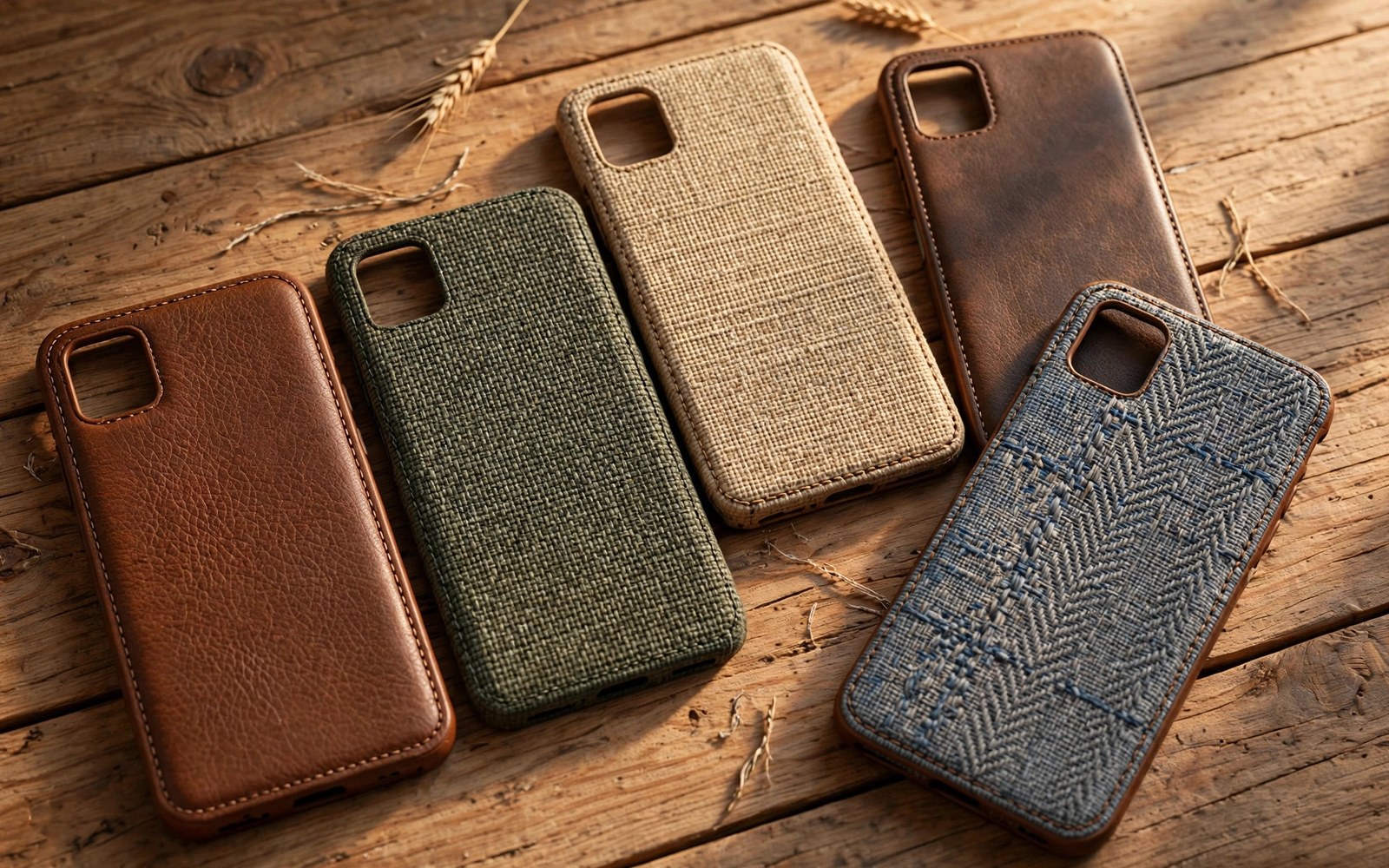
Leather and fabric cases bring warmth to a cold glass phone. They feel soft in the hand. They look refined on a desk. They age in ways that plastic cases do not. Leather darkens and softens with use. Fabric fades and frays at the edges. Both changes can look charming or worn depending on taste.
Buyers often choose these materials for style alone. Long term wear deserves equal weight. A case that looks great for a month may look tired in a year. This guide compares leather and fabric on looks and durability. It covers care habits that extend life. It also covers when to choose plastic instead.
Style materials trade some drop safety for feel. That trade suits careful users well. It suits rough users poorly. Know your handling habits before choosing. For a clear plastic alternative, see why clear cases turn yellow over time to weigh looks against ageing.
Leather Looks And Patina
Real leather develops a patina with use. Oils from hands darken the surface slowly. Sunlight adds warm tones. Scratches blend into the texture over time. Many owners love this ageing. A leather case tells the story of its use. It looks better at six months than on day one for those owners.
Faux leather ages differently. It looks neat when new. It can peel or crack after months of flexing. Edges and corners peel first. Heat speeds the peeling process. A faux case rarely gains character with age. It simply wears out. Price gaps reflect this difference honestly.
Colour choice affects visible ageing. Dark leather hides stains and scuffs well. Light leather shows denim dye and dirt quickly. Tan leather darkens most visibly. Choose a colour that matches your pocket habits. Dark jeans pockets stain light cases fast.
Fabric Texture And Grip
Fabric cases use woven textiles over a hard shell. The weave gives excellent grip. A fabric case rarely slips from a hand. It also feels warm in winter. Plastic feels cold by comparison. Grip is the strongest practical benefit of fabric.
Fabric breathes better than leather or plastic. It stays comfortable during long calls. It absorbs a little sweat in summer. That absorption can stain light fabrics. Dark weaves hide stains better. A fabric case suits users who value hold above all else.
Weave patterns vary from fine to chunky. Fine weaves look refined and they clean easily. Chunky weaves grip better and they trap more dirt. A tight weave balances looks and cleaning. Check close photos of the weave before buying. Texture matters as much as colour for daily feel.
Water Stains And Cleaning
Leather hates soaking but tolerates light rain. A wet leather case should dry slowly at room temperature. Heat drying cracks leather badly. A leather conditioner every few months keeps it supple. Conditioner also evens out minor scuffs. Neglect lets leather dry and crack.
Fabric hates mud and spills more than rain. A spill soaks into the weave quickly. Blot spills at once with a clean cloth. Do not rub a stain into the weave. Mild soap and a soft brush clean most marks. Dry the case fully before refitting it to the phone.
Both materials stain from pocket dye. Denim dye transfers to light leather and fabric. A pocket liner or a bag pouch prevents transfer. Washable fabric cases exist for heavy users. Removable fabric covers clean easiest. Fixed fabric shells need spot cleaning only.
Drop Protection Compared
Leather cases give moderate drop protection. The leather layer adds little shock absorption. The shell underneath does most of the work. A hard shell with a leather wrap guards desk falls well. It guards concrete falls less well than rugged cases. Corner protection is usually modest.
Fabric cases behave similarly. The fabric adds grip that prevents drops. The shell absorbs the falls that still happen. Grip is the real safety feature here. Fewer drops beat better armour in daily life. A fabric case that never slips guards better than a rugged case that slips often.
Neither material suits harsh work sites. Dust and grit wear fabric fast. Wet and oily hands stain leather fast. Rugged plastic suits those settings better. Style cases suit offices and evenings best. Match the material to the setting where the phone lives.
Long Term Wear And Replacement
Real leather can last two years or more with care. Conditioning and gentle use extend its life. Stitching may fail before the leather does. Check stitching quality before buying. Double stitching lasts longer than single stitching. A well made leather case is an investment piece.
Fabric cases last about a year of daily use. Edges fray first near ports and buttons. Fading follows sun exposure. A frayed edge looks untidy even if protection remains. Replacement is cheap for most fabric cases. Treat fabric as a yearly refresh rather than a lifetime buy.
Cost per year helps compare fairly. A pricey leather case over two years may cost less yearly than cheap fabric twice a year. Faux leather breaks this math by peeling early. Spend on real leather or accept frequent fabric replacement. Both paths can make sense with honest expectations.
- Choose real leather for patina and multi-year life.
- Choose fabric for the best grip and warm feel.
- Condition leather every few months.
- Blot fabric spills at once and never rub stains in.
- Avoid light colours if you carry denim pockets.
- Replace fabric cases once edges fray visibly.
Which Material Suits You
Choose leather if you love ageing character and a refined look. It suits office and evening use. It rewards gentle care with a beautiful patina. It costs more upfront. It pays back over years of use. Dark colours suit daily pockets best.
Choose fabric if grip and comfort matter most. It suits long calls and active hands. It costs less and it refreshes yearly. It needs quick spill care. Dark weaves hide daily wear best. It feels the most natural in the hand of the three styles.
Choose plastic if your phone faces rough daily abuse. Style materials cannot match rugged plastic there. There is no wrong answer among these materials. There is only a mismatch with your life. Match the case to your days. Your phone will look and feel right for longer. Plant based style options are covered in eco-friendly biodegradable cases and their durability for buyers who value low impact materials.
Stitching Quality And Construction
Stitching decides leather case lifespan more than leather grade. A case flexes at the spine with every open and close. Weak stitching unravels under that repeated flex. Double stitching shares load across two threads. It lasts far longer than single stitching. Check stitch spacing in close photos. Even tight stitches signal careful making. Uneven loose stitches signal rushed work. A well stitched case feels firm at the spine. A poorly stitched case feels floppy from day one.
Edge finishing also reveals construction quality. Burnished leather edges look smooth and sealed. Raw cut edges fray and darken quickly. Fabric edges need bound seams to resist fraying. A bound seam wraps the fabric edge fully. An unbound seam unravels within months. Check edge photos before buying any style case. Edges age first and they show quality fastest. Good edges justify a higher price honestly.
Inner shell fit matters as much as outer material. A loose inner shell lets the phone shift during use. Shifting wears the inner lining quickly. A snug shell holds the phone silently. Test fit by shaking the cased phone gently. Silence means a good fit. Rattling means a poor fit that will worsen. Return a rattling style case at once. Fit quality beats material beauty for daily use.
Vegan Leather And Modern Alternatives
Vegan leather uses plant or synthetic materials that mimic animal leather. Good vegan leather looks and feels close to real leather. It resists water better than real leather. It also avoids conditioning routines. Poor vegan leather peels like cheap faux leather. Quality varies hugely between makers. Check owner reviews after months of use. Peeling reports reveal weak vegan leather fast. Durable vegan leather earns praise for ageing gracefully.
Cork and wood veneer cases offer another natural look. Cork feels warm and light. It grips well in dry hands. It can chip at the edges with hard use. Wood veneer looks striking on a desk. It adds little drop protection alone. Both materials suit careful users best. They suit style focused buyers more than rough users. Their ageing character charms owners who value natural materials.
Pair style material choice with heavy-duty cases compared with slim covers thinking for rough days. A leather case suits office and evening use. A rugged case suits travel and outdoor work. Swapping between them takes seconds. That habit preserves a beautiful case for years. It also guards the phone better on rough days. Two cases serve a varied life better than one forced compromise.
Leather care products extend case life measurably. A conditioner every few months keeps leather supple. It also evens out minor scuffs and scratches. Apply conditioner sparingly with a soft cloth. Excess conditioner darkens light leather unevenly. Test conditioner on a hidden edge first. A hidden test reveals colour change safely. Skip conditioner on faux leather entirely. Faux leather needs only a damp wipe. Correct care matches the material type.
Style cases make thoughtful gifts for careful owners. A leather case suits a professional colleague well. A fabric case suits an active friend well. Check the recipient phone model before gifting. A wrong model case is useless despite good taste. Include a gift receipt for easy exchange. A receipt removes awkwardness from a model mistake. Gift cases should prioritise fit over fashion. A fitting case delights. A non fitting case disappoints.
Style case care:
- Leather: condition every 2-3 months, dry slowly if wet
- Fabric: blot spills at once, mild soap spot clean
- Both: avoid denim dye transfer, dark colours hide stains
- Leather life: 2+ years with care
- Fabric life: about 1 year daily use
- Replace when: peeling, fraying, or stitching fails
The steps above follow the approach described in the official developer documentation for device care and accessory testing. The guidance draws on standard material care practice and everyday handling. Leather and fabric age with character when cared for. Choose the material whose ageing you will enjoy seeing.

