

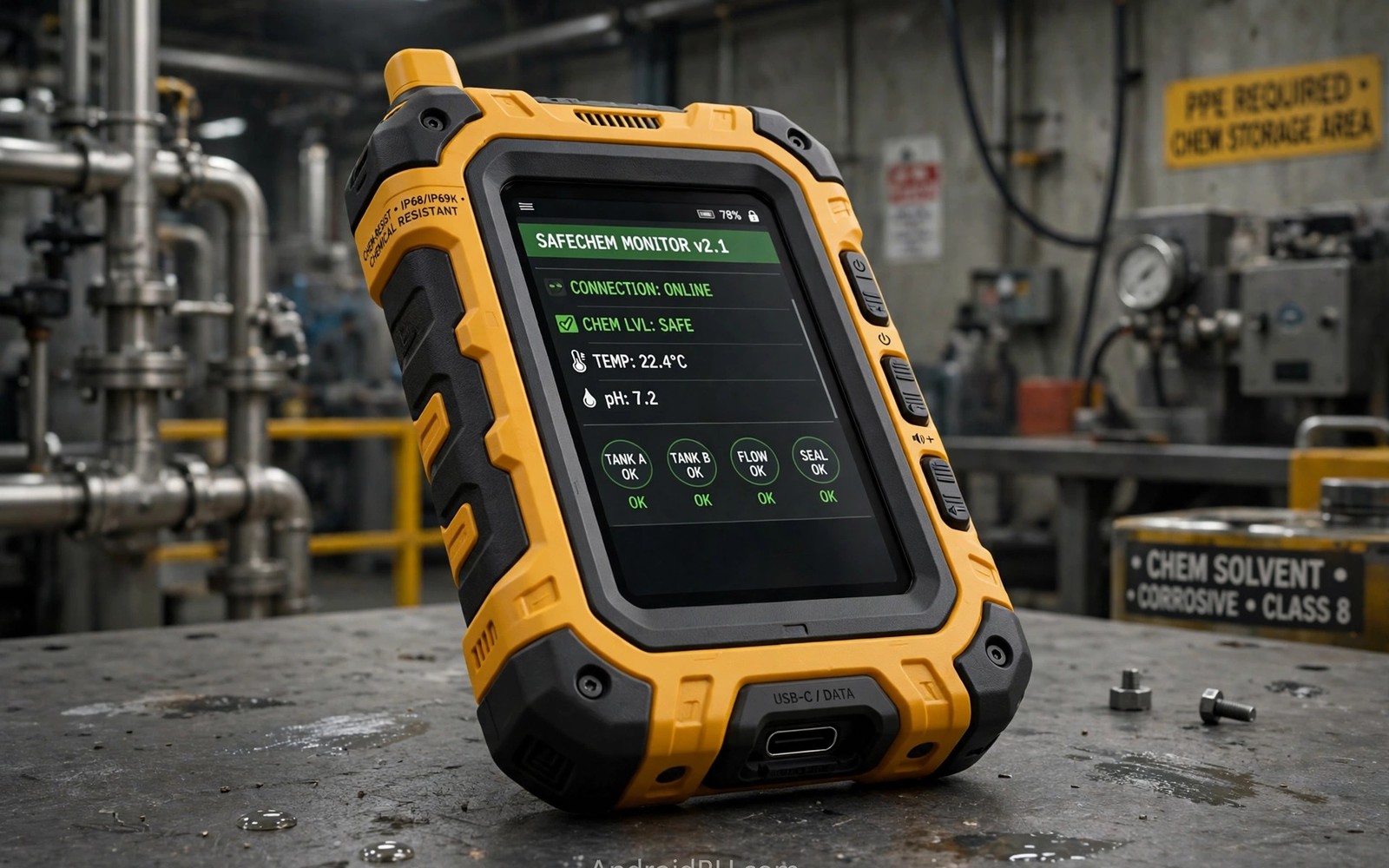
Chemical resistance industrial phones must survive daily contact with cleaners and solvents. A normal phone housing can soften or crack after repeated chemical exposure. Seals can swell and lose their fit. Screens can cloud when solvents attack coatings. Specialized industrial devices use materials chosen for chemical stability. This guide explains those materials and the care rules that keep them working.
Chemical damage is often slow and invisible at first. A housing may look fine while its surface weakens. A seal may swell by a fraction of a millimetre and still look seated. That small change can open a path for dust and water later. The waterproof seals that wear over time face extra stress in chemical plants. Heat plus chemicals accelerates seal aging. Inspect seals often when chemicals are part of daily work.
Chemical resistance also matters for cleaning staff in hospitals and food plants. Hospital cleaners use disinfectants many times per day. Food plant workers use caustic cleaners on every shift. Phones in those settings face chemical contact far more often than office phones. A standard phone may fail within months under that regime. A chemical resistant device lasts years under the same cleaning routine. Cleaning frequency should drive device choice.
Which chemicals damage phones most
Solvents like acetone and ethanol attack many plastics. Acetone can dissolve common phone housings fast. Ethanol is milder but repeated wiping still dries rubber. Chlorine cleaners bleach and harden rubber seals. Strong acids etch metal frames and attack coatings. Alkaline degreasers can dull screens and soften adhesives.
Oils and fuels cause slower damage. Diesel and cutting oil can swell some rubber types. Hydraulic fluid can soften seals over months. Food acids and salt solutions corrode metal contacts. Each chemical attacks different materials. No single phone resists every chemical. Match the phone material to the chemicals in your plant.
Housing materials that resist chemicals
Polycarbonate housings resist many cleaners but fail against acetone. Glass filled nylon resists a wider range of solvents. Stainless steel frames resist acids better than aluminium. Fluorinated rubber seals resist oils and many solvents far better than standard rubber. These materials cost more and they add weight. That cost buys survival in harsh plants.
Ask the maker for a chemical resistance chart. A serious industrial brand lists tested chemicals and exposure results. A vague brand gives only a general claim. Compare the chart against your plant chemical list. A phone that resists ethanol may still fail against your specific degreaser. The chart is the only reliable guide.
Seals gaskets and port covers under chemicals
Seals are the weakest link under chemical attack. Standard rubber swells in oils and solvents. Swollen seals lose compression and leak. Fluorinated rubber and silicone seals handle wider chemical ranges. Silicone resists heat well but tears more easily. Fluorinated rubber balances chemical resistance and durability best for many plants.
Port covers face the most handling and the most chemical contact. Workers open covers with gloved hands that carry chemical residue. Residue transfers to the seal face each time. Wipe covers with clean water after chemical contact when plant rules allow. Replace covers at the first sign of swelling or cracking. A cheap cover protects an expensive phone.
adb shell dumpsys battery | grep -i health
adb shell settings get system screen_brightness
adb shell pm list packages | grep -i -E 'device|health' | head -5
Attribution: the snippet above is an original example prepared for this article. It follows a standard public pattern for Android device checks and it does not copy code from any vendor site.
Screens coatings and touch under chemicals
Screen glass itself resists most chemicals well. Coatings on the glass do not. Oleophobic coatings repel fingerprints but solvents strip them. A stripped coating still shows a clear image. It smudges faster and cleans harder. Touch performance usually survives coating loss. A screen protector can take the chemical wear instead of the coating.
Use a replaceable film protector in chemical plants. Replace the film when it clouds or peels. Avoid glass protectors with strong adhesives that solvents may weaken. Test touch response after fitting any protector. A protector that blocks glove mode hurts field use. Balance chemical protection against touch needs for your job.
Safe cleaning rules for industrial phones
Clean with the mildest method that works. Rinse with clean water first when plant rules allow. Use a damp cloth with mild soap for routine cleaning. Avoid direct solvent sprays on the phone. Apply cleaner to a cloth rather than to the device. Wipe seals and covers gently and dry them fully before closing ports.
Never soak a phone in solvent even when it carries a water rating. Water ratings test fresh water only. Solvents attack materials in ways water never does. Never use abrasive pads on seals or screens. Abrasion creates paths for chemicals to enter. Log cleaning products used on each device. That log helps trace damage when a seal fails.
Choosing a device for your plant chemicals
List every chemical that touches devices in your plant. Include cleaners and fuels and process fluids. Request resistance data for that exact list. Choose a device that covers the harshest chemical on the list. A device that covers most chemicals but fails on one daily cleaner is a poor choice.
Also check glove compatibility and mounting needs. A chemical resistant phone must still work with plant gloves. It must still fit plant mounts and chargers. Test one device for a month in real plant conditions before fleet purchase. A month of real exposure reveals swelling and clouding that spec sheets hide.
Hospitals food plants and laboratories
Hospital devices face disinfectants that kill microbes but attack plastics. Alcohol and chlorine based disinfectants are common. Devices need housings that tolerate repeated wiping. Seals must survive daily disinfection without swelling. A device that fails disinfection protocols cannot stay in clinical use. Infection control teams should approve device materials before purchase.
Food plants use hot water and caustic foam cleaners. Devices may face direct spray during washdowns. IP69K ratings help with hot jets. Chemical resistance helps with caustic foam. Both protections matter together in food work. A device with only one protection fails the other stress. Check both ratings for food plant devices.
Laboratories handle solvents and reagents in small amounts. Spills happen despite care. A lab phone may contact ethanol or acetone or acids. Lab devices need resistance to the specific reagents used in that lab. A generic industrial rating may miss a lab specific chemical. List lab chemicals before choosing a device.
Cleaners should receive training on device safe cleaning. A cleaner who sprays solvent directly onto a phone can damage seals fast. Training should show the approved wipe method. It should list banned cleaners for each device type. A short training session prevents most chemical damage. Post the approved method near charging stations.
Device rotation helps chemical exposed fleets last longer. Rotate devices through cleaning and rest periods. A device that dries fully between shifts lasts longer than a device cleaned and reused immediately. Rest periods let seals recover shape. Rotation schedules are cheap and they extend fleet life measurably.
Glove and device compatibility in chemical plants
Chemical resistant gloves can block touch screens and buttons on industrial phones. Thick chemical gloves behave like heavy work gloves for touch purposes. A phone with glove mode and large physical buttons suits chemical plants better. Test the exact glove and phone combination before fleet purchase. A phone that works bare handed may fail completely with chemical gloves on. Glove testing belongs in every chemical plant device trial.
Chemical gloves also carry residue onto phone surfaces during handling. Residue transfers to screens and buttons and seals with every touch. Workers should wipe devices at shift end with approved methods. A device cleaning station near the exit helps compliance. Workers clean devices before leaving the plant area. Clean devices last longer and carry less contamination into offices and vehicles. Cleaning stations are cheap compared with device replacement costs.
Common mistakes
The biggest mistake is assuming water resistance means chemical resistance. Water tests use fresh water only. Solvents attack materials that water leaves untouched. Another mistake is spraying solvent directly onto the phone. Direct spray drives chemicals into seals and ports.
A third mistake is ignoring slow seal swelling. A swollen seal may look seated while it leaks under pressure. Inspect seals weekly in chemical plants. A fourth mistake is using abrasive cleaning pads. Abrasion damages seals and coatings and opens paths for future chemical attack.
A fourth mistake is storing chemical exposed phones in sealed bags while still damp. Trapped moisture corrodes contacts and breeds mould. Dry devices fully in moving air before storage. Ventilated storage protects electronics better than sealed bags.
Frequently asked questions
Can I clean an industrial phone with alcohol wipes?
Many industrial phones tolerate brief alcohol wiping. Repeated soaking still dries rubber over time. Check the maker chemical chart for alcohol limits. Rinse with water after when plant rules allow.
Does chemical resistance last the life of the phone?
No. Chemicals age materials gradually even on resistant devices. Resistant materials age slower than standard materials. Regular inspection and cover replacement keep protection strong over years.
What if my plant uses a chemical not on the chart?
Ask the maker for test data on that chemical. Test one device in real conditions before fleet buying. Do not assume resistance from a similar chemical name.
Conclusion
Chemical resistance industrial phones protect work when materials match the plant. Resistant housings and seals and careful cleaning together keep devices alive in harsh environments. No device resists every chemical forever. Inspection and correct cleaning extend protection for years. The solar charging for off grid trips adds useful context for this choice. The weight and thickness of protected phones adds useful context for this choice.
Your concrete next step is to list the chemicals that touch phones in your plant this week. Compare that list against the maker resistance chart for any candidate device. Test one phone for a month before you buy for the whole team.
Ask your cleaning team which products touch devices most often this month. Compare that list against device resistance data. A mismatch found now prevents a fleet failure later. Chemistry knowledge is device protection.

