

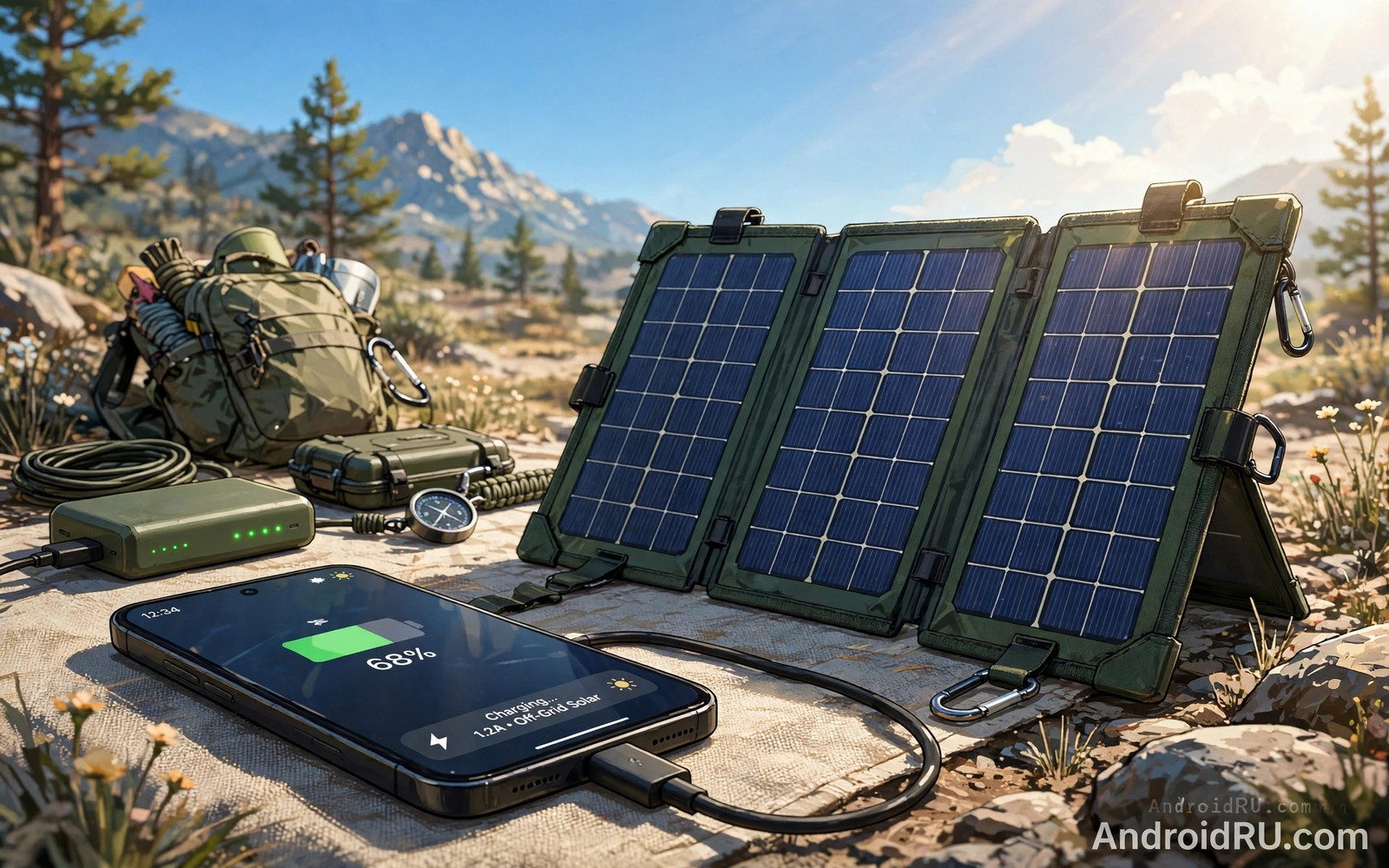
Solar powered charging for off grid phones turns sunlight into usable phone power far from any socket. A panel on a backpack can top up a phone during a rest stop. A solar power bank can store daylight energy for night charging. These tools do not replace a wall charger. They extend phone life on multi day trips. This guide explains realistic solar performance so you can plan with confidence.
Solar charging is slow compared with wall charging. A small panel may deliver only a few watts in real sun. A phone needs many watt hours for a full charge. That maths sets honest expectations. The massive battery phones for long trips pair well with solar because a large battery stores solar gains over several days. Solar plus a giant battery together cover trips that neither tool covers alone.
Solar charging also suits emergency preparedness at home. A folding panel stored with emergency supplies can charge phones during a power outage. A storm may cut grid power for days. Solar panels work when fuel for generators runs out. A charged phone keeps emergency information flowing. Preparedness kits gain real value from a tested solar panel. Test the panel yearly so it works when an outage strikes.
How solar panels convert sunlight to phone power
A solar panel uses photovoltaic cells to convert light into direct current. The panel output varies with sun angle and cloud and temperature. A panel rated at 20 watts delivers that power only in perfect noon sun. Real hiking conditions give far less. Shade from trees can cut output by most of its value. A panel lying flat on a pack also loses output versus a panel angled at the sun.
A charge controller or a built in circuit regulates panel output for USB devices. It prevents voltage spikes from harming the phone. Some panels charge phones directly. Others charge an internal battery first. Direct charging stops when a cloud passes. Battery buffered charging stores energy and delivers it steadily later. Buffered systems suit phones better on variable days.
Panel sizes and realistic charging times
A 10 watt panel suits emergency top ups. It may add 10 to 20 percent to a phone over a full sunny day of hiking. A 20 watt panel can add 30 to 50 percent in good sun. A 30 watt folding panel can approach a full charge over two sunny days. These numbers assume the panel faces sun for many hours. A panel inside a pack charges nothing.
Phone battery size changes the maths. A small phone battery fills faster from the same panel. A giant rugged battery needs more solar days. Plan panel size against battery size and trip length. A week long trip needs a larger panel plus a power bank. A weekend trip may need only a small panel for safety top ups.
Solar power banks versus direct panels
Solar power banks combine a battery with a small panel. The small panel charges the bank slowly over days. The bank then charges the phone fast at night. This design is convenient and compact. It is poor as a primary solar charger because the built in panel is tiny. It takes many days of sun to fill a large bank through its own panel.
Folding panels give far more solar area for the same weight. They pack flat and unfold at camp. They charge a separate power bank during the day. That bank charges the phone at night. This two stage system is the most reliable off grid setup. Carry a panel plus a bank rather than relying on a solar bank alone.
Positioning panels on trails and at camp
Hang the panel on the outside of a backpack while hiking. Face it toward the sun as much as the trail allows. Stop at sunny rest points and angle the panel directly at the sun. At camp hang the panel from a tree or lay it on a rock in full sun. Move it every hour or two to follow the sun. Small repositioning gains add up over a day.
Avoid shade from your own body and pack straps. Even partial shade on one cell can cut panel output sharply. Keep the panel clean and dry. Dust and water spots reduce light capture. Wipe the panel with a soft cloth each morning. A clean panel in full sun is the best free charger you can carry.
adb shell dumpsys battery
adb shell settings get global battery_saver_enabled 2>/dev/null || echo saver-check-done
adb shell cmd batterystats 2>/dev/null | grep -i -m 3 'charge\|discharge' || echo stats-check-done
Attribution: the snippet above is an original example prepared for this article. It follows a standard public pattern for Android device checks and it does not copy code from any vendor site.
Cables connectors and weather care
Use short thick USB cables for solar charging. Long thin cables lose power as heat. A good cable preserves the small solar output. Carry a spare cable because solar cables wear at folds. Check connector fit in rain and dust. Sealed connectors last longer on trails.
Most folding panels resist light rain but they are not fully waterproof. Protect connections from rain with a dry bag. Do not leave a panel in a storm when lightning is near. Store the panel dry at night to prevent connector corrosion. Treat the panel as electronics rather than as a waterproof tarp.
Planning a solar kit for trip length
For a weekend trip pack a 20 watt panel and a 10000mAh bank. Charge the bank at home before departure. Use solar to top up the bank during the day. For a week trip pack a 30 watt panel and a 20000mAh bank. Ration phone use to maps and messages and photos. Turn on battery saver and flight mode between check ins.
Test the full kit before a remote trip. Charge your phone from the panel on a sunny day at home. Measure how much charge you gain in four hours. That test gives a personal baseline for planning. A kit tested at home rarely surprises you on a trail. An untested kit often disappoints at the worst moment.
Emergency kits vehicles and base camps
Emergency kits should include a folding panel and a charged power bank. Store the panel where sunlight can reach it quickly. A panel buried under supplies helps nobody during an outage. Keep cables with the panel in one pouch. A complete pouch deploys in minutes when power fails.
Vehicles can carry a panel on the dashboard for trickle charging. Dashboard sun through glass still charges a panel slowly. A dashboard panel tops up a power bank during a drive. It cannot replace a proper panel in full sun. Treat vehicle dashboard charging as a bonus rather than a primary source.
Base camps for research and film crews use larger solar arrays. A camp array can charge many devices through a central bank. Camp solar planning needs a power budget. List every device and its daily energy need. Size the array above total need with margin for cloudy days. A camp without a power budget runs out on cloudy weeks.
Solar panels also charge radios and lights and GPS units at camp. A single panel can serve a whole kit through USB. Prioritise phones and radios for safety. Charge lights and cameras after safety devices reach full charge. A priority order prevents a dead radio when a camera drains the bank.
Winter solar performance drops with short days and low sun angles. Snow reflection can help panel output on clear days. Snow cover on the panel itself blocks output completely. Brush snow off panels each morning. Angle panels steeply in winter to catch low sun. Winter solar planning needs larger panels than summer planning.
Solar panel durability on rough trails
Folding solar panels face flexing and abrasion on every trail day. Hinges wear with repeated folding. Cell surfaces scratch against pack contents. A panel stored in a padded sleeve lasts far longer than a panel loose in a pack. Choose panels with reinforced hinges and scratch resistant coatings. A durable panel costs more upfront but survives many seasons. A cheap panel with weak hinges fails mid trip and leaves a team without solar power.
Panel connectors also wear from repeated plugging in dust and rain. Dust in a USB connector causes poor contact and slow charging. Clean connectors gently with dry air before each use. Cover connectors when the panel is packed away. A connector cap costs almost nothing and prevents most dust failures. Treat panel connectors with the same care as phone ports. Small connector care preserves the whole solar system.
Panel angle also changes with latitude and season in ways that surprise first time solar users. A panel laid flat works reasonably well near the equator at midday. A panel laid flat in northern latitudes in winter catches far less sun. Tilting the panel toward the south in northern regions improves winter output greatly. Tilting toward the north helps in southern regions. A simple tilt adjustment can double winter charging compared with a flat panel. Camp routines should include a morning panel tilt check beside the tent. That check takes one minute and it pays back in faster charging all day long.
Common mistakes
The biggest mistake is expecting a solar panel to charge like a wall charger. Solar charging is slow and weather dependent. Another mistake is keeping the panel inside a pack. A shaded panel produces almost nothing.
A third mistake is relying on a solar power bank panel alone. The built in panel is too small for fast recovery. Carry a folding panel plus a separate bank. A fourth mistake is using a long thin cable that wastes solar power as heat. A short thick cable preserves every watt.
A fourth mistake is buying a panel without checking its USB output type. Some panels output low power that cannot charge modern phones well. Check wattage and USB type before purchase. A panel with weak output frustrates users and wastes pack weight.
Frequently asked questions
How long does solar charging take for a phone?
A 20 watt panel in good sun may add 30 to 50 percent over a full hiking day. A full charge often needs two sunny days. Clouds and shade extend that time a great deal.
Can solar panels charge a phone in cloudy weather?
Yes but output drops sharply. Thin cloud may halve output. Thick cloud may cut it to a tenth. A power bank buffer helps you use cloudy day gains at night.
Are solar chargers waterproof?
Most folding panels resist light rain. They are not fully waterproof. Protect connectors from rain and store panels dry at night. Check the maker rating before storm use.
Conclusion
Solar powered charging for off grid phones gives slow steady energy where no socket exists. Realistic panel sizing and good positioning and a power bank buffer turn sunlight into reliable phone power. Test your kit at home and ration phone use on long trips. The weight and thickness of protected phones adds useful context for this choice. The GPS accuracy in canyons and forests adds useful context for this choice.
Your concrete next step is to test your panel for four hours in full sun this week. Record how much phone charge you gain. Use that number to size your panel and bank for your next multi day trip.
Add a solar test to your yearly emergency kit check. Unfold the panel in sun and charge a phone for one hour. Record the gain in your kit log. A tested kit is a trustworthy kit when an outage arrives.

