

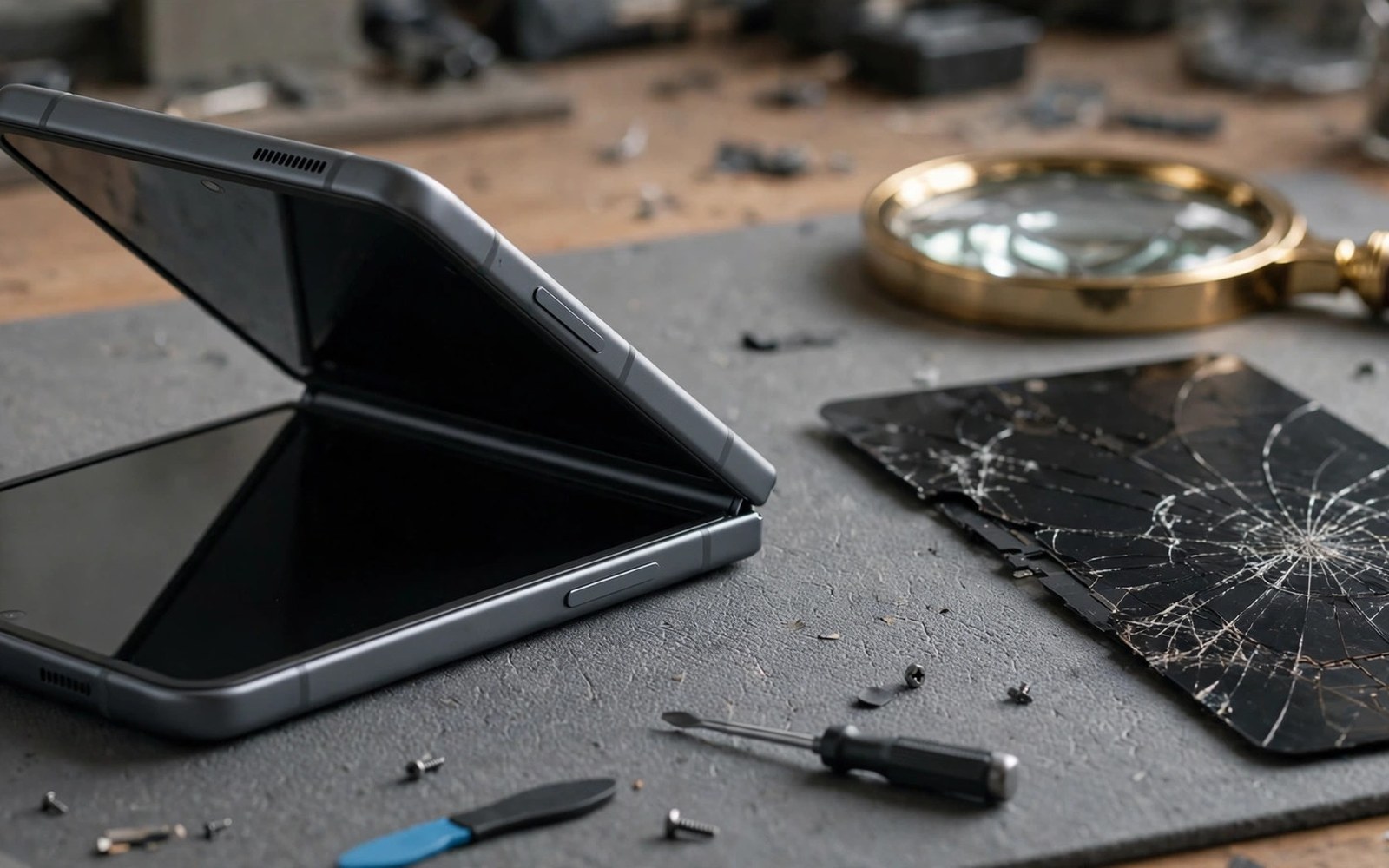
The Cost of Screen Repairs on Foldable Devices Explained
Open a foldable phone and you hold two screens, a hinge, and a bill that can surprise even careful owners. I learned that the hard way when a friend dropped a Galaxy Z Fold on a tiled floor and the inner display showed a bright green line the next morning. The phone still worked, the cover screen still worked, and the quote for the inner panel was close to half the price of the phone itself. That gap between expectation and reality is why this topic matters before you buy, before you drop, and before you agree to any repair.
This guide breaks down what a foldable screen repair actually costs in 2026, why the inner panel sits at the top of the price range, and how warranty, care plans, and third-party shops change the maths. You will get real price ranges for Samsung, Google, Motorola, and other folding phones, a clear comparison of inner versus outer screen work, and a step-by-step plan for getting a written quote, checking the repair, and keeping the next bill small.
It is written for owners, not technicians. You do not need to know how ultra-thin glass is made to make a smart decision, but you do need to know which damage is cheap, which damage is expensive, and which questions stop a shop from charging you twice for the same job.
Why foldable screen repair cost is so high in 2026
A slab phone has one rigid glass panel glued to a frame. A foldable has a flexible OLED panel, a layer of ultra-thin glass, a touch layer, a plastic top film, and a hinge that must line up with all of them to within a fraction of a millimetre. When one layer cracks, the bonded stack usually has to come out as a single unit. That is the first reason the bill is high: you are rarely paying for a piece of glass, you are paying for a whole display assembly.
The second reason is labour. A technician must open the phone, disconnect two halves, remove the hinge cover, fit the new panel, check the fold angle, test touch across the crease, and calibrate colour and brightness. On a Galaxy Z Fold 5 or Z Fold 6 that job can take two to three hours in an authorised centre. On a slab phone the same glass swap can take under an hour. Time is money, and foldables take more of it.
The third reason is parts scarcity. Far fewer replacement panels exist for foldables than for popular slab phones, and most of them come from the original maker or from a small group of licensed suppliers. A third-party panel for a Galaxy S24 is easy to find. A genuine inner panel for a Pixel Fold or a Motorola Razr 50 Ultra is a different story, especially in the first year after launch when demand is low and production runs are small.
What makes the inner folding panel different from a normal screen
The inner panel bends thousands of times. Samsung rates its newer Fold hinges for around 200,000 folds, and the panel is built to flex with them. That flexibility comes from layers that are thinner and more fragile than the glass on a slab phone. A drop that would only chip a normal screen can crease, crack, or delaminate a folding panel because the impact bends the stack at its weakest point, the fold line.
Heat makes the problem worse. Leave a foldable on a car dashboard in summer and the adhesive softens. Fold it while it is hot and the top film can bubble or lift. I have seen a phone that looked fine in the morning develop a visible ridge along the crease after a hot afternoon, and the owner had done nothing except use it normally.
Ultra-thin glass and the plastic top film explained
Ultra-thin glass, often called UTG, is only about 30 microns thick on many foldables, thinner than a human hair. It gives the screen a glass feel while still bending. On top of it sits a soft plastic protective film. That film is meant to be replaceable, and on Samsung phones it is fitted at the factory. Peel it off yourself and you can damage the panel underneath, so leave film replacement to a service centre or follow the maker instructions exactly.
Why a crack at the crease is worse than a crack at the edge
A crack at the edge of the outer screen is often cosmetic. A crack at the crease can break touch lines that run across the fold, and it can let dust into the hinge. Once dust gets in, every fold grinds it against the panel. That is why technicians tell owners to stop folding a cracked inner screen and to book service quickly, even if the phone still turns on.
Inner screen replacement price by model and brand
Prices move by region, by model, and by whether you use an authorised centre, so treat the ranges below as a planning guide and always get a written quote for your exact model. In the United States, an inner screen replacement for a Galaxy Z Fold 6 commonly runs from about $400 to $700 out of warranty, while a Galaxy Z Flip 6 inner panel is often $300 to $500. Older models such as the Z Fold 4 or Z Flip 4 can be cheaper when parts are in stock, but they can also be dearer when parts are scarce.
Google Pixel Fold inner screen work is usually quoted in a similar band to the Z Fold, roughly $500 to $800 in the US, because the panel is large and the supply chain is smaller. Motorola Razr models tend to cost less for the inner panel, often $250 to $450, because the folding display is smaller. OnePlus Open and Honor Magic V series phones sit in the middle, roughly $400 to $650, depending on the market and the service route.
In the UK and Europe, expect the same jobs to cost roughly £350 to £600 for a Fold inner panel and €400 to €700 in the eurozone, before any care-plan discount. In India and Southeast Asia, authorised prices are often lower in absolute terms but still high relative to the price of the phone, and waiting times can be longer because panels are shipped from a central warehouse.
That said, the model matters less than the damage type. A top-film replacement on a Z Fold can cost $30 to $80. A full inner panel swap is ten times that. Always ask the service desk to state in writing whether the quote is for film, glass, panel, or panel plus hinge parts, because those four jobs have very different prices.
Samsung Galaxy Z Fold and Z Flip inner screen prices
Samsung publishes out-of-warranty repair prices in several markets, and its authorised centres follow them closely. A Z Flip inner screen is cheaper than a Z Fold inner screen because it is smaller and the hinge is simpler. The outer screen on either phone is cheaper still, often $100 to $200 for a Flip and $150 to $250 for a Fold, which is why many owners use the cover screen while they save for an inner repair.
Check whether your phone is still inside its first year, because a defect that looks like a crack can sometimes be covered. Samsung has, in the past, covered crease-line defects that appeared without impact, but it will not cover a panel that shows impact marks or a dented frame. Photograph the phone before you hand it over, and keep the photos with the date.
Google Pixel Fold and Motorola Razr repair prices
Google and Motorola both use authorised networks rather than a large network of their own shops, so turnaround can be slower. A Pixel Fold owner in the US may wait a week or more for a panel to arrive, and the quote may include shipping both ways. Motorola Razr owners often get faster service because the inner panel is smaller and more shops carry it, but the hinge on a Razr still needs a trained technician.
Ask both makers about a loan phone. Some authorised centres offer one, some do not, and the answer changes how painful a week without your main phone will be. If no loan phone is available, back up everything before you send the phone away, because a mail-in repair can take longer than the estimate.
Inner versus outer screen repair cost compared
The outer screen is the one you see when the phone is closed. It is built like a slab screen, it does not bend, and it can often be replaced without touching the hinge. The inner screen is the one you see when the phone is open. It bends, it bonds to the hinge, and it needs calibration after fitting. That difference explains almost the entire price gap.
| Repair job | Typical US price range | Time and complexity |
|---|---|---|
| Outer cover screen replacement | $100 to $250 | Often under 90 minutes, hinge untouched |
| Inner folding panel replacement | $300 to $800 | Two to four hours, hinge check and calibration included |
| Top protective film replacement | $30 to $80 | Under 30 minutes, no panel work |
| Inner panel plus hinge parts | $500 to $950 | Half a day or more, full hinge service |
| Battery plus inner panel bundle | $400 to $900 | Longer visit, battery is often bonded to the panel frame |
| Third-party inner panel, non-genuine | $200 to $500 | Cheaper parts, quality and colour can vary |
Use that table when you read a quote. If a shop quotes $180 for an inner panel on a Z Fold 6, ask what is included, because that price is far below the genuine panel cost and usually means a non-genuine part, a refurbished panel, or a quote that excludes labour. If a shop quotes $700 for an outer screen, ask why, because that price is far above the normal range for that job.
Small cracks in the top film cost far less than panel cracks, and a protector change may hide film wear cheaply. Touch failure, bright lines, or a black patch signal deeper panel damage. Back up your data before any repair visit, because service may wipe the phone or replace parts that hold data, and a backup made after the fault cannot bring back photos that were only on the phone.
When the outer screen is the smart repair to do first
If money is tight and the inner screen still works, fix the outer screen first and use the cover display for calls, messages, and navigation. That keeps the phone usable while you save for the inner job, and it stops a cracked outer screen from cutting your finger or letting water in. Do not do the reverse: a working outer screen does not make a dead inner panel usable, and folding a cracked inner panel can spread the damage.
When a hinge repair gets bundled with the panel
Some repairs replace hinge parts alongside the panel, and that bundle explains a quote that looks high at first glance. A hinge that clicks, sticks, or opens unevenly may need new hinge covers, a new hinge mechanism, or a new frame half. Ask the technician to show you the hinge movement before and after the repair, and to note on the receipt whether hinge parts were replaced, because that note matters for resale and for any later warranty claim.
Warranty, Samsung Care Plus, and care plan maths
Standard warranty covers defects rather than accidental cracks. If your screen cracked after a drop, the standard warranty will almost always say no. If a line appeared along the crease without any drop, with no dent on the frame and no impact mark on the screen, ask for a defect assessment in writing, because that case can qualify.
A care plan changes the maths completely. Samsung Care Plus, Google Preferred Care, and similar plans usually charge a monthly or yearly fee plus a service fee per claim, often $29 to $99 for a screen claim in the US. Compare that total with the full repair price. A plan that costs $12 a month plus a $29 claim fee pays for itself the first time you crack an inner panel, but it costs more than the repair if you never claim in two years.
Heavy users, parents of small children, and people who work outdoors gain most from cover. Careful home users who keep the phone in a case and never drop it may prefer to save the fee instead. There is no right answer for everyone, only a right answer for your habits, so be honest about how often you have cracked a phone before.
Check claim limits and repair turnaround before you buy cover. Some plans limit claims per year, others require authorised service centres only, and loan phones during repair vary by plan and region. Read the fine print about hinge and water damage exclusions, because a plan that excludes hinge damage will not help when the hinge is the problem.
Care plan maths in practice
How to work out whether a care plan saves you money
Write down three numbers: the monthly fee times 12, the claim fee, and the full out-of-warranty repair price for your model. Add the first two, then compare the total with the third. If the plan total is less than half the full repair price, and you have cracked a phone in the last three years, the plan is usually worth it. If the plan total is close to the full repair price, and you have never cracked a phone, saving the money is usually the better bet.
What to check in the fine print before you buy cover
Look for the number of claims per year, the excess per claim, whether the plan covers the inner panel or only the outer screen, whether it covers hinge damage, and whether it covers water damage. Also check whether you must buy the plan within 30 or 60 days of buying the phone, because most plans will not let you add cover after the phone is already damaged.
Authorised service versus third-party repair shops
Third-party shops may offer lower prices for foldable screens, and some of them do excellent work. Quality varies widely because parts and skills differ, and a poor panel fit can stress the hinge and ruin the crease. Warranty may end after a third-party opening, so ask about genuine parts and hinge testing before you commit, and get the answer in writing.
Authorised service costs more but protects seals and calibration. Technicians train on hinge alignment for each model, genuine panels match colour and touch specs, and the repair is recorded against your phone serial number, which helps resale. Turnaround may run longer due to parts ordering, so ask for a date in writing and ask what happens if the part is delayed.
Choose authorised service for inner screen work when possible, especially in the first year of ownership and especially if the phone is still under warranty for other faults. Use a trusted third-party shop for outer screens, film changes, and older phones where the authorised price is close to the value of the phone itself.
Five questions to ask any repair shop before you hand over the phone
Ask whether the panel is genuine, refurbished, or third-party, and ask to see the part. Ask whether the quote includes labour, tax, and hinge testing, or whether those are extra. Ask how long the repair takes and what warranty the shop gives on its own work. Ask whether your data will be wiped, and ask for a written quote with the model, the job, and the total price. A shop that answers all five clearly is usually a shop you can trust.
Keep the service receipt for warranty and resale proof, and keep the old panel if the shop offers it back, because a buyer who sees the old cracked panel and the new receipt trusts the repair far more than a buyer who only hears about it.
What affects the final bill beyond the panel price
Labour is the biggest extra, and it varies by city. A shop in central London or New York charges more per hour than a shop in a small town, and an authorised centre charges more than an independent shop. Parts shipping is the next extra, especially for mail-in repairs where the phone travels to a central workshop and back.
Tax, diagnostic fees, and water-damage cleaning can add to the bill. Some shops charge a diagnostic fee that is waived if you go ahead with the repair, and some charge it even if you walk away, so ask before you leave the phone. If the phone has been in water, the shop may need to clean corrosion before it can test the new panel, and that cleaning is a separate charge.
Model age cuts both ways. New models face the highest parts prices because supply is tight. Older models may face parts delays instead of lower prices, because the maker has stopped producing panels and the remaining stock sits in a warehouse far away. A Z Fold 3 panel in 2026 can cost almost as much as a Z Fold 5 panel for exactly that reason.
Labour, calibration, and diagnostic fees explained
Calibration is not a made-up charge. After a new panel is fitted, the technician must test touch across the whole display, including the crease, check colour uniformity, and check that the phone knows when it is open, half-open, and closed. That testing takes time and a trained eye, and it is the step that separates a good repair from a panel that looks fine on day one and fails in week three.
Why older foldables can cost more than you expect
When a model is discontinued, the maker orders fewer panels, and third-party makers move on to newer models. The remaining genuine panels become scarce, and scarcity pushes the price up. If you own a first-generation Fold or an early Razr, get a quote early, before the panel becomes a special order, and consider whether the repair is worth more than the phone is worth on the second-hand market.
How to get a fair quote and avoid paying twice
Follow these steps in order, and do not skip the written quote. First, photograph the damage in good light, front and back, and note the model, the serial number, and the date the damage happened. Second, back up the phone to your Google account and to a computer if you can, because a repair can wipe data. Third, call two authorised centres and one trusted independent shop, and ask each for the same job in the same words, so the quotes are comparable.
Fourth, ask each shop to confirm whether the quote is for film, panel, or panel plus hinge, and whether labour and tax are included. Fifth, choose the shop, book the repair, and ask for a receipt that lists the part number and the warranty on the work. Sixth, test the phone in the shop before you leave, using the checks in the next section.
If prevention appeals more than repair then read about stylus options for foldable glass and choose hinge aware protection early, because a stylus that is not made for a folding panel can scratch the top film and start the damage that ends in a panel swap.
A step-by-step check to run in the shop before you pay
Open and close the phone slowly five times and listen for clicks or grinding. Open a notes app and draw lines across the whole inner screen, including the crease, and look for gaps or jumps. Open a plain white image and a plain black image and look for bright lines, dark patches, or colour shifts. Test the fingerprint sensor and face unlock on both screens, and test the cover screen touch as well. If anything fails, say so before you pay, while the technician is still there.
Post-repair touch and fold test you can do at home
At home, repeat the same draw test, then use the phone normally for a day and watch the crease in bright light. A good repair feels even from closed to open and back again, with no new stiffness and no new sound. Note any change in a phone note with the date, because that log helps a service team judge a fault months later.
Cutting your future bill with cases, film, and habits
A hinge aware case prevents most crack causes for little money, and a screen protector sacrifices itself to save the top film. Separate pockets keep keys away from both screens, and a care plan suits owners with active outdoor lives. A small monthly fee beats a sudden huge bill for many buyers, but only if you actually buy the plan before the accident.
Act fast when a crack appears to stop it spreading. Avoid folding a cracked inner screen repeatedly, tape over a crack only as a short term safety step to keep glass shards in place, back up data, and book service promptly. Early repair often saves hinge parts from secondary damage, and a hinge saved is a few hundred pounds saved.
Also read about game interfaces on unusual aspect ratios to learn case designs that prevent repeat damage, because a case that fits the hinge zone properly protects the weakest part of the phone, while a case that presses on the hinge can make folding stiffer over time.
A simple weekly care routine for a folding phone
Take five quiet minutes each week. Wipe both screens with a soft dry cloth, check the hinge zone for lint, and look for new marks near the fold line under good light. Early marks tell you about pocket habits before damage grows. End the routine by testing hinge motion slowly through its full range and by backing up photos and messages, so a repair never risks memories.
Accessories that help most owners spend less
A small kit can live in a desk drawer: a microfibre cloth, spare stylus tips if you use one, a short cable, and a sleeve for bag transport. Replace worn accessories before they cause damage rather than after, because frayed cables risk ports, loose cases trap grit against hinge edges, and worn protectors catch stylus tips and fingers. Small replacement costs beat repair bills by a wide margin.
Travel, daily habits, and planning your next foldable
Travel habits start with pocket discipline on the move. Keep the phone in a separate pocket away from keys and coins, use the cover screen for navigation glances while walking, and unfold only when seated and ready for detailed work. That rhythm protects screens in crowded places, on trains, and at airports.
When you plan your next upgrade, weigh software support length heavily, because longer support means security updates for more years. Check maker promises for your shortlist models, test them in a shop with your own apps and pockets, and type, scroll, and fold for ten minutes per model. Store lighting hides flaws that home use reveals, and a careful test prevents expensive disappointment.
Then read about cases made for hinge designs and explore game layouts that use the big screen safely, because the right case is the cheapest repair you will ever buy.
Common mistakes that turn a small crack into a big bill
The most common mistake is delaying repair while still folding a cracked screen, because each fold can spread cracks and stress the hinge. The next is buying the cheapest panel without hinge testing, because a poor fit can ruin crease quality and touch response. The third is peeling the top film off at home, and the fourth is skipping the backup before handing the phone over. Avoid those four and most foldable bills stay manageable.
Frequently asked questions about foldable screen repair cost
How much does an inner screen repair cost on a Galaxy Z Fold?
Out of warranty, a Galaxy Z Fold inner panel usually costs $400 to $700 in the US, depending on the model and the service route, with older models sometimes cheaper and newer models at the top of the range. A care plan claim is usually $29 to $99, and a top-film change is $30 to $80. Get a written quote for your exact model before you authorise work, because the model and the damage type change the price more than the brand does.
Does warranty cover a cracked foldable screen?
Standard warranty usually excludes accidental cracks and drops, so a drop is not covered. A defect crack that appears without impact, with no dent on the frame, may qualify, and the service team will judge impact marks and hinge condition. Care plans fill the accidental damage gap, but they have claim limits and exclusions, so read them before you buy.
Can I replace only the glass on a foldable inner screen?
Glass-only repair rarely works for bonded folding panels, because the glass, OLED, and touch layers are bonded as one unit. Most services replace the full panel unit instead. Film damage alone may need only a protector change, so ask the service team to confirm the damage depth first and to quote film and panel as separate jobs.
Is a third-party foldable screen repair worth the saving?
It can be, for an outer screen or for an older phone where the authorised price is close to the value of the phone. For an inner panel on a phone under a year old, authorised service is usually the safer choice, because it protects calibration, seals, and warranty. Ask any third-party shop whether the panel is genuine, what warranty it gives on its work, and whether it tests the hinge after fitting.
How long does a foldable inner screen repair take?
An authorised centre often needs two to four hours if the panel is in stock, or several days if the panel must be ordered. Mail-in repairs can take a week or more including shipping. Ask for a date in writing, ask whether a loan phone is available, and back up the phone before you send it away.
What to do next with your foldable
Repair costs reward prevention more than any other foldable topic. Buy a good hinge aware case, consider a care plan before the first accident, and act fast if damage appears, choosing authorised service for inner screens. Photograph the damage, back up the phone, get two written quotes, and test the repair in the shop before you pay.
Pick two habits from this guide and put them into practice this week while the ideas stay fresh: a separate pocket for the phone and a five-minute weekly hinge check. Small steady steps beat grand plans that never start, and your future self will notice the difference in hinge smoothness, screen clarity, and the size of the next repair bill. Inner panel replacement is the most expensive common repair on a folding phone, and a written quote that names the exact job stops most billing surprises before they happen.

