

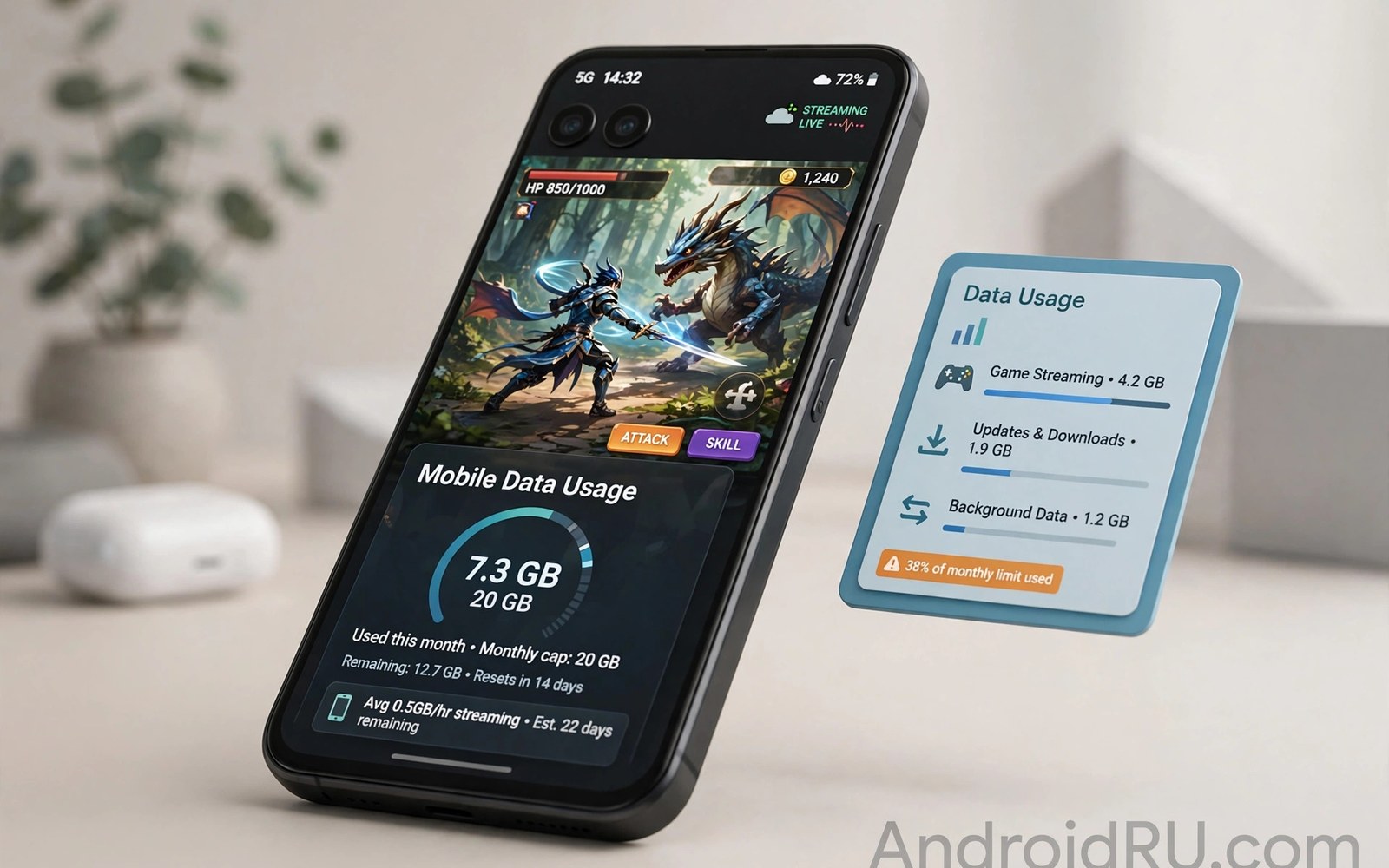
Data caps cloud gaming limits affect frequent mobile players more than any other group. A casual player barely notices caps. A daily player can burn a monthly allowance in a week. Cloud streams use gigabytes per hour. Caps turn that steady burn into throttling or extra fees. This article shows how to measure and manage usage before caps bite.
Caps come in many forms. Some plans slow speeds after a limit. Some charge per extra gigabyte. Some cut video quality automatically. All forms hurt cloud play. A throttled stream stutters. An overage fee surprises at bill time. Planning avoids both pains.
Real monthly math for frequent players
A daily player at one hour per day uses about 30 hours per month. At 5 gigabytes per hour that totals 150 gigabytes for gaming alone. Add video and social and updates and the total climbs higher. Many mobile plans cap below that figure. Home broadband caps vary too. Some home plans cap at far higher levels or not at all.
Lower quality changes the math fast. A 720p stream at 3 gigabytes per hour cuts the same 30 hours to 90 gigabytes. That saving can fit inside many plans. A 480p stream cuts further but looks soft on larger screens. Phone screens tolerate lower quality better than tablets or TVs.
Count all household use before you judge a cap. Family video streaming often exceeds gaming use. A shared home cap must cover everyone. Talk with household members about peak use. A shared plan needs shared awareness to work fairly.
Carrier options worth checking
Some carriers offer plans with higher caps or unlimited data with fair use rules. Unlimited rarely means truly unlimited at full speed. Fair use rules may throttle heavy users after a threshold. Read the fine print for video throttling rules specifically. A plan that throttles video hurts cloud gaming even when general data stays fast.
Home broadband usually suits heavy cloud play better. Many home plans offer high caps or no caps. A home Wi-Fi link also stays stable for long sessions. Mobile data suits short play and travel gaps. Split your play by link type to protect both caps and quality.
Off peak bonuses help some players. Certain plans offer free night data or rollover data. Schedule long sessions during bonus hours when possible. Rollover data can cover heavy weeks. Check your carrier app for these features before you pay for a bigger plan.
Habits that keep you inside the cap
Set a weekly data budget for gaming. Check usage each Sunday. Adjust quality for the next week if usage runs high. Weekly checks catch problems early. Monthly checks arrive too late to fix a blown cap.
Use Wi-Fi for all long sessions. Reserve mobile data for short bursts under 30 minutes. Download game updates only on Wi-Fi. Pause cloud backups during mobile play. Each habit protects the cap a little. Together they protect it a lot.
Track per app usage in Android settings. Settings shows data use by app. Your cloud app total tells the true story. Compare it with your estimate. Adjust quality caps until measured use matches your budget. Real numbers beat guesses every time.
A script to track cap headroom
The script below projects month end usage from current use and days passed. Edit the numbers from your carrier app each week.
cap_gb = 150
used_gb = 62
day_now = 12
days_month = 30
daily_rate = used_gb / day_now
projected = daily_rate * days_month
print("Daily rate GB:", round(daily_rate, 1))
print("Projected month GB:", round(projected, 1))
print("Cap GB:", cap_gb)
if projected <= cap_gb:
    print("On track. Headroom GB:", round(cap_gb - projected, 1))
else:
    print("Over cap risk GB:", round(projected - cap_gb, 1))
    print("Lower stream quality or shift sessions to Wi-Fi")
This snippet is an original cap planner written for this article. It is included here so you can project month end usage early enough to act.
Common mistakes
Many players learn their cap only after throttling starts. Read plan terms before heavy play. Another mistake is streaming at maximum quality on mobile data out of habit. Set a mobile quality cap once and leave it. Your usage becomes predictable.
Some players forget family usage on shared plans. One member can burn the shared cap alone. Share usage numbers openly at home. Others ignore carrier warnings at 80 percent use. Those warnings are your last cheap chance to adjust. Heed them at once.
A final mistake is paying overage fees repeatedly instead of changing plans. Two months of overage often exceed a plan upgrade cost. Compare plan prices after your first overage month. A better plan may cost less than repeated fees.
Negotiating a better plan
Negotiating with carriers works better than most players expect, because retention teams hold offers that front line sales cannot access. Call when your contract nears renewal and mention competing offers calmly. Retention agents respond to polite customers with real alternatives. Threats and anger backfire, while calm comparison shopping wins discounts. Prepare two competitor prices before calling, and quote them accurately. Honest leverage beats bluffing every time.
Timing your call matters as much as your script. End of month and end of quarter bring stronger retention offers, because agents chase targets. Holiday promotions also stack with retention deals sometimes. Ask directly whether any unadvertised loyalty discount applies to your line. Many carriers hide loyalty offers behind a simple question. One question can save money for a full year.
Document every promise from a negotiation call, because verbal offers vanish when bills arrive. Note the agent name and date and offer details during the call. Ask for written confirmation by message or email before hanging up. Written proof resolves billing disputes in minutes. Players who skip documentation fight for months over promised discounts that nobody recorded.
Household data budgets
Household data budgets work when every member sees the same numbers, because hidden use causes surprise overages. Share a simple weekly data report in a family chat. List each member total without blame. Awareness alone cuts waste, as members adjust habits when they see their share. A family that tracks together stays inside caps together.
Assign priority to essential use first in household budgets, because work and school traffic must survive even in heavy gaming weeks. Reserve a data slice for work video calls and school uploads before allocating gaming data. Gaming fills remaining allowance rather than competing with essentials. Clear priorities prevent arguments when caps tighten near month end.
Children need data education alongside limits, because unexplained caps feel like punishment. Explain gigabytes with concrete examples, such as one hour of high quality gaming equaling several movies. Children who understand units manage their own use better. Offer Wi-Fi sessions as the easy alternative rather than banning play outright. Education plus alternatives beats restriction alone.
Guests also affect household caps when they join home Wi-Fi, because visitors stream video and download updates freely. A guest network with basic limits protects the main allowance without awkward conversations. Most modern routers support guest networks with simple setup. Enable one before parties and visits. Guests enjoy access, and hosts keep their cap intact.
When to switch carriers
Switching carriers makes sense when overage fees exceed plan upgrade costs for two straight months, because repeated fees signal a structural mismatch. Compare total monthly cost including fees rather than headline plan prices. A slightly pricier plan with a higher cap often costs less overall than a cheap plan plus fees. Math beats loyalty when bills grow.
Coverage changes also justify switching, because a carrier that served you well last year may degrade as towers load. Test a new carrier with a prepaid SIM before porting your number. A week of real use reveals coverage truth better than coverage maps. Prepaid tests cost little and prevent porting regret. Never switch on map promises alone.
Porting numbers requires care to avoid service gaps, because a failed port can leave you unreachable for days. Keep the old line active until the new line works fully. Confirm the port completion with a test call before cancelling old service. A careful port takes a day longer but avoids a week of chaos. Patience during switching protects your number and your sanity.
Reading your bill correctly
Reading your mobile bill correctly reveals data costs that summary pages hide, because bills separate plan charges and overage fees and taxes. Find the data usage section and compare it with your own tracking. Discrepancies between carrier totals and phone totals deserve questions, because metering differences sometimes favor the carrier. Ask for detailed usage records when totals diverge sharply. Detailed records expose metering errors and background use you missed.
Promotional credits expire silently and raise bills unexpectedly, because intro offers last a fixed number of months. Note promotion end dates when you sign up. A bill jump after month twelve often means a promotion ended rather than a price hike. Knowing the cause lets you renegotiate or switch promptly. Surprise bills frustrate players who could have acted earlier with a calendar reminder.
Roaming charges hide in bills for travelers who game abroad, because cloud streams over roaming data cost far more than home data. Disable data roaming for gaming abroad unless you buy a travel pass. Travel passes cap roaming costs predictably. A single roaming gaming session without a pass can cost more than a month of home service. Check roaming terms before every trip.
FAQ
How much data does daily cloud gaming use per month?
One hour daily at high quality uses roughly 150 gigabytes monthly for gaming alone. Lower quality cuts that figure sharply. Measure your own hourly rate for an exact total.
Does Wi-Fi use count against a mobile data cap?
No. Home Wi-Fi use counts against home broadband terms instead. Mobile caps apply only to cellular data. Use Wi-Fi for long sessions whenever possible.
Can I get unlimited data for cloud gaming?
Many carriers sell unlimited plans with fair use rules. Heavy video use may still throttle after a threshold. Read video rules carefully before relying on unlimited marketing.
Cap management pairs with quality and link choices covered elsewhere in this wave. The guide to stream resolution and data consumption converts settings into gigabytes per hour. The explainer on how 5G transforms mobile cloud gaming warns where mobile data burns fastest. The guide to bandwidth needs for lag free cloud gaming lists stable speeds that keep streams efficient.
Conclusion
Data cap limits shape how frequent mobile cloud gamers must play. Daily high quality sessions burn caps fast. Weekly tracking and quality caps and Wi-Fi first habits keep you safe. Your next step is simple. Open your carrier app tonight and note used data and days passed. Then run the projection script with those numbers. If the projection exceeds your cap then lower mobile quality today before the next session.

