

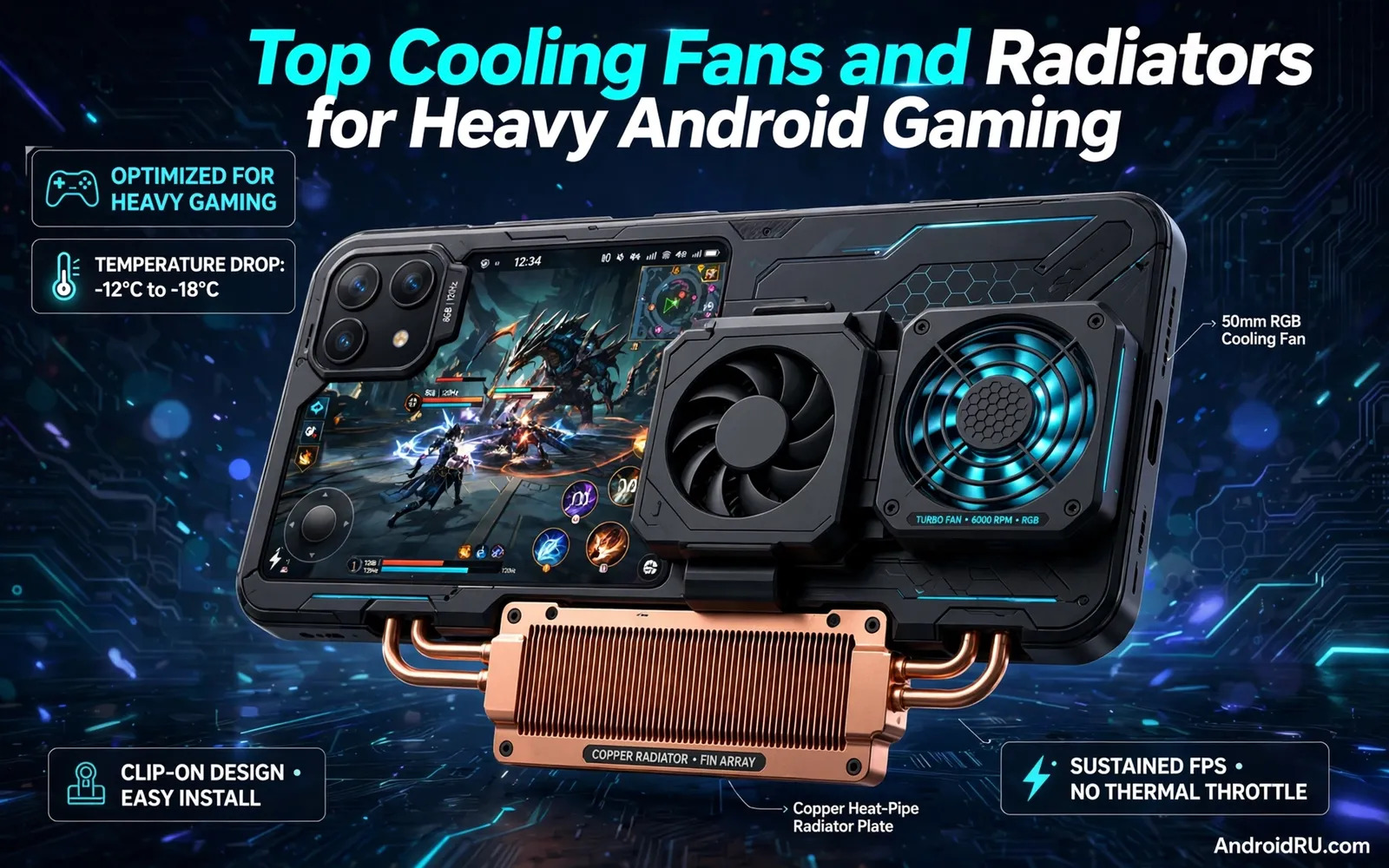
Heavy Android gaming pushes a phone far harder than everyday use. Long sessions raise heat inside a slim body. Heat can lower frame rates. Heat can dim a screen. Heat can make a phone feel uncomfortable to hold. A clip-on fan or a radiator plate helps move that heat away. The right cooler keeps play steady. The wrong cooler adds bulk without real help. This guide explains how these coolers work. It also explains how to pick one that fits your phone and your games.
Think about cooling as part of your gaming setup. A phone cooler is not magic. It cannot fix a weak chip. It cannot fix a poor network link. It can give a strong phone room to sustain speed. It can delay the point where heat forces a slowdown. It can keep your hands cooler during long matches. Start by checking how your phone behaves today. Note when frame drops begin. Note where the phone feels hottest. Note whether a case traps heat. Those notes guide a smarter purchase.
How Clip-On Fans And Radiator Plates Move Heat
A clip-on fan blows air across the back of a phone. Moving air carries heat away from the shell. A radiator plate spreads heat across a wider surface first. A wider surface gives air more area to cool. Some coolers combine both ideas in one unit. A cold plate touches the phone back. A fan then cools that plate. The result is steadier surface temperature during play. Check the contact area before you buy. A small plate on a large phone cools only one spot.
Fit matters more than fan speed on paper. A cooler must sit flat against the phone back. A thick case can block contact. A curved back can leave gaps. A magnetic plate can help on some phones. A clamp can help on others. Test the grip before a long session. Shake the phone gently with the cooler attached. Watch for sliding or tilting. A cooler that shifts during play cools unevenly. A stable mount cools the same zone all session long.
Choosing Power And Noise For Long Sessions
Most phone coolers draw power through a cable. A wired supply gives steady fan speed. A battery pack can free you from a wall socket. A battery pack also adds weight and another charge to manage. Noise matters during voice chat. A loud fan can leak into a microphone. A quiet fan may move less air. Balance airflow against noise for your setting. Home play can tolerate more fan sound. Late night play near others needs a quieter unit. Readers who want a phone-first view can open Gaming Phone vs Regular Flagship: Which Should Gamers Buy? before they judge a cooler on its own.
Weight and balance shape comfort over time. A heavy cooler changes how a phone feels in your hands. A top-heavy phone tires your wrists faster. A centered cooler feels more natural. A side-mounted cooler may block a finger rest zone. Hold the full setup for several minutes before you commit. Play a short match with the cooler on. Check grip comfort. Check button reach. Check whether the cable pulls at an angle. Comfort problems grow worse in hour two and hour three.
Cases Cameras And Everyday Practicality
Cases and coolers often fight each other. A thick protective case insulates heat. A thin case allows better contact. A magnetic case ring can help a magnetic cooler seat well. Remove a thick case for serious gaming if your cooler needs direct contact. Keep the case for travel and daily use. Swap setups based on the task at hand. Clean the contact plate often. Dust and pocket lint reduce contact quality. A quick wipe keeps cooling consistent from week to week. A clear view of controller options sits inside Top Mobile Game Controllers: Razer Kishi vs Backbone One and that view helps you plan a full gaming rig around cooling.
Think about where you play most often. Desk play suits a larger cooler with a steady power cable. Travel play suits a compact cooler that packs flat. Outdoor play adds sun heat that no small fan can fully beat. Shade helps more than fan speed in direct sun. Avoid charging and gaming at full load in a hot car. Heat stacks from every source at once. Give the phone breaks between ranked matches. Let the shell return to room feel before the next long run. Small habits protect battery health over months of play.
A Simple Buying Checklist
Start with phone size and back shape. Match the cooler plate to the hot zone. Check clamp width or magnetic fit. Check cable length and power source. Check noise level for voice chat. Check weight for long holds. Check whether the cooler blocks a camera lens. Check whether it blocks a charging port. Check return terms in case fit fails. A checklist prevents impulse buys based on fan looks alone. For audio pairing during cooled sessions the notes in Best Gaming Headsets with Low Latency for Mobile Gamers help you pick sound gear that keeps pace with fast play.
Cooling gear works best as one part of a system. Lower screen brightness a little when heat builds. Close heavy apps running behind your game. Use a stable network link to avoid extra radio heat. Keep the phone out of a pocket while it cools down. Store the cooler dry and clean between sessions. Replace worn pads that no longer grip well. A good cooler plus calm habits gives long sessions a better chance to stay smooth. Choose fit first. Choose steady airflow second. Choose looks last.
Seasonal heat changes how a cooler performs in real rooms. Summer rooms run warmer than winter rooms. A cooler that feels strong in winter may struggle in summer. Test cooling in the warmest room you play in. Test cooling after the phone charges for a while. Heat from charging stacks with heat from gaming. A cooler cannot erase a hot room fully. A cooler can still widen the gap before slowdowns begin. Track frame smoothness across seasons. Track comfort across seasons too. Seasonal notes help you judge whether an upgrade is truly needed.
Game genres stress a phone in different ways. Fast shooters push graphics and network together. Strategy games push long sessions with steady load. Racing games push sustained graphics with vibration feedback. Open world games stream large areas continuously. Each genre heats different phone zones. A cooler plate should cover the zone your genre heats most. A plate that covers only the center may miss a hot edge zone. Feel the phone back after each genre session. Map the hot zone with your hand. Map the cool zone too. A mapped hot zone guides plate placement better than guesswork.
Fan maintenance keeps airflow strong over months. Dust clogs small fan blades quickly. Dust also coats radiator fins and blocks air paths. Clean blades with a dry soft brush. Clean fins with short bursts of dry air. Avoid wet cleaning on fan motors. Avoid poking blades with sharp tools. Check fan bearings for grinding sounds. A grinding fan needs replacement soon. A rattling mount needs tightening or new pads. Keep spare pads in the accessory box. A maintained cooler lasts far longer than a neglected one.
Power cables for coolers deserve the same care as the cooler itself. A frayed cable can drop power mid-match. A loose plug can cause fan speed swings. A long cable can tangle with controller cables. Route cooler cables away from hand movement zones. Use a cable clip on a desk setup. Use a short cable for lap play. Keep a spare cable for travel tournaments. Label the cooler cable so it does not mix with phone charging cables. A tidy cable setup prevents accidental unplugs during ranked play. Tidy cables also reduce trip hazards in shared rooms.
Cooler choice interacts with phone software settings. A high refresh display adds heat during play. A lower refresh setting can ease thermal load. A performance mode can push chips harder and hotter. A balanced mode can pair well with a modest cooler. Test game settings with the cooler on. Test the same settings with the cooler off. Compare frame stability across both tests. Compare hand comfort across both tests. Software plus hardware together decide the final result. Neither side alone tells the full story. A balanced pair beats a strong cooler fighting aggressive settings.
Travel with a cooler needs a packing plan. A clip cooler needs a hard pouch to protect blades. A radiator plate needs a sleeve to prevent scratches. A clamp cooler needs padding around its jaws. Pack cables separately from the cooler body. Keep the cooler dry during rain travel. Wipe the contact plate after dusty travel days. Check the mount grip after transport vibrations. A cooler that survives travel well earns its place in a gaming bag. A fragile cooler that breaks in transit wastes money. Pack smart. Play cool. Repeat the routine every trip.
Competitive players should treat cooling as part of tournament preparation rather than as an afterthought bought on the day of a match because a cooler that has never been tested with a real tournament load can slide or overheat at the worst moment while a cooler that has survived several long practice sessions gives a player confidence that frame rates will hold steady through decisive rounds and that confidence itself improves focus during high pressure play.
Parents buying cooling gear for younger gamers should check size and weight together with safety features because a heavy cooler can strain small hands during long sessions while a cooler with exposed fan blades can catch fingers or hair during excited play and a simple guard plus a moderate weight keeps gaming comfortable without turning a fun hobby into a source of wrist pain or minor injuries.
Streamers who broadcast mobile gameplay need cooling that stays quiet enough for microphone pickup while still moving enough air to prevent thermal slowdowns during long live sessions because viewers notice frame drops immediately and viewers also notice fan noise in quiet commentary moments so a balanced cooler protects both stream quality and audience experience at the same time.
Accessory makers keep improving cooler designs with better contact plates and quieter fans and smarter power use while phone makers keep improving internal heat spreading with vapor chambers and graphite layers so buyers should compare new cooler claims against their own phone internal cooling rather than assuming every new fan brings a large gain because a phone with strong internal cooling may need only a light cooler while a phone with weak internal cooling benefits far more from a strong external unit.
Check cooler compatibility with your phone case before every gaming tournament. Remove thick cases that block contact with the plate. Keep thin cases only when contact stays firm through the plate. Test the cooler after any case change. Test the cooler after any phone upgrade too. A new phone shape can break an old cooler fit. A new camera bump can tilt a plate badly. A tilted plate cools unevenly across the back. Uneven cooling leaves one hot corner untouched. Refit or replace a cooler that tilts.

