

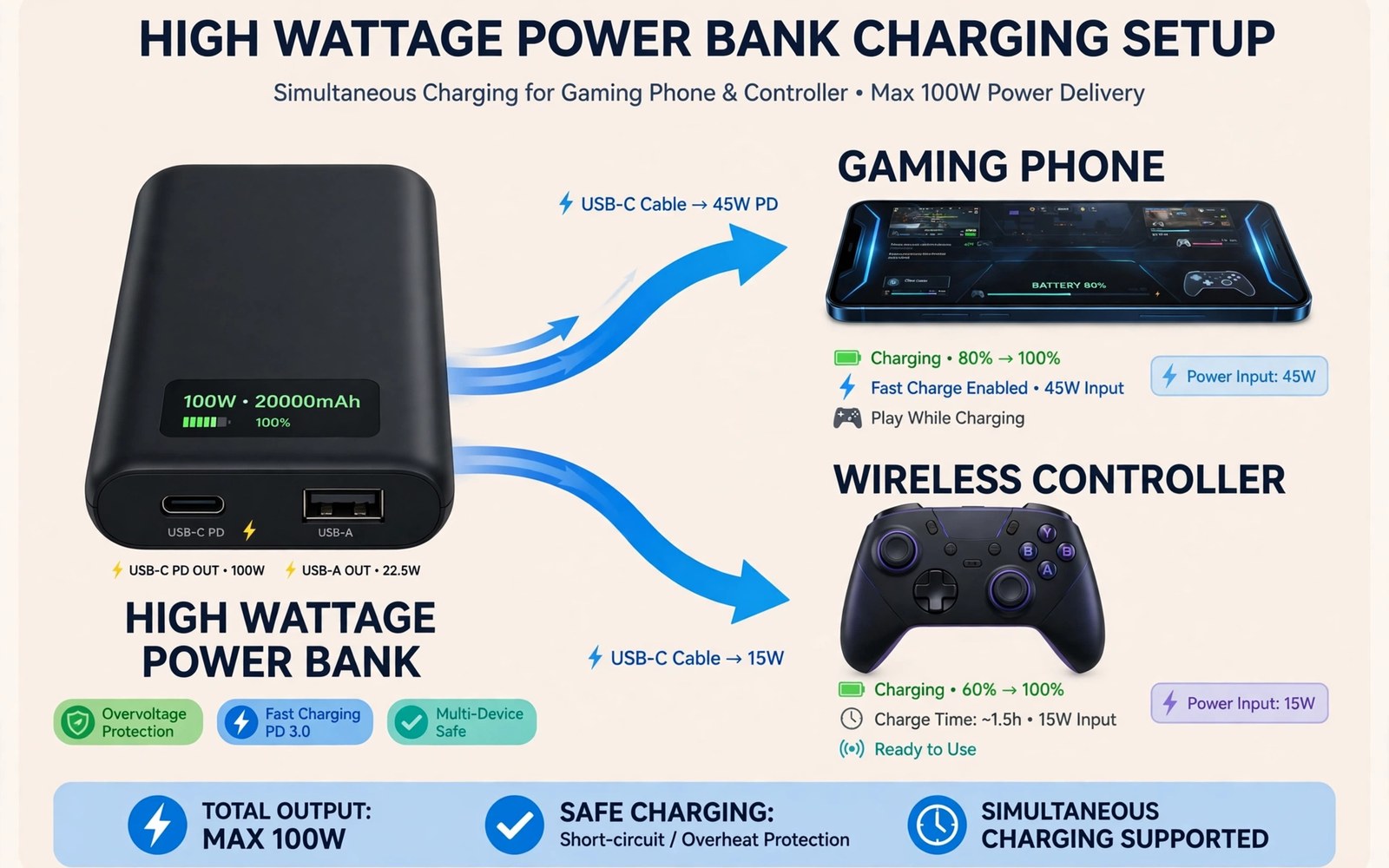
Power banks high wattage gaming devices need them because gaming drains batteries fast. High graphics and bright screens and radios consume power together. A small low wattage bank charges too slowly to keep up. A high wattage bank feeds power faster than games consume it.
Wattage alone does not guarantee a good gaming bank. Capacity and port count and safety features matter too. A large capacity bank lasts longer but weighs more for travel. Multiple ports charge pad and phone together on long days. Safety circuits protect devices from heat and overcurrent during intense use.
This article compares wattage and capacity and ports for gaming banks. You will learn how to match a bank to your phone charging needs. You will also learn travel rules and care habits. A well chosen bank keeps gaming days free from low battery anxiety.
Wattage and charging speed for gaming
Wattage measures power flow from bank to device each second. Higher wattage charges phones faster during play. Gaming phones often accept fast charging at higher wattages. A bank below phone fast charging needs charges slowly during games. Match bank output to phone fast charging support for best results.
Cable quality limits real wattage as much as bank specs do. A weak cable throttles power even from a strong bank. Use cables rated for your bank output wattage. Test charging speed during a game to confirm real performance. Spec sheets promise watts but cables and heat decide actual delivery.
Capacity and travel weight balance
Capacity measured in milliamp hours decides how many charges a bank holds. Larger capacity suits long travel days without outlets. Larger banks weigh more and take longer to recharge themselves. A mid capacity bank suits most daily gaming needs well. Choose capacity by longest day away from outlets rather than maximum possible size.
Airline rules limit very large power banks for flights. Check airline limits before flying with a huge bank. Most gaming banks fall within common travel limits. Very large banks may need airline approval or stay home. Plan travel banks around flight rules as well as gaming needs.
Ports safety and passthrough charging
Multiple ports let one bank charge phone and pad and earbuds together. Shared ports split total wattage across devices. Check per port wattage rather than total bank wattage alone. A bank with strong total watts may still charge each device slowly when shared. Prioritise the phone port for gaming sessions.
Safety features protect phones during long high wattage charging. Overcurrent and temperature protection prevent damage from faults. Buy banks from known makers with clear safety certifications. For cooling during long charging sessions read about cooling fans for mobile gamers and keep heat under control while you charge and play.
Daily care and long term bank health
Recharge power banks fully after heavy gaming days. Store banks at partial charge for long idle periods. Avoid leaving banks in hot cars or direct sunlight. Heat degrades bank cells faster than normal use. Cool storage extends bank life across many gaming seasons.
Inspect cables and ports monthly for wear and looseness. Loose ports charge slowly and disconnect during play. Replace worn cables promptly rather than tolerating slow charging. A fresh cable often restores full wattage at low cost. Regular checks keep gaming power reliable day after day.
Accessories that pair well with this setup
A rated USB-C cable set matters as much as bank wattage for gaming power. Weak cables throttle even strong banks during play. Buy cables rated for your bank output wattage. Keep one spare cable in the travel pouch always. That spare prevents a single cable failure from ending a long gaming day away from outlets entirely.
A small cable organiser keeps travel power kits tidy in bags. Tangled cables waste time and suffer strain damage. An organiser separates bank cables from pad cables clearly. That tidy kit speeds setup at travel destinations. Organised gear also lasts longer since cables avoid sharp bends and crushing in packed bags.
Portable monitors increase power needs for travel gaming stations significantly. Screens draw power alongside phones during long sessions. Compare travel screens in portable gaming monitors before planning bank capacity. That comparison helps size banks for full kits rather than phones alone. Full kit planning prevents mid day power failures on travel gaming days.
A weekly routine that keeps everything working
Test bank charging speed monthly during a real game session. That test reveals cable wear or bank degradation early. Note charging results briefly for trend comparison. A slowing charge trend may signal cable failure before bank failure. Monthly tests enable cheap cable fixes before bank replacement guesses waste money unnecessarily.
Inspect bank ports monthly for looseness that causes slow charging. Loose ports disconnect with small movements during play. Replace banks with failing ports before travel reliance grows. Clean ports gently to remove lint buildup. That monthly glance keeps travel power reliable across long gaming seasons and frequent trips alike.
Review audio gear power needs monthly as wireless earbuds join travel kits. Earbuds need case charging alongside phones and pads. The audio options are clear in low latency earbuds for gamers for players planning full kit power. Monthly review sizes banks for every device in the kit rather than phones alone.
How this plays out in real life
A traveller relies on a high wattage bank for a full day of gaming away from outlets. The bank charges a phone faster than games drain it. That traveller also powers earbuds from the same bank. One bank covers the whole travel gaming kit efficiently. Long travel days stay gaming filled without outlet hunting anxiety at all.
A student carries a mid capacity bank for campus days between classes. That bank size balances weight against daily charging needs. Gaming breaks between lectures drain phones steadily. The bank restores charge during afternoon classes quietly. That campus routine keeps phones ready for evening gaming sessions after study ends.
A tournament player packs two banks for a full day of competitive matches. Redundant power prevents mid tournament battery failures. That player tests both banks before match day begins. Spare cables accompany both banks in the kit. That professional preparation reflects tournament stakes where power failures cost rankings and prizes.
A family road trip uses one large bank for several devices together. Children share bank ports for phones and tablets during drives. Parents prioritise the driver navigation phone for charging. That shared power plan prevents backseat battery arguments. Family travel power management requires fairness plus prioritisation for essential devices first.
A budget buyer chooses a bank by wattage first after learning capacity lessons. A previous huge low wattage bank failed during gaming sessions. That buyer now matches wattage to phone fast charging specs. Real game charging tests confirm performance before travel reliance. That lesson driven purchase shows experience beats spec sheet marketing for power gear.
A practical check you can run
You can check phone charging and battery state during bank tests. Connect the bank and run the checks below on a computer linked to the phone. The output shows battery status and charging state.
adb shell dumpsys battery
adb shell dumpsys thermalservice
adb shell settings get global adaptive_battery_management_enabled
The commands above are adapted from public platform documentation for Android developer tools. They are included here as a teaching example for checking device behaviour and not as copied product code.
Common mistakes
A common mistake is buying a bank by capacity alone without checking wattage. A huge low wattage bank charges too slowly during games. Phone battery still drops while playing despite the bank. Match wattage to phone fast charging needs first. Capacity matters only after wattage keeps up with gaming drain.
Another mistake is using weak cables with a strong bank. Weak cables throttle power and waste bank potential. Use cables rated for bank output wattage. Test real charging speed during play. A cable upgrade often fixes slow charging cheaper than a new bank.
A third mistake is ignoring airline limits for very large banks. Oversized banks may face confiscation or flight bans. Check airline rules before travel days. Choose a travel bank within limits for flights. Keep larger banks for road trips and home use.
Frequently asked questions
How many watts do I need for gaming phones?
Most gaming phones benefit from banks that match their fast charging support. Higher wattage keeps battery stable during intense games. Lower wattage banks charge slowly and may lose ground during play. Check your phone fast charging spec and match bank output to it.
Can I play games while charging from a power bank?
Yes but combined gaming and charging generates extra heat. Lower brightness a little to reduce heat during bank charging. Take short breaks to let the phone cool. A cool phone charges faster and holds performance steadier than a hot phone.
How long does a gaming power bank last?
Bank lifespan depends on cycles and heat and storage habits. Quality banks last hundreds of cycles with good care. Avoid heat and deep discharges for longest life. Replace banks when capacity drops noticeably or ports loosen.
Conclusion
A high wattage bank keeps gaming days free from battery anxiety when matched well. Match wattage to phone fast charging first. Balance capacity against travel weight. Use rated cables and safety certified banks for reliable power.
Your next step is a spec check today. Note your phone fast charging wattage and your longest day away from outlets. Shortlist banks that meet wattage and capacity needs with room to spare. Test charging during a real game before travel reliance.
Plan your first power bank week around real game charging tests. Note phone fast charging wattage on day one from official specs. Test bank charging on day two during a demanding game and note battery trend. Test a second cable on day three if charging seems slow unexpectedly. Test multi device charging on day four with pad and earbuds sharing the bank. Note bank recharge time on day five after a full gaming day drain. Test travel weight on day six by carrying the bank all day. Decide on day seven whether the bank meets wattage and capacity needs fully. A tested week prevents travel power failures and wasted spending on mismatched banks.

