

The Number On The Box Misleads Buyers
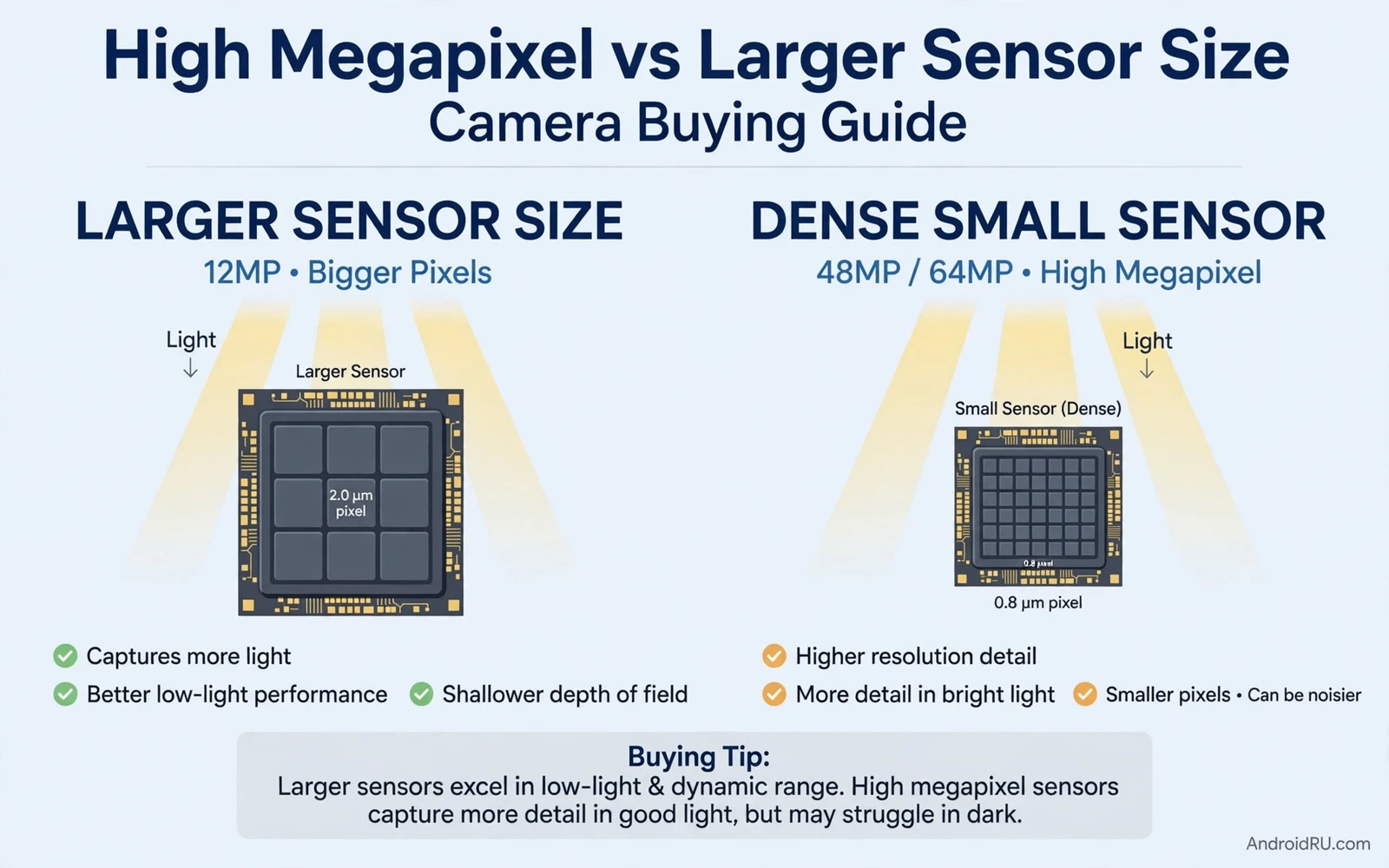
Phone makers print a large megapixel number on the box because it is easy to compare. A buyer sees 200 and assumes it beats 50. That assumption fails in many real photos. Megapixels count the number of light sensitive points on a sensor. They say nothing about the size of each point. They say nothing about the total size of the sensor. They say nothing about the lens that feeds light to the sensor. A photo is the result of the whole camera system working together. A single number cannot describe that system.
Sensor size describes the physical area that gathers light. A larger sensor gathers more total light for the same scene. More light means less noise in dim rooms. More light means cleaner shadows. More light means better colour at night. A smaller sensor with many pixels divides its small area into tiny points. Each tiny point gathers little light. The result can be sharp in bright daylight and noisy in a dim restaurant. Buyers who shoot at night should care about sensor size first.
Pixel binning changes the maths in a useful way. Many high megapixel phones combine groups of small pixels into one larger virtual pixel for the final photo. A 200 megapixel sensor may output a 12 megapixel photo after binning. That binned photo can be clean because the combined pixels gather more light together. The full resolution mode keeps every pixel separate for maximum detail in bright light. A buyer should test both modes. The binned mode shows daily quality. The full mode shows daylight detail potential.
How Pixel Size Shapes Image Quality
Pixel size is measured in microns. A larger pixel covers more area and catches more photons. A phone pixel of around two microns after binning gathers light well for a small sensor. A phone pixel below one micron gathers less light per point. The difference shows in shadows and in night shots. It shows less in bright daylight where light is plentiful. That pattern explains why a phone can win a daylight test and lose a night test against the same rival.
Small pixels also demand a sharper lens. A lens must resolve detail fine enough for each tiny pixel to record a distinct value. If the lens cannot resolve that fine detail then extra pixels add file size without adding visible detail. Lens quality therefore caps the benefit of a very high pixel count. A larger sensor with a good lens can deliver visible detail that a dense small sensor cannot match. Buyers should judge lens sharpness at the edges of the frame where cheap lenses soften first.
Noise reduction software adds another layer. Phones stack several frames and merge them to reduce noise. Stacking helps small sensors a great deal. It also helps large sensors. The best phones use stacking wisely without turning skin into plastic. A buyer should inspect skin texture and hair detail in night portraits. A phone that keeps texture while controlling grain has a balanced pipeline. A phone that erases texture has pushed noise reduction too far.
Detail Cropping And Printing
High megapixel counts help when a buyer crops heavily. A distant bird or a far sign can be cropped from a large file and still look acceptable. A low megapixel file falls apart faster under the same crop. Wildlife and sports and travel photographers gain real value from extra pixels. A buyer who never crops beyond a social post gains little from the same pixels. Social platforms compress photos heavily. That compression erases fine detail differences that look large on a computer screen.
Printing size follows the same logic. A large print needs more pixels than a phone screen. A poster sized print from a high megapixel phone can look good when the original light was strong. A small print or a screen view needs far fewer pixels. Most buyers view photos on phones and share them online. For that use a clean 12 megapixel photo beats a noisy 200 megapixel photo every time. Clean light and clean colour matter more than raw pixel count on a small display.
Zoom behaviour links pixel count to real reach. Some phones use a high megapixel main sensor to crop digitally for a two times zoom. That crop zoom can look decent in daylight because the starting file is large. A dedicated telephoto lens usually beats crop zoom in low light and at longer range. Buyers should test zoom at the distances they actually use. A two times crop test and a five times telephoto test reveal the true zoom system better than any spec sheet claim.
Low Light Is The Honest Test
Take the same dim scene with both kinds of phone and compare the results on a large screen. Look at shadow detail first. Look at colour stability next. Look at skin texture last. A larger sensor phone usually holds shadow detail with less grain. A dense small sensor phone may show more grain or heavier smoothing. The gap narrows when both phones use long multi frame stacking. The gap rarely disappears fully because physics favours the larger light gathering area.
Night mode software can rescue a small sensor in a still scene. It cannot rescue a moving subject as well because long stacking blurs motion. A child running or a pet turning its head will smear in a long night exposure. A larger sensor needs a shorter exposure for the same brightness. That shorter exposure freezes motion better. Buyers who photograph people at night should favour sensor size for that reason alone. Still life photographers can rely more on software.
Video low light follows the same physics with less help from stacking. Video frames are short exposures by nature. A larger sensor gives cleaner video at dusk and indoors. A dense small sensor gives noisier video in the same light. Creators should test video at dusk rather than trusting still photo night mode results. The still result may flatter a phone whose video remains noisy.
Lens And Processing Complete The Picture
Aperture controls how much light the lens passes. A wider aperture lets more light reach the sensor. It also gives a shallower depth of field for portraits. A phone with a larger sensor and a wide aperture gathers light from both advantages at once. A phone with a small sensor and a narrow aperture fights light from both directions. Buyers should read aperture together with sensor size rather than alone. Either trait alone tells only half the light story.
Processing style shapes the final look as much as hardware. Some phones sharpen aggressively and boost saturation. Some phones keep a natural softer look. Aggressive sharpening can make a dense sensor look detailed at first glance. It can also create halos around edges. Natural processing can look soft at first glance yet it grades better in an editor. Buyers should judge processing on skin and foliage and fabric rather than on architecture alone. Those subjects reveal sharpening artefacts fastest.
Photo editing apps in photo editing apps for professional results on Android let buyers test how much headroom a file holds because a clean large sensor file tolerates stronger edits before breaking apart. A noisy small sensor file shows banding and grain faster under the same edits. A buyer who edits heavily should favour files with clean shadows and stable colour. That editing test often predicts long term satisfaction better than a single unedited sample.
Buying Checklist For Different Users
A daylight travel photographer who crops often should favour a high megapixel phone with a good lens. A night and indoor photographer should favour a larger sensor with larger binned pixels. A portrait photographer should favour a larger sensor and a good portrait lens and natural skin processing. A social only photographer should favour pleasing colour and fast capture over either extreme. Each profile leads to a different best phone. No single phone wins all four profiles at once.
Check sensor size in the spec sheet when the maker publishes it. Check binned pixel size as well. Check whether the phone outputs full resolution and binned photos. Check telephoto presence and aperture for the main lens. Check sample photos in dim light and in bright light. Check samples on a large screen. Those six checks take an hour and prevent years of regret. A buyer who skips them buys a number rather than a camera.
Lens attachments in smartphone camera lens attachments for photography can extend a good phone camera for macro and wide shots yet they cannot fix a weak sensor because an add on lens still feeds light to the same small area. An attachment is a creative extra rather than a sensor upgrade. Buyers should fix the base camera first and add attachments later for fun and for specific shots.
Common Myths To Drop
More megapixels do not guarantee sharper photos. Lens quality and focus accuracy and stabilisation shape sharpness too. A shaky 200 megapixel photo is softer than a stable 12 megapixel photo. More megapixels do not guarantee better zoom. A dedicated telephoto lens beats digital crop zoom in most low light cases. More megapixels do not guarantee better video. Video uses a cropped sensor area and short exposures where sensor size matters more.
A larger sensor does not guarantee better photos alone. A poor lens or poor processing can waste a large sensor. A small sensor with excellent processing can beat a large sensor with poor processing in some scenes. Buyers must judge the system as a whole. Sample photos from real reviewers and from friends give better evidence than a spec table. A system test beats a single trait test every time.
Camera shootouts in a flagship camera shootout between Pixel and Samsung Ultra phones illustrate system differences well because two strong systems can produce different looks from similar hardware through processing choices alone. One system may favour vivid colour while the other favours natural tone. Buyers should pick the look they enjoy rather than the look a chart declares best. Personal taste is a valid buying factor for a camera.
Verdict For Camera Buyers
Favour larger sensor size when low light and people and video matter most. Favour high megapixel count when daylight detail and heavy cropping matter most. Favour a balanced phone with a large sensor and a sensible pixel count when both matter. Test dim scenes and moving subjects before you decide. Choose the phone whose photos you enjoy on a large screen after the first excitement fades. That phone will keep pleasing you long after the box number is forgotten.
Mid range camera phones in mid range phones built for camera enthusiasts prove that a balanced camera system does not always demand flagship money because a well tuned sensor and lens pairing can beat a headline number at a lower price. A careful buyer can find strong low light and strong daylight in one mid range phone by testing samples rather than chasing the largest number. Value in cameras comes from the system rather than from a single figure.

