

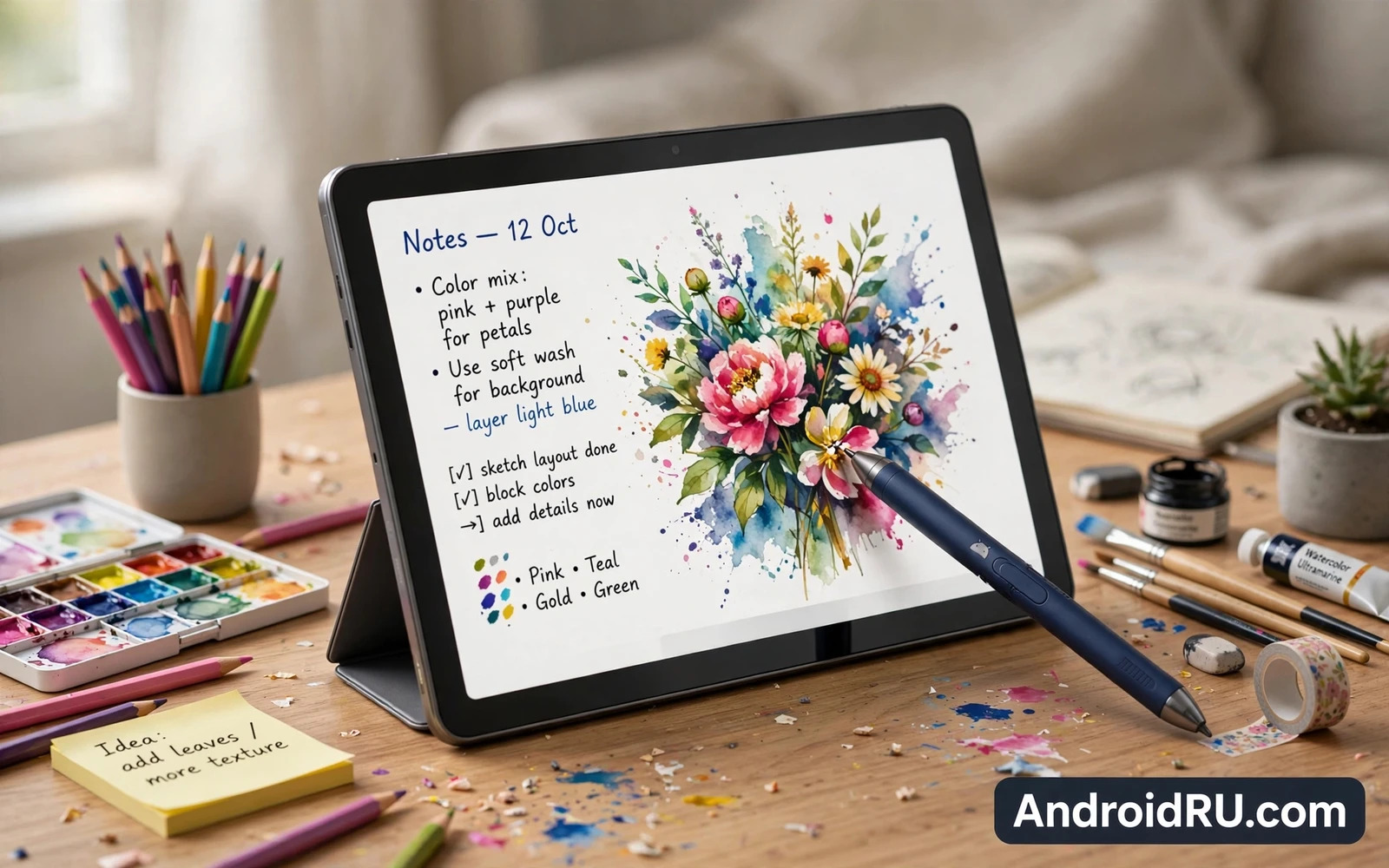
A tablet for artists and note-takers is a drawing surface and a notebook in one device. Stylus quality decides whether drawing feels natural or feels like fighting the screen. Display quality decides whether colours look true and whether lines stay sharp. App support decides whether your favourite drawing and notes apps work well. This guide explains stylus latency and pressure and display trade-offs in plain language. It helps artists and students and professionals choose a tablet that fits their craft. It also helps you avoid a tablet with a weak stylus that ruins good hardware. Start with your main use such as sketching or handwriting or annotation.
What Matters Most
Stylus latency is the delay between pen movement and line appearance. Low latency makes drawing feel direct and natural. Pressure levels affect line weight and shading control. Palm rejection lets you rest your hand on the screen while drawing. Display colour accuracy matters for art that will print or publish. Screen size affects drawing comfort and portability. Battery life matters for long study and studio sessions. Storage and file export matter for large art projects. Artists who want a pocket large screen sometimes choose folding and foldable phone durability over the long term tests whether that screen lasts.
Stylus Latency and Feel
A stylus should feel like a pen rather than a remote control. Test latency with fast strokes and with slow detailed lines. A good stylus tip should glide without scratching the screen. Think about stylus latency and feel in your normal day rather than in a short store demo. Compare stylus latency and feel across shortlisted models on the same task so the result stays fair. A weakness here can matter more than a strength elsewhere when you use the Android tablet every day. Check the full detail for stylus latency and feel and ask what it means for your routine. Spend extra time on stylus latency and feel if it touches your main daily task. Note your verdict on stylus latency and feel for each shortlisted model before you move on.
Pressure and Tilt
Pressure sensitivity gives control over thick and thin lines. Tilt support helps shading with a natural pen angle. Check that your drawing app uses these features fully. Think about pressure and tilt in your normal day rather than in a short store demo. Compare pressure and tilt across shortlisted models on the same task so the result stays fair. A weakness here can matter more than a strength elsewhere when you use the Android tablet every day. Check the full detail for pressure and tilt and ask what it means for your routine. A small weakness in pressure and tilt becomes a daily annoyance over time. Compare pressure and tilt on the exact model you will buy rather than on a related model.
Display Colour and Sharpness
A sharp display with accurate colour helps art decisions. A matte screen layer can reduce glare and improve pen feel. Brightness matters for outdoor sketching and bright studios. Think about display colour and sharpness in your normal day rather than in a short store demo. Compare display colour and sharpness across shortlisted models on the same task so the result stays fair. A weakness here can matter more than a strength elsewhere when you use the Android tablet every day. Check the full detail for display colour and sharpness and ask what it means for your routine. Compare display colour and sharpness on the exact model you will buy rather than on a related model. A small weakness in display colour and sharpness becomes a daily annoyance over time.
Screen Size and Weight
A large screen gives room for detailed art and for tool palettes. A smaller tablet travels better for notes and classes. Hold the tablet for several minutes to judge weight comfort. Think about screen size and weight in your normal day rather than in a short store demo. Compare screen size and weight across shortlisted models on the same task so the result stays fair. A weakness here can matter more than a strength elsewhere when you use the Android tablet every day. Check the full detail for screen size and weight and ask what it means for your routine. Note your verdict on screen size and weight for each shortlisted model before you move on. Spend extra time on screen size and weight if it touches your main daily task.
Apps for Art and Notes
Drawing apps vary in brush engines and layer support. Notes apps vary in handwriting search and organisation. Check that your must have apps run well on the tablet system. Think about apps for art and notes in your normal day rather than in a short store demo. Compare apps for art and notes across shortlisted models on the same task so the result stays fair. A weakness here can matter more than a strength elsewhere when you use the Android tablet every day. Check the full detail for apps for art and notes and ask what it means for your routine. Spend extra time on apps for art and notes if it touches your main daily task. Note your verdict on apps for art and notes for each shortlisted model before you move on.
Battery and Charging
Long battery life supports a full day of classes or studio work. Fast charging helps between sessions. A stylus that needs frequent charging can interrupt flow. Think about battery and charging in your normal day rather than in a short store demo. Compare battery and charging across shortlisted models on the same task so the result stays fair. A weakness here can matter more than a strength elsewhere when you use the Android tablet every day. Check the full detail for battery and charging and ask what it means for your routine. A small weakness in battery and charging becomes a daily annoyance over time. Compare battery and charging on the exact model you will buy rather than on a related model.
Storage and Export
Large canvas files and layered art need generous storage. Export options should include common formats for print and sharing. Cloud backup protects art from device loss. Think about storage and export in your normal day rather than in a short store demo. Compare storage and export across shortlisted models on the same task so the result stays fair. A weakness here can matter more than a strength elsewhere when you use the Android tablet every day. Check the full detail for storage and export and ask what it means for your routine. Compare storage and export on the exact model you will buy rather than on a related model. A small weakness in storage and export becomes a daily annoyance over time.
Accessories and Keyboard
A keyboard can turn a tablet into a light work machine. A good case should protect the screen and hold the stylus. Check stylus replacement cost and tip availability. Think about accessories and keyboard in your normal day rather than in a short store demo. Compare accessories and keyboard across shortlisted models on the same task so the result stays fair. A weakness here can matter more than a strength elsewhere when you use the Android tablet every day. Check the full detail for accessories and keyboard and ask what it means for your routine. Note your verdict on accessories and keyboard for each shortlisted model before you move on. Spend extra time on accessories and keyboard if it touches your main daily task.
How to Choose Step by Step
List your main tablet tasks such as drawing or notes or annotation. Shortlist tablets with a stylus included or well supported. Test stylus latency with fast and slow strokes. Test palm rejection with your natural hand position. Test your main drawing and notes apps. Test display colour with art you know well. Test weight and size for your bag and your desk. Check battery life during a long drawing session. Check storage and export options for your projects. Check stylus tip replacement cost. Compare keyboard and case options. Choose the tablet that feels natural in your hand. A tablet artist still needs a good phone camera for reference photos and mid-range smartphones for camera enthusiasts helps choose that phone.
Risks and Limits to Watch
Do not judge a tablet stylus from a spec sheet alone. Latency and pen feel must be tested in person. Do not buy a tablet for art if your drawing app lacks key features on it. Do not ignore display glare because glare ruins long drawing sessions. Do not choose the largest tablet if you carry it daily. Do not forget backup because art files grow large and valuable. Do not assume that every stylus works with every tablet. Do not skip palm rejection testing with your real grip. Do not buy extra accessories before you know the stylus works well. A hands on test protects an artist investment.
A Simple Ownership Plan
A simple ownership plan helps any device last longer and cost less over time. Plan ownership in years rather than in launch excitement. Set a total budget that includes accessories and a possible repair. Keep a list of the features you must have and the features you can skip. Test the device in your real environment before the return period ends. Save the purchase receipt and the warranty document in one safe place. Learn the update schedule for the exact model you bought. Keep software updated but read update notes before a major change. Back up data that matters to you on a regular schedule. Review settings once a month and remove apps you no longer use. Check battery or power behaviour over time and note sudden changes. Protect the device from drops and dust and heat with suitable accessories. Use only chargers and cables that match the device requirements. Seek authorised repair for serious faults rather than a risky home fix. Consider resale value when you choose colour and storage and condition. A well kept device sells easier and keeps more of its value. Plan the next upgrade only when the current device fails a real need. Avoid buying a replacement for a single minor annoyance. Share the device care basics with anyone else who uses it. Ownership success comes from steady care rather than from a perfect launch choice.
Final Decision
A digital artist should weight stylus latency and colour accuracy. A note-taker should weight handwriting feel and app organisation. A student should weight battery life and portability and price. A professional should weight export options and display quality. A tablet that feels natural will encourage daily practice. A tablet that fights your hand will sit unused. Choose the size and stylus that match your craft. Then build a routine of drawing and noting every day. The best tablet is the one that disappears and leaves only your work. Let your hand rather than a feature list decide the winner. A tablet plus a watch can form a light work kit and smartwatches compatible with Android phones covers the wrist part of that kit.

