

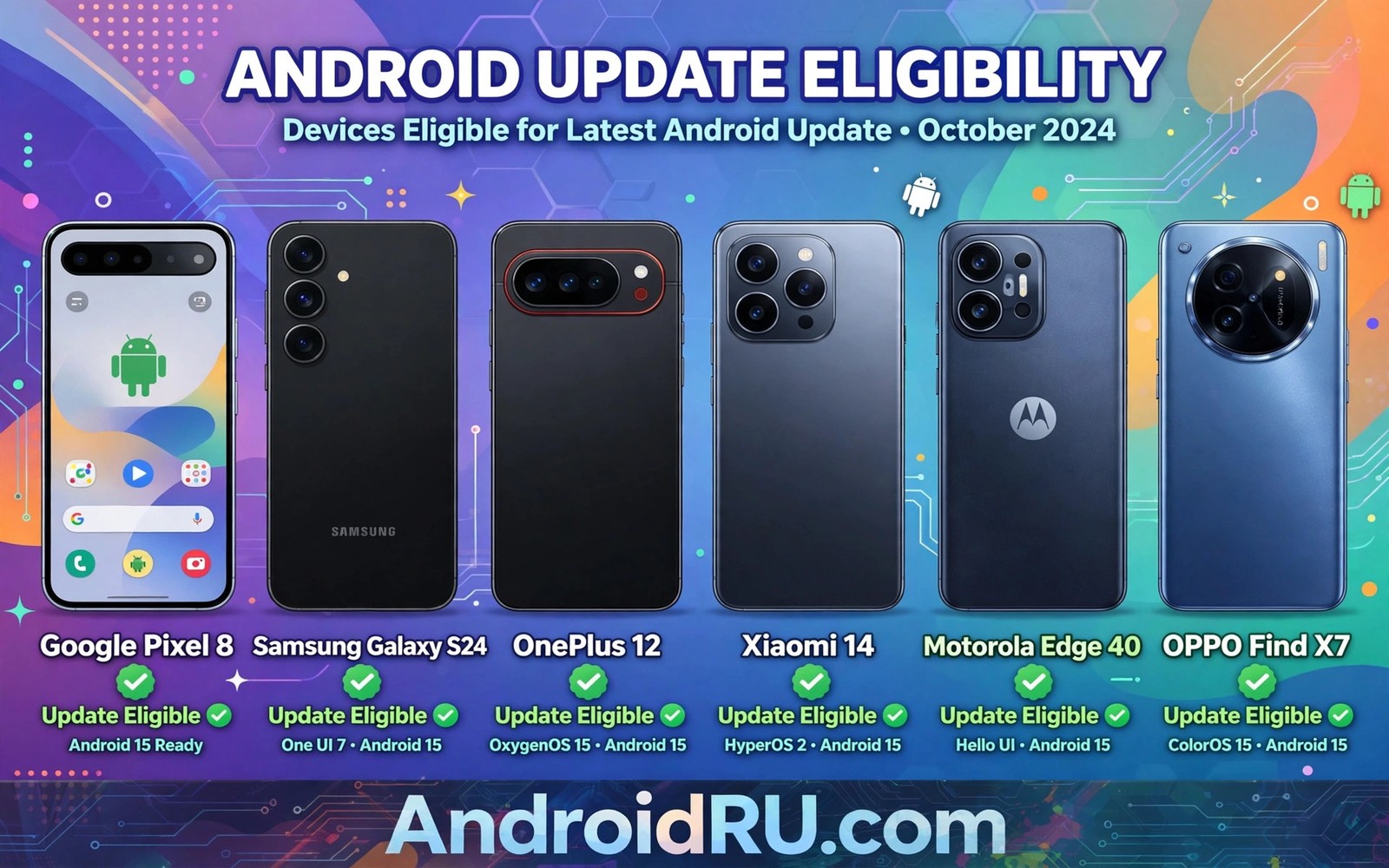
The list of phones that will get Android 15 is the first thing most owners check after a major release is announced. Eligibility depends on the launch date of the phone and the support promise made by its brand. A phone launched two years ago may still qualify while an older budget phone may already sit outside the support window.
Support promises have improved in recent years and flagship phones now often receive several major updates. Budget phones still receive fewer updates in most cases. If you are unsure about your model then checking for updates on your phone is the fastest way to confirm what your device can actually install today.
How eligibility is decided
Brands decide eligibility from the launch date and the hardware power of the phone. A newer processor and more memory make it easier to run a new system well. A very old phone may struggle with new features even if the software could technically install. Brands therefore draw a line based on age and hardware and testing cost.
The support promise at launch is the clearest guide. If a brand promised four major updates then a phone should receive four versions after its launch version. If the promise was two updates then the third major version will likely never arrive. Keep the launch promise in mind before you buy a new phone.
Google Pixel phones
Pixel phones receive Android updates first and they receive them for the longest period in the Android world. Recent Pixel models promise seven years of updates in some cases. Older Pixel models still receive updates within their original promise window. Pixel owners can usually install a major release on the day it becomes stable.
Pixel phones also receive monthly security patches and feature drops between major releases. Those smaller updates keep the phone fresh without a full version change. A Pixel that sits outside major update support may still receive security patches for a short extra period depending on its model.
Samsung Galaxy phones
Samsung now offers long support for flagship Galaxy S and Galaxy Z models. Many recent flagships receive four major Android updates and five years of security patches. Midrange Galaxy A models often receive four major updates as well though the timing lags behind flagships. Older Galaxy models follow shorter promises from their launch era.
adb shell getprop ro.product.model
adb shell getprop ro.build.version.release
adb shell getprop ro.vendor.build.security_patch
These commands follow the approach described in the official Android developer documentation for reading model and build information from a device.
Samsung rolls out updates in stages by model and by region. A flagship in one country may receive the update weeks before the same model in another country. Patience helps here and quarterly platform releases can bring useful features while you wait for the next major version.
Xiaomi OnePlus and other brands
Xiaomi flagships usually receive several major updates while budget Redmi models receive fewer. The exact count varies by series and by launch year. Xiaomi also uses its own interface layer which needs adaptation time before each major release ships. That layer explains why Xiaomi updates often arrive later than Pixel updates.
OnePlus flagships follow a similar pattern with several major updates promised for recent models. Nord models receive fewer major updates than flagship OnePlus phones. Other brands such as Motorola and Sony and Asus set their own promises and owners should check the brand page for the exact model. A single brand promise does not apply to every phone it sells.
What to do if your phone is not eligible
A phone outside major update support can still work well for years with security patches and app updates. Many apps continue to support older Android versions for a long time. You can keep using the phone safely if you install security patches promptly and avoid risky downloads.
Owners who want the newest system have two honest options. They can buy a newer phone with a long support promise or they can explore a custom ROM if they accept the risks. Learning about major updates and monthly patches helps you judge whether a new version is worth the cost of a new device.
Eligibility details owners often miss
Eligibility lists often hide important details behind a simple phone name. A Galaxy S phone sold in one region may carry a different model number from the same name sold elsewhere. Those variants can follow different update paths even though the marketing name looks identical. Checking the exact model number in settings avoids a false conclusion. Owners who skip that step may wait for an update that their variant will never receive or they may miss an update that already arrived for their variant.
Tablets and foldables add another layer to eligibility. A tablet from the same brand may follow a different schedule from a phone with a similar name. Foldables often receive priority because they sit in a flagship price tier. Budget tablets may receive far fewer updates than flagship phones from the same brand. Owners should therefore check the update page for the exact device type rather than assuming phone promises apply to every device a brand sells.
Work phones and phones bought through an employer may follow a managed update policy. An employer may delay updates until internal apps are tested. That delay can look like missing eligibility when it is actually a managed schedule. Employees should ask their IT team before assuming the phone lost support. A managed delay usually ends once internal testing finishes and the update then installs normally.
Second hand buyers face a special eligibility trap. A used flagship may look like a bargain but its remaining support may be short. A phone launched four years ago with a four year promise has no major updates left even if the hardware still feels fast. Checking the launch year and the promise before paying protects the buyer. A slightly newer midrange phone with years of support left may offer better value than an older flagship with no updates left.
Planning around eligibility
Planning around eligibility starts with a simple timeline for your phone. Write down the launch year and the number of promised major updates. Add those numbers to find the last expected major version. Then add the promised patch years to find the security end date. That timeline tells you when to start shopping for a replacement. It also tells you whether a current update delay is normal or a sign of a deeper problem.
Families with several phones benefit from staggering purchases rather than buying all phones in the same year. Staggered purchases spread update end dates across different years. That pattern avoids a sudden moment when every family phone loses support at once. It also spreads cost over time. A family plan built around support timelines feels less stressful than a plan built only around price deals.
Trade in value also connects to eligibility in a direct way. A phone with years of support left commands a higher trade in price than a phone near the end of support. Owners who trade in before the final major update often receive more value. Owners who wait until after support ends receive less. Timing a trade in around the support timeline therefore protects money as well as security.
Owners who cannot afford a new phone should focus on safe habits during the final support years. Keep apps updated and install every patch promptly. Avoid risky downloads and use strong lock screen protection. Those habits do not replace updates but they reduce risk while a replacement is planned. A careful owner can use a phone safely for a period after major updates end.
Eligibility checks for specific situations
Owners who bought a phone second hand should verify eligibility through the brand support page rather than trusting the seller description. Sellers may describe a phone as eligible based on its name alone without checking the variant. A quick check of model number and launch year protects the buyer from disappointment. Buyers should also ask for the current Android version and patch date before paying. Those details reveal how well the seller maintained the phone.
Owners who use a phone for work should confirm eligibility with their employer IT team in addition to the brand page. Managed phones may follow a different update path from personal phones of the same model. IT teams may delay a major update until business apps pass testing. That delay does not mean the phone lost eligibility. It means the organisation controls timing for business reasons. Clear communication with IT avoids confusion about missing updates.
Gamers should check eligibility with performance in mind rather than version number alone. A phone that qualifies for Android 15 may still struggle with demanding games if its processor is old. New system features cannot overcome hardware limits for graphics intensive games. Gamers who care about frame rates should therefore weigh hardware age alongside eligibility. A newer midrange phone may game better than an older flagship that still receives updates.
Parents buying a first phone for a child should prioritise remaining support years over raw specifications. A child phone needs security patches for the whole period the child uses it. A phone with three years of support left suits a child who will use it for two years. A phone with only one year left may become unsafe before the child outgrows it. Support timeline therefore becomes a safety decision for families as well as a value decision.
Common mistakes
A common mistake is assuming that every phone from a brand receives the same update count. Flagship and budget lines differ sharply and that difference surprises many owners. Another mistake is trusting a fan made list without checking the model number. Model numbers matter because one name can cover several hardware variants.
- Assuming all phones from one brand share one support promise ignores the gap between flagship and budget lines.
- Trusting an unofficial list without checking the exact model number can give a false yes or a false no.
- Buying an old flagship for a new update without checking its remaining support years is a costly error.
Frequently asked questions
Will my three year old flagship get Android 15?
Many recent flagships will because their promises cover four major updates. Older flagships from the era of two update promises may not qualify. Check the launch promise and the brand update page for your exact model.
Why does my friend have the update and I do not?
Rollouts happen in stages by model and region and carrier. Your friend may own a different variant or live in an earlier rollout region. Waiting a few weeks often resolves the gap without any action.
Does eligibility guarantee good performance?
No update can guarantee smooth performance on every device. New features need more resources and very old hardware may feel slower after a major update. Reading owner feedback for your model helps set realistic expectations.
Conclusion
Eligibility for Android 15 depends on launch date and brand promise and hardware power. Pixel phones lead the rollout and Samsung flagships follow with long support. Xiaomi and OnePlus and other brands vary by series and owners must check the exact model.
Your next step is to find your model number in settings and compare it with the official brand list. If your phone qualifies then back up your data and wait for the rollout. If it does not qualify then plan your next phone around a long support promise.

