

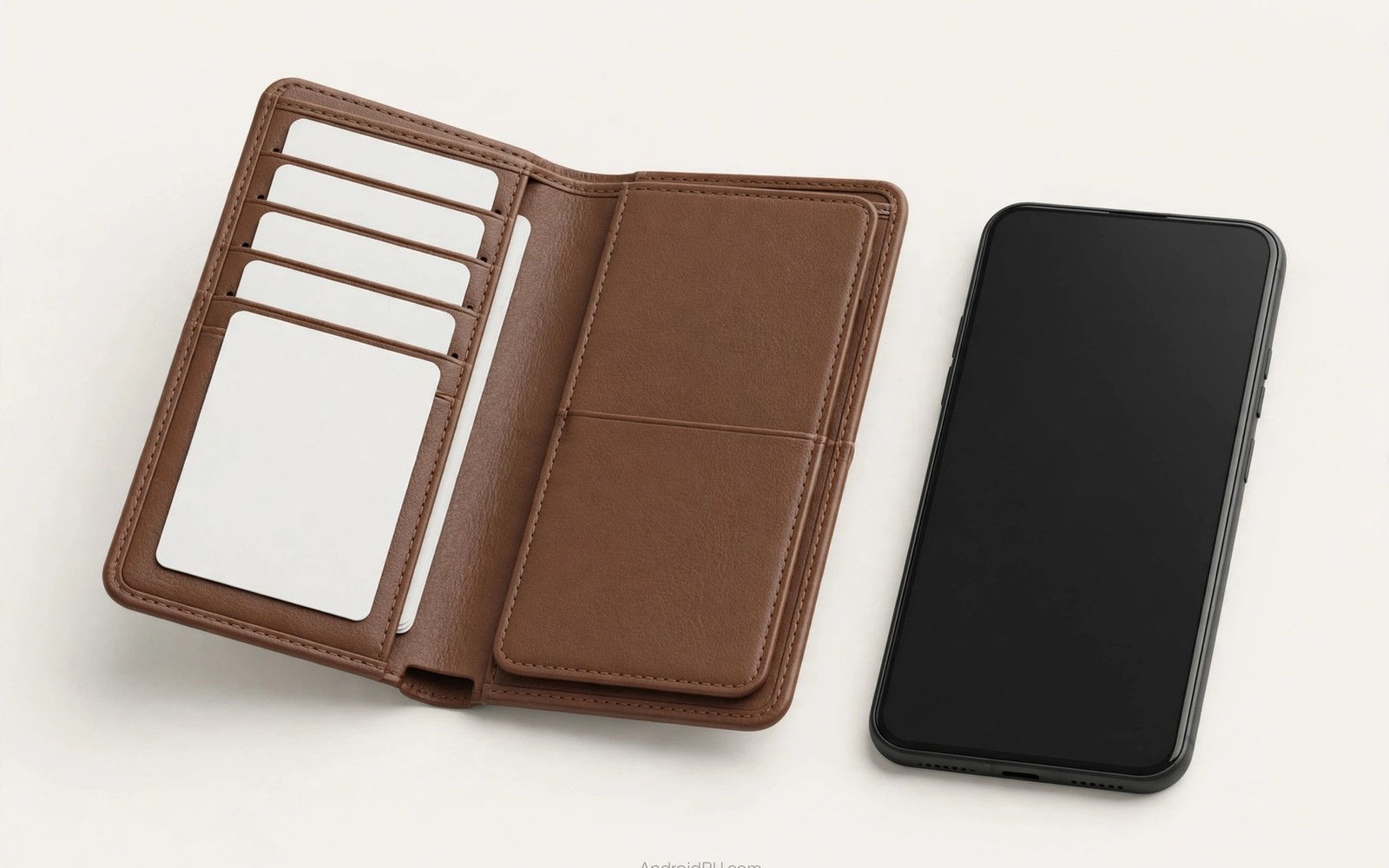
A wallet case merges a phone and a wallet into one item. Card slots hold bank cards and ID. A folio cover folds over the screen. One pocket carries phone and cards together. The convenience is obvious for light travel. The trade offs deserve a closer look.
Card capacity and bulk pull in opposite directions. More slots mean a thicker case. A thick case feels heavy in a pocket. RFID blocking adds another layer to consider. Some cases block radio signals to cards. Others leave cards readable through the case. This guide compares all three factors.
It covers slot layouts and daily use. It covers RFID risk honestly. It also covers drop protection with a folio cover. For stand features that pair with folios, see kickstand cases for hands-free viewing as a related feature.
Card Slots Capacity And Layout
Most wallet cases hold two to four cards. Two card cases stay slim. Four card cases grow thick quickly. A case that holds many cards tempts overfilling. Overfilled slots stretch and cards slip out. Carry only the cards you use daily. Leave rarely used cards at home.
Slot layout affects daily speed. Outer slots suit tap payments without opening the folio. Inner slots suit ID and loyalty cards. A folio that opens like a book suits right handed users. Left handed users may prefer a flip down design. Test the opening direction before buying. A wrong direction annoys every single day.
Cash storage varies by design. Some folios add a cash pocket behind the cards. Cash adds bulk and it can slip out. A cash pocket suits notes folded once. It rarely suits coins. Coins add weight and they scratch card surfaces. Keep coins in a separate pocket for case health.
RFID Blocking Explained
RFID blocking uses a shielding layer in the case. The layer blocks radio waves from reaching cards. Contactless cards use radio waves to pay. A blocked card cannot be read while shielded. An unblocked card can be read by a nearby terminal. Blocking matters only when the case is closed.
Real RFID theft risk is low but not zero. A thief needs a reader close to your pocket. Crowded transport gives that closeness. Most banks limit contactless amounts without a PIN. Fraud protection also covers most losses. Blocking adds peace of mind rather than essential safety for most users.
Blocking can also annoy daily use. A shielded card will not tap pay while inside a closed case. You must remove the card or open the folio to pay. That extra step cancels some wallet convenience. Some cases shield only one side. Those cases block reads from outside while allowing taps from inside. Check shielding design before buying.
Daily Convenience And Pocket Life
One item pockets simplify light outings. A walk or a quick shop needs phone and card only. A wallet case covers both needs. It removes the need for a separate wallet. It also creates a single point of loss. Losing the case means losing phone and cards together. That risk deserves honest thought.
Bulk grows with every card added. A four card folio feels like a small book. Tight pockets suffer most. Jacket pockets handle folios well. Jeans pockets prefer slim two card designs. Match capacity to your pocket type. A case that fights your pocket will be abandoned quickly.
Folio covers protect screens in bags. The cover guards against keys and coins. It also adds a step before every use. Opening a folio for each glance slows quick checks. Users who glance often may prefer a back only case. Users who bag carry often love folio protection.
Drop Protection With Folios
Folio cases guard screens well when closed. The cover absorbs bag scratches fully. Drop protection varies by shell design. A hard inner shell guards corners well. A soft sleeve style folio guards less. Check corner thickness inside the folio. Thin sleeves suit bags more than falls.
An open folio changes drop behaviour. The cover flaps during a fall. It can catch on objects and twist the phone. A magnetic clasp keeps the folio closed in a bag. It may open during a fall anyway. A folio is not a rugged case. It suits careful users best.
Card slots can affect drop safety too. Cards add stiffness to one side. That stiffness can focus impact unevenly. A folio full of cards feels solid. It may also transfer force to the phone frame. Keep card count moderate for balanced protection. Two cards balance convenience and safety well.
Security Habits For Wallet Cases
Treat a wallet case like a wallet for security. Never leave it on a table in public. A thief gains phone and cards in one grab. Use a phone lock with a strong PIN. Enable remote lock and tracking. Those settings matter more than RFID shielding. A locked phone protects data even if cards are lost.
Report lost cards at once if a case goes missing. Freeze cards through banking apps quickly. Most apps freeze in seconds. A fast freeze stops most fraud. Keep a spare card at home for emergencies. A single item lifestyle needs a backup plan. Without a backup, one loss blocks payments fully.
Check cards monthly for wear from slots. Tight slots scratch card chips and stripes. Loose slots let cards slip out unnoticed. Replace a case once slots stretch. A stretched slot risks silent card loss. Card loss in a crowd is hard to notice until checkout.
- Carry two cards for slim pockets and four only for jackets.
- Check whether shielding blocks taps from inside the case.
- Use a magnetic clasp to keep the folio closed in bags.
- Enable remote lock and tracking before daily wallet use.
- Freeze cards at once through banking apps if lost.
- Replace a case once slots stretch or cards slip.
Choosing The Right Wallet Case
Start with your card count and pocket type. Two card slim folios suit jeans. Four card folios suit jackets and bags. RFID shielding suits crowded commuters. Non shielded cases suit frequent tap payers. Match the feature to your payment habit. A shielded case that blocks every tap frustrates daily use.
Check material quality before buying. Real leather folios age well. Faux leather peels at folds within months. Fabric folios grip well but they stain. Stitching at the spine decides lifespan. Double stitched spines last longest. A wallet case flexes at the spine daily. Weak stitching fails there first.
Test the folio in a shop when possible. Open and close it several times. Slide cards in and out. Feel the pocket bulk with cards loaded. A hands-on test reveals annoyances fast. Online buyers should check return terms. A wallet case is personal and it must feel right. Grip safety for one item carry is covered in lanyards and grip accessories that prevent drops for added security.
Travel Minimalism And One Item Carry
Minimalist travellers carry phone plus cards only. A wallet case enables that lifestyle fully. It removes a separate wallet from luggage. It also removes a pocket from daily carry. Light travel rewards every item removed. A wallet case is one of the best removals available. It keeps essentials together and accessible. Airport security also speeds up with fewer items. One tray holds phone and cards together.
Minimalism demands discipline about card count. A traveller may need several cards abroad. Transport cards and hotel cards add bulk quickly. A four card folio suits travel better than a two card slim case. Jacket pockets handle travel folios well. Trouser pockets struggle with them. Choose pocket type by travel clothing. A jacket based trip suits a folio perfectly. A shorts based trip suits a slim case plus a small pouch.
Backup planning matters more for minimalist travellers. Losing one item loses phone and cards together abroad. Keep a spare card in hotel luggage. Keep emergency cash separate from the wallet case. Store banking app access on a second device if possible. A backup plan turns a disaster into an inconvenience. Minimalism without backup is fragile. Minimalism with backup is liberating.
Folio Versus Back Only Wallet Designs
Back only wallet cases attach cards to the rear. They skip the folio cover entirely. They stay slimmer than folios. They also leave the screen exposed in bags. Back only designs suit users who value slim pockets. They suit users who check phones constantly. No cover means no opening step. Quick glances stay quick with back only designs.
Folio designs guard screens in bags and pockets. They add bulk and an opening step. They suit bag carriers best. They suit users who rarely glance at phones. A folio also offers a stand feature in many designs. That stand aids video viewing on trips. Back only designs rarely offer stands. Choose folio for protection and stands. Choose back only for slim speed.
Card security differs between the two designs. Folio covers hide cards from view. Back only cards sit visible on the rear. Visible cards tempt pickpockets in crowds. Folio covers also shield RFID signals when closed. Back only cards stay readable always. Crowded city travel favours folios for security. Quiet rural travel suits back only designs fine. Match design to crowd risk honestly.
Pair wallet choice with leather and fabric cases on style and wear when choosing materials. Leather folios age beautifully with travel. Fabric folios grip well in sweaty climates. Plastic folios clean easily after spills. Material choice shapes travel experience daily. A travel case should feel good after long days. Comfort decides whether a travel case earns its place.
Festival use tests wallet cases harshly. Crowds bump folios open repeatedly. A strong magnetic clasp prevents accidental opening. A weak clasp spills cards in a crowd. Test clasp strength before festival use. Shake the closed folio firmly at home. A folio that opens during shaking will open in a crowd. Choose a folio with a snap or strong magnet for events. Festival security also favours folios that hide cards fully.
ID windows add convenience for some wallet users. A clear window shows an ID without removal. It suits workplace badge checks well. It also exposes the ID to nearby eyes. A window ID is visible whenever the folio opens. Users with sensitive IDs should avoid windows. A hidden slot protects ID privacy better. Choose a window only when frequent ID display justifies exposure. Most users suit hidden slots better.
Wallet case checklist:
- Capacity: 2 cards slim, 4 cards jacket only
- Shielding: blocks outside reads? allows inside taps?
- Clasp: magnetic, holds closed in bag
- Shell: hard inner shell, thick corners
- Spine: double stitching preferred
- Security: phone lock + remote tracking on
The steps above follow the approach described in the official developer documentation for device care and accessory testing. The guidance draws on standard contactless payment practice and everyday carry habits. Wallet cases trade bulk for convenience. Choose capacity and shielding that match your real daily routine.

