

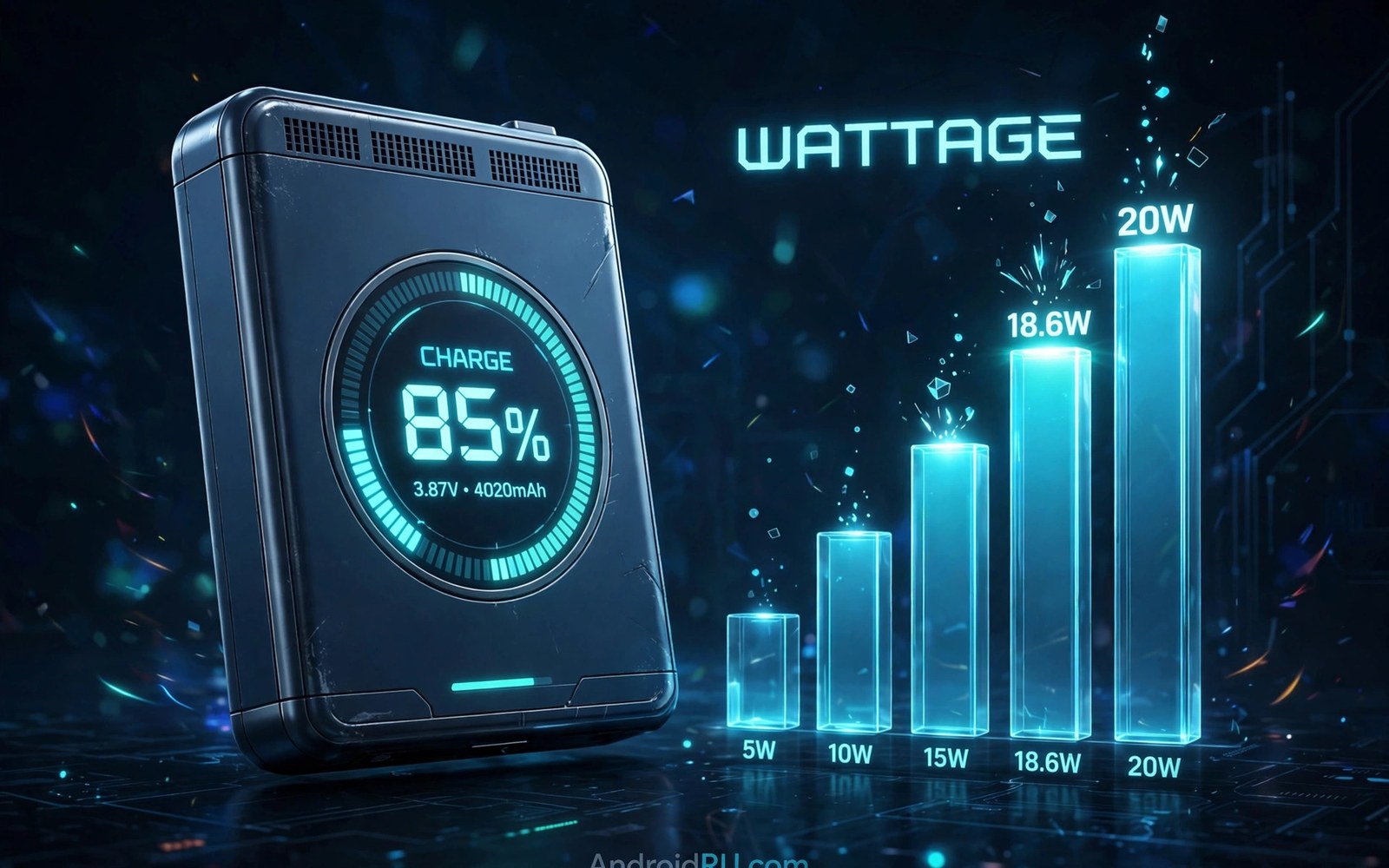
High wattage charging promises a full battery in minutes. That speed feels like freedom on a busy morning. It also raises a fair question about long term battery health. Heat and high current stress battery cells over hundreds of cycles. A battery that charges fast every day may age faster than one charged gently. The size of that effect depends on habits and on phone design.
Wattage alone does not decide battery wear. A 120W system that splits power across two cells may stress each cell less than a simpler design. Thermal management also matters because a cool fast charge ages slower than a hot one. Charging habits matter too because frequent top-ups differ from daily full cycles. Phone makers tune all of these factors together. Buyers should look past the watt number to the whole system.
This guide explains the link between wattage and lifespan in plain terms. It covers heat and charge curves and cell stress. It also gives practical habits that keep fast charging safe. Most users can enjoy fast charging without ruining a battery. The key is to use high power when it helps and slow power when time allows.
How Batteries Age During Charging
Lithium batteries age through chemical wear inside their cells. Each charge cycle causes tiny changes that slowly reduce capacity. High current speeds those changes when it forces ions to move fast. Heat speeds them further because warmth accelerates unwanted reactions. A battery kept cool and charged gently ages more slowly. A battery pushed hard and kept hot ages faster.
Age shows up as shorter daily life rather than sudden failure. A phone that once lasted a full day may need a top-up by evening. That decline is normal after hundreds of cycles. Fast charging can bring that point forward if heat stays high. Good thermal design delays it by keeping cells in a safe range. Users cannot stop ageing but they can slow it with sensible habits.
- Avoid charging a very hot phone at full speed
- Remove thick cases during fast charges
- Prefer slow charging overnight when possible
What Wattage Actually Means
Wattage is voltage multiplied by current. A charger can reach high wattage with high voltage or high current. Phone systems choose a mix that suits their battery design. Two-cell designs split the load so each cell sees less stress. Single-cell designs must handle the full load in one place. That design difference explains why watt numbers alone mislead buyers.
Peak wattage also lasts only part of a charge. Phones charge fastest when the battery is low and cool. Power drops as the battery fills to protect the cells near full. A 120W phone may hold that peak for only a few minutes. The average power across a full charge is far lower. Compare full charging times rather than peak numbers for a fair view.
Heat As The Main Wear Factor
Heat does more damage than wattage by itself. A fast charge in a cool room stresses cells less than a slow charge in a hot car. Direct sunlight and gaming during charging add heat on top of charging heat. That combined heat can push a phone into thermal limits. The phone then slows charging to protect itself. Users who keep the phone cool get more benefit from fast charging.
Charging while using the phone heavily adds another heat source. Video calls and games draw power while the charger supplies it. That loop keeps the battery warm for the whole session. A short pause from heavy use during a fast top-up helps a lot. Let the phone charge idle for ten minutes when speed matters. The battery will fill faster and stay cooler.
Charge Levels And Daily Habits
Battery wear grows at the extremes of charge. Staying near full for long periods stresses cells. Draining to empty regularly also stresses cells. The gentlest range sits in the middle of the charge scale. Many phones offer a mode that caps charging below full. That mode suits overnight charging when a full battery is not needed at dawn.
Partial top-ups are kinder than daily full cycles. Topping up from half to nearly full counts as less wear than a full cycle. Frequent small top-ups can therefore extend battery life. Fast charging fits this pattern well for daytime use. Use a quick top-up when needed and a slow overnight charge otherwise. That mix balances speed with longevity.
120W Versus 20W In Practice
A 20W charge is gentle and it suits overnight and desk use. It creates modest heat and it gives the battery an easy cycle. A 120W charge is dramatic and it suits urgent top-ups before leaving home. It creates more heat and it demands strong thermal design. Most users need the top speed only a few times per week. Daily use at moderate power keeps wear lower overall.
Phone design narrows the gap between those extremes. Modern high power phones use dual cells and vapour cooling. They also taper power sharply as the battery fills. Those features cut the wear penalty of high wattage a lot. A well designed 120W phone may age similarly to a modest phone with poor cooling. Design and habits together decide the outcome more than wattage alone.
Practical Rules For Fast Charging
Use fast charging when time is short and slow charging when time is plentiful. Keep the phone cool and idle during fast sessions. Avoid charging in hot cars or in direct sunlight. Remove a thick case if the phone feels warm during a charge. Enable battery care modes for overnight charging when available. These rules cost nothing and they protect the battery across years of use.
Replace a swelling battery at once and stop using the phone. Swelling signals cell damage that needs professional attention. Do not puncture or bend a swollen battery. Take the phone to a repair service with proper handling tools. A healthy charging routine makes swelling rare but vigilance still matters. Safety always outranks squeezing extra life from a damaged battery.
Fast Charging And Battery Cycle Counts
Battery cycle counts measure full charge equivalents over a battery life. A cycle does not require a single full charge from empty. Two half charges add up to roughly one cycle. Fast charging affects wear per cycle rather than cycle counting itself. Heat during fast cycles raises wear per cycle. Gentle cycles with low heat wear less per cycle.
Users can extend cycle life by avoiding deep discharges. Charging from half to full stresses cells less than charging from empty. That pattern suits fast top-ups during the day well. A quick top-up from half uses fast power briefly. Heat stays lower because the session is short. Short top-ups therefore combine speed with modest wear.
Calendar ageing also affects batteries regardless of cycles. A battery ages slowly even when a phone sits unused. Heat accelerates calendar ageing too. A phone stored hot ages faster than one stored cool. Fast charging heat contributes to both cycle and calendar ageing. Keeping phones cool helps on both fronts at once.
Battery replacement timing depends on total wear from all sources. A battery at reduced capacity still works but needs more frequent charging. More frequent charging then adds cycles faster. That feedback loop accelerates decline near end of life. Gentle charging habits delay entry into that loop. Early care pays off most near the end of battery life.
Charger And Cable Quality In High Wattage Systems
High wattage systems demand more from chargers and cables. A charger must sustain high power without overheating. A cable must carry high current without voltage drop. Weak parts in either link throttle the whole system. The phone then charges slower despite a high watt headline. Quality parts are essential for high wattage benefits.
Charger cooling design matters at high power levels. A charger with good internal layout spreads heat evenly. A charger with poor layout develops hot spots that trigger throttling. Feel the charger case during a high watt session. Even warmth suggests good design while a hot spot suggests weak design. Return chargers with severe hot spots promptly.
Cable length becomes more critical at high wattage. Long cables lose more power as heat at high current. A short cable preserves voltage better across the session. Use the shortest practical cable for high wattage charging. A desk cable of modest length usually gives the best result. Travel cables should also favour short quality builds.
Connector quality also matters under high current. A loose connector creates resistance and heat at the joint. That heat can damage ports over time. Check connectors for firm seating before high watt sessions. Replace cables with loose connectors immediately. Port health protects high wattage performance across phone life.
Use fast charging only when time is short
Charge slowly overnight when possible
Keep the phone cool and idle while charging
Avoid full charges every single day
Enable battery care mode if available
Readers who want more context on portable power can read MagSafe-Style Magnetic Wireless Power Banks for Android Devices for a related view on the same topic.
Readers who want more context on portable power can read Why Bad USB Charging Cables Can Slow Down Charging Speeds for a related view on the same topic.
Readers who want more context on portable power can read Analyzing Battery Power Loss When Charging Wirelessly for a related view on the same topic.
The steps above follow the approach described in the official developer documentation and standard industry guidance for safe charging practice.
Wattage affects lifespan mainly through heat and cell stress. High power is not automatically harmful when cooling and design are strong. Daily habits decide much of the outcome. Fast top-ups with a cool phone cause modest wear. Slow overnight charging with a capped level causes even less.
Enjoy fast charging as a tool rather than a default for every session. Save top speed for mornings when time is tight. Let slower charging handle nights and desk days. That balance keeps the phone fast today and healthy for years. The best charging routine is the one you can follow without thinking.
Cycle awareness and quality gear complete the wattage picture. Short top-ups from mid-level charge wear less than full fast cycles. High wattage needs strong chargers and short cables to deliver real speed. Heat remains the thread linking all wear factors. Manage heat and fast charging stays a safe daily tool.
Set a personal rule for fast charging use. Use top speed for urgent mornings and gentle power otherwise. Keep the phone cool and idle during fast sessions. That simple rule balances modern speed with long battery life. Future phones will charge faster still but heat care will remain essential.
Fast charging research continues to push power higher each year. New battery chemistries may tolerate high power better. Silicon-carbon batteries promise higher capacity and better heat tolerance. Those advances could reduce the wear penalty of fast charging. Current lithium batteries still need heat care today. Future chemistry may relax but not remove heat rules.
Phone makers increasingly offer adaptive charging controls. Those controls learn user routines and adjust charging curves. A phone that knows waking time can finish charging gently. Adaptive controls reduce wear without user effort. Enable adaptive features when your phone offers them. Software intelligence complements careful charging habits well.
Repair shops increasingly report battery health data to users. That data helps users judge when replacement makes sense. A battery at low health charges slower by design. Replacement restores both capacity and charging speed. Track health yearly after the second year of use. Early replacement planning avoids sudden battery failures.

