

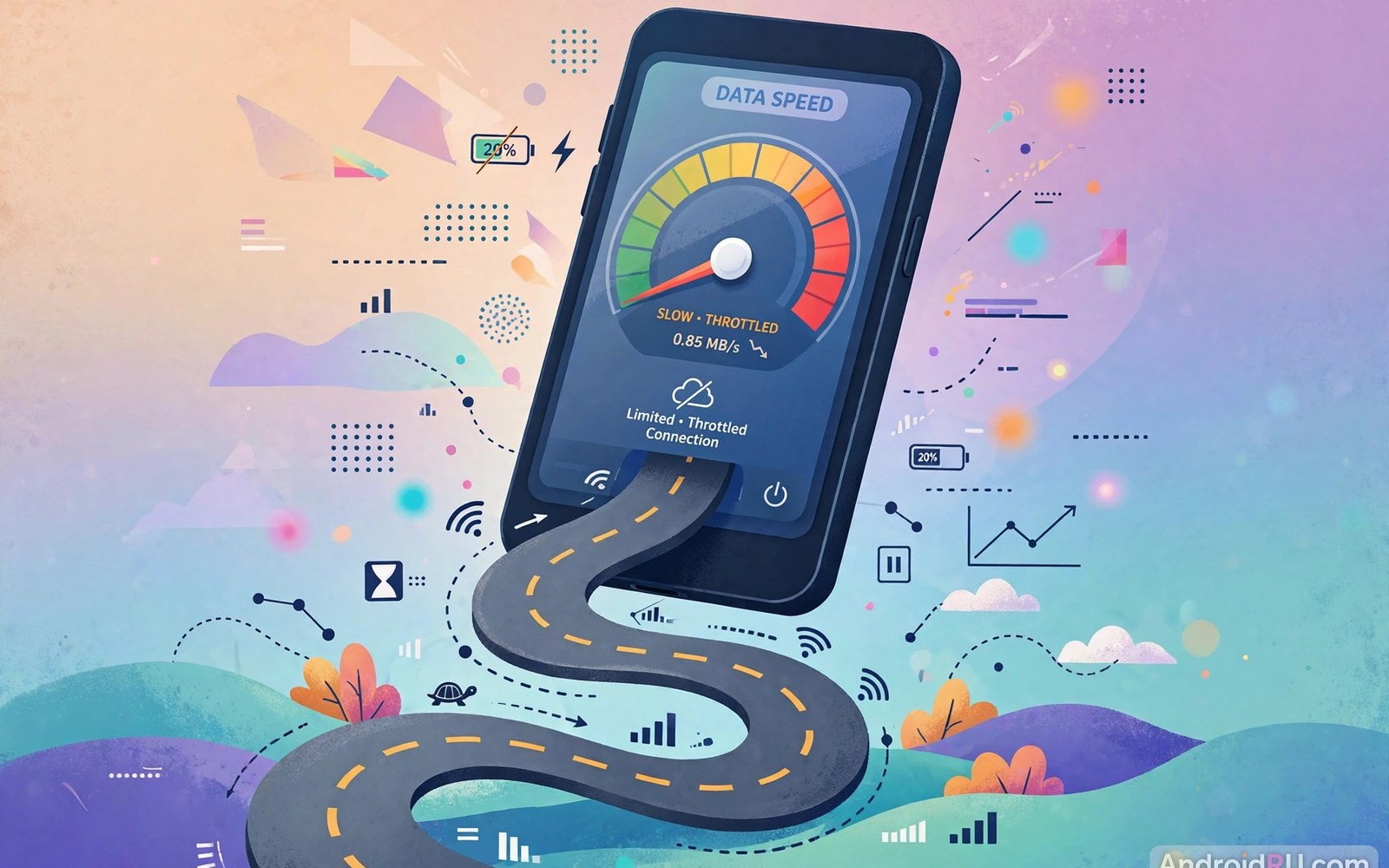
Unlimited data rarely means unlimited full speed. Carriers slow speeds after a hidden threshold. That slowdown is called throttling. It turns fast browsing into a crawl. Video buffers and maps load slowly. The plan still works but barely. Many users discover throttling only after the bill arrives. This article explains how throttling works in plain terms.
Throttling differs from deprioritization in important ways. Throttling applies after a cap regardless of congestion. Deprioritization applies only on busy towers. Both slow your data but for different reasons. Knowing which rule applies helps you respond. The sections below cover caps and speeds. They also cover detection and workarounds.
What Throttling Actually Does
Throttling caps your speed at a low rate. Common throttle rates are 128 or 256 kilobits per second. Some plans throttle to 512 kilobits per second. Those rates load basic web pages slowly. They fail for video streaming almost always. Music streaming may work at low quality. Maps load with delays at those rates. The phone stays connected but feels broken.
Carriers enforce throttling at the network level. Your phone cannot bypass it with settings. Speed tests reveal the cap clearly. Tests show a flat speed ceiling across servers. That ceiling matches the throttle rate closely. A VPN cannot lift a network throttle. The carrier shapes traffic before it reaches you. Only a new allowance or a new cycle restores speed.
Caps Hidden Inside Unlimited Plans
Unlimited plans hide a premium data allowance inside. That allowance may be 50 or 100 gigabytes. After that point speeds drop sharply. The plan page calls the allowance premium data. Marketing headlines hide the number deep in terms. Find the premium data number before you buy. Compare it with your real monthly usage. A plan with a small premium pool throttles heavy users fast.
Some plans throttle only hotspot data after a cap. Phone data stays fast while hotspot slows. Other plans throttle all data after the cap. Read the hotspot terms separately from phone terms. A plan that suits phone-only use may fail tethering. Heavy users need both numbers checked. Note the throttle speed as well as the cap. A 512 kilobit throttle beats a 128 kilobit throttle daily.
Throttling Versus Deprioritization
Deprioritization lowers your priority on busy towers. It does not cap your speed directly. Your speed drops only when the tower is crowded. At quiet hours your speed returns to normal. Throttling caps speed at all hours after a cap. Even a quiet tower cannot lift a throttle. That distinction matters for diagnosis. Test speeds at quiet hours to tell them apart.
A plan can apply both rules at once. Deprioritization may start immediately on cheap plans. Throttling may start after the premium allowance ends. The combined effect feels severe at peak hours. Read plan terms for both keywords. Terms such as premium data signal deprioritization rules. Terms such as reduced speeds signal throttling rules. Knowing both rules prevents surprise slowdowns.
How to Detect Throttling on Your Phone
Run speed tests at several times of day. Throttled speeds stay flat across all hours. Deprioritized speeds recover at quiet hours. Compare test results with your plan terms. A flat ceiling near 128 kilobits signals throttling. A varying speed signals deprioritization instead. Test on the same server for fair comparison. Different servers give different results naturally.
Check your data usage in phone settings too. Usage near the premium allowance confirms throttling. Usage far below it points elsewhere. A weak signal also mimics throttling symptoms. Test near a window or outdoors to rule out signal. If speeds stay flat with strong signal then throttling is likely. Contact support to confirm the cap status. For reliable test method see testing signal strength accurately before you conclude.
Video Throttling and Quality Caps
Some carriers throttle video streams separately. Video may cap at standard definition quality. That cap applies even before the data cap ends. Streams load at 480p instead of high definition. The cap saves network capacity for carriers. It frustrates users with large screens. Some plans offer HD video as a paid add-on. Others include it only on premium tiers.
Video caps are hard to detect from speed tests. General speed tests may show full speed. Video streams still cap at lower rates. Test with a long video stream directly. Watch for quality stuck at standard definition. Check the video app quality setting first. Set quality to auto or highest for the test. If quality stays low then a video cap is likely active.
Hotspot Throttling Traps
Hotspot data often carries stricter throttle rules. A plan may offer 50 gigabytes of phone data. The same plan may offer 15 gigabytes of hotspot. After that hotspot point speeds collapse. Laptop work becomes painful at throttle rates. Video meetings freeze and files crawl. Check hotspot caps before remote work trips. A plan that fits phone use may fail laptop use.
Some carriers throttle hotspot speed from the start. Hotspot may cap at 600 kilobits per second always. That cap blocks HD video meetings entirely. It still allows email and basic browsing. Read hotspot speed terms with care. A hotspot speed cap matters more than the allowance for workers. Test hotspot speed on day one of any plan. Early tests prevent mid-project failures later.
Reducing Throttling Impact Day to Day
Lower video quality to stretch premium data further. Standard definition uses far less data than HD. Download content on Wi-Fi before leaving home. Set apps to Wi-Fi-only updates and backups. Those habits delay the throttle point by days. Data saver mode blocks background waste too. Restrict hungry apps in data settings. Small habits compound into real savings monthly.
Use Wi-Fi whenever it is available and safe. Home and office Wi-Fi spare mobile data. Public Wi-Fi needs a VPN for sensitive tasks. A VPN protects data but cannot lift throttling. It also adds a small overhead to usage. Prefer trusted networks for banking and work. Save mobile data for travel and commutes. Wi-Fi-first habits keep premium data for when it matters.
Switching Plans to Escape Throttling
A plan with a larger premium pool solves throttling directly. Compare premium allowances across rival carriers. A higher pool costs more but removes the crawl. Calculate cost per premium gigabyte for fairness. Divide monthly price by premium gigabytes. The cheapest per-gigabyte plan often wins for heavy users. Include hotspot pools in the same math. A plan with a big phone pool but tiny hotspot pool may still fail you.
Switch near the end of a billing cycle. Switching early wastes days already paid for. Test the new plan before you port your number. Test at peak hours and at home. Confirm speeds match the advertised terms. Port only after the test passes fully. Keep the old line active during testing. Heavy users should also compare prepaid data options since prepaid pools vary widely.
Throttling and Net Neutrality Debates
Throttling sparks debate about fair network use. Carriers argue caps manage limited spectrum. Critics argue caps punish heavy users unfairly. Regulators in some regions limit throttle practices. Rules vary widely by country and year. Check local rules before assuming protections. Consumer groups track throttle complaints publicly. Their reports reveal patterns across carriers.
Transparency rules require clearer plan disclosures in many markets. Carriers must state throttle speeds in terms. Those terms remain hard to find in practice. Consumer pressure improves disclosure over time. Shoppers who read terms reward honest carriers. Honest disclosure should guide your buying choice. Support brands that state caps plainly. Market pressure works when buyers read the fine print.
Future of Unlimited Data and Caps
Networks gain capacity each year with new spectrum. Mid band expansion eases congestion in cities. Larger capacity may raise premium allowances over time. Caps may grow rather than vanish entirely. Carriers use caps to segment plan tiers. Premium tiers will likely keep larger pools. Budget tiers will likely keep smaller pools. That tier structure persists even as networks improve.
Satellite and fixed wireless add competitive pressure. More options force carriers to improve terms. Heavy users gain leverage from rival offers. Shop yearly to capture improving terms. A plan that throttled you last year may improve. Or a rival may offer a larger pool today. Regular shopping keeps carriers honest. Your data habits deserve a plan that grows with networks.
Throttling on 5G Versus 4G Networks
Throttling applies on both 4G and 5G networks. The cap follows your plan rather than your network type. A 5G phone throttles to the same low rate. The faster network cannot lift a plan cap. Users expect 5G to escape throttling always. That expectation leads to disappointment after caps. Check premium allowances regardless of network generation. Generation changes speed potential not plan rules.
Mid band 5G may feel less throttled for basic tasks. Lower latency helps pages start faster. The throttle ceiling still limits throughput hard. Video remains capped at the throttle rate. Latency gains cannot fix a 128 kilobit ceiling. Heavy users should not buy 5G as a throttle cure. Buy a larger premium pool instead. Network generation and plan allowance solve different problems.
Throttling Detection Checklist
- Find the premium data allowance in the plan terms.
- Note the throttle speed that applies after the cap.
- Check the separate hotspot cap and hotspot speed.
- Run speed tests at peak and quiet hours for comparison.
- Compare usage with the premium allowance in settings.
- Test video quality directly since speed tests may miss video caps.
Settings > Network & internet > SIMs > Data usage
Premium allowance = plan terms premium data number
Test 1: speed test at dinner time (peak hour)
Test 2: speed test late at night (quiet hour)
Flat ceiling at all hours = throttling likely
The method above reflects common consumer practice for detecting mobile throttling. Caps and throttle speeds vary by carrier plan and region. Always confirm current terms on the carrier page before you buy.
Know Your Cap Before You Hit It
Throttling hides inside unlimited marketing too often. Find the premium data number before you buy. Note the throttle speed and hotspot rules. Test speeds at peak and quiet hours. Use Wi-Fi-first habits to stretch premium data. Switch plans when caps no longer fit usage. Informed buyers rarely suffer surprise slowdowns. Users comparing plan types should also weigh budget carrier plans against direct carrier tiers.
Review your plan yearly as networks and habits change. Caps grow and prices shift with competition. A yearly review captures better terms fast. Measure usage and test alternatives regularly. The best plan is one whose cap you never hit. Shop with terms in hand and speed will follow.

