

alcatel Fierce 4: A Full Review With Detailed Specifications
The alcatel Fierce 4 arrived in August 2016 as a large, low-cost phone for buyers who wanted a big screen without a big bill. Announced on 29 August 2016 and released in the same month, it was sold through MetroPCS from 29 August 2016 at a price of $69, and it reached T-Mobile later in the autumn of that year. This alcatel Fierce 4 review looks back at the phone as a product of its time: a budget phablet with a 5.5-inch display, a metal body, and the plain, practical Android 6.0 Marshmallow software of the era. It was never meant to compete with flagship phones, and judging it by 2026 standards would miss the point. What matters is how well it served its target audience in 2016, and what its full specifications tell us about the budget market of that year.
Anyone reading this alcatel Fierce 4 full specifications and review today is probably doing one of three things: remembering a phone they once owned, buying a used one as a spare, or researching the history of affordable Android phones. All three readers need the same thing, which is a clear, honest account of what the phone could and could not do. The alcatel Fierce 4 price at launch in 2016 was one of its strongest selling points, and the rest of this article measures the hardware against that price. A quick note on scope: this is a retrospective review based on the verified specifications and the launch record, not a hands-on test of a new unit in 2026, so claims about present-day performance are kept to what the hardware itself implies.
For readers comparing other alcatel phones from the same period, the alcatel Pixi 4 Plus Power First Impressions, Review and Full Specs article covers a close relative with a very different priority, a much larger battery in place of the Fierce 4 metal body. That contrast is useful, because it shows how alcatel split its budget range in 2016 between battery life, screen size, and build quality.
Design and Build Quality
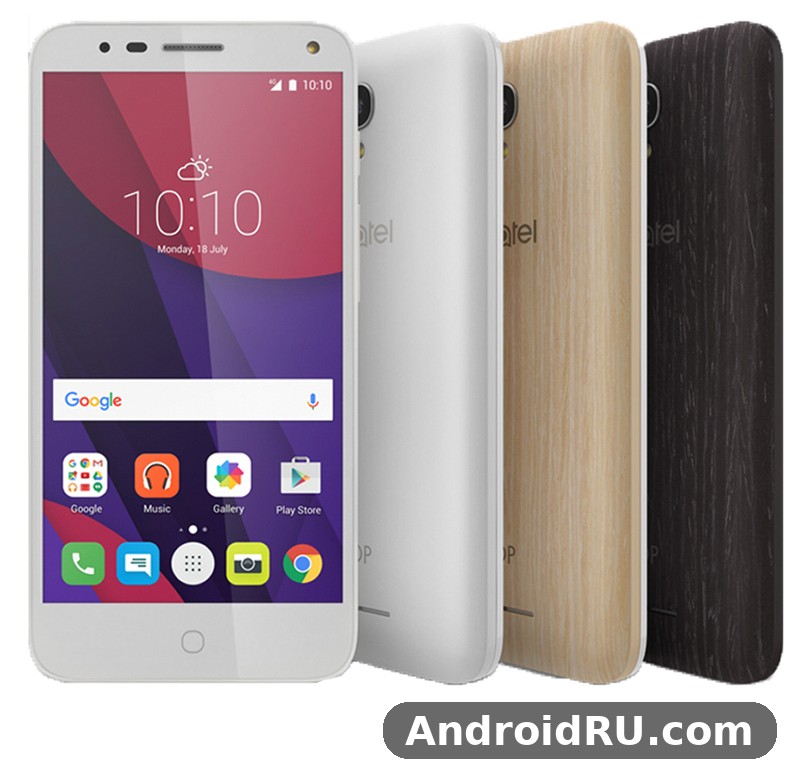
The alcatel Fierce 4 design was one of the more ambitious parts of the package. Where many budget phones of 2016 were plain plastic slabs, the Fierce 4 used a metal casing that gave it a cooler touch and a more solid feel in the hand. The alcatel Fierce 4 dimensions weight and metal casing design tell the story in numbers: 150.9 x 77 x 8.1 mm and 163.9 grams. That is a tall, wide phone, as any 5.5-inch device must be, but at 8.1 mm thick it was reasonably slim for its class, and the weight was well distributed. The only colour offered was Black, and the alcatel Fierce 4 color choice was limited to that single Black finish, a safe choice that suited the metal finish and hid fingerprints better than a glossy light colour would have done.
Holding the phone, the first thing a buyer in 2016 would have noticed was the size. A 5.5-inch screen makes a phone a two-handed device for most people, and the Fierce 4 was no exception. The bezels were typical of the period, with noticeable space above and below the display, and the earpiece, front camera, and sensors sat in the top bezel in the usual arrangement. The metal frame helped the phone feel sturdier than its $69 launch price suggested, although a case was still a sensible purchase for anyone worried about drops, since metal can dent and the glass front can crack just like any other phone of the era.
Metal Casing and In-Hand Feel
The alcatel Fierce 4 design and build quality review has to start with that metal casing, because it was the feature alcatel talked about most at launch. The back panel and frame gave the phone a firm grip and a premium touch that plastic rivals at the same price could not match. The curved edges of the body helped the wide phone sit more comfortably in the palm, and the 163.9 gram alcatel Fierce 4 weight was light enough for long reading sessions without tiring the hand. Buttons for power and volume sat on the side within easy reach, and the overall layout was simple and practical rather than flashy.
There were limits to what the design could offer at this price. The battery was sealed inside the metal body, so owners could not swap in a spare, and there was no water resistance rating of any kind. The alcatel Fierce 4 has no fingerprint sensor for security, so unlocking relied on a PIN, pattern, or password, which was still common on budget phones in 2016. An alcatel Fierce 4 case was a popular accessory for that reason, protecting both the metal finish and the screen, and a tempered glass protector was a cheap way to guard the large front glass.
Display and Screen Size
The alcatel Fierce 4 display quality and screen size put it firmly in phablet territory. The panel is a 5.5-inch IPS LCD with a resolution of 720 x 1280 pixels, which works out to about 267 pixels per inch. That is not a sharp display by modern standards, and fine text shows a slight softness if you look closely, but for watching videos, browsing, and reading in 2016 it was perfectly serviceable, and the IPS technology gave it decent viewing angles and natural colours. The large alcatel Fierce 4 screen made it a good choice for media, maps, and games, which was the whole point of a phone this size.
Brightness was adequate indoors and usable outdoors in shade, though direct sunlight washed the image out, as it did on most budget LCD phones of the period. The display was the single biggest reason to choose this phone over a smaller budget handset, and it paired well with the stereo-free single speaker for casual video watching. Readers who want to compare screen sizes across the alcatel range can look at the Breaking Down the alcatel Pixi 4 (5): Review, Key Features and Full Specs article, which covers another 5-inch class device from the same era and shows how the Fierce 4 larger panel set it apart.
Outdoor Visibility
In bright daylight the screen needed its brightness turned up, and even then contrast dropped noticeably. That was normal for a budget IPS panel in 2016, and owners learned to shade the phone with a hand when reading messages outside. Indoors, by contrast, the display was bright and easy on the eyes, with whites that stayed reasonably clean and colours that avoided the oversaturated look some rivals chased.
Performance and Hardware
Under the metal body, the alcatel Fierce 4 performance with Snapdragon 210 processor hardware was modest even by 2016 budget standards. The chipset is the Qualcomm MSM8909 Snapdragon 210, a quad-core chip with four Cortex-A7 cores running at 1.1 GHz, paired with an Adreno 304 graphics processor. The alcatel Fierce 4 Snapdragon platform was designed for entry-level phones, and it shows in how the phone handles demanding apps. Everyday tasks such as calls, messaging, email, and light browsing ran acceptably, but heavy multitasking or large games would slow it down, and switching between several apps at once could produce a visible pause while apps reloaded.
That said, the hardware was honestly matched to the price. At $69 on MetroPCS, buyers were not paying for speed, and the phone delivered the basics without pretending otherwise. The alcatel Fierce 4 for T-Mobile and MetroPCS customers was a carrier phone through and through, tuned for the networks it sold on rather than for benchmark charts. The alcatel Fierce 4 MetroPCS launch made it a prepaid standout, and the alcatel Fierce 4 T-Mobile arrival in autumn 2016 brought the same phone to contract customers. The alcatel Fierce 4 call quality and network performance were solid for the price, with clear voice calls on LTE and reliable signal in cities, and its 4G LTE support gave it fast enough mobile data for streaming and browsing on the go.
Snapdragon 210 Processor and RAM
The alcatel Fierce 4 RAM allocation was 2GB, which was a genuine strength at this price in 2016. Many rivals still shipped with only 1GB, and the extra gigabyte made a real difference to everyday use, keeping more apps in memory and reducing the reloads that plagued cheaper phones. The quad-core Cortex-A7 processor handled the Android 6.0 interface, the dialler, the camera app, and social apps without drama, though it was never quick. The alcatel Fierce 4 gaming performance on budget hardware was limited to casual titles: simple puzzle games, card games, and older 2D titles ran fine, while demanding 3D games had to run at low settings and still dropped frames.
Thermal behaviour was unremarkable for a low-power chip, and the Snapdragon 210 rarely got hot during normal use. Some owners asked about alcatel Fierce 4 overheating issues during long calls, and while a warm earpiece area after a long call was possible on any phone, there was no widespread pattern of serious heat problems reported for this model. The alcatel Fierce 4 problems and common issues reported by owners tended instead to be the ordinary frustrations of budget hardware: occasional slowness, limited storage, and a camera that struggled in low light, all of which are covered in the sections below.
Storage Space and microSD Card Support
The alcatel Fierce 4 storage space and microSD card support followed the usual budget formula of 2016. Internal storage is 16GB, of which a meaningful share is taken up by the Android system and preinstalled apps, leaving roughly 10 to 11GB free for the owner on first boot. That is enough for a reasonable set of apps and some photos, but anyone who kept a large music library or many games would fill it quickly. The alcatel Fierce 4 storage can be expanded with a microSD card, with support commonly listed up to 128GB, although some sources list 256GB as the maximum. This article follows the widely listed 128GB figure, which is the safe, commonly cited limit.
The alcatel Fierce 4 SIM card slot and memory card slot arrangement was practical: the phone took a Nano-SIM, and the microSD slot sat alongside it, so owners could add cheap storage without giving up their mobile connection. Moving photos and music to the card was the standard advice for owners, and Android 6.0 Marshmallow even offered adoptable storage on some devices, although carrier builds did not always expose that option. For a phone of this class, expandable storage was not a luxury, it was a necessity, and the Fierce 4 got that part right.
Camera Review
The alcatel Fierce 4 camera setup was simple: an 8MP rear camera with autofocus and an LED flash, and a 5MP front camera with a wide 84-degree lens. There was no optical image stabilisation, no laser autofocus, and no dual-camera trickery, all of which were reserved for far more expensive phones in 2016. What the phone offered instead was a straightforward camera app that opened quickly and took acceptable photos in good light, which is what most buyers at this price actually needed.
Comparing the camera with other budget alcatel phones of the period is instructive. The alcatel X1 Specifications, Review and Verdict: Is It Worth It? article covers a phone aimed a little higher up the range, and the gap between the two shows where the Fierce 4 saved money: fewer camera features, a simpler sensor, and slower processing. Even so, for daylight snapshots, social media posts, and family photos, the Fierce 4 camera was good enough, and that was the standard that mattered.
Rear Camera in Daylight
The alcatel Fierce 4 camera quality in daylight photos was the best side of this camera. Outdoors in bright sun, the 8MP sensor captured reasonably detailed images with natural colours and acceptable dynamic range for a budget phone. Autofocus was not fast, and it could hunt in tricky light, but once it locked on, results were sharp enough for sharing online and printing at small sizes. The LED flash helped with close subjects indoors, though it could wash out skin tones at short range, as single-LED flashes tend to do.
Low light was the weak point. Without a large sensor or stabilisation, evening and indoor shots came out soft and noisy, and the camera app sometimes chose a slow shutter speed that blurred moving subjects. That was the normal trade-off at this price in 2016, and owners who cared about night photos needed a more expensive phone. For daylight use, though, the rear camera did its job, and the 8MP resolution was enough for the social apps of the time.
Front Camera and Wide-Angle Selfies
The alcatel Fierce 4 front camera selfie quality and wide angle lens was a deliberate selling point. The 5MP front camera used an 84-degree wide lens, which let more people fit into a group selfie without a selfie stick, and it made video calls feel more natural by showing more of the room. In good light, selfies were clear and usable, with skin tones that stayed reasonably natural, and the wide angle was genuinely useful for group shots at gatherings.
The front camera had no flash of its own, so low-light selfies were noisy, and the wide lens could distort faces near the edges of the frame if the subject was too close. Even with those limits, the front camera was one of the more thoughtful features on the phone, and it matched how people actually used budget phones in 2016, with messaging apps and video calls mattering as much as the rear camera.
Video Recording
The alcatel Fierce 4 video recording quality and playback experience was basic but functional. The rear camera recorded 720p video, which looked fine on the phone own 720p display and was acceptable for clips shared on social media. There was no 4K recording and no stabilisation, so walking while filming produced shaky footage, and panning quickly could show the rolling-shutter wobble common to budget sensors. Playback of videos and streamed content on the large screen was a better experience than recording, and the phone handled common video formats without trouble.
Battery Life and Charging
The alcatel Fierce 4 battery is a 2500 mAh non-removable unit, and the alcatel Fierce 4 battery life and charging time story is one of modest capacity meeting modest hardware. The Snapdragon 210 is a frugal chip, and the 720p display draws less power than a 1080p panel would, so the phone could usually get through a normal day of calls, messages, and light browsing on a single charge. Heavy users who streamed video for hours or played games would need a top-up before bedtime, and the phone charged over micro-USB at standard speeds, with no fast charging on offer.
Charging from empty to full took a couple of hours with the supplied alcatel Fierce 4 charger in the box, and there was no wireless charging, which was still a premium feature in 2016. The sealed battery meant that when the cell eventually aged, replacement was a repair job rather than a do-it-yourself swap. The alcatel Fierce 4 replacement battery and repair options therefore matter to anyone still using one today: a shop can fit a new cell, but owners should weigh the repair cost against the value of a phone this old before paying for it.
Everyday Battery Life
In everyday use, the battery delivered roughly a full day for a light to moderate user, with screen-on time in the region of three to four hours depending on brightness and signal strength. Standby drain was low, thanks to the Doze feature in Android Marshmallow, which put idle apps to sleep. The battery was not a headline feature like the larger cells in some rivals, since that rival phone was built around battery capacity while the Fierce 4 was built around its metal body and large screen. For buyers who valued screen size over stamina, the Fierce 4 balance made sense; for buyers who needed two days between charges, it did not.
Software and Android Marshmallow
The alcatel Fierce 4 Android software was Android 6.0 Marshmallow at launch, with a light alcatel skin over the top. The alcatel Fierce 4 Android Marshmallow software features and updates story is a short one: Marshmallow brought granular app permissions, Google Now on Tap, and the Doze battery-saving mode, all of which were meaningful improvements over Android 5.0. The interface was close to stock Android in feel, with alcatel adding its own launcher touches, a few extra apps, and carrier apps from MetroPCS and T-Mobile.
The alcatel Fierce 4 software was simple to learn, which suited first-time smartphone buyers and older users who wanted a big, clear screen without a complicated interface. The settings menus were straightforward, the notification shade behaved as Android users expected, and the phone supported the usual Google services of the time, including the Play Store, Gmail, Maps, and YouTube. The alcatel Fierce 4 user manual and setup guide for beginners was a useful companion for new owners, covering the first setup steps, the Google account sign-in, and the basics of the camera and messaging apps.
Software Features and Updates
The alcatel Fierce 4 update history is the weakest part of the phone story. There was no alcatel Fierce 4 software update to Android 7 Nougat, and security patches were limited, which was unfortunately normal for budget carrier phones in 2016. Buyers got the Android version the phone shipped with, plus minor maintenance updates, and that was the end of the road. Anyone using a Fierce 4 today should treat it as a legacy device: fine as a spare phone, a media player on Wi-Fi, or a basic handset, but not a device to trust with sensitive accounts or banking, since its software is years out of date.
On the positive side, the software that was there worked reliably. The alcatel Fierce 4 Bluetooth WiFi and GPS connectivity features covered the essentials: Bluetooth for headsets and car hands-free, Wi-Fi for home and public networks, GPS for navigation, and 4G LTE for mobile data. The alcatel Fierce 4 headphone jack and speaker sound quality were also practical rather than premium: a standard 3.5 mm jack for wired headphones, and a single loudspeaker that was clear enough for calls and ringtones but thin for music. The alcatel Fierce 4 speaker was loud enough to hear across a room, though it distorted at maximum volume, and The alcatel Fierce 4 unboxing and first impressions in 2016 would have shown a large metal phone that felt more expensive than its $69 price, with the phone, a charger, a cable, and the usual paperwork in the box.
Full Specifications
The table below brings together the alcatel Fierce 4 specs in one place. Every figure comes from the verified launch record and the specification listings for this model, and where sources differ on the microSD maximum, this article follows the commonly listed 128GB figure. The alcatel Fierce 4 release date and availability in the United States are also recorded here: announced 29 August 2016, released August 2016, first sold by MetroPCS and later by T-Mobile.
| Feature | Specification |
|---|---|
| Model | alcatel Fierce 4 |
| Announced | 29 August 2016 |
| Release date | August 2016 |
| Availability | MetroPCS from 29 August 2016, T-Mobile in autumn 2016 |
| Launch price | $69 on MetroPCS |
| Display | 5.5-inch IPS LCD, 720 x 1280 pixels, about 267 ppi |
| Chipset | Qualcomm MSM8909 Snapdragon 210 |
| Processor | Quad-core 1.1 GHz Cortex-A7 |
| Graphics | Adreno 304 |
| RAM | 2GB |
| Storage | 16GB, microSD up to 128GB |
| Rear camera | 8MP, autofocus, LED flash, 720p video |
| Front camera | 5MP, 84-degree wide-angle lens |
| Battery | 2500 mAh, non-removable |
| Operating system | Android 6.0 Marshmallow |
| Body | Metal casing, 150.9 x 77 x 8.1 mm, 163.9 g |
| Colours | Black |
| SIM | Nano-SIM |
| Connectivity | 4G LTE, Wi-Fi, Bluetooth, GPS, micro-USB, 3.5 mm headphone jack |
| Fingerprint sensor | None |
The alcatel Fierce 4 specs table shows a balanced budget phone rather than a phone with one standout feature and many gaps. The 2GB of RAM, the metal body, and the large display were the highlights, while the processor, the camera, and the battery were ordinary for the price. The alcatel Fierce 4 dimensions of 150.9 x 77 x 8.1 mm and the 163.9 gram weight place it among the larger budget phones of 2016, and the 5.5-inch screen was the feature most buyers would notice first. For a fuller sense of how alcatel positioned its larger phones that year, the alcatel A3 XL Specs and Review: A Detailed Look at Display article covers a later large-screen alcatel model and makes a useful comparison point for the display-first approach.
Pros and Cons
A fair summary of the Fierce 4 has to weigh what it did well against what it could not do. The list below is based on the specifications, the launch price, and the way the phone was used in 2016, and it avoids crediting the phone with features it never had.
Pros
The large 5.5-inch display was the main attraction, giving videos, maps, and reading room to breathe. The metal casing made the phone feel more expensive than its $69 price, and the 2GB of RAM was generous for a budget phone in 2016, keeping everyday apps running more smoothly than 1GB rivals. The wide-angle front camera was a thoughtful touch for group selfies and video calls, the microSD slot solved the tight 16GB of internal storage, and the price itself was hard to argue with for a phone this size on MetroPCS and T-Mobile. The alcatel Fierce 4 price made it an easy choice for buyers who wanted a big screen on a prepaid plan, and the simple Marshmallow software was easy to learn.
Cons
The Snapdragon 210 processor was slow for anything beyond basic tasks, and demanding games or heavy multitasking exposed its limits quickly. The 2500 mAh battery was small for a 5.5-inch phone and rarely stretched beyond a day of heavy use, while the 8MP camera struggled in low light and the 720p display looked soft next to sharper rivals. The sealed battery could not be swapped by the owner, there was no fingerprint sensor, and the software was left behind on Android 6.0 with no upgrade to Nougat. The alcatel Fierce 4 accessories market was also modest, with cases and screen protectors available but little else, and the single colour choice of Black gave buyers no variety at all.
Frequently Asked Questions
When was the alcatel Fierce 4 released?
The alcatel Fierce 4 release was in August 2016. It was announced on 29 August 2016, went on sale through MetroPCS on the same day at $69, and reached T-Mobile later in the autumn of 2016. The alcatel Fierce 4 release date and availability in the United States were therefore tied to the US carrier market, and the phone was sold as a T-Mobile US and MetroPCS model rather than as a global unlocked handset.
What are the main specifications of the alcatel Fierce 4?
The main alcatel Fierce 4 specs are a 5.5-inch HD IPS LCD display, a Qualcomm Snapdragon 210 quad-core 1.1 GHz processor, 2GB of RAM, 16GB of storage with microSD expansion to 128GB, an 8MP rear camera, a 5MP wide-angle front camera, a 2500 mAh non-removable battery, and Android 6.0 Marshmallow. The metal body measures 150.9 x 77 x 8.1 mm, weighs 163.9 grams, and was sold in Black. The full table in the specifications section above lists every detail.
Is the alcatel Fierce 4 still worth buying today?
The question is the alcatel Fierce 4 still worth buying today depends on the use. As a main phone in 2026, no: the processor is slow, the software is years out of date, and many modern apps will not run well or at all. As a spare phone, a Wi-Fi media device, or a collector item from the 2016 budget era, it can still be interesting at a very low used price, provided the buyer accepts the limits and does not use it for sensitive accounts. The alcatel Fierce 4 vs other budget phones in 2016 comparison shows it was competitive in its own year, but ten years of progress have moved the whole market far beyond it.
How much storage does the alcatel Fierce 4 have?
The alcatel Fierce 4 has 16GB of internal storage, with a microSD card slot for expansion. The commonly listed maximum is 128GB, although some sources list 256GB, and this article follows the 128GB figure as the widely cited limit. Owners should move photos, music, and videos to the card to keep the internal storage free for apps, and they should check the alcatel Fierce 4 manual for the exact steps to format and move files on their carrier build.
How do I fix a frozen alcatel Fierce 4?
If the screen freezes, the standard first step is a forced restart by holding the power button until the phone restarts, which clears a temporary freeze without deleting data. For a deeper fix, owners can ask how to factory reset the alcatel Fierce 4, which wipes all data and returns the phone to its out-of-the-box state, so photos and contacts should be backed up first. The exact reset steps vary slightly by carrier build, so the alcatel Fierce 4 manual for the MetroPCS or T-Mobile version is the best source for the precise menu path. The alcatel Fierce 4 screen protector and case accessories for sale from third-party sellers can help prevent the cracked screens that often follow a dropped phone, which is a common cause of touch problems on older handsets.
Verdict
The alcatel Fierce 4 was a honest budget phablet for 2016. It offered a large screen, a metal body, 2GB of RAM, and a wide-angle selfie camera at a $69 launch price on MetroPCS, and it delivered those things without pretending to be a flagship. Its weaknesses were the weaknesses of its price class: a slow Snapdragon 210 chip, a small 2500 mAh battery for a phone this size, a camera that needed good light, and software that stopped at Android 6.0 Marshmallow. Readers weighing it against its rivals should remember the context in which it was sold, a market where a big screen and a metal body at this price were genuinely unusual.
Compared with its stablemates, the Fierce 4 sat in the middle of the alcatel budget range. The alcatel Shine Lite vs the Rest: Review and Specifications Compared article shows a rival approach from the same brand, with different priorities in design and camera, and the contrast underlines how much choice budget buyers had in 2016. The Fierce 4 choice was the big screen and the metal body, and for buyers who wanted exactly that, it was a fair deal. Today it is best remembered as a snapshot of the 2016 budget market: large, cheap, metal, and practical, with a 2500 mAh battery, 2GB of RAM, and a 5.5-inch screen that defined what a $69 phablet could be.

