

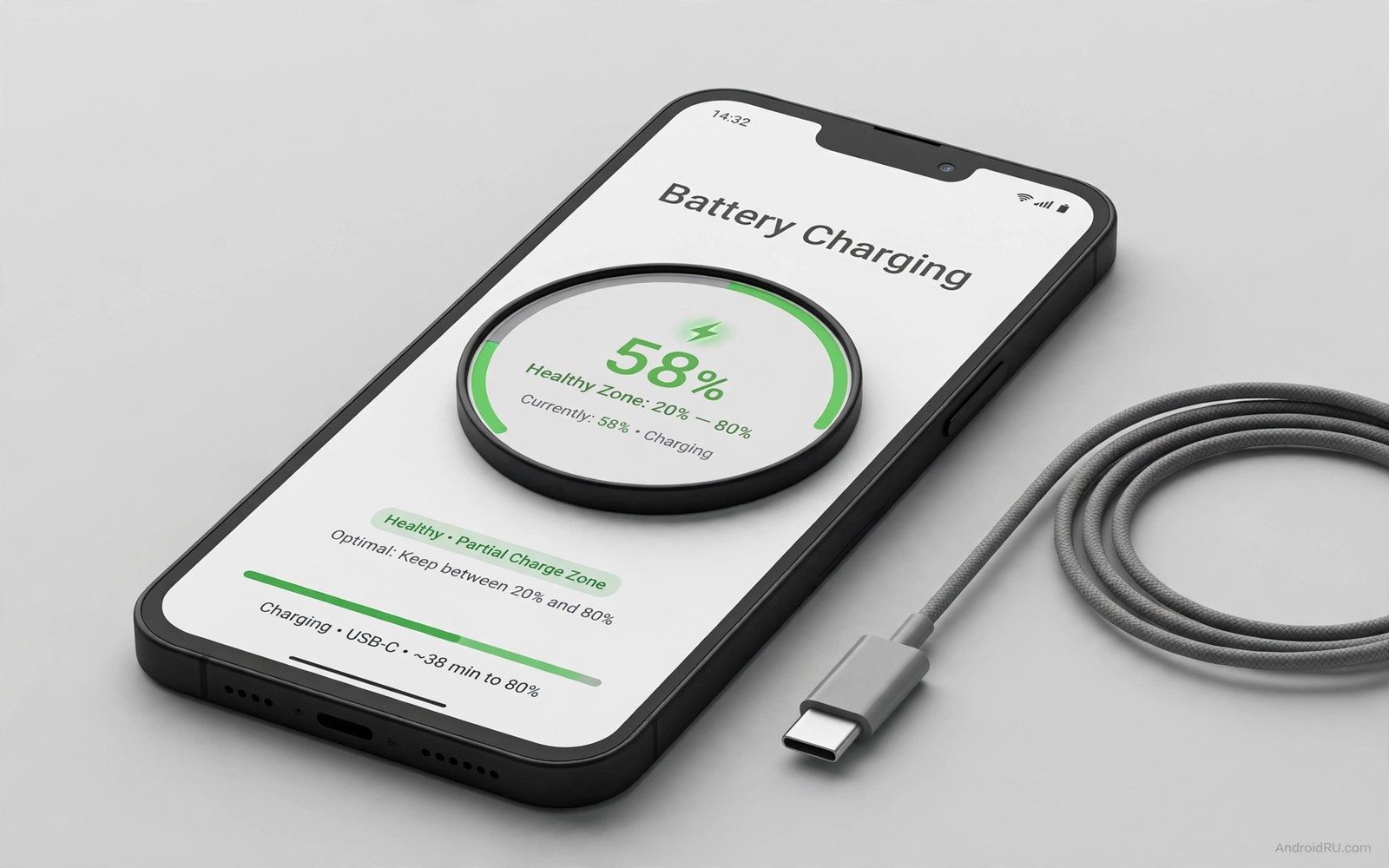
My old phone taught me the 100 to 0 rule was a trap during the first winter I followed it literally. I drained it to zero every night. I charged it to full every morning. I felt disciplined. The battery felt worse within a year. It shut down at 12 percent on cold days. It swelled slightly by the second year. That experience pushed me to learn how modern lithium-ion cells actually age. The old rule came from nickel batteries. Those cells had a memory effect. Modern phones do not work that way. A full drain stresses the chemistry. A constant full charge stresses it too. The sweet spot sits in the middle. This guide explains that middle ground in plain steps.
Where the 100 to 0 myth came from
Older rechargeable batteries remembered partial charges. A nickel cadmium cell charged from half full would act as if half was its new empty point. Users learned to drain fully before charging. That advice spread through manuals and repair shops. It made sense for that chemistry. Lithium-ion cells use a different chemistry. They have no memory effect in the same way. They degrade through heat and voltage stress. A deep discharge pushes voltage very low. A full charge holds voltage very high. Both ends of the range wear the cell faster. The phone already protects against true zero. It shuts down before the cell is truly empty. Repeated trips to that shutdown point still count as stress. The myth survives because it sounds logical. It also survives because people confuse calibration with health. Calibration fixes the meter. It does not heal the cell. You can read about meter drift in a related discussion of calibrating the battery meter for accurate readings when the percentage looks wrong. That topic is about measurement. This article is about daily habits.
Think of the battery as a rubber band. Stretch it to its limit every day and it loses snap. Keep it slack and it lasts longer. Charging from 20 to 80 percent is a gentle stretch. Charging from 0 to 100 percent is a full stretch. The difference sounds small on one day. It compounds over hundreds of cycles. A phone charged once daily reaches 500 cycles in under two years. Small daily savings add up across that span. Manufacturers design cells for a cycle count. They test under lab conditions. Real life adds heat and fast charging. Your habits decide where in that range you land. The goal is not perfection. The goal is fewer extreme cycles.
What lithium-ion batteries actually want
A lithium-ion cell prefers a moderate state of charge. It prefers cool temperatures. It prefers steady current over sudden spikes. High voltage at 100 percent accelerates chemical side reactions. Low voltage near zero risks copper damage inside the cell. Heat speeds every bad reaction. Cold reduces capacity temporarily. The phone manages much of this with software. It slows charging near full. It warns about heat. It may pause charging overnight. You still control the biggest factors. You choose when to plug in. You choose which charger to use. You choose whether the phone bakes in sunlight while charging. Those choices matter more than any single app tweak. They also matter more than chasing a perfect percentage every hour.
Voltage is the hidden factor most guides skip. A cell at 100 percent sits near 4.4 volts on many phones. A cell at 80 percent sits closer to 4.1 volts. That small gap reduces stress a lot. A cell at 20 percent sits near 3.6 volts. A cell near zero drops below safe levels quickly. The range from 20 to 80 percent keeps voltage in a calm band. It also leaves a buffer for sudden demand. A game or a camera burst needs current fast. A mid-range charge handles that demand without dipping into danger. A nearly empty cell cannot. That is why phones die suddenly below 20 percent. The voltage collapses under load. The meter may show 15 percent one minute and zero the next. A buffer prevents that cliff.
The 20 to 80 daily routine that works
Start your day near 80 percent. Use the phone normally through work and errands. Plug in when you reach 20 to 30 percent. Unplug near 80 percent. Repeat that loop on most days. You do not need to watch the meter constantly. Set a charge limit if your phone offers one. Many Android phones now offer an 80 percent limit in battery settings. Some offer adaptive charging that finishes just before your alarm. Use those tools when they exist. They automate the habit. If your phone lacks a limit then use a simple alarm. Set a reminder for the evening top-up. Charge while you cook dinner. Unplug before bed. That pattern fits most routines without fuss.
Top up in short bursts when the day demands it. A 20 minute charge before a long commute helps a lot. A quick top-up at lunch can carry you to evening. Partial charges do not count as full cycles. The system counts total charge throughput. Two 40 percent top-ups equal roughly one 80 percent charge in cycle terms. They stress the cell less than one deep cycle. This is why frequent short charges beat rare deep charges. Do not fear plugging in at 50 percent. That habit is actually good. It keeps the cell in its calm band. It also keeps you away from the low cliff at the end of the day. The only cost is a little attention. A charge limit removes even that cost.
Pair the routine with a look at background drain because a phone that drains fast forces more cycles. A phone that loses charge overnight will need a morning top-up you did not plan. That extra cycle adds wear. You can learn how overnight drain from system services can be reduced before it forces extra charging. Fewer wasted cycles mean fewer full charges. The charging myth and the drain problem are linked. Fix drain first and the charging routine gets easier. A phone that holds charge well needs fewer plugs. A phone that leaks charge needs constant rescue charging.
When a full 100 percent charge makes sense
Full charges still have a place. A long travel day is one example. A day without any charger access is another. A hike or a festival may need every percent. Charge to 100 percent on those days without guilt. One full charge does not ruin a battery. The damage comes from doing it every day for years. Use full charges as a tool. Do not use them as a default. When you do charge fully then use the phone soon after. Do not leave it at 100 percent on a charger for days. Heat plus high voltage is the worst pair. A phone left on a hot dashboard at full charge ages fast. A phone charged fully then used promptly ages normally. Timing matters as much as the number itself.
Calibration is another valid reason for a full cycle. If the meter jumps from 30 percent to zero then a calibration cycle may help. Charge fully once. Use the phone until it shuts down. Charge fully again without interruption. That sequence resets the meter estimate. Do this rarely. Once every few months is plenty. Do not turn calibration into a weekly ritual. The meter reset does not restore lost capacity. It only fixes the display. If capacity is truly gone then no calibration will bring it back. You will need a battery replacement or a new phone decision. Honest diagnosis saves money. It also saves time spent chasing a software fix for a hardware problem.
Charging overnight without wrecking the cell
Overnight charging worries many owners. Modern phones handle it better than old ones. Adaptive charging learns your wake time. It charges to 80 percent quickly. It finishes the last stretch before your alarm. That design exists to reduce time at high voltage. Use it if your phone offers it. If it does not then charge before bed instead of during sleep. Plug in during your evening routine. Unplug when you settle in. You will wake near 80 percent. That is enough for most mornings. A short morning top-up covers heavy days. The habit feels odd at first. It becomes automatic within a week.
Heat is the real overnight enemy. A phone under a pillow traps heat. A thick case traps heat. A fast charger adds heat. Combine all three and the cell cooks all night. Charge on a hard cool surface. Remove a heavy case if the phone feels warm. Use a slower charger overnight when speed does not matter. A 5 watt or 10 watt charger is plenty for eight hours. It generates less heat. It also reduces voltage stress. Save fast charging for moments when you truly need speed. That trade protects the cell and still meets your schedule. You can compare this with simple daily habits that protect battery health for a broader routine. The charging window is one habit among several. Heat control and app control complete the picture.
A simple charging log you can keep
A short log reveals patterns you cannot feel. Note the start percent and end percent each day. Note the charger type. Note whether the phone felt warm. After two weeks you will see your real pattern. You may find you charge fully every night out of habit. You may find a single app forces a midday charge. Data beats guessing. The log below shows a minimal format you can copy into any notes app. It needs no special tool. It takes ten seconds per entry.
Date: 2026-10-06
Start: 24%  End: 81%  Charger: slow USB
Warm: no  Notes: charged during dinner
Date: 2026-10-07
Start: 31%  End: 100%  Charger: fast USB
Warm: yes  Notes: travel day, used phone after unplug
The log format above follows a simple tracking pattern used by many Android power users to spot charge drift and heat events without any paid tool. It works because it records only what affects wear. Start percent shows depth of discharge. End percent shows voltage stress. Charger type hints at heat. The warm flag catches thermal events. Review the log weekly. Look for repeated full charges. Look for repeated warm entries. Fix the pattern behind those entries. Change the charger or the charging location. The log is a mirror. It shows habits you would otherwise miss.
Common mistakes
Many owners drain to zero to reset the battery. That reset idea is outdated. It stresses a lithium-ion cell for no benefit. Many owners charge to 100 percent and leave the phone plugged in for days. That habit holds voltage high while heat builds. Many owners use the fastest charger for every charge. Fast charging is a tool for urgency. It is not a daily default. Many owners charge in direct sunlight or in a hot car. Heat during charging multiplies wear. Many owners ignore a swollen battery. Swelling is a safety warning. Stop using that phone and seek repair at once. Many owners trust a battery saver app to fix hardware wear. No app restores lost capacity. Apps can reduce drain. They cannot reverse chemistry.
Another mistake is obsessing over every percent. Checking the meter ten times a day creates stress without benefit. The routine should be loose. Aim for the 20 to 80 band most days. Accept exceptions without guilt. A travel day or a busy day will break the band. That is fine. Long term patterns matter more than single days. A relaxed routine you follow for years beats a strict routine you abandon in a month. Set a charge limit and let software do the watching. Your job is to avoid heat and deep drains. Software handles the rest.
FAQ
Is it bad to charge my phone to 100 percent every day? It is not instantly harmful. It adds voltage stress over time. Daily full charges shorten lifespan compared with an 80 percent limit. Use full charges for travel days. Use partial charges for normal days.
Should I let my phone die completely before charging? No. A full drain stresses lithium-ion cells. Plug in near 20 percent. A rare calibration drain is the only exception. Do not make it a habit.
Does fast charging ruin batteries faster than slow charging? Fast charging adds heat. Heat accelerates wear. Occasional fast charging is fine. Daily fast charging on a hot phone adds up. Use slow charging when time allows.
Conclusion
The 100 to 0 rule belongs to an older battery era. Modern phones want a calm middle range. They want cool temperatures. They want short top-ups over deep cycles. Set a charge limit at 80 percent tonight. Plug in when you reach 20 percent tomorrow. Charge on a cool surface with a slower charger overnight. Check your log after two weeks and fix any repeated heat or full charge pattern. That single change will do more for your battery than any cleaner app or myth ritual. Start tonight and let the habit compound.

