

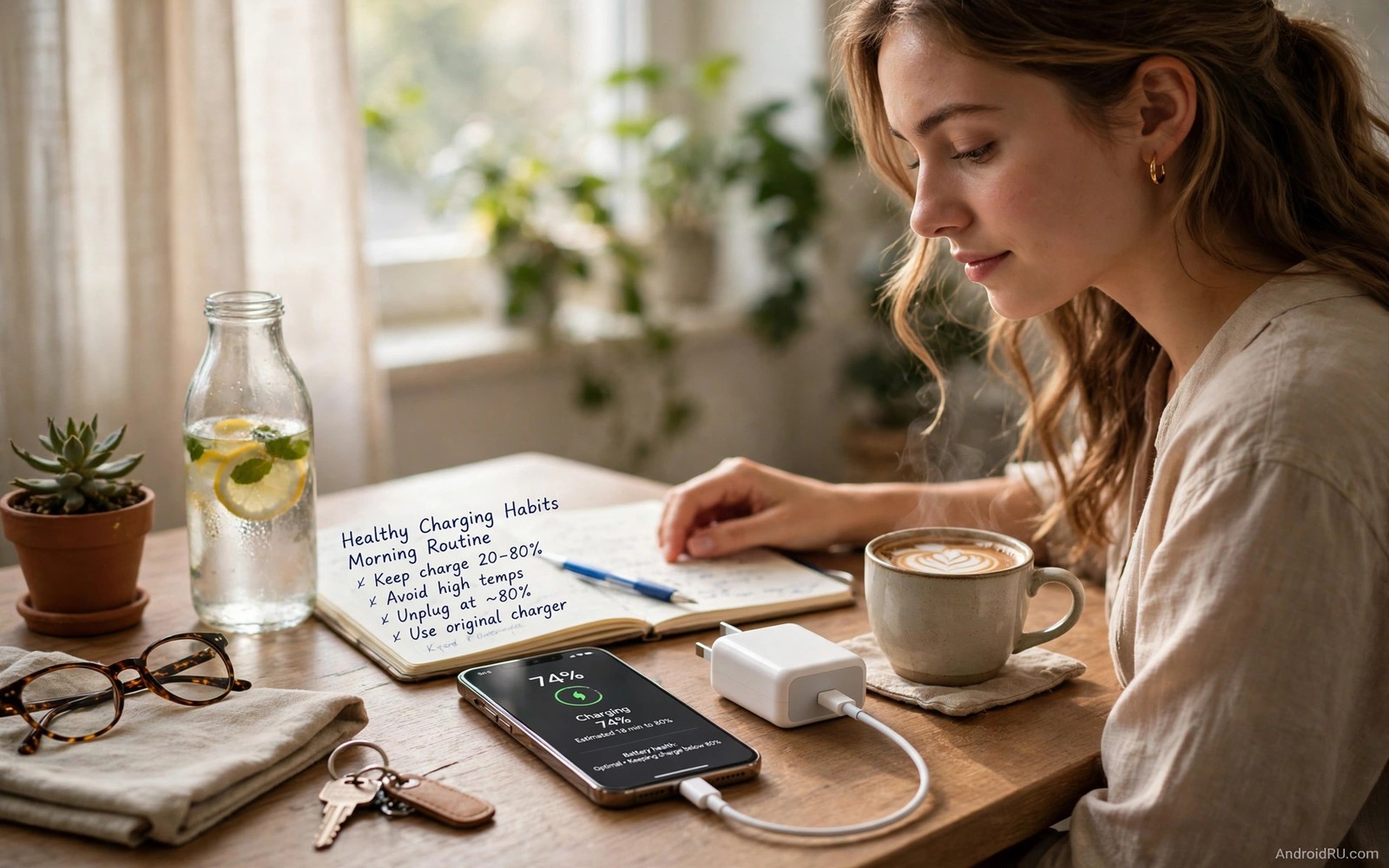
Battery health advice often feels overwhelming. Guides list twenty settings. They list ten apps. They list special chargers. Real life needs simpler rules. Seven habits cover most of the benefit. Each habit takes seconds. Each habit compounds over years. Together they keep capacity higher for longer. They also keep daily battery life steadier. You do not need to master battery chemistry. You need a routine you will actually follow. This guide gives that routine. It explains each habit briefly. It shows how to make each habit automatic. Start with one habit today. Add another each week.
Habit one: charge in the middle range
Keep daily charging between 20 and 80 percent when possible. That range avoids voltage extremes. It reduces chemical stress. Set a charge limit at 80 percent if your phone offers it. That setting automates the habit. If no limit exists then charge during dinner and unplug before bed. That timing naturally lands near 80 percent. Top up during the day when needed. Short top-ups are good. They keep the cell in its calm band. They avoid deep drains. Do not worry about exceptions. Travel days can use full charges. Normal days should use the middle range. The average matters more than any single day. A mostly middle range routine beats a perfect week followed by months of full cycles.
Make the habit visible. Put a slow charger where you charge at night. Put a fast charger elsewhere for emergencies. That placement nudges you toward slow routine charging. Place the charger on a hard surface. That placement also helps heat control. Small environment choices make habits stick. Willpower fades. Environment persists. A charger in the right place does the work for you. A charge limit in settings does the work for you. Design the habit once. Let it run daily without thought. That design principle applies to every habit in this guide.
Habit two: keep the phone cool
Heat is the fastest battery killer. Avoid the worst heat events. Never leave a phone in a hot car. Never charge in direct sunlight. Never game while charging with a fast charger. Those three events cause disproportionate wear. Normal warm use is fine. Extreme heat is not. Remove a thick case on hot days. Play on a hard surface rather than a bed. Charge on a nightstand rather than under a pillow. Those choices cost nothing. They prevent thermal stress. Check the phone by touch during charging. A warm phone is normal. A hot phone needs a change. Move it to a cooler spot. Switch to a slower charger. Remove the case. Respond early. Heat damage accumulates silently. Early response prevents most of it.
Summer deserves special attention. A phone navigating in sunlight can overheat quickly. Use a vent mount with airflow. Shade the phone when possible. Lower brightness when navigating in heat. Brightness plus sunlight plus navigation is a heat triple. Reduce one factor to break the triple. Winter deserves opposite care. Do not charge a freezing phone immediately. Warm it indoors first. That patience prevents plating damage. Seasonal awareness is a habit. It takes a second of thought per season. It saves months of capacity over years.
Habit three: limit background work
Background work drains power and adds cycles. Limit it aggressively for apps you rarely need instantly. Open Battery Usage weekly. Look for high background time. Restrict those apps. Turn off background location for most apps. Turn off auto video play in social apps. Turn off unnecessary sync services. Those limits cut cycles. Fewer cycles mean longer life. They also improve daily battery life immediately. That immediate reward reinforces the habit. You will feel the benefit the next day. Long term health follows from daily savings. Background control is both a daily win and a longevity win.
Review notifications as part of background control. Each notification can wake the phone. A chatty app waking hourly costs power. Turn off promo notifications. Keep only messages from people. That filter cuts wakes sharply. It also reduces distraction. A quieter phone is a calmer phone. It is also a longer lasting phone. Notification hygiene is a habit worth building. It takes ten minutes once. It pays daily. Revisit it when you install a new app. New apps default to noisy notifications. Change them at install time. That timing prevents weeks of waste.
Habit four: use the right charger
Use a certified charger for routine charging. Use a good cable without fraying. Replace damaged cables promptly. A bad cable causes intermittent charging. Intermittent charging creates heat cycles. It also stresses the port. A good charger delivers stable voltage. Stable voltage protects the cell. Cheap chargers may lack proper regulation. They may overheat. They may deliver spikes. The risk is small per charge. It compounds over thousands of charges. Invest in one good slow charger for home. Invest in one good cable for travel. That investment is cheaper than a battery replacement. It is also safer.
Match charger speed to need. Use slow charging overnight. Use fast charging only when time matters. Overnight speed is wasted because you sleep through it. Slow overnight charging is gentler and cooler. Fast charging before a meeting is smart. Fast charging every night is wasteful. Keep chargers separated by purpose. A slow charger at home encourages slow habits. A fast charger in a bag serves emergencies. That separation makes the right choice the easy choice. Easy choices become habits. Hard choices require willpower. Design for easy.
Habit five: manage screen power
Screen power dominates daily drain. Lower brightness to a comfortable level. Use adaptive brightness as a starting point. Adjust manually when it overshoots. Shorten screen timeout to 30 seconds or one minute. A screen left on unnecessarily wastes power. Use dark mode on OLED phones. Dark pixels use less power. Use 60Hz for reading apps if per app settings allow it. Reserve 120Hz for scrolling and gaming. Those screen habits add up to hours per week. Hours per week mean fewer cycles per year. Screen habits are therefore longevity habits. They feel like daily tweaks. They act like long term protection.
Lock the phone when you finish using it. Do not leave it face up with the screen on. A pocket press can wake the screen repeatedly. A face down placement can trigger accidental touches on some phones. Use a lock button habit. Press it every time you put the phone down. That second of action saves minutes of screen time daily. Minutes daily become hours monthly. Hours monthly become cycles yearly. Small habits compound. Screen discipline is the easiest habit to start. It needs no settings change. It needs only attention for a week until it becomes automatic.
Habit six: update wisely and audit yearly
Keep software updated on the stable channel. Updates fix drain bugs. They improve power management. They also patch security issues. Security matters for a phone you keep for years. Do not chase beta software for daily use. Beta software may drain faster. It may also have bugs. Stable software gives predictable power use. Audit apps once per year. Delete unused apps. Restrict greedy apps. Replace bloated apps with lighter versions. An annual audit takes an hour. It prevents years of background waste. It also frees storage. Free storage helps performance. Performance helps a phone feel new longer.
Check battery health quarterly. Note capacity if your phone reports it. Note cycle count if available. A steady trend is good. A sudden drop signals a habit or hardware issue. Investigate sudden drops promptly. Look for a new app or a heat event. Fix the cause. Quarterly checks avoid daily anxiety. They also catch problems early. Early catches are cheaper to fix. A habit problem fixed in a quarter costs little. The same problem ignored for a year costs capacity permanently. Quarterly review is a habit of attention. It takes five minutes. It protects years.
Habit seven: store and handle with care
Handle the phone gently around power. Do not bend cables sharply at the port. A bent cable stresses the connector. A stressed connector causes intermittent charging. Intermittent charging creates heat. Use strain relief on cables. Unplug by the plug not the cable. Those handling habits protect the port. A healthy port delivers stable power. A damaged port delivers unstable power. Port health is battery health by extension. Clean the port gently if lint builds up. Use a wooden toothpick carefully. Do not use metal tools. Lint can block full insertion. Partial insertion causes arcing and heat. A clean port charges reliably.
Store spare phones at 50 percent in a cool place. Check them every few months. Top up to 50 percent if needed. A stored phone at full charge ages faster. A stored phone at zero may not revive. That storage habit matters for backup phones. It also matters for a phone you lend or sell later. A well stored phone retains value. It also works when needed. Care in storage is care in longevity. It costs minutes per year. It saves a battery.
Daily battery habits checklist
Charge 20 to 80 percent, slow charger at night
Keep phone cool, no car or sunlight charging
Background restricted, promos off
Screen timeout short, brightness comfortable
Lock phone when done, port clean
The checklist above follows a simple daily routine pattern used by many Android power users to keep battery habits visible without any paid tool. It fits on a phone note. It takes seconds to review. It covers charging and heat and background and screen. Review it weekly at first. Review it monthly once habits stick. A visible checklist beats memory. Memory fades under busy days. A checklist persists. Print it or pin it in notes. Let it remind you until habits become automatic.
Common mistakes
Many owners try all seven habits at once and quit in a week. Add one habit per week instead. Many owners obsess over exact percentages. Aim for ranges not exact numbers. Many owners buy a battery app to enforce habits. Apps add background work. Settings and environment enforce habits better. Many owners ignore heat while perfecting charging percentages. Heat matters more than a few percent. Many owners keep every notification on for fear of missing out. Promo notifications are not essential. Turn them off. Many owners use a fast charger nightly out of habit. Move it out of the bedroom. Environment beats willpower.
Another mistake is expecting habits to restore a worn battery. Habits slow future wear. They do not reverse past wear. A phone at 75 percent capacity will not return to 95 percent through habits. Habits keep it at 75 percent longer. That distinction matters for expectations. Pair habits with long term tricks for five year battery life and with correct charging routines that avoid deep cycles. Habits plus knowledge give the best result. Habits alone without understanding fade. Understanding alone without habits changes nothing.
FAQ
Which single habit matters most? Charge limits and heat control together matter most. An 80 percent limit caps voltage stress. Avoiding extreme heat prevents the worst aging. Those two habits cover most longevity benefit.
Do I need to follow all seven habits perfectly? No. Follow most of them most days. Consistency beats perfection. One habit per week builds a sustainable routine. A relaxed routine you keep beats a strict routine you abandon.
Will these habits make daily battery life longer too? Yes. Background limits and screen habits improve daily life immediately. Charge limits may reduce usable range slightly on a given day. The net effect over time is better daily life because capacity stays higher.
Conclusion
Seven habits protect battery health without complexity. Charge in the middle range. Keep the phone cool. Limit background work. Use a good slow charger routinely. Manage screen power. Update wisely and audit yearly. Handle the port and storage with care. Pick one habit today. Charge to 80 percent tonight with a slow charger on a cool surface. Add a second habit next week. By next month the routine will run itself. Your battery in year three will thank you for habits started today. Check progress against monitoring degradation cycles without root each quarter to see the trend.

