

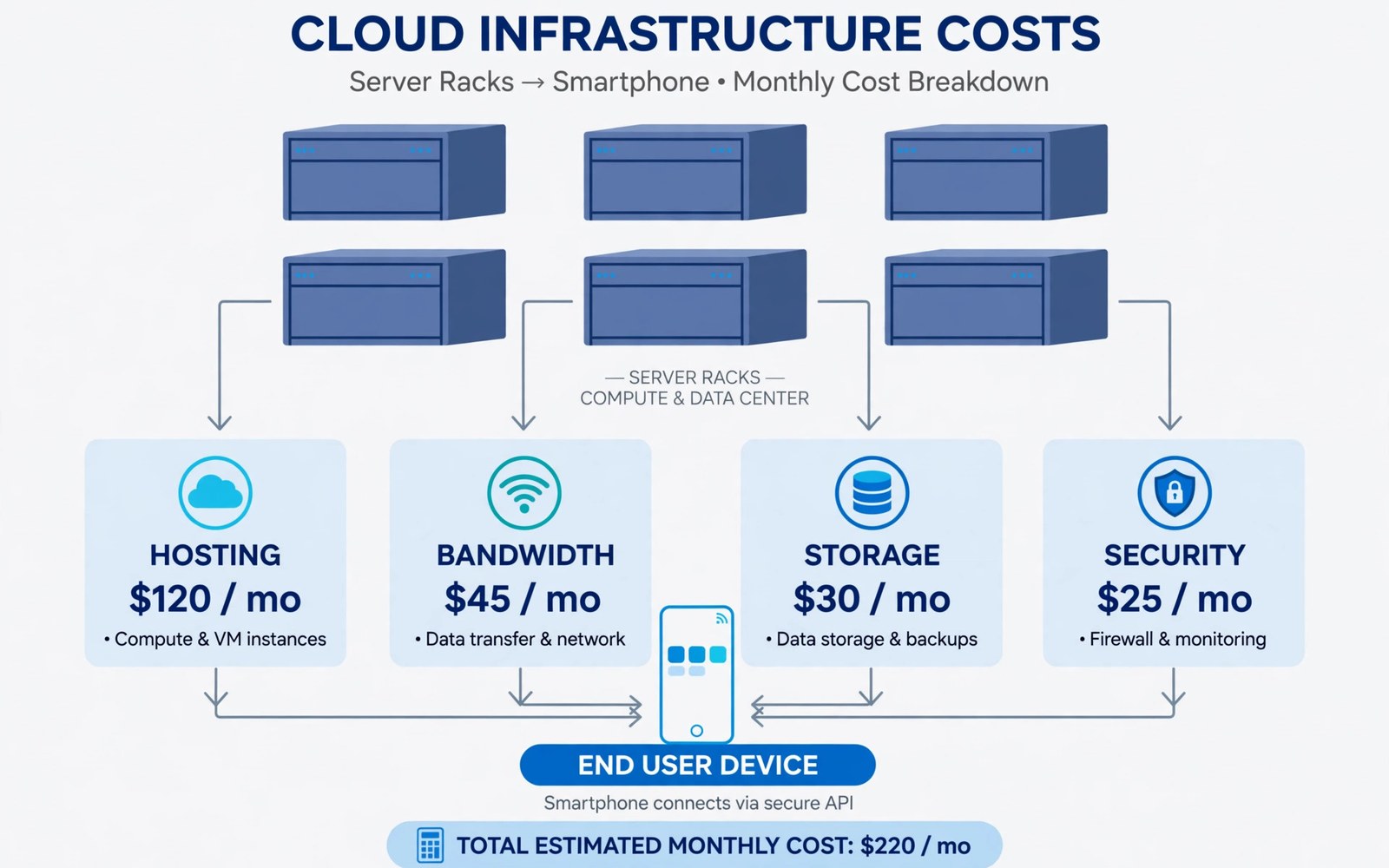
Many users wonder why a simple app demands a monthly fee. The answer often sits in a data center far away. Servers store your data and sync your devices and process your requests around the clock. Those servers cost money every month whether you open the app or not.
This guide breaks down the real costs behind app servers. It covers hosting and bandwidth and security and support. It also explains when subscription fees fairly reflect those costs. Understanding the server side helps you judge prices without cynicism or naivety.
Servers Run Every Hour of Every Day
A server is a computer that stays online permanently. It answers requests from thousands of users at once. It stores databases and files and user accounts. Running that machine costs electricity and hardware and network access continuously.
Cloud providers rent servers by the hour and charge for storage separately. A popular app may need dozens of servers across regions. Those rental bills arrive monthly regardless of app sales. A one-time purchase cannot fund an endless rental bill.
Storage Costs Grow With Users
Every user adds data to the system. Photos and documents and messages accumulate daily. Storage providers charge per gigabyte monthly. A growing user base means a growing storage bill that never shrinks on its own.
Backups multiply storage needs further. Responsible developers keep multiple copies across regions. A single user file may exist in three locations for safety. That redundancy triples the storage cost behind one file. Subscriptions fund that safety net continuously.
Bandwidth: The Invisible Expense
Bandwidth measures data moving between servers and devices. Every sync and download and upload consumes bandwidth. Cloud providers charge for outbound data in particular. A popular app serving millions of downloads pays heavily for that traffic.
Video and photo apps consume bandwidth fastest. A single high resolution video sync can exceed a whole month of text data. Developers must size bandwidth for peak usage rather than average usage. Peak capacity costs more than steady capacity. Those peaks arrive during launches and viral moments.
Security Costs Never Stop
Servers attract attacks constantly. Developers must patch vulnerabilities quickly when they appear. Security monitoring runs around the clock to detect intrusions. Encryption protects data in transit and at rest. Each layer adds cost and staff time.
Compliance adds further security expense. Privacy regulations require audits and documentation and breach procedures. Payment processing demands certified secure systems. A small team can spend a large share of revenue on compliance alone. Those costs recur yearly rather than once.
Support Staff Cost More Than Servers
Users expect help when apps fail. Support teams answer questions and fix account problems. That human support costs far more than raw server rental. A subscription funds support staff who keep users happy month after month.
Support load grows with user count. More users generate more tickets even with a stable app. Automated help reduces some load but complex problems need humans. Developers who cut support to save money lose users quickly. Quality support is a genuine ongoing cost.
Development Continues After Launch
Apps need constant updates for new devices and operating systems. Each Android release can break existing features. Developers must test and fix compatibility continuously. That maintenance work never ends while the app remains available.
New features also require ongoing development. Users expect improvements rather than stagnation. A team that stops developing loses users to competitors. Subscriptions fund that continuous development cycle. One-time purchases fund only the launch version effectively.
Why Small Developers Feel It Most
Large companies spread server costs across millions of users. Small developers spread the same fixed costs across thousands. Per user costs run higher for small apps. That math forces small developers toward subscriptions earlier than large ones.
A solo developer faces an impossible choice without subscriptions. Charge once and watch server bills outpace revenue. Or charge monthly and risk user complaints about pricing. Most choose subscriptions because the alternative is shutting down. Supporting those developers matters and readers can explore supporting independent developers for funding models beyond subscriptions.
When Server Costs Do Not Justify Subscriptions
Not every app needs servers at all. Offline tools like calculators and local photo editors run entirely on your device. Those apps have no monthly server bill to fund. Charging a subscription for a fully offline app deserves skepticism.
Some apps use servers lightly for optional sync only. A subscription for optional sync may still be fair if priced modestly. But the core app should work without it. Judge each app by its actual server dependence rather than by its pricing claims.
How to Spot Inflated Server Claims
Vague claims about server costs deserve scrutiny. Honest developers explain what servers actually do for the app. Sync and backup and collaboration are concrete server jobs. A vague appeal to maintenance without specifics is weaker evidence.
Compare similar apps and their pricing. If competitors offer the same server features cheaper then costs may be inflated. If every competitor charges similarly then the market likely reflects real costs. Competition reveals more than any single developer claim.
The Economics of Free Tiers
Free tiers let users try server features without paying. Developers fund free users from paying subscribers. That cross subsidy works only when enough users convert. Free tiers with generous limits attract users but strain server budgets.
Generous free tiers sometimes shrink over time. A service that offered large free storage may reduce it later. That reduction reflects server cost pressure rather than greed alone. Users should expect free tier terms to evolve with the business reality.
What Happens When Revenue Falls Short
When subscription revenue falls below server costs developers face hard choices. They may raise prices or cut features or shut down. Shutdowns strand users who depended on the service. That risk is inherent to server dependent apps.
Users can protect themselves with regular data exports. Keep local copies of anything stored in a subscription service. That habit removes the worst consequence of a shutdown. Your data survives even when the service does not.
Fair Subscription Pricing Signals
Fair pricing usually shows several signals. Prices scale with usage tiers rather than one flat rate. Free tiers cover genuine light use. Annual discounts reward commitment modestly. Cancellation is easy and data export is straightforward.
Unfair pricing shows opposite signals. A single expensive tier with no options. No free tier for basic use. Hidden cancellation paths. Data export blocked or degraded. Those signals suggest revenue extraction rather than cost recovery. Broader pricing context appears in the rise of app subscriptions for the market forces behind these models.
Alternatives to Subscription Funding
Some developers fund servers through other means. One-time purchases plus optional paid upgrades work for stable apps. Donations fund community projects with modest server needs. Advertising funds free services but trades privacy for revenue.
Hybrid models combine approaches creatively. A lifetime purchase may cover the app while sync costs a small separate fee. That split matches costs to features transparently. Users pay server fees only when they use server features. Open source approaches also help and readers can compare open-source free alternatives for server light categories.
Questions to Ask Before Subscribing
Ask what servers do for this specific app. Ask what happens to your data if you cancel. Ask whether a cheaper tier covers your usage. Ask how often the app updates meaningfully. Honest answers to those questions justify most fair subscriptions.
Also ask yourself how much you value the server features. Sync across devices may matter enormously to you. Or it may matter little if you use one device only. Your personal value determines fairness more than any universal rule.
Content Delivery Networks Explained
Content delivery networks cache app data near users worldwide. That caching speeds downloads and reduces main server load. CDN providers charge for cached data delivery per gigabyte. Popular apps with global users rely heavily on CDN infrastructure.
CDN costs scale with user geography. Serving users across continents requires more CDN nodes. Each node adds expense even when idle. Global apps pay for worldwide presence whether users cluster or spread evenly.
Database Costs Behind Simple Apps
Databases store user accounts and settings and content. Managed database services charge for capacity and queries. A social app with constant reads and writes generates heavy database bills. Optimizing queries reduces costs but requires engineering time.
Database backups add further expense. Point in time recovery requires continuous backup storage. That backup storage costs nearly as much as primary storage. Responsible developers pay it gladly because data loss destroys trust instantly.
Scaling for Viral Moments
Apps must handle sudden traffic spikes without crashing. A viral moment can multiply traffic tenfold overnight. Developers provision extra capacity for those spikes. Idle capacity during quiet periods still costs money.
Auto scaling reduces waste by adding servers only when needed. But auto scaling itself requires engineering and monitoring. Spikes also strain databases and bandwidth simultaneously. That combined strain explains why viral success can bankrupt unprepared apps.
Third Party Services and APIs
Many apps depend on third party services for maps or payments or messaging. Those services charge per API call or per user. A mapping feature that seems free to users costs the developer per map load. Those per use costs accumulate invisibly.
Third party price increases cascade to app developers. A map provider raising prices forces app developers to raise theirs or cut features. That dependency chain explains some subscription price increases. Users rarely see the upstream cause behind the price change.
Open Source Infrastructure Savings
Open source infrastructure reduces some server costs. Free database and web server software eliminates license fees. But hosting and operations still cost money. Open source saves on software licenses rather than on servers themselves.
Community operated infrastructure helps some projects further. Volunteers host mirrors and relays for popular open tools. That distributed hosting spreads costs across many supporters. Commercial apps rarely enjoy that volunteer infrastructure advantage.
Server Cost Estimator
The snippet below models simple server cost scaling. It shows how monthly server costs grow with user count and storage per user. Adjust the numbers to grasp why popular apps face large bills. The model is simplified but the scaling lesson is real.
users = 10000
storage_per_user_gb = 2
cost_per_gb = 0.023
storage_cost = users * storage_per_user_gb * cost_per_gb
print("Monthly storage cost:", storage_cost)
The snippet above is a simple illustration of server cost scaling. It uses sample rates only. Real cloud pricing varies by provider and region and service tier.

