

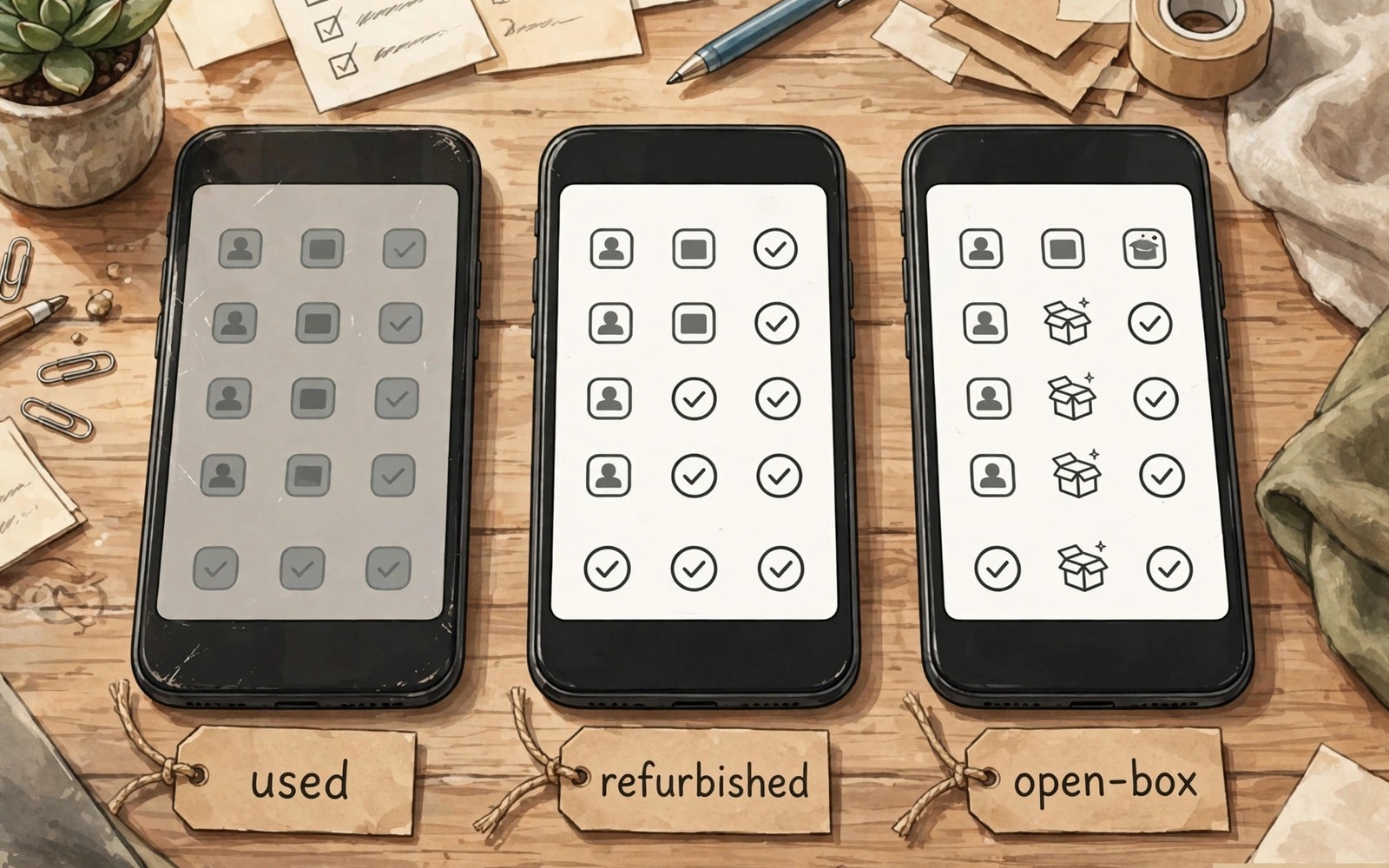
Phone listings use three labels that sound similar. Refurbished and used and open-box mean very different things. The label affects price and warranty and risk. Many buyers pay a premium for a label that promises little. This guide explains each label in plain terms. You will know exactly what to expect before you spend money.
Start by ignoring marketing words like premium or certified. These words have no fixed legal meaning in most markets. Focus on facts instead. Ask what tests were done and what parts were replaced. Ask how long the warranty lasts and who honors it. Written answers matter more than bold claims.
What Used Really Means
Used means a previous owner sold the phone as it was. The seller may clean it and reset it. No repair or testing standard is implied. Condition can range from near perfect to heavily worn. Prices reflect this wide range. A used phone can be a bargain or a burden.
Private sellers offer used phones with little protection. Shops may test used phones before resale. Always ask what testing was done. A shop that tests screens and batteries adds real value. A shop that only wipes data adds little.
Used phones suit buyers who inspect devices themselves. You can test everything before paying. You can also negotiate based on faults you find. If you cannot inspect the phone then a used listing carries higher risk. Consider a refurbished option instead.
What Refurbished Really Means
Refurbished means the phone was inspected and repaired as needed. A technician checks hardware and replaces faulty parts. The phone is cleaned and reset before resale. Testing depth varies widely between sellers. Some refurbishers run full diagnostic suites. Others only fix obvious faults.
Good refurbishers grade devices after repair. Grades describe cosmetic condition after work is done. A grade A phone should look nearly new. A grade B phone may show light marks. Read the grade definition for that seller. Never assume grades match across sellers.
Refurbished phones usually include a warranty. Warranty length ranges from 30 days to one year. A longer warranty signals seller confidence. Pair this knowledge with essential hardware checks to plan your full inspection. Even a refurbished phone deserves your own checks.
What Open-Box Really Means
Open-box means the box was opened but the phone saw little use. Returns and display units often become open-box stock. These phones may be nearly new. They may lack some original accessories. The box itself may show wear.
Open-box phones often keep most of the original warranty. Check the remaining warranty with the maker. Ask for the purchase date and proof. A display unit may have screen wear from constant use. Inspect display units extra carefully.
Open-box stock suits buyers who want near new condition at a discount. Discounts are usually smaller than refurbished discounts. The trade off is lower risk and fuller warranty. Compare open-box prices with new prices first. A tiny discount may not justify the missing accessories.
Side By Side Comparison
Used phones offer the lowest prices and the least protection. Refurbished phones balance price and tested quality. Open-box phones offer near new condition at a moderate discount. Your choice depends on budget and skill. Confident inspectors can thrive in the used market. Cautious buyers should favor refurbished or open-box stock.
- Used: lowest price with no standard testing implied.
- Refurbished: inspected and repaired with a seller warranty.
- Open-box: opened but lightly used with most warranty left.
- Certified: refurbished plus maker or program backing.
- As-is: sold with known faults and no returns.
- Grade A: near new appearance after any repair work.
Certified refurbished deserves a special note. This label usually means a maker program backs the device. Testing standards are stricter in these programs. Parts are often genuine. Prices sit higher than independent refurbished stock. Read program terms before you pay extra for the badge. The value of battery health testing becomes clear when you compare real offers.
Questions That Reveal The Truth
Ask the seller to list every replaced part. Ask which diagnostic tests were run. Ask whether the battery was replaced or only checked. Ask who provides the warranty and how claims work. Ask about the return window in days. Vague answers should lower your offer or end the deal.
Request real photos of the exact unit. Ask for a video of the phone booting up. Ask for a screenshot of battery health. These requests filter out careless sellers fast. Serious sellers comply without complaint. They know proof builds trust.
Label decoder
- Used = sold as found by previous owner
- Refurbished = inspected and repaired before resale
- Open-box = box opened with very light use
- Certified = program backed refurbished device
This short decoder summarizes how the trade commonly uses these labels. Sellers still define their own grades and terms. Always confirm the exact promise in writing before payment.
Which Label Should You Choose
Choose used when you can inspect the phone in person. Choose refurbished when you buy online without inspection. Choose open-box when you want near new condition and a solid warranty. Each label can deliver value. The wrong label for your situation creates regret.
Price alone never tells the full story. A cheap used phone with a dead battery costs more after repair. A pricier refurbished phone with a fresh battery may cost less overall. Weigh total cost before you decide. The insight from blacklist and carrier lock checks helps you judge long term value. Buy the label that matches your patience and your skills.
How Grades Differ Across Sellers
Grade systems look standard but they are not. One refurbisher may call a phone grade A with light scratches. Another may call the same phone grade B. The difference comes from internal quality thresholds. Some sellers inspect under bright lamps. Others inspect under normal room light. Bright lamp inspection catches more marks. Always ask how grading inspection works before you trust a grade letter.
Cosmetic grades also ignore internal wear. A grade A phone can still carry a worn battery. A grade B phone can still carry a fresh battery. Grade describes appearance after refurbishment. It does not describe battery health or internal condition. Ask for battery health separately from grade. Ask for functional test results separately too. Combine grade with test data for a true picture.
Some sellers add plus grades like A Plus or Excellent. These labels sound premium but lack standard definitions. Treat them as marketing until proven otherwise. Ask what extra work justifies the plus label. Ask whether the warranty is longer for plus grades. If the answer is vague then the label adds no value. Pay for documented work rather than fancy grade names.
Regional differences also affect grade meaning. Refurbishment standards vary by country and by program. Maker programs usually follow stricter rules. Independent shops follow their own rules. Research the specific seller rather than the label alone. Reviews from recent buyers reveal true grading habits. A seller with consistent reviews deserves more trust than a seller with a shiny grade chart.
Questions To Ask Before Choosing A Label
Ask yourself how much risk you accept. A confident tester can accept used stock with no warranty. A cautious buyer needs refurbished stock with solid cover. Your skill level should drive the label choice. Do not let a low price push you beyond your comfort zone. A deal that causes anxiety is not a good deal.
Ask how long you plan to keep the phone. Short term use tolerates older used stock well. Long term use favors refurbished stock with warranty. A phone kept for three years needs stronger initial condition. A phone kept for six months can be rougher. Match the label to your ownership horizon honestly.
Ask what return protection you need. Online purchases need stronger returns than in person purchases. In person purchases let you test before paying. Online purchases rely on seller honesty and platform rules. Choose labels with return windows that match your buying channel. A strong return window beats a strong grade letter.
Refurbishment Process Behind The Scenes
Professional refurbishment starts with triage. Technicians sort incoming phones by model and condition. They test basic functions before any repair. Phones with board damage go to specialist repair or recycling. Phones with minor faults enter the standard line. Triage prevents wasted work on hopeless devices.
Technicians then run diagnostic software suites. These suites test sensors and radios and cameras. They test battery health and storage speed. Failed components get flagged for replacement. Passed components get logged for quality records. Diagnostic logs support warranty claims later. Serious refurbishers keep logs for every unit.
Repair work follows diagnostics. Technicians replace screens with graded parts. They replace batteries with new or tested units. They clean internal dust and replace worn seals. They update software to the latest supported version. Each step follows a written procedure. Written procedures keep quality consistent across technicians.
Final quality control repeats key tests after repair. A second technician often performs final checks. This separation catches mistakes from repair work. Phones that pass move to grading and photography. Phones that fail return for rework. Rework loops continue until the phone passes fully.
Packaging completes the process. Phones receive protective wrapping and basic accessories. Graders assign cosmetic grades from final inspection. Listings describe grade and warranty honestly. Honest listings reduce returns and complaints. The whole process explains why refurbished phones cost more than raw used phones.
Open-Box Stock Sources Explained
Retail returns create most open-box stock. Buyers return phones within return windows. Reasons include wrong color or changed minds. Some returns come from gift duplicates. These phones saw days of use at most. Retailers cannot sell them as new again. Open-box channels absorb this stock at discounts.
Display units form another open-box source. Stores display phones for customer handling. Display phones endure constant touching and bright light. Their batteries cycle through demo loops daily. Their screens may show early wear. Display units deserve extra screen and battery checks. Their discounts should reflect heavier use than returns.
Carrier overstock also becomes open-box stock. Carriers order excess units for launches. Unsold units move to discount channels later. These units may be truly unused despite open boxes. Boxes open for inspection or bundling. Overstock units offer excellent value when verified. Check warranty start dates for overstock units carefully.
Manufacturer refurbished returns add a fourth source. Makers test returned units thoroughly. They repair faults and certify condition. These units carry strong warranties. They cost more than independent open-box stock. The extra cost buys maker backing and genuine parts. Value depends on warranty strength for your needs.
Quick Reference Checklist
- Ignore marketing words like premium without written proof.
- Ask what tests were done for every refurbished unit.
- Ask which parts were replaced during refurbishment.
- Ask who honors the warranty and for how long.
- Read grade definitions for the specific seller.
- Request real photos of the exact unit offered.
- Request video of the phone booting up.
- Request a screenshot of battery health readings.
- Compare used prices with refurbished prices fairly.
- Compare open-box prices with new prices fairly.
- Check remaining maker warranty for open-box units.
- Inspect display units extra carefully for screen wear.
- Choose used stock only when you can inspect in person.
- Choose refurbished stock for online purchases without inspection.
- Choose open-box stock for near new condition needs.
- Price battery replacement into used phone totals.
- Price warranty value into refurbished phone totals.
- Reject vague answers about testing or warranty.
- Keep written seller answers with order records.
- Test every label category phone fully after delivery.

