

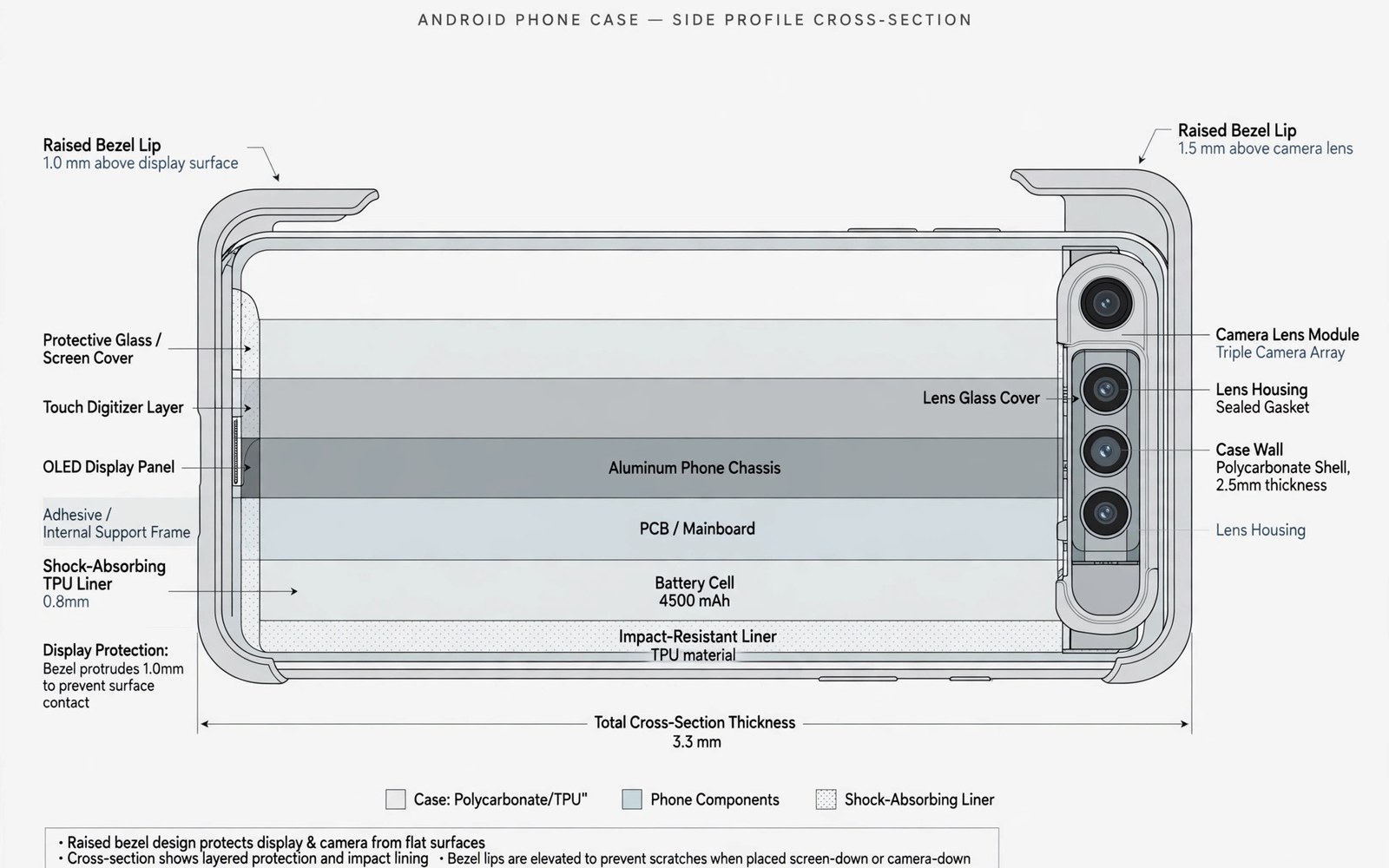
A raised bezel is a small lip around the edge of a phone case. It rises slightly above the screen on the front. It rises slightly above the camera module on the back. That tiny height creates a gap between the phone and any flat surface. The gap is the whole point of the design. It keeps glass from touching tables and floors.
The idea is easy to miss in product photos. A lip of one millimetre looks like nothing. In daily use it prevents countless small scratches. Phones spend hours face down on desks and counters. Each contact wears the screen coating a little. A raised lip removes most of that contact entirely.
This guide explains how raised bezels work and how to judge them. It covers lip height and camera rings. It covers fit with screen protectors. It also covers the limits of the design. For corner impact safety, see how air cushion corners absorb drop impacts as a companion topic.
How A Raised Lip Guards The Screen
A phone placed face down rests on the case lip instead of the screen. The screen floats above the table by the lip height. Dust and grit on the table cannot reach the glass. Sliding the phone across a desk still risks edge contact. The lip cuts that risk sharply for flat surfaces.
Lip height matters more than lip style. A lip that barely clears the screen helps only on smooth tables. A lip of a millimetre or more helps on rougher surfaces. Very tall lips can hinder edge swipes. Gesture navigation near the screen edge may feel less smooth. Balance height against daily comfort.
The lip must run around the full screen edge. Gaps at the bottom edge are common in cheap cases. A gap lets grit reach the screen at that point. Check product photos for a continuous border. Owner photos reveal gaps better than studio shots. A full lip is worth a small price premium.
How Camera Bezels Guard Lenses
Camera lenses sit proud of many phone backs. They scratch easily on tables and in pockets. A raised camera ring lifts the lenses off flat surfaces. The ring surrounds the camera module with a protective wall. It works like the screen lip but on the back of the phone.
Lens covers add a second layer for some users. A sliding cover guards lenses inside bags. A fixed ring guards lenses on tables. Sliding covers can trap dust against the lens. Fixed rings stay cleaner in daily use. Choose the style that matches how you carry the phone.
Camera rings must clear the tallest lens. Some phones have one lens that sticks out further. A ring that clears the module may still miss that lens. Check side profile photos before buying. A ring that sits flush with the lens gives no protection at all. Height is easy to verify in a side photo.
Fit With Screen Protectors
Raised lips and screen protectors must work together. A thick glass protector can rise above a shallow lip. That cancels the lip benefit. The screen glass then touches tables again. A case friendly protector stays below the lip height. Pairing matters more than either product alone.
Test the pair on day one. Place the phone face down on a clean table. Slide a thin sheet of paper under the screen edge. If paper passes freely, the lip still clears the surface. If paper catches, the protector sits too high. Swap to a thinner protector or a taller lip case.
Film protectors rarely cause this problem. They add almost no height. Glass protectors vary in thickness. Tempered glass with a thick adhesive layer adds the most height. Check total stack height when buying both items. A matched pair guards better than two good items that fight each other.
Drop Protection And Lip Design
A raised lip also helps in falls. The lip strikes first on a flat landing. It absorbs a little energy before the screen meets the surface. The effect is modest compared with corner cushioning. It still helps on flat drops onto smooth floors. Rough surfaces can still reach the screen through grit.
Lip material affects drop performance. Soft TPU lips flex and rebound. Hard plastic lips can crack under a sharp blow. Mixed designs use a hard shell with a soft lip. That mix gives structure and shock absorption together. Look for lips that feel slightly flexible when pressed.
Corner height should exceed lip height slightly. Corners strike first in most falls. A tall corner with a lower lip still guards flat placement. A tall lip with flat corners guards placement but not corner falls. Both heights matter for full coverage. Full drop safety is covered in heavy-duty cases compared with slim covers for buyers weighing bulk against safety.
Limits Of Raised Bezels
Raised lips cannot guard against everything. A stone on a table can poke past the lip. Sand in a pocket can scratch a screen despite a lip. Drops onto uneven ground defeat flat surface logic. A lip guards flat contact only. It is one layer in a wider protection plan.
Tall lips can also trap dust along the screen edge. Dust lines build up where the lip meets the glass. Clean that channel weekly with a soft brush. Trapped grit can scratch the edge coating over time. A quick clean prevents a slow problem. Neglect turns a guard into a scratch source.
Wireless charging is rarely affected by a lip. The lip sits at the edges away from the coil. Very thick back plates matter more for charging. A camera ring adds little charging trouble. Test charging after fitting any new case. A failed charge on day one is easy to fix with a return.
- Choose a continuous lip with no gaps at the bottom edge.
- Check that the camera ring clears the tallest lens.
- Pair a tall lip with a case friendly screen protector.
- Test flat placement with a thin sheet of paper.
- Clean dust from the lip channel every week.
- Replace a case once the lip cracks or flattens.
Buying Checklist
Start with side profile photos. They reveal true lip height better than front shots. Look for a visible step between lip and screen. Compare that step across cases you consider. A clear step means real protection. A flush edge means marketing only.
Read owner reviews for your exact phone model. Lip height varies by model even within one case line. A case that fits one phone well may fit another loosely. Model specific fit decides real lip performance. Generic one size cases rarely guard well.
Balance lip height with edge gestures. Tall lips slow swipes from the screen edge. Short lips keep gestures smooth but guard less. Most users adapt to a moderate lip within days. Try the case for a week before judging comfort. Camera lens care is covered further in camera shield covers that guard lenses if you want extra lens safety.
Stacking A Lip With A Screen Protector
A raised lip and a screen protector form a team. The lip guards flat contact. The protector guards scratches and light impacts. Together they cover most daily damage paths. The team fails when heights mismatch. A thick protector can rise above a shallow lip. The screen then touches tables again through the protector. The protector itself takes the wear instead of the screen. That is still better than a bare screen touching a table. It is worse than a lip that clears the full stack. Measure total stack height when buying both items.
Thin film protectors stack best with shallow lips. Film adds almost no height. A shallow lip still clears a film covered screen. Glass protectors need taller lips for the same clearance. A tall lip with glass gives the strongest flat protection. A tall lip can hinder edge swipes slightly. Users adapt to a moderate lip within days. Gesture users should test swipe comfort before committing. A lip that blocks gestures will frustrate daily use more than it helps.
Camera lips stack with lens protectors in a similar way. A lens glass disc adds height over the lens. A camera ring must clear the disc as well as the lens. A ring that clears the bare lens may fail with a disc fitted. Check total height on the camera side too. A disc plus a shallow ring gives no table clearance. A tall ring plus a disc gives full clearance. Buy the ring and the disc as a pair when possible. Matched pairs avoid height surprises on both sides of the phone.
Shopping Mistakes With Raised Bezels
The most common mistake is trusting front photos alone. Front photos hide lip height completely. A case can look protective from the front while sitting flush. Side photos reveal the true step between lip and screen. Always check side profiles before ordering. A visible step means real clearance. A flush edge means marketing rather than protection. Seller photos that hide side views deserve doubt. Ask for a side photo when none is shown.
A second mistake is ignoring model differences within a case line. One model may have a tall camera module. Another model may sit almost flat. The same case design gives different clearance per model. A lip that guards one model well may fail another. Read model specific reviews for lip height. Generic line wide praise proves little for your phone. Your exact model determines real lip performance.
A third mistake is choosing the tallest lip available. Extreme lips hinder wireless charging alignment in rare cases. They also make edge gestures clumsy. They collect more dust along the channel. A moderate lip guards flat surfaces fully. It keeps gestures smooth and cleaning easy. Tallest is not best for daily comfort. Moderate height with full edge coverage wins for most users.
Bumper only cases offer an alternative to full lips. A bumper wraps the edges without covering the back. It raises the screen and camera off surfaces. It also shows the phone back design fully. Bumpers suit users who love the phone finish. They guard edges well but backs poorly. A bumper plus a back skin covers both needs. Skins guard scratches without adding bulk. That combination suits design lovers best. Full cases suit protection lovers better.
Magnetic accessories can clash with tall lips in rare cases. A tall lip may block a magnetic wallet from sitting flat. A wallet that sits tilted holds weakly. Check wallet seating after fitting a tall lip case. A flush wallet means good compatibility. A tilted wallet means a lip conflict. Choose a lower lip or a thinner wallet in that case. Compatibility testing on day one prevents daily annoyance. A wallet that wobbles will eventually fall off unnoticed.
Raised bezel checklist:
- Front lip: continuous, clears screen by >= 1 mm
- Camera ring: clears tallest lens
- Paper test: sheet slides freely under face-down phone
- Protector stack: protector top below lip top
- Material: soft flexible lip preferred
- Cleaning: brush lip channel weekly
The steps above follow the approach described in the official developer documentation for device care and accessory testing. The guidance draws on standard case design practice and everyday handling. A raised bezel is a small feature with a large daily benefit. Judge it by measured height and full edge coverage.

