

Battery life decides how free your phone feels during the day. When battery saver mode is handled well, the phone lasts longer between charges. It also feels more reliable on busy days. This guide explains battery saver mode and what it restricts in plain language. It gives steps you can test this week. It also explains why each step matters. You do not need special tools to start. You only need a few minutes in Settings and a little patience.
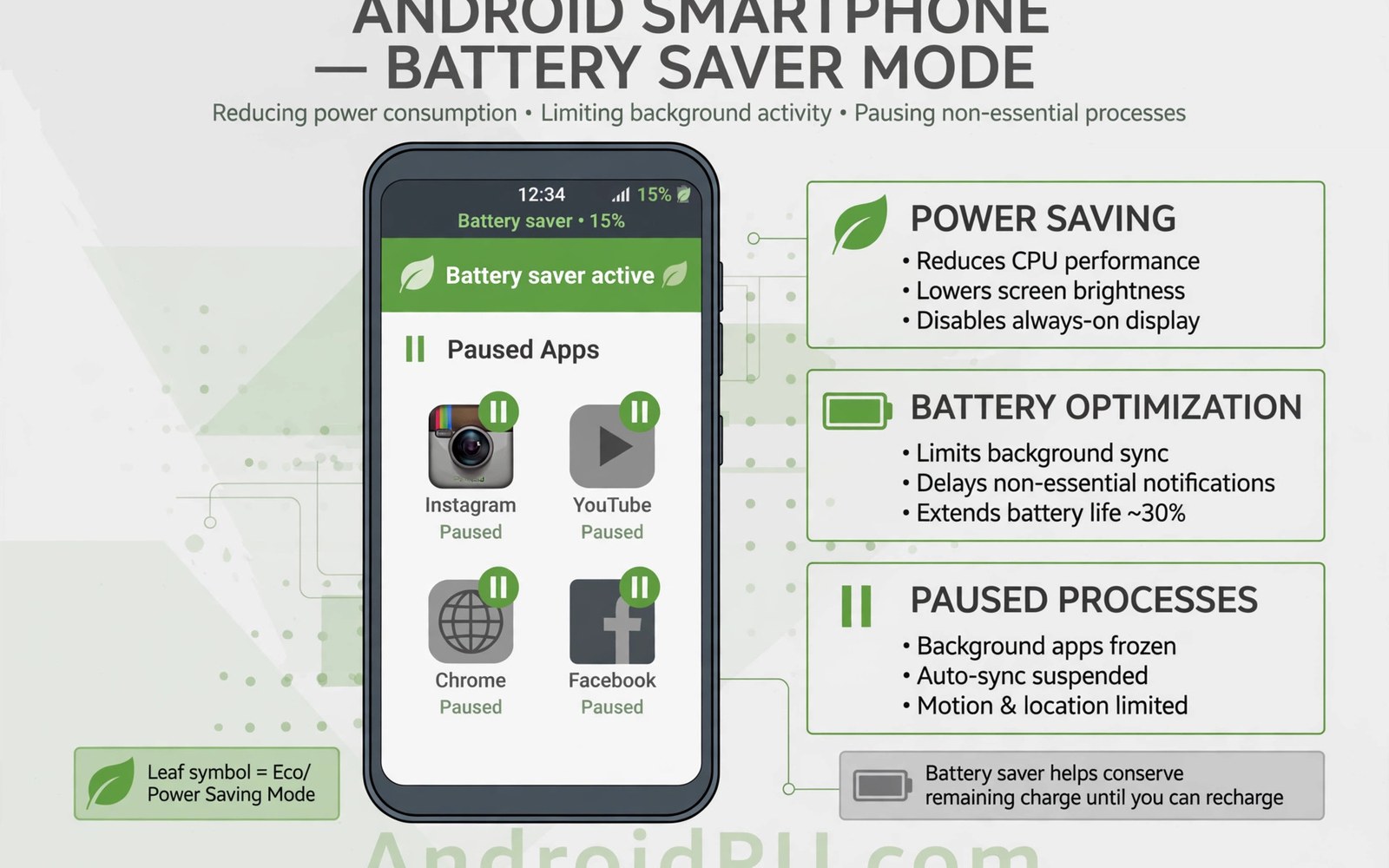
Battery saver mode is a system switch for low power days. It lowers processor speed and limits background work. It dims the screen and shortens timeouts. It delays sync for non urgent apps. It may also turn off vibration and location extras. Together these cuts stretch the remaining charge. That effect builds up over days and weeks. Small drains add up when they run all day. Small savings also add up in the same way. The goal is not to chase a perfect number. The goal is a phone that reaches the evening with power to spare. This guide keeps that goal in view. It separates quick wins from habits that need more time.
How Battery Saver Mode Restricts Power Works on Android
The mode does not shut the phone down. Calls and messages keep working. Your most used apps still open. What changes is the pace of unseen work. Mail may check less often. Social feeds may wait until you open them. Animations may feel less smooth. Those trade offs buy extra hours. Android manages power through a mix of system rules and app limits. The screen and the radio often use the most energy. Background work uses less at any single moment. Yet it can run for hours without you noticing. That long runtime is why it matters so much. A single app rarely drains a full battery on its own. A group of apps and settings together can do so.
The risk is missing an urgent alert during saver mode. A delayed mail check may hide a time sensitive message. A limited app may fail to update at the right moment. You can ease that risk by choosing which apps stay exempt. Keep urgent apps free from limits. Let the rest wait. Understanding this balance helps you choose wisely. You can keep the features you value most. You can trim the ones you rarely use. You do not have to turn everything off. You only have to match each setting to your real routine. That approach keeps the phone useful and efficient at the same time.
Signs That Power Is Being Wasted
The first sign is a battery that falls fast during normal use. You may notice the phone getting warm during light tasks. You may also see the percentage drop sharply after a short session. These signs do not prove a single cause. They show that a closer check is worth your time. A short test over two or three days gives clearer evidence than one bad afternoon.
- Battery saver stays off even when the battery runs low.
- Background apps keep syncing during a low battery day.
- The screen stays bright and timeout stays long at low charge.
- You need extra hours but no plan for stretching power.
Watch for patterns rather than single events. A drain that follows one app or one setting is easier to fix. A drain that appears only in one place may point to signal or location. A drain that appears every day may point to background work. Note what you were doing when the drop happened. That note will guide the checks in the next section.
How to Check It on Your Phone
Start with the battery screen in Settings. It shows which apps used the most power in the last day. It also shows screen time and background time for each app. Compare those numbers with your own memory of the day. An app you barely opened should not sit near the top. If it does, that app deserves a closer look. Take a screenshot so you can compare later.
- Open Settings and tap Battery then Battery Saver.
- Read what the mode limits on your phone model.
- Turn it on manually to test the feel for a day.
- Set it to turn on automatically at a low percentage.
- Exempt messaging apps that must alert you at once.
Repeat the check after you change one setting. Changing many things at once hides the real cause. One change at a time gives a clean result. Give each change at least a full day to show its effect. Two days is better when your routine varies. If the numbers improve, keep the change. If nothing changes, return to the old setting and try the next idea.
Settings That Make a Real Difference
Battery saver settings are easy to schedule. An automatic trigger removes the need to remember. Manual control suits days when you know you need extra time. These settings work best when they match your routine. A strict setting that annoys you will not last. A mild setting that you keep is worth more. Start with the easiest change first. Add stricter changes only if you still need more battery life. Your phone should still do the jobs you bought it for.
- Set battery saver to start at 20 percent or 15 percent.
- Keep vibration and haptics low while saver is active.
- Limit background sync for social and shopping apps.
- Use dark theme beside saver mode on OLED phones.
Check the effect of each setting over a few days. Some settings save power mainly on long days. Others save power mainly when the phone sits idle. Both kinds of saving matter. Keep a short note of what you changed and when. That note helps you undo a change that causes trouble. It also helps you repeat what worked on your next phone.
Daily Habits That Protect Battery Life
A good habit is to set the automatic trigger once and forget it. The phone will then protect itself on long days. You can still turn saver on early before travel. That early start buys more hours than a late start at five percent. Plan ahead on days with heavy use. Habits matter because they run every day without effort once they are set. Charge in a cool place when you can. Avoid leaving the phone in a hot car or in direct sun. Use Wi-Fi at home when it is stable and strong. Turn off radios you are not using for a long stretch. These small choices protect both daily runtime and long term health.
Think about your heaviest use first. Video and navigation use far more power than reading or messaging. Plan charging around those heavy sessions. A short top up before a long trip beats a dead battery during it. Keep a charger in the place where you need it most. That simple step removes many low battery surprises. It also reduces the urge to use risky fast charging all the time.
Mistakes to Avoid
Many battery myths lead people to harmful habits. Closing every app by hand often wastes more power than it saves. The system must reload each app from scratch when you reopen it. That reload uses processor time and network data. It is better to limit only the apps that truly misbehave. Let the system manage the rest in the normal way.
- Waiting until the battery is nearly dead to enable saver.
- Exempting every app and cancelling the saving.
- Leaving saver on for weeks and blaming it for slow alerts.
- Forgetting that saver limits sync for mail and feeds.
Avoid chasing extreme measures unless you truly need them. A phone that cannot receive messages on time is not a good trade. A phone that stays dim in bright sun is hard to read. Balance matters more than any single trick. Keep the features that protect your safety and your work. Trim the extras that add little value to your day.
A Simple Weekly Routine
Once a week, spend five minutes on battery care. Open the battery screen and look at the top apps. Check for any app that climbed without a clear reason. Review location and background permissions for those apps. Clear away widgets or wallpapers you no longer enjoy. That short review keeps small problems from growing.
Once a month, look at the bigger picture. Ask whether your battery still lasts through a normal day. Ask whether the phone still charges at a normal speed. Ask whether it gets hot during ordinary use. If the answers worry you, work through this guide again from the start. A fresh check often reveals a new app or a changed setting. It also gives you a record to share if you seek repair help.
What to Do Next
Start today with the check that fits battery saver mode best. Open the battery screen and look at the real numbers for your phone. Do not guess from memory alone. Write down the top apps and the settings you plan to change. That short note becomes your baseline for the week. A baseline turns vague worry into a clear test.
Make one change and live with it for two full days. Notice whether alerts still arrive on time. Notice whether the phone feels slower in a way that bothers you. Notice whether the battery reaches the evening more easily. If the change helps and causes no trouble, keep it. If it causes trouble, undo it and try the next idea in this guide.
After a week, review your notes about battery saver mode and what it restricts. Look for the change that gave the largest gain. Look for any change that caused annoyance. Keep the winners and drop the rest. Your routine should feel natural by now. It should not feel like a chore that you dread each morning. A routine you keep beats a perfect plan that you abandon.
Return to this guide when your routine changes. A new job or a new app can shift power use sharply. A system update can change settings without warning. A seasonal trip can expose weak signal drain. Each change deserves a fresh battery check. That habit keeps your phone ready for the days that matter most. It also keeps small problems from turning into daily frustration.
Battery saver setup:
1. Settings > Battery > Battery Saver
2. Set auto trigger to 20 percent
3. Keep messaging apps unrestricted
4. Enable dark theme on OLED
5. Test manual mode for one day
Putting It All Together
Battery saver is a safety net. Set it early and it will quietly add hours when you need them most. Start with the check in this guide today. Make one change and watch the result for a day or two. Then add the next change that fits your routine. Over a week you will learn what truly helps your phone. That knowledge is worth more than any single tip. It lets you adapt when apps change or when your routine changes. Your battery will thank you with calmer days and fewer urgent charges.
For a wider view of battery care, read 15 Tested Ways to Extend Your Android Smartphone Battery Life. You can also explore How Extreme Battery Saver Modes Extend Power in Emergencies. A further useful read is How Adaptive Battery Machine Learning Optimizes Power Over Time. Each of these topics connects to the habits in this guide. Together they help you build a routine that fits your phone and your day.
The steps above follow the approach described in the official developer documentation for Android power management. That guidance explains how the system limits background work and how settings affect energy use. The advice here stays close to those standard principles. It avoids tricks that fight the system or that hide real problems.

