

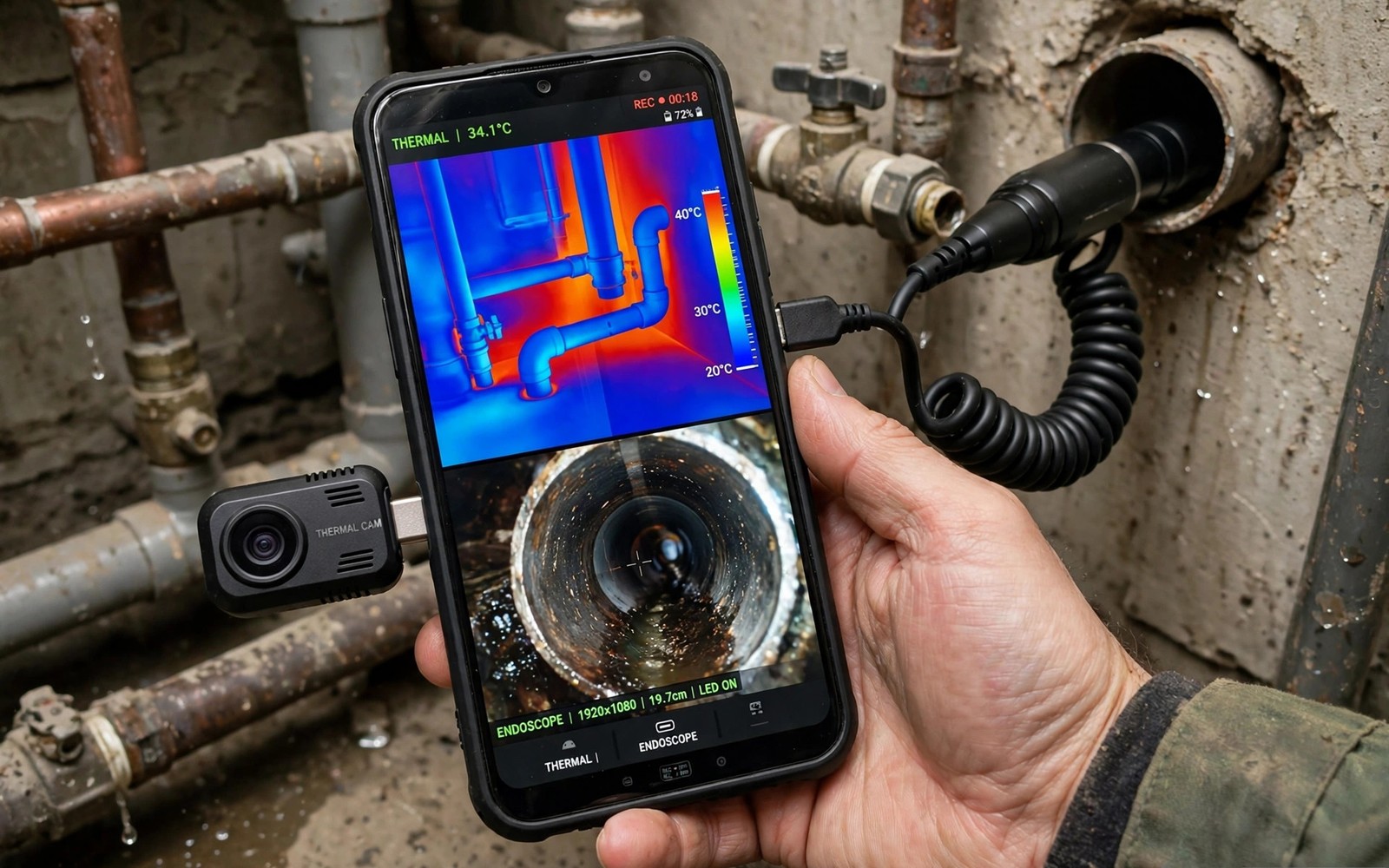
Thermal and endoscope camera accessories cost real money and buyers deserve an honest value test. A thermal clip on can cost as much as a budget phone. An endoscope attachment can cost less than a tank of fuel. Value depends on how often you use the tool and how much time it saves. This guide compares both accessory types against built in options so you can spend wisely.
Accessories win on flexibility. One thermal clip on can serve several phones in a team. One endoscope can inspect pipes and engines and wall cavities. Built in sensors win on speed because they are always ready. The thermal imaging cameras on smartphones explain built in sensor benefits in detail. Accessories suit occasional use. Built in sensors suit daily use. Frequency of use should decide your spend.
Accessory value also depends on resale and sharing within a team. A quality thermal accessory holds resale value when a team upgrades. A cheap accessory loses value fast and may fail before resale. Team sharing spreads cost across many users. A shared accessory in a tool crib serves many jobs per month. Shared use turns an expensive tool into a cheap per job resource. Tool cribs make accessories affordable for small teams.
What thermal accessories actually do
A thermal accessory attaches through USB and adds an infrared sensor to a normal phone. The phone app shows a heat map and temperature readings. Resolution varies widely across price levels. Cheap accessories give coarse maps that suit simple leak checks. Pricier accessories give finer detail for electrical panels and insulation work.
Accessory software matters as much as sensor hardware. Good apps add measurement points and reports and image blending. Weak apps give colours without reliable numbers. Test the app before you buy when possible. A sensor with weak software wastes its hardware potential. Check app update history too. An abandoned app can break after a phone OS update.
What endoscope accessories actually do
An endoscope accessory is a thin camera on a flexible cable. It reaches inside pipes and engines and wall cavities. The phone screen shows the camera view live. LED lights on the tip light the dark space. Cable length decides reach. A one metre cable suits drains and appliances. A five metre cable suits longer pipes and ducts.
Camera diameter decides which openings the tool can enter. A slim 8 millimetre camera fits many pipes. A thicker camera gives better light and image quality but fits fewer spaces. Waterproof ratings matter for drain work. A non waterproof endoscope fails fast in wet pipes. Check the waterproof rating before drain use.
adb shell dumpsys usb 2>/dev/null | grep -i -m 5 'device\|accessory' || echo usb-check-done
adb shell pm list packages | grep -i -E 'thermal|endoscope|usb' | head -5
adb shell getprop sys.usb.state
Attribution: the snippet above is an original example prepared for this article. It follows a standard public pattern for Android device checks and it does not copy code from any vendor site.
Cost maths for occasional versus daily use
Calculate cost per use honestly. A thermal accessory used twice a year costs a great deal per use. A thermal accessory used daily costs little per use. A plumber who finds one hidden leak per month earns the accessory back fast. A homeowner who checks one wall per year may never earn it back.
Rental and borrowing change the maths. A tool hire shop may rent a thermal camera for a day. A colleague may lend an endoscope for one job. Occasional users should rent or borrow first. Frequent users should buy quality once. Buying cheap twice costs more than buying good once.
Built in versus accessory trade offs
Built in thermal phones cost more upfront but need no extra parts. They never get left at the depot. They charge with the phone. They update with the phone. Accessories cost less upfront but add carrying and charging steps. They can be lost on site. They may need adapters for new phone ports.
Port changes create a real accessory risk. A USB accessory bought for one phone may not fit the next phone. Built in sensors avoid that risk entirely. Teams that upgrade phones often should weigh port risk heavily. Teams that keep phones for years face less risk. Plan accessory life against phone upgrade cycles.
Image quality and measurement trust
Thermal accessories vary in temperature accuracy. Cheap sensors may drift by several degrees. That drift matters little for finding a leak pattern. It matters a great deal for safety reports. Endoscope image quality varies with light and cable length. Longer cables lose light and sharpness at the tip.
Treat accessories as screening tools unless accuracy is proven. Confirm critical thermal readings with a calibrated thermometer. Confirm endoscope findings with direct inspection when possible. Screening plus confirmation gives reliable results without overspending on lab grade gear.
Care storage and accessory lifespan
Accessories need care to last. Thermal sensors hate drops and moisture. Store them in padded cases. Keep lens covers on when not in use. Endoscope cables kink when wound tightly. Wind cables in loose loops. Clean tips after wet or dirty work. Dry connectors before storage to prevent corrosion.
Software support decides lifespan as much as hardware care. An accessory with an abandoned app dies when phones update. Choose brands with active app updates. Check recent app reviews before purchase. An accessory with a dead app is an expensive paperweight.
Sharing renting and tool crib economics
Tool cribs let teams share expensive accessories without buying one per worker. A crib manager logs checkouts and returns. Damage gets noticed at return inspection. Shared tools need clear care rules. A tool damaged by one user affects the next user. Checkout logs create accountability for care.
Rental shops offer thermal cameras for single jobs at a daily rate. A one day rental suits a single building survey. A week rental suits a renovation project. Compare rental cost against purchase cost for your job count. Rent when jobs are rare. Buy when jobs recur monthly.
Second hand accessories can offer value when tested carefully. Test sensor accuracy against known temperatures before paying. Test endoscope light and focus at full cable length. Check app support for the accessory model. An accessory with a dead app is worthless at any price. A tested second hand tool can save half the new price.
Warranty terms matter more for accessories than for phones. Accessories face drops and water and heat in the field. A warranty that covers accidental damage adds real value. A warranty that excludes field damage adds little. Read accessory warranty terms before purchase. A strong warranty can justify a higher price.
Accessory bundles sometimes add cases and cables and adapters. A bundle with a good case protects the sensor during transport. A bundle with spare cables prevents downtime from cable failure. Value bundles by the usefulness of each included item. A bundle padded with useless items is not a saving.
Warranty and support for clip on accessories
Clip on accessories often carry shorter warranties than phones. A one year accessory warranty may expire before a team discovers a fault pattern. Check warranty length before purchase. Check whether the warranty covers sensor drift and cable failure. Sensor drift matters for thermal tools used in reports. Cable failure matters for endoscopes used daily. A warranty that excludes both common failures offers little real protection.
Support channels also matter for accessories. A phone maker with local service may not service its accessories locally. An accessory bought online may need international shipping for repair. Shipping time removes the tool from service for weeks. Teams should stock a spare accessory for critical tools. A spare keeps work moving during repair waits. Spare planning belongs in the purchase budget from the start.
Accessory compatibility with phone cases also affects daily usability more than buyers expect. A thermal clip on may not fit through a thick rugged case opening. An endoscope cable may strain against a case edge during use. Test every accessory with the exact case fitted to the phone. A case that blocks an accessory forces workers to remove the case for each use. Repeated case removal wastes time and risks drops. Choose cases with generous port openings when accessories are part of the workflow. Case and accessory testing belongs in the same trial as the accessory itself.
Common mistakes
The biggest mistake is buying a thermal accessory for one casual check. Rental or borrowing serves that need far cheaper. Another mistake is choosing the cheapest thermal sensor for professional reports. Coarse maps and drifting readings undermine report trust.
A third mistake is buying a non waterproof endoscope for drain work. Water kills it fast. A fourth mistake is ignoring app support. A great sensor with a dead app becomes useless after an OS update. Check app activity before you spend.
A fourth mistake is lending an accessory without a checkout log. Unlogged loans lose tools and hide damage. Log every loan with date and borrower and return condition. A simple log protects shared investments.
Frequently asked questions
Should I buy a thermal accessory or a thermal phone?
Buy an accessory for occasional use across several phones. Buy a thermal phone for daily trade use. Daily users gain speed and reliability from built in sensors that justify the higher price.
Are cheap endoscopes good enough?
Yes for simple visual checks in accessible spaces. Cheap models suit drain and appliance peeks. Professional inspection work needs better light and resolution and waterproofing.
Can accessories replace professional inspection tools?
No for safety critical work. Accessories screen well and guide further checks. Confirm critical findings with calibrated or professional tools before acting.
Conclusion
Thermal and endoscope camera accessories cost is justified when use is frequent and time saved is real. Occasional users should rent or borrow first. Daily trade users should buy quality accessories or built in sensors and protect them well. The keeping waterproof seals in good shape adds useful context for this choice. The how rugged phones earn their toughness rating adds useful context for this choice.
Your concrete next step is to count how many inspection jobs you did last month that needed thermal or endoscope views. If the count is under two then rent first. If the count is above eight then buy a quality tool this month.
Check whether a colleague or a rental shop already owns the accessory you need. Borrow or rent for your next job and record the time saved. That record gives honest data for a future purchase decision.

