

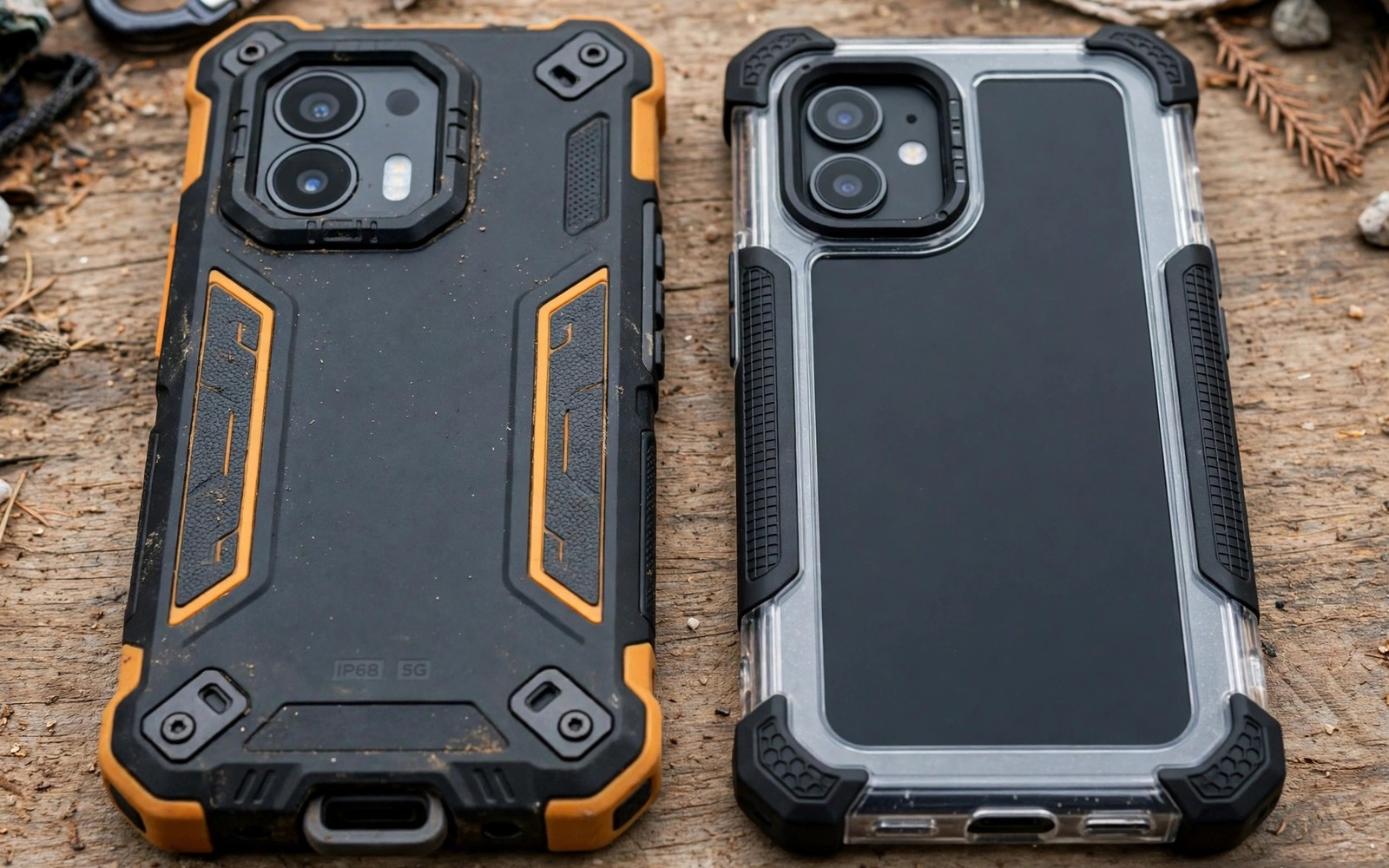
Rugged phone vs heavy case weight is a closer contest than many buyers expect. A slim phone plus a heavy case often ends up nearly as thick as a rugged phone. It often ends up nearly as heavy too. The difference lies in sealing and internal mounts and total balance. This guide compares the two routes with real numbers so you can choose honestly.
Start with total weight rather than phone weight alone. A 180 gram phone plus a 120 gram heavy case totals 300 grams. A rugged phone may weigh 310 grams on its own. The totals are almost equal. Thickness follows the same pattern. The rubberized housings that absorb shock on rugged phones are built into the frame. Heavy cases add similar rubber outside a slim frame. Total bulk ends up similar even when the starting phones differ greatly.
Weight comparisons also change when you add mounts and accessories. A slim phone in a heavy case plus a metal mount plate weighs more than the case total alone. A rugged phone with a built in mount point may need no plate. Accessory weight should join the total comparison. Count every item that stays on the phone daily. A fair total includes case and plate and lens protector and grip strap together.
Measuring total weight honestly
Weigh the phone with the case fitted and with a screen protector on. Add the weight of any mount plate or card holder you use daily. That total is the weight you actually carry. Many buyers compare a bare slim phone against a rugged phone. That comparison is unfair and misleading. Always compare carried totals.
Balance matters beside total grams. A heavy case adds weight to the edges and corners. A rugged phone spreads weight through the whole frame. Edge heavy phones feel clumsier in one hand. Frame balanced phones feel steadier. Hold both options for several minutes before you judge. A short shop hold hides fatigue that a full day reveals.
Measuring total thickness honestly
Measure thickness at the thickest point including camera bumps and case lips. A slim phone may measure 8 millimetres bare. A heavy case may add 5 millimetres or more. The total reaches 13 millimetres. A rugged phone may measure 14 millimetres. The gap is only one millimetre in that example. Pocket fit depends on total thickness rather than bare thickness.
Thickness affects mounts and pockets and chargers. A thick total may not fit a car mount designed for slim phones. It may not fit a tight pocket. Check mount grip width before you buy either route. A phone that cannot mount safely loses value on site and on the road.
adb shell getprop ro.product.model
adb shell dumpsys display | grep -i -m 3 'width\|height'
adb shell settings get system screen_brightness
Attribution: the snippet above is an original example prepared for this article. It follows a standard public pattern for Android device checks and it does not copy code from any vendor site.
Grip pocket fit and daily handling
Heavy cases often add excellent grip. Textured rubber sides help wet hands hold the phone. Rugged phones also offer strong grip through their housings. The grip winner depends on the exact case and the exact phone. Test grip with wet hands and with gloves when you can.
Pocket fit favours the option with smoother edges. A rugged phone with rounded corners slides into pockets well. A heavy case with sharp corner bumpers can snag pocket fabric. A snagging phone slows every draw. For workers who draw the phone often smooth edges matter. For workers who keep the phone in a pouch grip matters more.
Sealing ports and internal protection gaps
This is where rugged phones pull ahead clearly. A heavy case does not seal charging ports. It does not seal speaker grilles against dust and water. It protects against drops only. A rugged phone seals ports and grilles by design. It also mounts internal parts on shock absorbing pads. A cased slim phone keeps rigid internal mounts that can fail after repeated drops.
Water exposure reveals the gap fast. A cased phone dropped in a puddle may survive the drop and fail from water entry. A rugged phone survives both stresses together. Dust exposure shows the same gap over months. Dust enters a cased phone through open ports. It stays out of a sealed rugged phone. Choose sealing based on your water and dust exposure.
Cost repair and upgrade flexibility
A heavy case route costs less at first when you already own a good phone. A quality heavy case costs far less than a new rugged phone. Case replacement is cheap and fast. Phone upgrades stay independent of protection. You can move a case style to a new phone model with a new case.
A rugged phone route costs more upfront but may last longer in harsh work. Fewer repairs offset the higher price over years. Screen repairs on a rugged phone may cost more due to sealed design. Case route repairs use standard phone parts and wider repair networks. Compare total cost over three years rather than day one price.
Which route suits which worker
Choose a heavy case when your risks are mainly drops and your water exposure is low. Office workers and light field workers suit this route. Choose a rugged phone when dust and water and drops all happen daily. Construction and farming and hiking guides suit the rugged route.
Choose a heavy case when you need flagship cameras and fast updates. Choose a rugged phone when you need giant batteries and loud speakers and glove mode. No route wins every category. Match the route to your top three daily needs. A phone that excels at your top needs beats a phone that is average at everything.
Total carried weight across a full kit
A work kit includes the phone and its case and its mount and its charger. A hiking kit adds a power bank and a cable and a pouch. Each item adds grams that accumulate across a day. A kit audit reveals surprising totals. Many workers carry over a kilogram of phone related gear without realising it. Auditing the kit helps cut dead weight.
Pouches and holsters add weight and bulk beyond the phone itself. A leather holster may weigh 100 grams. A padded pouch may weigh 150 grams. A belt clip adds further grams. Choose the lightest pouch that still protects the phone. A heavy pouch on a light phone defeats the weight saving of the slim phone route.
Power banks dominate kit weight for long trips. A 20000mAh bank weighs around 350 grams. That bank alone equals a rugged phone weight. A giant battery phone may remove the need for a large bank on short trips. Removing the bank saves more weight than choosing a lighter phone. System weight beats device weight for trip planning.
Cables and adapters add small weights that accumulate. A long cable and a wall charger and a car charger together may weigh 200 grams. Carry only the cables that the trip needs. A single multi tip cable can replace several single cables. Kit discipline saves weight without sacrificing function.
Clothing pockets also limit practical weight. A heavy phone in a shirt pocket pulls fabric and feels awkward. A heavy phone in a jacket pocket swings while walking. A hip belt pocket or chest pocket carries weight better. Pocket choice changes perceived weight more than a small gram difference. Test pocket carry on a real walk before judging weight.
Screen protector weight and thickness in the total
Screen protectors add weight and thickness that buyers often ignore in totals. A tempered glass protector may add 20 grams and nearly a millimetre of thickness. A film protector adds almost no weight or thickness. Glass protects better against drops and scratches. Film preserves touch sensitivity and glove performance better. The protector choice shifts the total comparison between rugged phones and cased phones. Include protector weight in any honest total.
Mount plates and magnetic rings add further hidden weight. A metal plate for magnetic mounts may add 15 grams inside a case. A grip ring adds similar weight and bulk. A pop socket adds bulk that affects pocket fit. Each accessory alone seems trivial. Together they can add 50 grams and several millimetres. Audit every accessory on the phone before comparing totals. A full audit often reverses a close weight decision.
Repair access also differs between the two routes in ways that affect long term ownership. A cased slim phone can be repaired at many high street shops with standard parts. A rugged phone may need a specialist service centre for sealed repairs. Specialist repairs can take longer and cost more per visit. A cased phone owner can often get a screen replaced the same day. A rugged phone owner may wait a week for a sealed repair. Repair speed matters when the phone is a daily work tool. Factor local repair access into the route decision before purchase.
Common mistakes
The biggest mistake is comparing bare phone weight against rugged weight. Carried totals are what matter. Another mistake is assuming a heavy case adds water protection. Cases protect against drops only and ports stay open.
A third mistake is ignoring mount fit. A thick total may not fit existing mounts. Check mount width before you commit. A fourth mistake is judging grip from a dry shop test. Wet hands and gloves change grip completely. Test in real conditions.
A fourth mistake is weighing phones on a shop scale without accessories. Shop weights ignore cases and plates and pouches. Carried weight is the only weight that matters. Weigh the full daily kit at home for an honest comparison.
Frequently asked questions
Is a phone in a heavy case as tough as a rugged phone?
For drops it can be close. For dust and water it is not equal. Cases leave ports open and internal mounts rigid. Rugged phones seal ports and cushion internals by design.
Does a heavy case make a phone too thick for pockets?
Often the total thickness nears rugged phone thickness. Check total thickness with the case fitted. Smooth rounded cases fit pockets better than sharp bumper cases.
Which route costs less over three years?
It depends on repair rates. Case routes start cheaper. Rugged routes may save repair costs in harsh work. Add expected repairs to the price before you decide.
Conclusion
Rugged phone vs heavy case weight ends in a near tie on bulk. Rugged phones win clearly on sealing and internal shock protection. Heavy cases win on upfront cost and upgrade flexibility. Your daily dust and water exposure should break the tie. The GPS accuracy in canyons and forests adds useful context for this choice. The vehicle mounts that hold heavy phones adds useful context for this choice.
Your concrete next step is to weigh your current phone with its case fitted today. Compare that total against a shortlisted rugged phone weight. Then check your water and dust exposure honestly and let that decide the route.
Weigh your full phone kit on a kitchen scale this week. Record the total for each route you consider. Let the full kit total decide rather than the bare phone number. Honest totals prevent sore pockets and tired arms.

