

This guide to carrier locked vs unlocked Android phones which to buy explains price and freedom and travel in plain terms.
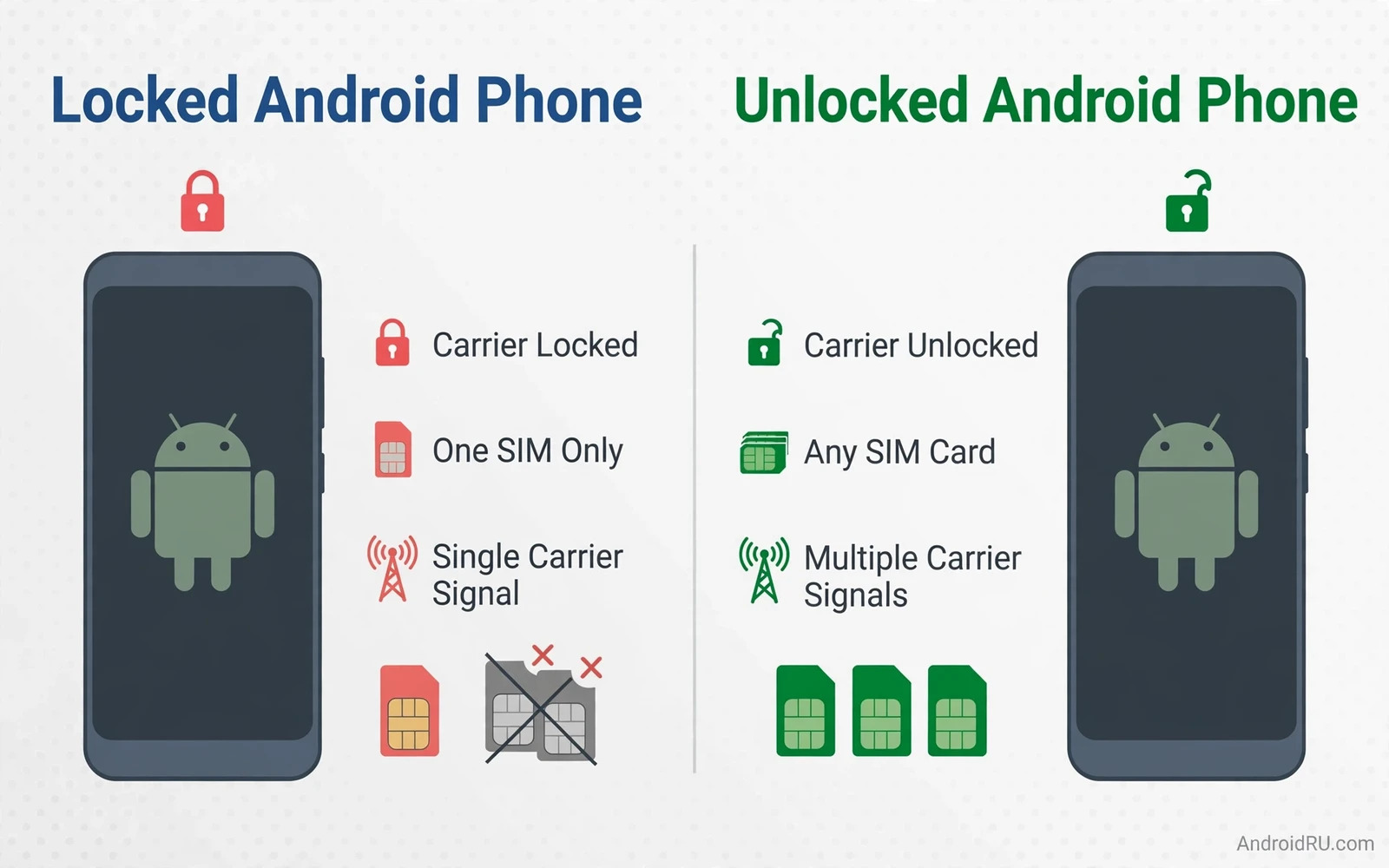
A carrier locked phone works only with one mobile network until it is unlocked. An unlocked phone works with many networks and many SIM cards. The carrier locked vs unlocked Android phones question matters because it shapes price and freedom and travel and resale. A locked phone can cost less upfront. An unlocked phone can cost more upfront but offer more choice later. This guide explains the trade in plain terms. It helps you pick the option that fits your budget and your life.
Start with how long you plan to keep the phone and where you plan to use it. A user who stays with one carrier for years may gain little from unlocking. A user who travels or switches carriers or uses two SIM cards may gain a lot from unlocking. A user who buys phones often may gain resale value from unlocking. A user on a tight budget may gain upfront savings from a locked deal. Your plan length and travel habits decide the winner.
Locked phones often arrive through carrier deals with monthly payments or trade in offers. Those deals can make a strong phone affordable in monthly steps. Unlocked phones often arrive through shops or makers with full payment upfront. Full payment can feel steep but it frees you from carrier terms. Compare total cost over the full period and not just the first payment. A cheap first payment can hide a long and costly commitment.
What Locked Really Means
Locked means the phone checks the SIM against an allowed carrier list. A SIM from another carrier will not connect for calls and data. Wi-Fi features and apps still work normally. The phone itself is not broken or weak. It simply refuses other networks until the carrier releases it. Release rules vary by carrier and by contract and by payment status. Read those rules before you sign any deal.
Unlocking usually requires a finished contract or a paid off device or a waiting period. Some carriers unlock automatically after set terms are met. Some carriers require a request and a check. Some carriers refuse unlocking while bills remain unpaid. The process can be quick or slow depending on the carrier. A clear unlock policy is a sign of a fair carrier deal. A vague unlock policy is a warning sign.
Dual SIM and eSIM features interact with locking in useful ways. A locked phone may still accept a second SIM only from the same carrier in some cases. An unlocked phone can mix carriers freely across physical SIM and eSIM. Travellers benefit most from that mix. They can keep a home number active while adding a local data plan abroad. That flexibility can save money and hassle on every trip.
Price And Total Cost
Locked deals can bundle a phone discount with a service plan. The discount looks attractive on day one. The service plan may cost more per month than a SIM only plan. Over two years the higher monthly cost can erase the phone discount. Always add phone payments and service payments together across the full term. Compare that total with an unlocked phone plus a cheap SIM only plan. The cheaper total wins and not the cheaper headline.
Unlocked phones also open the door to cheaper plans and short plans. You can switch to a better deal when prices fall. You can pause or change plans without phone penalties. You can use prepaid plans for travel or for a second line. That freedom has real cash value over time. A locked phone trades that freedom for an upfront discount. The trade only makes sense when the discount beats the freedom value.
Resale value also favours unlocked phones in most cases. Buyers prefer a phone that works on any network. An unlocked phone therefore sells faster and often for more money. A locked phone limits the buyer pool to one carrier audience. If you sell phones often then unlocking protects your resale return. Readers weighing total ownership cost may also find Best Android Phone Brands Ranked by Reliability and Support useful because brand support affects resale and repair value too. Brand and lock status together shape what a phone is worth later.
Travel Flexibility And Freedom
Travel is where unlocked phones shine brightest. A traveller can buy a local SIM at arrival and enjoy local rates at once. A traveller can keep maps and messages working without roaming fees. A traveller can switch to a stronger local network in rural areas. A locked phone forces roaming or Wi-Fi hunting instead. Roaming can cost a lot and Wi-Fi hunting wastes time. For frequent travellers unlocking is not a luxury. It is a practical tool.
Work users also gain from unlocked flexibility. A work user may need a work SIM and a personal SIM in one phone. A work user may change carriers when an employer changes contracts. A work user may need coverage from a different network in a new office area. An unlocked phone adapts to those changes without a new handset. A locked phone may force an awkward workaround or a second phone.
Freedom also means freedom from carrier software extras. Carrier phones may ship with extra apps and branding and delayed updates. Unlocked phones often ship with cleaner software and faster updates from the maker. Cleaner software can feel faster and last longer. Delayed updates can leave a phone behind on security and features. If clean software matters to you then unlocking deserves extra weight.
Risks And Fine Print
Locked deals carry fine print that deserves slow reading. Check contract length and monthly total and early exit fees. Check unlock timing and unlock conditions in writing. Check whether the discount requires a premium plan that you do not need. Check whether trade in credit depends on staying with the carrier. A deal that looks simple in an advert can hide several linked conditions. Slow reading now prevents regret later.
Unlocked buying carries its own risks to check. Check that the phone supports the network bands of your carrier. Check that the phone supports the 5G bands and voice features of your carrier. Check warranty terms and return terms from the seller. A phone that lacks a key band may show weak signal even when unlocked. Band support matters as much as lock status for real coverage.
Payment risk also differs between the two paths. Locked deals spread cost but bind you to monthly payments. Missed payments can block unlocking and affect credit in some cases. Unlocked buying demands full payment but leaves you free. Choose the payment path that matches your cash flow and your discipline. A comfortable payment plan beats a stressful discount every time.
Mistakes To Avoid
One mistake is signing a locked deal for a phone discount and ignoring the plan cost. Another mistake is buying unlocked without checking band support for your carrier. A third mistake is assuming that all locked phones unlock quickly after purchase. Unlock timing varies and some carriers impose long waits. Always confirm unlock rules in writing before you pay.
Another mistake is buying a locked phone as a gift without checking the recipient carrier. A gift that cannot connect to the recipient network is a frustrating gift. Another mistake is ignoring eSIM limits on locked phones. Some locked phones limit eSIM to the same carrier. Another mistake is forgetting resale plans. A phone you plan to sell soon should stay unlocked when possible.
A final mistake is choosing based on a single month of use. Phone ownership lasts years and carrier needs change. Jobs change and moves happen and travel plans grow. A choice that fits today may strain tomorrow. Choose the option that stays flexible through likely changes. Flexibility is insurance against life changes.
How To Choose
Choose locked when you love your carrier and plan to stay and the total cost truly beats unlocked plus a cheap plan. Choose locked when the deal includes a phone you could not otherwise afford and the terms are clear. Choose unlocked when you travel or switch carriers or value resale or want clean software. Choose unlocked when you can pay upfront without strain. Let total cost and freedom decide together.
Before you pay run a short checklist. Confirm network bands and voice support and update path. Confirm unlock rules or confirm unlocked status in writing. Confirm total cost across the full term. Confirm return window and warranty cover. A checklist takes minutes and saves months of regret. Keep a copy of the terms with your receipt.
If you also compare phones for students or for family use then Best Android Tablets for Students: Specs, Price, and Notes will help you weigh price and specs for a different kind of buyer. Students and families often value freedom and low total cost highly. An unlocked tablet or phone can serve several users over time. A wise lock decision today keeps that future flexibility open.
Family And Shared Phones
Families often share plans and hand phones down to younger users. A locked phone can complicate hand downs when family members use different carriers. An unlocked phone passes between carriers without friction. That flexibility matters when a teenager joins a different plan or when a parent switches carriers for a better deal. Family buying should favour flexibility unless the locked saving is very large.
Business users face similar hand down questions. A company phone may move between employees and carriers over its life. An unlocked company phone adapts to each new user quickly. A locked company phone may sit idle while unlocking paperwork clears. Time lost to paperwork costs a business more than a small upfront saving. Businesses should weigh admin time alongside headline price.
Battery endurance also interacts with carrier choice in a subtle way. A phone on a weak carrier signal drains faster as its radio searches harder. A phone that can switch to a stronger local carrier may last longer each day. That is one more reason to read Top Phones with Longest Battery Runtime Tested Side-by-Side before you lock yourself to one network. Runtime reports help you judge whether carrier flexibility could also improve your daily battery life.
A final check before signing any deal is worth the time it takes. Read the unlock clause aloud and note the exact waiting period. Compare that clause with your travel plans for the next year. A clause that unlocks after a short wait may suit a patient buyer. A clause that locks for a long period may suit only a buyer who never travels. Clear terms protect both the buyer and the carrier relationship.

