

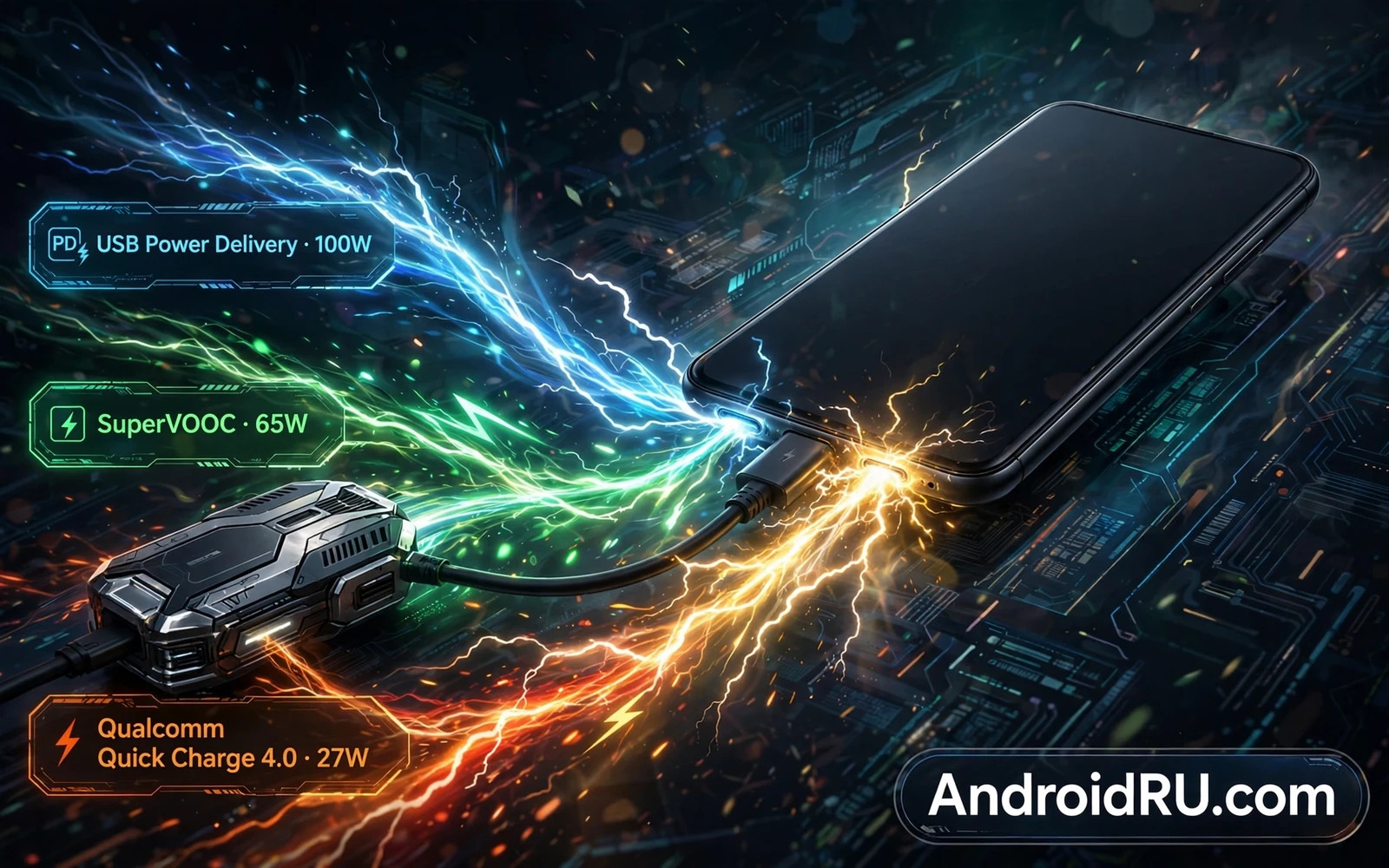
Why Charging Speed Is Not One Number
Fast charging sounds like a single race to full battery but the reality is a careful negotiation between charger and cable and phone. Each fast charging system uses its own way of raising voltage or current or both while watching heat and battery health. VOOC and PD and HyperCharge all chase the same goal and they reach it through different trade-offs in hardware and in safety checks. A phone charges fastest when every link in the chain speaks the same language. When any link falls back to a basic standard the whole charge slows down even if the charger itself looks powerful. Understanding that chain explains why two chargers with similar wattage labels can behave very differently.
This article explains how fast charging technologies work VOOC PD HyperCharge in plain language and it focuses on practical choices rather than on marketing claims. Charging speed and battery health pull in opposite directions and the smartest designs balance fast top ups with gentle charging when time allows. Testing a device in a shop for a few minutes rarely reveals how it behaves after a long day of real notifications and travel and media playback. Compatibility deserves a careful check because a device that works well with one phone or one account or one home system may struggle with another setup.
Voltage Current And Power Basics
Charging power comes from voltage multiplied by current and raising either value can speed up a charge. Higher current warms cables and connectors more while higher voltage needs careful conversion inside the phone. Good designs balance both values so heat stays controlled and the battery stays within safe limits through the whole session. Real world performance depends on the whole system working together and a strong processor cannot rescue weak cooling or weak antennas or weak power management. When two devices look similar on paper the difference often sits in sensor quality and in microphone quality and in antenna tuning that never appears in a short advertisement. The right question is not which device wins a benchmark and it is which device stays fast and cool and reliable during the tasks that you actually repeat every day. Small design decisions add up over months of use and a comfortable fit or a clear display or a reliable connection can matter more than a headline feature. Durability is about more than surviving a drop because hinges and ports and buttons and coatings all wear down through repeated daily handling. For shoppers who compare several device types the notes at Best Battery Life Smartphones Tested for Heavy Usage explain where spending more helps and where it simply adds weight.
How VOOC Approaches Speed
VOOC pushes higher current at lower voltage and it moves much of the heat management into the charger and cable design. That approach can keep the phone cooler during a fast top up because less energy converts to heat inside the handset. The trade-off is a need for a matched charger and cable because a generic cable may not carry the same current safely. Battery behaviour changes with heat and with age and with usage patterns so a fair judgement needs weeks of normal use rather than a single first impression. Privacy settings deserve the same attention as hardware because microphones and cameras and location data all need clear controls that a normal person can actually find. Good design hides complexity and the best devices make hard technology feel simple without removing the settings that advanced users need. Real world performance depends on the whole system working together and a strong processor cannot rescue weak cooling or weak antennas or weak power management. When two devices look similar on paper the difference often sits in sensor quality and in microphone quality and in antenna tuning that never appears in a short advertisement.
How USB PD Approaches Speed
USB Power Delivery is an open standard that negotiates voltage and current between charger and device over a USB-C connection. Its strength is broad compatibility across phones and tablets and laptops from many makers. Its weakness is variation because a PD charger and a PD phone may still settle on a modest speed when their supported profiles do not fully overlap. A sensible buyer compares total ownership cost rather than launch price alone because accessories and repairs and replacements and subscriptions all add to the real cost. Accessories can transform a good device into a great setup but only when they fit well and stay attached and do not block ports or buttons or cooling vents. The best choice is rarely the most expensive option and rarely the cheapest option because balance across comfort and speed and support matters more than any single highlight. Battery behaviour changes with heat and with age and with usage patterns so a fair judgement needs weeks of normal use rather than a single first impression. Privacy settings deserve the same attention as hardware because microphones and cameras and location data all need clear controls that a normal person can actually find. The comparison at Best Value for Money Android Smartphones of the Year helps because it keeps the focus on reliability and support rather than on launch excitement alone.
How HyperCharge Approaches Speed
HyperCharge focuses on very fast top ups by combining high power delivery with dual cell battery designs and aggressive thermal monitoring. Splitting the battery into two cells lets each cell charge in parallel which can shorten the time to a useful charge. Strong cooling and strict temperature limits matter most here because high power without control would damage battery health quickly. Comfort during long sessions is a practical test and not a luxury because eye strain and neck strain and hand fatigue all grow when a device fights the user. A calm buying process beats a rushed one because a short wait for reviews and for price history and for software feedback often prevents an expensive mistake. Before spending money it helps to list the three tasks that matter most and to judge every option against those tasks rather than against a long list of extras. A sensible buyer compares total ownership cost rather than launch price alone because accessories and repairs and replacements and subscriptions all add to the real cost. Accessories can transform a good device into a great setup but only when they fit well and stay attached and do not block ports or buttons or cooling vents.
Why Charging Slows Near Full
Almost every phone charges fastest when the battery is low and slows down as it approaches full. That curve protects battery chemistry because forcing high power into a nearly full cell creates stress and heat. A fair comparison therefore looks at time to a useful level such as half full rather than only at time to completely full. Charging speed and battery health pull in opposite directions and the smartest designs balance fast top ups with gentle charging when time allows. Testing a device in a shop for a few minutes rarely reveals how it behaves after a long day of real notifications and travel and media playback. Compatibility deserves a careful check because a device that works well with one phone or one account or one home system may struggle with another setup. Comfort during long sessions is a practical test and not a luxury because eye strain and neck strain and hand fatigue all grow when a device fights the user. A calm buying process beats a rushed one because a short wait for reviews and for price history and for software feedback often prevents an expensive mistake. A related hardware comparison at Flagship Killers: High Performance Phones at Low Prices shows how the same buying questions change when the screen size and the price bracket change.
Cables Chargers And Safety Checks
A thin or damaged cable can throttle a charge or overheat and a cheap charger may lack proper protection circuits. Certified cables and chargers from reputable makers reduce that risk. Users should replace frayed cables promptly and avoid charging under pillows or inside closed bags where heat cannot escape. Many buyers regret a purchase because they chased one impressive number while ignoring weight and grip and screen readability in the conditions where they live. Software support shapes the long term value of a device because security fixes and stability fixes and compatibility fixes keep a good device useful after newer models arrive. Clear controls and readable text and predictable menus help every user and they help older users and busy users and users in bright light most of all. Charging speed and battery health pull in opposite directions and the smartest designs balance fast top ups with gentle charging when time allows. Testing a device in a shop for a few minutes rarely reveals how it behaves after a long day of real notifications and travel and media playback.
Battery Health And Daily Habits
Fast charging used every day adds more wear than gentle overnight charging but modern battery management softens that effect. Keeping the battery away from extreme heat and avoiding constant full to empty cycles helps longevity. Many phones now offer an optimised charging mode that slows the final stretch overnight and that mode is worth enabling. A feature that looks strong on a specification sheet can still feel weak in daily use when software polish and battery behaviour and heat control are missing. A device that is easy to set up and easy to charge and easy to carry will get used far more often than a powerful device that feels awkward in daily life. Future proofing is not about chasing every new standard and it is about choosing open connections and proven formats that will still work with the next phone you buy. Many buyers regret a purchase because they chased one impressive number while ignoring weight and grip and screen readability in the conditions where they live. Software support shapes the long term value of a device because security fixes and stability fixes and compatibility fixes keep a good device useful after newer models arrive. A helpful companion read is Best Phones with Wireless Charging and Reverse Wireless Charging because it frames the choice around real tasks rather than around marketing claims alone.
Quick Checklist Before You Decide
- Match charger and cable to the exact fast charging system your phone supports.
- Judge speed by time to half full rather than by wattage printed on the box.
- Replace damaged cables at once and avoid charging in enclosed hot spaces.
- Enable optimised or gentle overnight charging when your phone offers it.
- Keep the phone cool during fast charging and remove thick cases if heat builds up.
- Use certified chargers for travel so compatibility stays reliable away from home.
Final Thoughts
The market will keep adding new models and new claims and the fundamentals will stay the same. Comfort and battery life and software support and repairability decide whether a device earns its place in daily life. Judge every new option against those fundamentals and ignore noise that does not change how the device feels at seven in the morning or late at night. That discipline is the real buying skill.

