

Charging Without Plugging In
Wireless charging removes the daily ritual of finding a cable and lining up a small plug in dim light. A phone placed on a pad simply starts charging and a phone that supports reverse wireless charging can even share power with earbuds or a watch. That convenience changes habits because topping up becomes effortless during work and during meals and during bedtime routines. Speed still lags behind wired charging in most cases and alignment still matters. A phone placed off centre may charge slowly or not at all. This guide explains how to judge wireless charging fairly and how to pick a phone and a pad that work well together.
This article explains best phones with wireless charging and reverse wireless charging in plain language and it focuses on practical choices rather than on marketing claims. The right question is not which device wins a benchmark and it is which device stays fast and cool and reliable during the tasks that you actually repeat every day. Small design decisions add up over months of use and a comfortable fit or a clear display or a reliable connection can matter more than a headline feature. Durability is about more than surviving a drop because hinges and ports and buttons and coatings all wear down through repeated daily handling.
How Wireless Charging Works
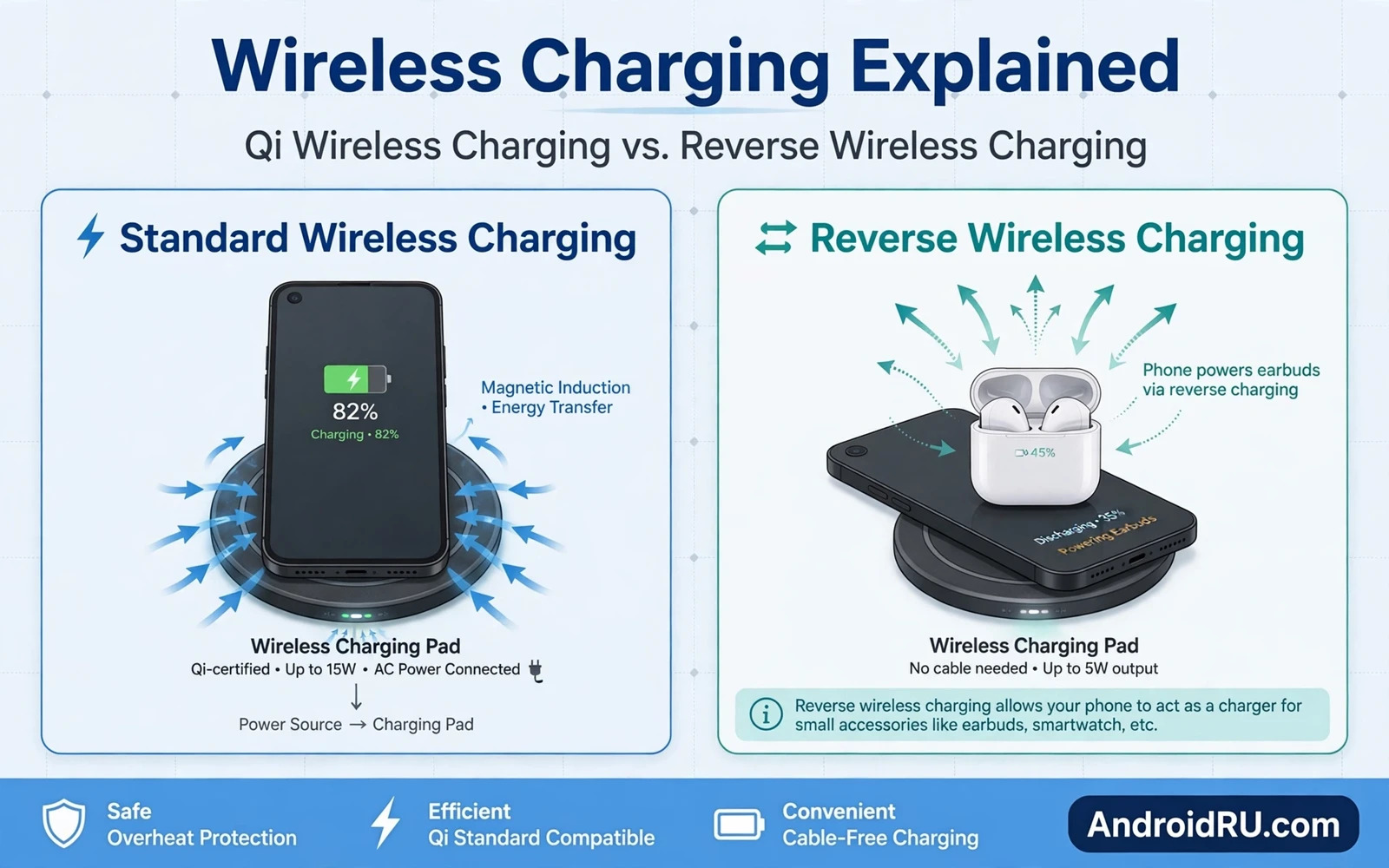
Wireless charging transfers energy through magnetic induction between a coil in the pad and a coil in the phone. Alignment of those coils decides efficiency and poor alignment wastes energy as heat. Modern pads and phones use magnets or guides to help centre the device and that small help makes a large difference in daily reliability. The best choice is rarely the most expensive option and rarely the cheapest option because balance across comfort and speed and support matters more than any single highlight. Battery behaviour changes with heat and with age and with usage patterns so a fair judgement needs weeks of normal use rather than a single first impression. Privacy settings deserve the same attention as hardware because microphones and cameras and location data all need clear controls that a normal person can actually find. Good design hides complexity and the best devices make hard technology feel simple without removing the settings that advanced users need. Real world performance depends on the whole system working together and a strong processor cannot rescue weak cooling or weak antennas or weak power management. Another angle on value and longevity appears at Best Battery Life Smartphones Tested for Heavy Usage and it pairs well with the checklist near the end of this article.
Speed Expectations In Real Life
Wireless charging usually runs slower than wired fast charging because induction losses and heat limits cap the power. A pad that advertises high power may still deliver modest speed when the phone warms up. Buyers should judge wireless charging by overnight convenience and desk top ups rather than by emergency refill speed. Before spending money it helps to list the three tasks that matter most and to judge every option against those tasks rather than against a long list of extras. A sensible buyer compares total ownership cost rather than launch price alone because accessories and repairs and replacements and subscriptions all add to the real cost. Accessories can transform a good device into a great setup but only when they fit well and stay attached and do not block ports or buttons or cooling vents. The best choice is rarely the most expensive option and rarely the cheapest option because balance across comfort and speed and support matters more than any single highlight. Battery behaviour changes with heat and with age and with usage patterns so a fair judgement needs weeks of normal use rather than a single first impression.
Reverse Wireless Charging Uses
Reverse wireless charging turns the phone into a small power pad for earbuds and watches and sometimes another phone. It suits emergencies and travel when a dedicated charger is missing. It drains the host phone noticeably so it works best as a rescue feature rather than as a daily charging routine. Compatibility deserves a careful check because a device that works well with one phone or one account or one home system may struggle with another setup. Comfort during long sessions is a practical test and not a luxury because eye strain and neck strain and hand fatigue all grow when a device fights the user. A calm buying process beats a rushed one because a short wait for reviews and for price history and for software feedback often prevents an expensive mistake. Before spending money it helps to list the three tasks that matter most and to judge every option against those tasks rather than against a long list of extras. A sensible buyer compares total ownership cost rather than launch price alone because accessories and repairs and replacements and subscriptions all add to the real cost. For a broader sense of the market around this topic explore Best Value for Money Android Smartphones of the Year and track which strengths tend to last beyond the first year.
Cases Magnets And Alignment
Thick cases and metal plates can block or weaken wireless charging and magnetic cases can improve alignment when designed correctly. A case marketed as wireless charging friendly still deserves a test with the actual pad. Removing a metal ring or a thick wallet case often restores normal charging speed at once. Clear controls and readable text and predictable menus help every user and they help older users and busy users and users in bright light most of all. Charging speed and battery health pull in opposite directions and the smartest designs balance fast top ups with gentle charging when time allows. Testing a device in a shop for a few minutes rarely reveals how it behaves after a long day of real notifications and travel and media playback. Compatibility deserves a careful check because a device that works well with one phone or one account or one home system may struggle with another setup. Comfort during long sessions is a practical test and not a luxury because eye strain and neck strain and hand fatigue all grow when a device fights the user.
Pads Stands And Multi Device Chargers
Flat pads suit bedside use while stands suit desks because the screen stays visible for notifications and video calls. Multi device chargers handle a phone and earbuds and a watch together but they need a strong power adapter to feed every coil. A weak adapter turns a premium charger into a slow charger. Future proofing is not about chasing every new standard and it is about choosing open connections and proven formats that will still work with the next phone you buy. Many buyers regret a purchase because they chased one impressive number while ignoring weight and grip and screen readability in the conditions where they live. Software support shapes the long term value of a device because security fixes and stability fixes and compatibility fixes keep a good device useful after newer models arrive. Clear controls and readable text and predictable menus help every user and they help older users and busy users and users in bright light most of all. Charging speed and battery health pull in opposite directions and the smartest designs balance fast top ups with gentle charging when time allows. The discussion at Flagship Killers: High Performance Phones at Low Prices adds useful background on build quality and battery behaviour and long term support for a neighbouring product type.
Heat Battery Health And Safety
Wireless charging generates more heat than wired charging and heat over time affects battery health. Good pads pause or slow down when temperature rises. Keeping the phone out of direct sunlight and away from thick insulating covers during wireless charging helps protect long term battery life. A product that receives regular updates and honest changelogs is usually a safer long term bet than a flashier product that goes quiet after launch. A feature that looks strong on a specification sheet can still feel weak in daily use when software polish and battery behaviour and heat control are missing. A device that is easy to set up and easy to charge and easy to carry will get used far more often than a powerful device that feels awkward in daily life. Future proofing is not about chasing every new standard and it is about choosing open connections and proven formats that will still work with the next phone you buy. Many buyers regret a purchase because they chased one impressive number while ignoring weight and grip and screen readability in the conditions where they live.
Choosing The Right Combination
The best combination pairs a phone with proven wireless support and a pad from a reputable maker with proper safety certification. Matching standards matters because a pad and a phone that support different power profiles will settle on the lowest common speed. A short real world test at home beats any specification comparison. The right question is not which device wins a benchmark and it is which device stays fast and cool and reliable during the tasks that you actually repeat every day. Small design decisions add up over months of use and a comfortable fit or a clear display or a reliable connection can matter more than a headline feature. Durability is about more than surviving a drop because hinges and ports and buttons and coatings all wear down through repeated daily handling. A product that receives regular updates and honest changelogs is usually a safer long term bet than a flashier product that goes quiet after launch. A feature that looks strong on a specification sheet can still feel weak in daily use when software polish and battery behaviour and heat control are missing. The experience described at How Fast Charging Technologies Work is worth reading alongside this article because it highlights setup steps that many buyers overlook.
Quick Checklist Before You Decide
- Test your case with your pad before assuming wireless charging works at full speed.
- Place the phone centred on the pad and confirm charging starts every time.
- Use a strong certified adapter with multi device chargers.
- Treat reverse charging as an emergency rescue rather than a daily routine.
- Keep the phone cool and out of sunlight during wireless charging sessions.
- Choose a stand for desks so notifications stay visible while charging.
Final Thoughts
A good final check is simple and it asks whether the device still feels easy after a week of normal use. If charging feels awkward or text feels small or controls feel confusing then the device will fight you every day. The right model removes friction instead of adding it. Choose the option that stays comfortable and reliable and well supported and the rest of the feature list becomes a bonus rather than a burden.

