

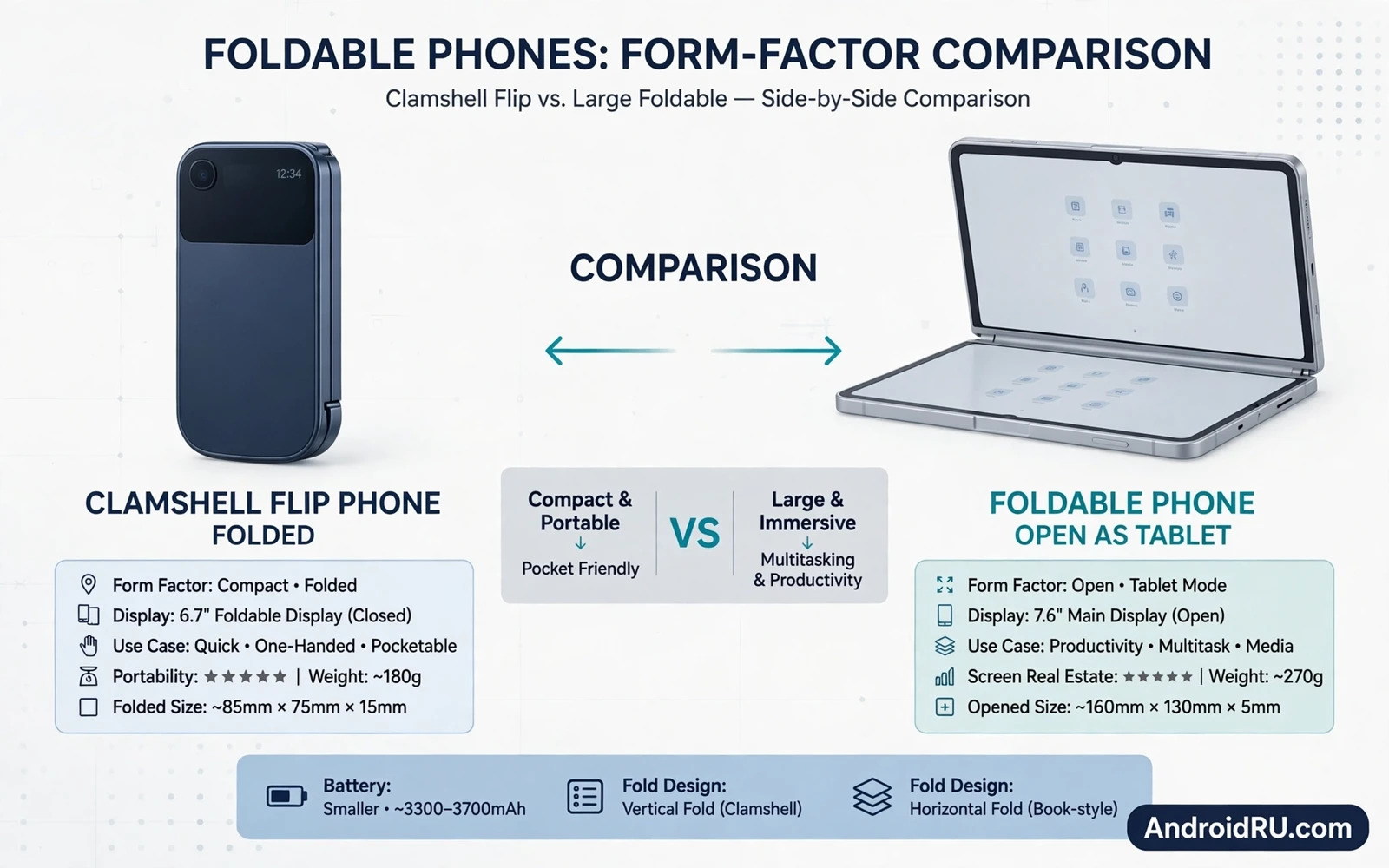
Two Ways To Fold A Phone
Flip phones and foldable phones share a folding screen yet they solve opposite problems. A flip phone folds in half along a horizontal hinge so that a normal phone becomes a small pocket square. A foldable phone folds like a book so that a phone becomes a small tablet when opened. The flip design prioritises pocketability and style and one-handed charm. The foldable design prioritises screen space and multitasking and media immersion. Buyers who confuse the two will end up with the wrong device because the daily experience differs completely despite the shared folding trick.
The hinge is the heart of both designs and it decides durability and feel. A well built hinge opens smoothly and holds its position at many angles. A weak hinge feels loose or creaks or lets dust into the mechanism. Makers have improved hinge sealing and strength over successive generations yet a folding phone still has more moving parts than a rigid phone. That complexity is the price of flexibility. Buyers should test the hinge in a store and listen for smooth motion and check whether the phone sits flat when closed. A hinge that feels confident on day one is more likely to survive years of daily folding.
Pocket Feel And Portability
Pocket feel is the flip phone strongest argument and it is immediately obvious the first time you carry one. A folded flip phone disappears into a small pocket or a tiny bag compartment where a large rigid phone would bulge. It also feels delightful to snap shut at the end of a call in a way that a slab phone never matches. The cover screen handles quick alerts and music control and simple replies without opening the phone. That quick glance workflow reduces full opens and it keeps the main screen protected during much of the day.
Foldable phones trade pocket smallness for screen largeness and that trade is visible in weight and thickness when closed. A closed foldable phone feels like two thin phones stacked together and it sits heavier in a pocket. Many buyers accept that bulk because the reward arrives when the phone opens into a tablet-sized canvas. Reading and video and split-screen work feel transformative on that large inner display. A buyer who carries a bag will barely notice the extra bulk. A buyer who wears slim pockets will notice it every time they sit down.
Durability questions deserve hard evidence and the long-term foldable durability findings reports how folding screens and hinges behave after long-term use. Buyers who love a large canvas but hesitate over a folding phone can compare sizes in the tablet screen size guide which matches tablet dimensions to reading and work habits. Pocket comfort remains a separate question and the compact phone guide judges small slab phones by grip and one-handed reach.
Screens Cameras And Daily Tasks
Screen experience splits sharply between the two forms. A flip phone inner screen matches a normal phone screen so apps behave exactly as they do on a slab phone. A foldable phone inner screen changes app behaviour because apps can show more content side by side. Multitasking shines on a foldable because two apps can share the large canvas comfortably. Video feels cinematic on a foldable and reading feels like a small book. The crease down the middle of a folding screen remains visible in some light yet most owners stop noticing it after a few days of use.
Cameras follow a similar split because body space shapes lens options. Flip phones often carry capable main cameras yet they may lack the long zoom systems of top slab flagships. Foldable phones have more internal space when opened yet their thin halves limit camera depth as well. Both forms now take excellent daylight photos and strong portraits. Neither form currently matches the very best camera flagships in every exotic scenario. Buyers who prioritise camera zoom above folding novelty should compare camera results directly rather than assuming that a premium folding price guarantees a premium camera system.
Durability And Long Term Ownership
Durability worries every folding phone buyer and the worry is fair because flexible screens need more care than rigid glass. Folding screens use softer materials that scratch more easily than traditional phone glass. Makers add protective layers and they warn owners never to peel those layers off. Dust and grit remain a risk around hinges despite improved sealing. A case helps yet folding cases must accommodate the hinge and they add bulk to both forms. Owners who work outdoors or near sand should think carefully before choosing any folding phone.
Long term ownership also involves repair cost and software support. Folding screen repairs cost far more than rigid screen repairs and that cost should factor into any buying decision. Makers now offer longer support and better hinge warranties than early folding generations yet the risk remains higher than for a slab phone. Readers who want evidence about how folding phones age can review long-term durability findings on foldable designs and how hinges and screens hold up after extended use. That evidence helps separate early folding fears from current folding reality.
Software And Multitasking
Software decides whether a foldable phone feels like a tablet or merely like a large phone. Good foldable software lets apps transition smoothly between the cover screen and the inner screen. It lets you drag content between apps and it remembers window layouts across sessions. Poor foldable software wastes the large canvas with stretched phone layouts that show little extra content. Flip phone software faces a simpler task because the inner screen behaves like a normal phone. The cover screen software matters more for flip phones because quick actions must work without opening the device.
App compatibility still varies across the folding market. Most popular apps now support large screens well yet some niche apps still stretch awkwardly. Makers work with developers to improve tablet layouts and the situation improves each year. Buyers should test their most used apps on a demo unit before buying a foldable phone. A flip phone buyer faces far less app risk because the inner screen size is familiar. That lower software risk is a genuine advantage for buyers who value predictability over novelty.
Price And Value Reality
Price separates the two forms from slab phones and from each other. Folding phones cost more than comparable slab phones because flexible screens and complex hinges are expensive to make. Flip phones usually cost less than book-style foldables yet they still carry a premium over a similar slab phone. Value depends on how much you actually use the folding benefit. A flip buyer who loves pocketability will use the benefit every day. A foldable buyer who multitasks daily will use the large screen constantly. A buyer who rarely opens the foldable fully may have paid a large premium for a feature that stays folded.
Resale value and upgrade cycles also shape the value question. Folding phones depreciate faster than popular slab flagships in many markets because buyers worry about hinge wear on a used device. A careful owner who keeps the phone clean and protected will preserve more value. Buyers who upgrade every year feel the premium less than buyers who keep a phone for four years. The value calculation is therefore personal. Match the folding benefit to your daily habits and the premium becomes an investment rather than a novelty tax.
Which Form Factor Wins
The winner depends on the life you actually live rather than on a specification contest. Flip phones win for buyers who want the smallest pocket footprint and a charming device that handles normal phone tasks with style. Foldable phones win for buyers who want a tablet in their pocket and who multitask or read or watch video for hours each day. Slab phones still win for buyers who want maximum durability and camera power and value without folding risk. Naming a single universal winner would mislead because the three forms serve different daily lives.
If forced to choose between the two folding forms for the widest audience then the flip phone wins on practicality while the foldable wins on ambition. The flip phone asks less of its owner in durability care and software adjustment and price. The foldable phone offers more transformation for buyers ready to embrace a larger canvas. Readers who also value compact everyday comfort can compare these folding shapes with a guide to compact phones for one-handed use and how pocket size shapes daily comfort. Your pocket and your tasks and your tolerance for novelty will point to the right fold and that personal fit is the only verdict that matters.
Living With A Folding Phone
Daily folding habits decide whether a folding phone feels delightful or fragile over time. Open and close the phone with even pressure rather than flicking one corner hard. Keep the inner screen free of grit by wiping it gently and by avoiding pockets full of sand or crumbs. Close the phone before sliding it into a tight pocket so the inner screen stays protected. These small habits cost nothing yet they protect the hinge and the flexible display across thousands of folds. Owners who treat the fold with casual care rather than fear usually enjoy the longest trouble-free life.
Software habits matter as much as physical care for folding owners. Learn the multitasking gestures for your foldable because dragging apps into split view transforms the large screen from a novelty into a tool. Save app pairs that you use together so a single tap restores a productive layout. Test your banking and work apps on the inner screen early because a few apps still behave oddly at tablet size. A folding phone rewards owners who adapt their workflow to the larger canvas and it disappoints owners who use it exactly like a slab phone.
Retail display units help folding buyers enormously because a folding phone must be felt to be judged. Fold and unfold the demo unit many times and listen for consistent hinge motion. Open apps on the inner screen and test whether the layout feels natural for your favourite tasks. Close the phone and slide it into your own pocket or bag to judge real carry bulk. A few minutes with a demo unit prevents an expensive mismatch between expectation and daily reality.

