

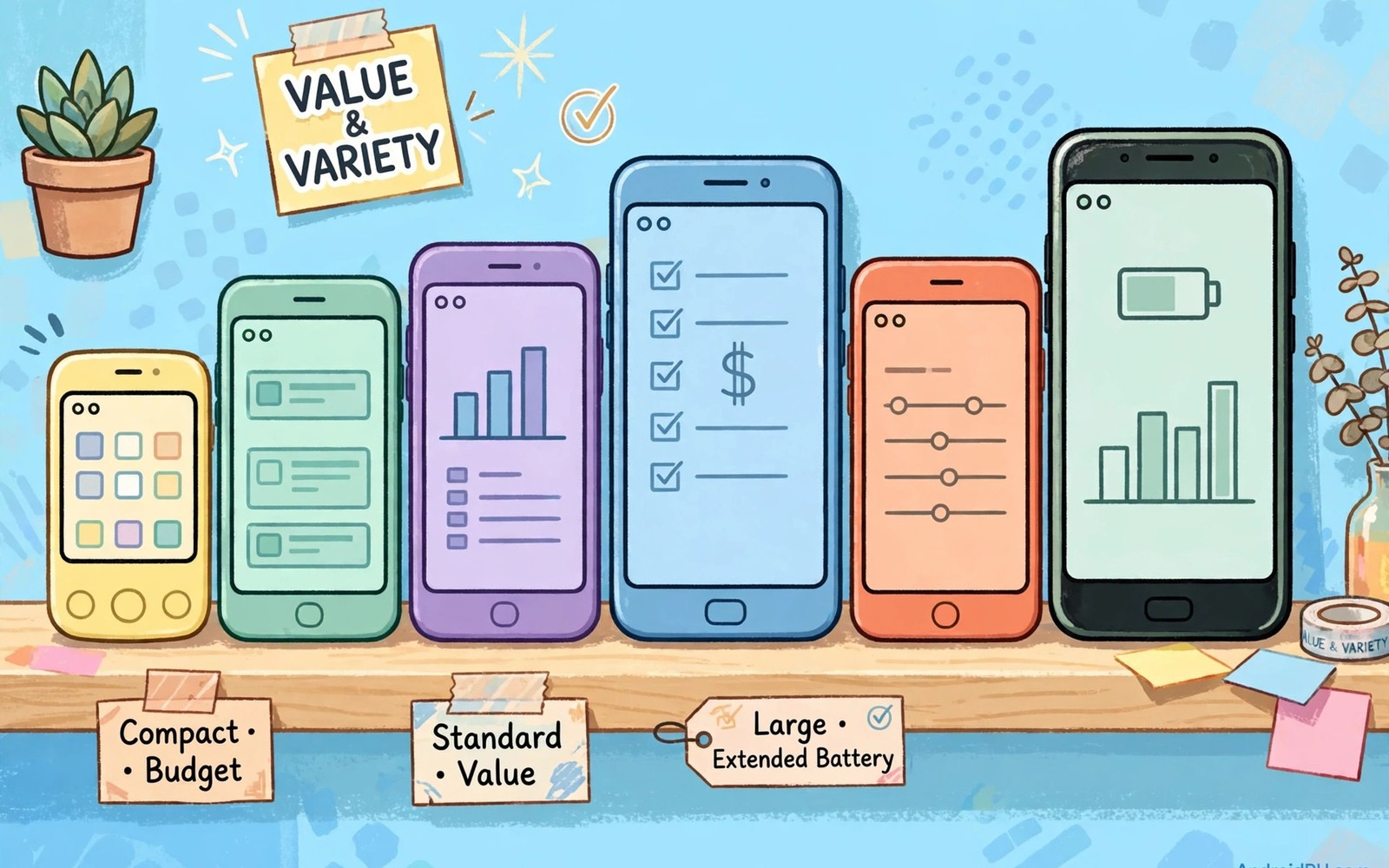
Xiaomi Ecosystem Overview: MIUI/HyperOS, Value, and Hardware Range
Xiaomi deserves a calm and honest look rather than a quick verdict based on launch hype. The company sells more phones than almost any other brand, across prices from under $150 to over $1,000, and it does so under three names that confuse even careful buyers: Redmi, POCO, and Xiaomi itself. On top of that sits a software story that changed in 2024, when HyperOS replaced MIUI, and an ecosystem of watches, earbuds, tablets, and home devices that can either deepen the value or lock you into one brand. This overview examines all of it through daily use and long-term ownership, weighing strengths against limits without hiding either side.
I have used Xiaomi phones as daily drivers on and off for years, most recently a Redmi Note running HyperOS and a Xiaomi 14 for a long-term camera test. The pattern I kept seeing was the same in both: the hardware felt generous for the price on day one, and the software decided how the phone felt by day thirty. Smooth scrolling, sensible defaults, and quiet notifications made the cheaper phone feel calm. Cluttered preinstalled apps and surprise prompts made the dearer phone feel busy until I spent an hour cleaning it up. That hour matters, because most buyers never spend it, and they judge the phone on its first week instead of its best week.
Before you compare prices, it helps to see how this topic connects with nearby ideas such as Pixel software intelligence. That wider view prevents a narrow choice based on one feature alone, and it shows where trade-offs usually hide. Keep your own routine at the centre of every comparison, because the right Xiaomi phone is the one that fits your five daily tasks, not the one with the longest spec sheet. This article gives you the three product lines, the software change from MIUI to HyperOS, the camera and battery picture by price tier, and a clear verdict for each type of buyer.
What Defines Xiaomi Today: Value, Hardware Range, and HyperOS
The strength of Xiaomi rests on aggressive pricing more than on one headline feature. A single strong feature cannot carry a weak daily experience, and Xiaomi knows it. The company buys components at huge volume, sells phones on thin margins, and makes part of its money from services and ecosystem products instead. That model is why a $250 Redmi can carry a bright 120Hz AMOLED display, a 5,000 mAh battery, and a 200MP camera sensor that would have cost twice as much from another brand three years ago. It is also why the software carries more preinstalled apps and prompts than a Pixel or a Motorola, because services are part of how the price stays low.
Hardware range is the second defining trait. Xiaomi does not sell one phone with a few options. It sells a ladder: Redmi at the bottom, Redmi Note in the middle, POCO for performance buyers, Xiaomi T series for near-flagship value, and the numbered Xiaomi series at the top, with the Ultra models carrying Leica-tuned cameras. Add tablets, the Watch series, Buds, and a large home range, and the ecosystem starts to look like a full alternative to Samsung or Apple at a lower price. The range is a strength when you know which rung you need, and a source of confusion when you do not, because two phones can share a name, a price, and a spec sheet while differing in the details that matter.
The third trait is software. HyperOS replaced MIUI starting with the Xiaomi 14 series in late 2023 and rolled out across Redmi and POCO phones through 2024 and 2025. It is still Android underneath, with Xiaomi’s own interface, apps, and services on top, and it is the software that most buyers actually live with. HyperOS is cleaner than late MIUI, with fewer duplicate apps and a more consistent design, but it is still a heavily customised system. Notifications, permissions, and background app behaviour all work a little differently from stock Android, and those differences shape daily comfort more than any single hardware spec. Judge a Xiaomi phone on a week of normal use, not on launch day, because the software habits only show up once your real apps, accounts, and routines are on the device.
Redmi vs POCO vs Xiaomi: The Three Lines Explained
Redmi, POCO, and Xiaomi are three brands under one company, and they aim at three different buyers. Redmi is the volume line: affordable phones for everyone, with the Redmi Note series as its best-known product. POCO is the performance line: fast chips and large batteries at mid-range prices, aimed at gamers and power users who care about speed more than camera polish. Xiaomi is the premium line: the numbered series and the Ultra models, with the best cameras, the best displays, and the longest support. A buyer who understands this split can ignore half the catalogue at once, which is the fastest way to make the choice manageable.
| Line | Typical price | Best for | Camera focus | Software support |
|---|---|---|---|---|
| Redmi | $120 to $300 | Everyday use, first phones, family phones | Good daylight, basic night mode | 2 to 3 years of major updates |
| Redmi Note | $200 to $400 | Best value all-rounder | Strong main camera, useful ultrawide | 3 to 4 years of major updates |
| POCO | $200 to $500 | Gaming, speed, heavy multitasking | Good, rarely the priority | 2 to 3 years of major updates |
| Xiaomi T series | $450 to $700 | Near-flagship value | Strong, close to flagship | 4 years of major updates |
| Xiaomi numbered / Ultra | $700 to $1,300 | Best camera, best display, premium build | Leica-tuned, best low light | 4 to 5 years of major updates |
Redmi: Affordable Phones for Everyday Use
Redmi is where most Xiaomi buyers start. The plain Redmi phones, such as the Redmi 13 and Redmi 14C, cost little and cover the basics: calls, messaging, social apps, video, and light games. The Redmi Note series sits above them and is the line most people should look at first, because it adds a better display, faster charging, and a stronger main camera for a modest price rise. A Redmi Note 13 Pro or Note 14 Pro, for example, gives you a 120Hz AMOLED display, a 5,000 mAh battery, and 67W charging at a price where many rivals still offer a 60Hz LCD and 25W charging. That gap is the whole Redmi argument in one sentence.
The trade-off is in the details. Redmi phones use mid-range chips that handle daily apps smoothly but slow down under sustained gaming. Their cameras take strong daylight photos and weaker night shots. Their bodies use plastic frames more often than metal, and water resistance is usually limited to splash protection rather than a full IP68 rating. None of that matters if your day is messaging, maps, video, and photos in good light. It matters a lot if you play demanding games for an hour at a time or shoot photos after dark every week.
Redmi Note: the volume seller and the safe default
If you want one safe recommendation, it is the Redmi Note. It is the best-selling Xiaomi line for a reason: it balances display, battery, camera, and price better than any other rung on the ladder. Check the exact model before you buy, because the Note line splits into several versions with different chips and cameras, and the Pro version is usually worth the small premium over the base model. Buy the version with at least 8GB of RAM and 256GB of space if you plan to keep the phone for three years, because apps get heavier and your photo library only grows.
POCO: Performance Phones for Gamers and Power Users
POCO started as a single phone, the Pocophone F1 in 2018, and grew into a full line that puts the fastest chip it can into a mid-range body. A POCO X7 Pro or F7 gives you flagship-level speed, a large battery, and a high-refresh display at a price far below a flagship. That is the deal, and it is a good one for gamers and heavy users. The chip handles demanding games at high settings, the battery lasts through a long session, and the cooling is usually better than on a Redmi at the same price. If speed is your first priority, POCO is the Xiaomi line built for you.
The compromise is that POCO spends the budget on speed and takes it from elsewhere. Cameras are good rather than great, with less tuning and fewer premium features than a Xiaomi T series phone. The design is often louder, with bold colours and large camera modules that suit younger buyers and put off others. Software support is shorter than on the Xiaomi premium line, usually two to three years of major updates. None of that is a flaw if you know what you are buying. It is only a problem if you buy a POCO expecting flagship camera quality, because that was never what the line was for.
POCO F series: flagship speed without the flagship price
The POCO F series is the top of the POCO range and the closest thing to a flagship killer in the current market. It pairs a recent high-end chip with a large battery and a flat, bright display, and it skips the premium camera hardware and metal-and-glass build that would push the price up. Gamers get sustained performance and fast charging, and the phone stays cool enough to hold during a long session. If your budget is $400 to $500 and your priority is speed, the F series is hard to beat, and it is the POCO model most worth stretching for over the cheaper X series.
Xiaomi Numbered Series and Ultra: The Premium Line
The Xiaomi numbered series, such as the Xiaomi 14 and 15, is the company’s true flagship line, and the Ultra models sit above it as camera-first flagships. These phones carry the best displays Xiaomi makes, the fastest chips, Leica-tuned cameras with large sensors, and premium materials such as metal frames and ceramic or glass backs. The Xiaomi 15 Ultra, for example, uses a 1-inch type main sensor and a periscope zoom lens that keeps detail at long range, and it shoots video with a stability and audio quality that the cheaper lines cannot match. If you want the best camera Xiaomi makes, this is the only line that has it.
The premium line also gets the longest support, with four to five years of major Android updates and security patches, which matters if you plan to keep a $900 phone for four years. The trade-off is price: at this level, Xiaomi competes directly with Samsung and Google, and the value argument gets thinner. A Xiaomi 15 costs about the same as a Galaxy S25 or a Pixel 9, so the choice becomes about camera style, software taste, and ecosystem rather than price alone. That is a fair fight, and Xiaomi wins it on hardware and charging speed, while Samsung and Google win it on software polish and update speed in some regions.
From MIUI to HyperOS: What Changed in Xiaomi Software
MIUI was Xiaomi’s interface for over a decade, and by its later versions it had grown crowded. Duplicate apps, ads in system apps on some models, aggressive background app killing, and a settings menu full of toggles made the system powerful but busy. HyperOS, which replaced MIUI from late 2023, is a rebuild rather than a new coat of paint. It keeps the Xiaomi look, with the same control centre and the same app icons, but it runs on a lighter base, with less clutter, smoother animations, and a design that is meant to feel consistent across phones, tablets, watches, and home devices.
In daily use, the change is real but not dramatic. HyperOS feels calmer than late MIUI. The control centre is cleaner, the lock screen offers more customisation, and the system uses less space and memory on the same hardware. Notifications group better, and the settings search works well enough to find a buried option in seconds. That said, HyperOS is still a heavily customised system, and it still behaves differently from stock Android in ways that matter. Background apps can still be closed aggressively to save battery, which can delay messages from apps that are not on Xiaomi’s allowlist. Preinstalled apps still include duplicates of Google apps on some models, and some system apps still show promotions in certain regions. An hour spent in the first week, removing or disabling what you do not need and checking the battery settings for your messaging apps, pays for itself many times over.
HyperOS Design, Control Centre, and Daily Feel
The HyperOS home screen looks familiar to anyone who used MIUI, but the details are cleaner. Icons are more consistent, widgets are easier to place, and the lock screen can show depth effects and custom fonts without a third-party app. The control centre, reached by swiping down from the right, groups quick settings, brightness, and media controls in one place, and it can be customised to show the toggles you actually use. The recent apps screen shows large cards with a clear close button, and split-screen and floating windows are easy to reach from there. These are small things, but they are the things you touch a hundred times a day, and they decide whether the phone feels calm or fussy.
Updates and Support Windows: How Long Your Phone Stays Current
Update policy is one of the biggest differences between Xiaomi lines, and it should be part of every buying decision. Premium Xiaomi phones now get four to five years of major updates, which puts them close to Samsung and Google. The T series gets four years. Redmi Note gets three to four years. Plain Redmi and POCO get two to three years. A phone with a short support window can still be a good buy if the price is low and you plan to replace it in two years, but it is a poor buy if you plan to keep it for four. Ask for the support window before you buy, and check the rollout history for your region, because Xiaomi updates arrive at different speeds in different markets, and a promise at launch does not always match delivery a year later.
Check the update record before you buy any Xiaomi phone
Open the phone’s update history or search for its rollout record and look for two things: how quickly major Android updates arrived, and how regularly security patches followed. A line that received its last major update within three months of Google’s release is a healthy sign. A line that waited eight months is a warning. Security patches matter more than new features, because a phone with old patches is exposed to known flaws. Monthly patches are the standard on premium models, while cheaper models may receive them every two or three months. That gap is part of what you pay for, and it is worth knowing before you spend.
Xiaomi Cameras by Price Tier: Where the Money Shows
Camera quality is where Xiaomi’s price ladder is easiest to see. Daylight photos look strong on almost every modern Xiaomi phone, from the cheapest Redmi to the Ultra, because sensors and processing have improved so much that good light flatters every phone. The differences appear when the light gets difficult. Low light, portraits, and zoom are where the premium lines earn their price, and where the budget lines show their limits. Judge a Xiaomi camera on your own photos, in the places you actually take them, rather than on studio samples.
| Price tier | Daylight photos | Low light | Portrait mode | Video |
|---|---|---|---|---|
| Redmi under $200 | Good, bright and sharp | Noisy, soft detail | Basic edge detection | 1080p, basic stabilisation |
| Redmi Note $200 to $400 | Strong, vivid colour | Usable with night mode | Clean edges in good light | 4K, decent stabilisation |
| POCO $200 to $500 | Good, natural colour | Fair, not the priority | Good in daylight | 4K, good stabilisation |
| Xiaomi T series $450 to $700 | Excellent, rich detail | Strong, low noise | Natural skin tones | 4K, strong stabilisation |
| Xiaomi Ultra $1,000 and up | Excellent, Leica colour | Best in class | Excellent edge detail | 8K, best audio and stability |
Daylight Photos and the Leica Look on Premium Models
In daylight, a Redmi Note can take photos that look as good as a flagship on a phone screen. Colours are vivid, detail is sharp, and the main sensor captures enough light to keep shadows clean. The difference on premium models is in colour science rather than sharpness. Leica-tuned Xiaomi phones offer two colour profiles, Leica Authentic and Leica Vibrant, and the Authentic profile gives photos a restrained, natural look with restrained contrast that suits people who dislike heavy processing. The Vibrant profile gives the punchy colour that most people expect from a phone photo. Pick the style that matches your taste, and test it on your own screen, because a style you love on a bright display can look flat on a laptop.
Low Light, Portraits, and Zoom: The Real Camera Test
Low light separates careful tuning from rushed tuning. A good night mode keeps contrast natural and holds detail in shadows, while a poor one flattens the scene into a bright, noisy glow. Xiaomi’s premium phones handle this well, with night modes that take a few seconds and produce clean results. Redmi phones need a steadier hand and more patience, and their night shots often lose fine detail. Portrait mode depends on edge detection more than on lens count, so check hair and glasses in your test photos: clean edges make portraits believable, and messy edges ruin otherwise good shots. Zoom is the third test. Optical zoom preserves texture, while digital zoom smears it, so judge zoom at full screen size rather than as a thumbnail. A 3x optical zoom on a T series phone is genuinely useful, while a 10x digital zoom on a budget phone is mostly marketing.
Battery, Charging, and Everyday Endurance
Battery life is one of Xiaomi’s most consistent strengths. Most Redmi and POCO phones carry 5,000 mAh batteries, and newer models carry 5,500 mAh or more, with silicon-carbon battery technology arriving on recent flagships. In real use, that means a full day with charge to spare for most people, and two days for light users. Screen time and signal strength drain power fastest, and bright outdoor use drains it faster still, so real days vary more than lab tests suggest. The honest test is your own first week: if the phone reaches bedtime with 20 percent left, it fits your routine, and if it dies at dinner, it does not, whatever the spec sheet promised.
Charging speed is the other half of the story, and Xiaomi leads the industry here. A Redmi Note with 67W charging reaches a full charge in under an hour, and a Xiaomi flagship with 120W charging can reach half charge in about fifteen minutes. A ten-minute top-up can rescue a busy afternoon, and that changes how you think about battery life: you stop worrying about a full charge overnight and start topping up while you make coffee. That said, fast charging creates heat, and good systems slow down near full charge to protect long-term health. Do not judge charging by peak speed alone, and use the adaptive charging option if your schedule is regular, because it learns your wake time and slows overnight charging to protect the battery.
Wireless charging is limited to the premium lines, and it is slower than wired charging, but a pad on your desk encourages frequent top-ups that reduce range anxiety. Standby drain is a useful check of software quality: a healthy phone loses little power overnight, while a troubled one loses much more, usually because an app is waking the phone repeatedly. Check overnight drain during your first week, and check the battery settings for the apps that use the most power. Clear data helps you fix drain fast, and vague data leaves you guessing.
How to Test Battery Life in Your First Week
Use the phone normally for a week and note the battery level at bedtime each night. Check the overnight drain by comparing the level when you sleep and when you wake. Look at the battery usage screen to see which apps used the most power, and check whether a messaging app was closed by the system, which can delay notifications. If a single app uses far more power than the rest, restrict its background activity and test again. Predictability beats peak numbers for battery life, because a phone that lasts until bedtime every day wins trust, while a phone that dies early once a week frustrates you no matter how fast it charges.
Xiaomi Value for Money: Honest Pros, Cons, and Hidden Costs
Value means more than a low price. Total cost includes accessories, repairs, software life, and resale value, and a cheap phone with short support can cost more over three years than a dearer phone with five years of updates. Xiaomi wins the value argument at the low and middle prices, where its hardware is clearly ahead of rivals at the same price. It wins less clearly at the top, where Samsung and Google offer similar hardware with different software strengths. The table below is not a verdict on one phone, it is a picture of the whole brand, and it is the picture you should keep in mind while you shop.
A useful cross-check comes from OnePlus brand evolution, which shows a different path from value brand to premium competitor. OnePlus started as a flagship killer and moved upmarket, while Xiaomi kept its value lines and added premium lines on top. That difference matters for buyers, because Xiaomi still sells a good phone at $200, while OnePlus has largely left that price behind. If your budget is tight, Xiaomi has more to offer. If your budget is $800 and you want the most polished software, the choice is closer than the price tags suggest.
Where Xiaomi Wins on Value
The wins are concrete. Displays are bright and smooth at prices where rivals still use dimmer panels. Batteries are large and charging is fast across the whole range. Storage starts at 128GB on most models and 256GB is common in the mid-range. The hardware feels generous, and the ecosystem adds value if you already own a Xiaomi watch or earbuds, because pairing, controls, and battery information work together in HyperOS. For students, families, and first-time buyers, that combination is hard to beat, and it is why Redmi and Redmi Note sell in such volume.
Where the Price Catches Up Later
The costs are real too. Preinstalled apps and prompts take time to clean up, and some buyers never do, so they live with clutter for the life of the phone. Software support is shorter on the cheaper lines, which shortens the useful life of the phone. Resale value is weaker than Samsung or Apple in many markets, so a Xiaomi phone loses more of its value in the first year. Repair networks vary by region, and parts for a niche POCO model can be harder to find than parts for a mainstream Samsung. None of these costs appears on the price tag, but all of them affect what the phone costs you over three years. Count them before you decide, and remember that a discounted flagship can sometimes beat a new mid-range phone on total value, so compare current prices rather than launch prices.
Xiaomi Ecosystem Questions Readers Ask Most
Is HyperOS better than MIUI?
Yes, for most people, HyperOS is better than late MIUI. It is cleaner, lighter, and more consistent across devices, with fewer duplicate apps and smoother animations. It still carries some of MIUI’s habits, such as aggressive background app management and preinstalled apps that vary by region, so it does not feel like stock Android. If you are buying a new Xiaomi phone, you will get HyperOS, and the right move is to spend an hour in the first week cleaning up the apps you do not need and checking the battery settings for your messaging apps.
Which Xiaomi line should a student on a tight budget buy?
A Redmi Note, with at least 8GB of RAM and 256GB of space, is the best answer for most students. It covers classes, messaging, video, and photos well, it charges fast between lectures, and its price leaves room for a case and a charger. A plain Redmi is cheaper but slower, and it will feel old sooner. A POCO is worth it only if you play demanding games often, because its speed comes at the cost of camera polish and design restraint. Buy the Redmi Note during a sale if you can, because Xiaomi phones are discounted often, and a sale price can move you up a tier for the same money.
Do Xiaomi phones get long software support?
It depends on the line. Premium Xiaomi phones now get four to five years of major updates, the T series gets four years, Redmi Note gets three to four years, and plain Redmi and POCO get two to three years. That range is wider than Samsung or Google, where support is more uniform, so you must check the window for the exact model you are buying. A phone with a short window is still a fair buy at a low price if you plan to replace it in two years, but it is a poor buy if you want to keep it for four. Check the rollout history for your region as well, because updates arrive at different speeds in different markets.
Are Xiaomi watches, earbuds, and tablets worth buying with the phone?
They are worth buying if you will actually use the integration, and a waste if you will not. A Xiaomi watch pairs well with a Xiaomi phone, showing notifications, health data, and battery information in one place. Buds pair quickly and show battery levels in HyperOS. Tablets share clipboard and file transfer features with the phone. That said, each accessory also deepens your lock-in to one brand, because the integration works best inside the ecosystem and less well outside it. Buy the accessory that solves a real problem, such as a watch for fitness or earbuds for calls, and skip the rest until you need them.
Who Should Buy Which Xiaomi Phone: Verdicts per Use Case
The right Xiaomi phone depends on your routine, not on the launch hype. A student on a tight budget should buy a Redmi Note, because it balances display, battery, and camera at a price that leaves room for accessories. A gamer should buy a POCO F series phone, because its chip and cooling are built for sustained performance, and its camera is good enough for the photos a gamer actually takes. A photographer should buy a Xiaomi T series or an Ultra, because only those lines carry the camera hardware and tuning that make a difference after dark. A family buying several phones should buy Redmi models, because the low price and long battery life matter more than premium cameras, and the money saved can go to cases and screen protectors.
Before you buy, compare the Xiaomi choice with the budget options from other brands, and a good place to start is the Motorola budget lineup, which offers clean Android and strong battery life at similar prices. Motorola wins on software simplicity, while Xiaomi wins on hardware and charging speed at the same price. That comparison tells you what you value more: a calm, simple system or a faster, richer one. Neither answer is wrong, and knowing your answer before you shop is worth more than any single review.
Test the phone with your own SIM and apps during the return window, and use that window fully. Check the camera in the places you actually take photos, check the battery on your longest day, and check that your messaging apps deliver notifications on time. Small checks repeated often keep any phone healthy longer, and they protect you from a choice you regret. In the end, the right choice depends on fit rather than fame. List your deal breakers and must-have features, compare current prices rather than launch prices, and choose the option that stays comfortable after the excitement fades. That is the Xiaomi phone worth your money.

