

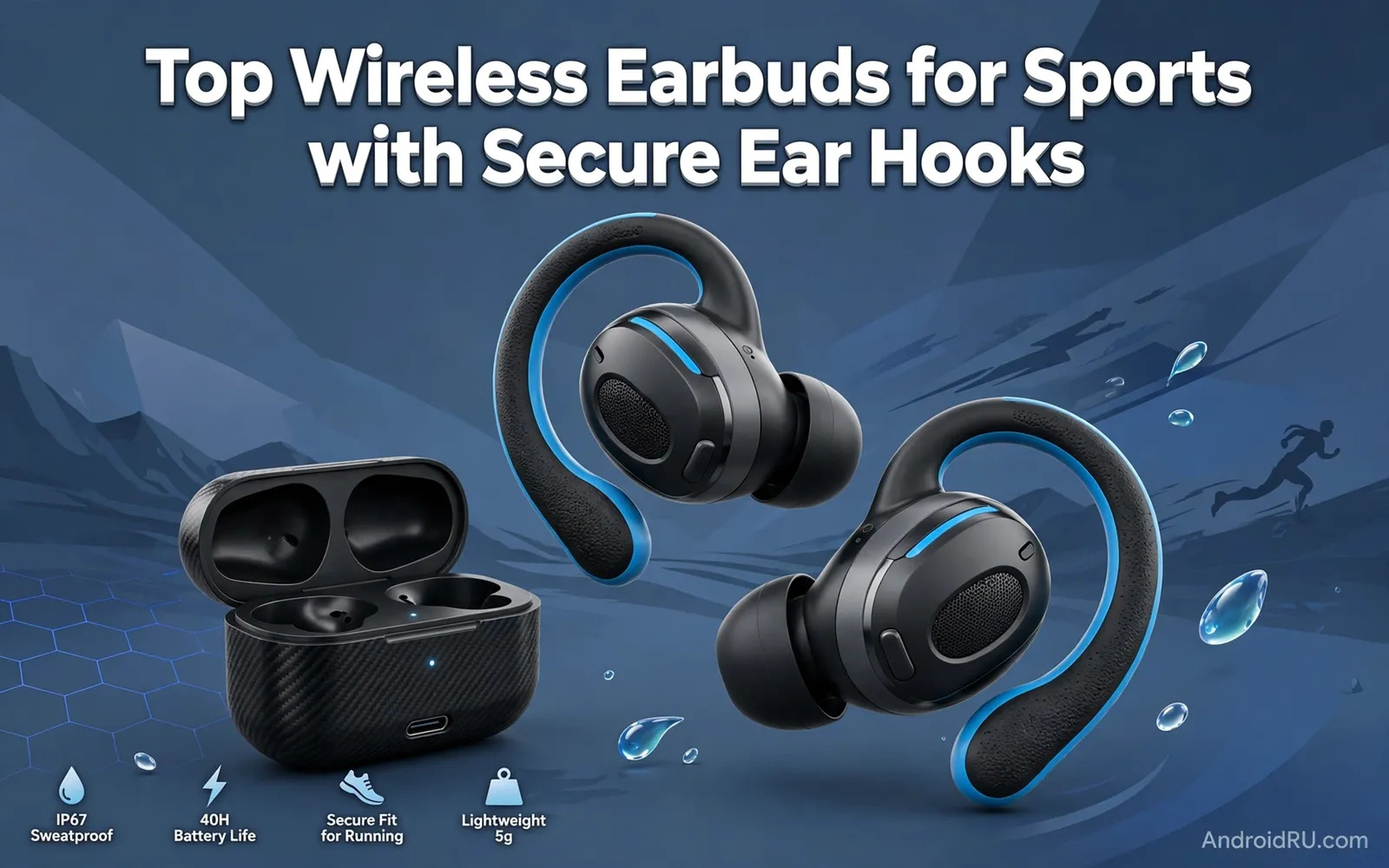
Sports earbuds must stay put when you move hard. Running shakes loose buds free. Jumping tests every fit trick. Sweat loosens smooth tips fast. Secure ear hooks wrap around the ear to anchor the bud. A hook plus a well sized tip beats a tip alone for most athletes. This guide explains how to pick sports earbuds that survive training. It also explains how to test fit before race day or match day.
Start with ear shape rather than brand hype. Ears differ in size and fold shape. A hook that fits one runner may pinch another runner. Adjustable hooks adapt to more ear shapes. Memory wire hooks mold gently around the ear curve. Fixed hooks suit users who share one size across workouts. Test hooks with the exact motion you train for. Run in place for two minutes. Shake your head side to side. Jump lightly several times. Note any slip or pressure point. A bud that slips in a test will slip in a race.
Sweat Water And Grip
Sweat resistance matters more than raw sound specs for sports use. Sweat enters seams and buttons over time. A rated resistant design handles workout moisture better. Rinse guidance varies by model. Some buds tolerate a quick rinse after training. Some buds prefer a dry wipe only. Dry buds after every sweaty session. Dry the charging case contacts too. Moisture in a case can block charging. Store buds dry between sessions. A dry routine extends sports bud life greatly. A wider earbud comparison helps you weigh noise control against sport fit and the tested guide in Top Wireless Earbuds for Android: Active Noise Canceling Tested gives you that wider view before you commit to a sport model.
Grip comes from tips plus hooks plus cable choices. Foam tips expand to seal the ear canal. Silicone tips stay firm and clean easily. Try every tip size in the box. A larger tip may seal better during movement. A smaller tip may feel better for long runs. A neckband style can add a safety net if a bud slips. True wireless buds offer freedom from cables. Neckband buds offer easier retrieval when one side slips. Choose the style that matches your sport and your tolerance for cables. Safety outdoors also matters. Full isolation can hide traffic sounds. A transparency mode can let traffic sounds through. Use transparency on roads. Use isolation on treadmills and in gyms.
Sound Controls And Battery For Training
Sports sound should stay clear at training pace. Bass should drive rhythm without drowning vocals. Vocals should stay clear for podcasts on long runs. Wind noise can ruin calls during outdoor sessions. A wind-resistant microphone design helps outdoor call clarity. Test calls outdoors before you rely on them. Test button controls with sweaty hands. Small touch pads can misfire with sweat. Physical buttons often work better mid-run. Large controls help with gloves in cold training. Practice controls at home before a timed workout. Codec differences shape wireless sound quality and the explainer in Top Smartwatches Compatible with Android Phones helps you judge whether a sport bud sound profile suits your ears.
Battery life should cover your longest session plus a margin. A case that holds several charges suits travel training camps. A case that charges quickly suits back-to-back sessions. Check charging port type for your existing cables. Check whether the case fits a running belt pocket. Check whether buds pair fast when you open the case. Slow pairing wastes warm-up time. Keep firmware updated for connection stability. Test pairing after each update. A reliable connection matters more than a fancy feature that drops mid-run. Health tracking can pair with sport audio on the same phone and the wearable guide in Top Smart Rings Supporting Health Tracking on Android shows how small wearables share training data with Android apps.
Fit Test Checklist Before You Keep Them
Run a full fit test across a week. Test a short run first. Test a long run second. Test a gym session third. Test a rainy day if your sport allows wet training. Note pressure after thirty minutes. Note slip after an hour. Note sound change as sweat builds. Note case charging after wet sessions. Keep packaging until the week passes. Return buds that fail the week test. A sport bud that passes a week earns trust for months. Choose secure hooks first. Choose sweat handling second. Choose sound third. The best sport bud is the one that stays put and keeps playing when training gets hard.
Trail running adds mud and rain to earbud challenges. Mud splashes reach buds during wet trail runs. Rain soaks hair and drips onto buds. A secure hook keeps buds seated through splashes. A sealed case protects buds after muddy runs. Clean buds gently after trail sessions. Remove mud from tips before storage. Dry hooks fully before case storage. Inspect charging contacts for mud residue. Mud on contacts blocks charging silently. A clean trail routine preserves buds across seasons. Trail runners should prioritize sealing and hooks over fancy features.
Gym training adds dropped weights and crowded racks to bud risks. A dropped bud can roll under heavy equipment. A bright case helps locate dropped buds fast. A neckband helps retrieve a slipped bud fast. True wireless buds need a careful pocket routine in gyms. Place buds in the case between exercises. Avoid placing loose buds on benches. Benches hide buds under towels easily. Wipe buds after shared equipment contact. Gym germs transfer through shared surfaces. A wipe routine protects ears and buds together. Gym habits matter as much as gym sound quality.
Cycling demands wind management and traffic awareness from earbuds. Wind noise overwhelms music at speed. Wind-resistant microphones help calls during rides. A single bud mode can preserve traffic awareness. A transparency mode can preserve awareness with both buds. Never fully isolate on busy roads. Choose hook styles that fit under helmets comfortably. Test helmet plus hook fit before road rides. Test strap plus helmet fit too. A helmet that presses hooks causes pain within minutes. Pain distracts from road safety. Comfort plus awareness beats isolation on every ride.
Swim-adjacent training needs clear water limits. Most sports buds resist sweat and rain only. Most sports buds do not survive swimming laps. Check water ratings before poolside use. Keep buds away from pool splash zones. Dry buds after humid pool hall sessions. Store buds away from chlorine air when possible. Chlorine air corrodes contacts over time. Use dedicated swim players for actual swimming. Use sports buds for dryland training beside pools. Clear limits prevent a costly swim mistake. A bud saved from water lasts many dry seasons.
Marathon training tests battery and comfort across months. Long runs exceed short workout battery needs. A case with multiple charges covers long run weekends. A quick charge feature covers forgotten charging nights. Comfort after three hours differs from comfort after thirty minutes. Test buds on your longest training run before race week. Test buds with race day clothing and belts. Test buds with race day nutrition belts. Race week is too late for fit surprises. A proven marathon bud earns race day trust. Trust plus comfort plus battery wins long races.
Team sports add shouting and sideline noise to bud use. Warm-up music needs punch and motivation. Sideline calls need clarity amid crowd noise. A bud that seals well helps warm-up focus. A bud with transparency helps sideline awareness. Coaches should set bud rules for team sessions. Players should remove buds during tactical talks. Players should store buds safely during matches. A lost bud during a match distracts the whole team. Team discipline plus good buds creates a focused warm-up. Focus plus discipline wins more than sound specs alone.
Cross-training athletes who switch between running and gym work in one session should choose earbuds that handle both movement types without refitting because a bud that stays secure during sprints can still slip during bench presses when head position changes while a hook design that anchors in both positions saves constant adjustment during mixed workouts.
Outdoor instructors who lead group sessions need earbuds that allow quick awareness checks between music tracks because an instructor must hear participant questions and safety warnings instantly while a bud with fast transparency switching lets an instructor move between music motivation and clear communication without removing buds mid-session.
Night runners should pair secure earbuds with reflective gear and a transparency mode that keeps traffic sounds audible because visibility and hearing together protect a runner far better than either sense alone while a fully isolating bud at night hides approaching vehicles until they are dangerously close.
Budget-conscious athletes should compare total ownership costs including replacement tips and case batteries rather than sticker prices alone because a cheap bud that needs frequent tip replacements and case repairs can cost more across a year than a slightly pricier bud with durable hooks and a long-lasting charging case.
Test sports earbuds with the exact workout you train for weekly. Test running buds on a real run outdoors. Test gym buds during a real gym session. Test cycling buds during a real ride. Each sport stresses fit differently. Running stresses vertical bounce most. Gym work stresses head position changes most. Cycling stresses wind and helmet fit most. A bud that passes one sport can fail another sport. Sport-specific tests reveal those failures early. Early failures allow returns before race season. Returns after race season help nobody.
Rotate ear tips regularly to maintain seal and hygiene. Foam tips compress permanently after weeks of use. Silicone tips harden slowly with sweat exposure. Replace foam tips monthly for heavy trainers. Replace silicone tips when seal weakens noticeably. Wash silicone tips weekly with mild soap. Dry tips fully before refitting. Keep spare tips in the charging case pouch. Spare tips save workouts when a tip tears suddenly. A fresh tip restores bass and isolation instantly. Tip care costs little and improves sound greatly.
Charge sports earbuds fully the night before key sessions. Check case charge level before leaving home. Check bud charge level in the app before leaving home. Carry a short charging cable for emergency top-ups. A ten minute top-up can save a long run. A dead bud mid-run ruins pacing and motivation. Set a charging reminder after every training session. Plug in buds immediately after showering. Immediate charging becomes a reliable habit quickly. Reliable habits prevent dead bud surprises completely.

